Most apparel brands already know their product pages need more than photos. What they don't know is which kind of video actually moves revenue, where it should sit on the page, and how to prove it worked.
ENDU, a Dutch essentials brand, answered all three with a controlled A/B test. Adding shoppable customer video under the Add to Cart button lifted revenue per session by up to 11.96% and conversion rate by up to 10.29%.
This guide breaks down why clothing is uniquely hard to sell online, what customer video fixes, where to place it, and how to test it so you know the lift is real, with results from six other apparel brands that did the same.
A product photo answers "what is it?" It shows the color, the cut, the details. It can't answer the questions apparel shoppers actually hesitate on:
This gets harder for essentials brands. ENDU sells tech suits, windbreakers, linen sets and polos with no logos and no seasonal drops. When there's no logo or trend to sell, the product and the people wearing it have to do all the convincing.
The same problem shows up across the category. Burju Shoes sells dance heels, and a still photo can't show how a shoe performs mid-turn. Stripe & Stare, a UK underwear brand, needed to show what makes its fabric and fit different in a crowded market. Both are things you have to see on a real body to believe.
Copy and size charts cover the specs well. They struggle with the reason to buy. That gap is where returns, abandoned carts and "I'll think about it" live.
A product photo shows a garment. A customer video shows someone choosing to wear it again.
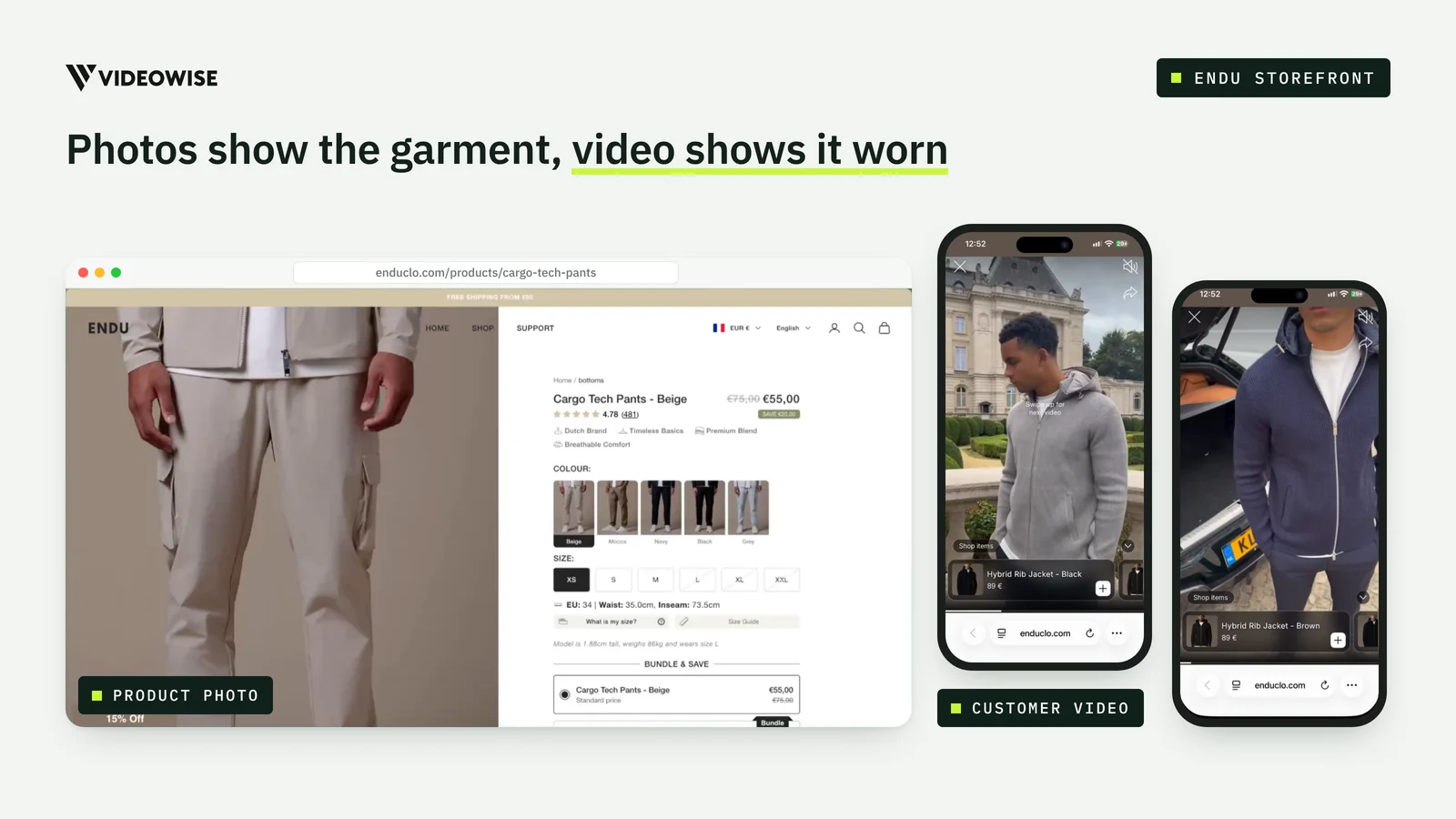
That difference is why user-generated video works so well in apparel. In a few seconds, a shopper sees real fit on a real body, how the fabric moves on a commute or a night out, and an honest reaction from someone who already paid for it.
The formats that tend to work best for clothing:
Most brands already have this content. It's sitting in tagged Instagram posts, TikTok mentions, review uploads and creator DMs. The problem is that it lives on social, while the buying decision happens on your product page. If you need a starting point, our UGC video complete guide covers how to collect it and get permission to use it.
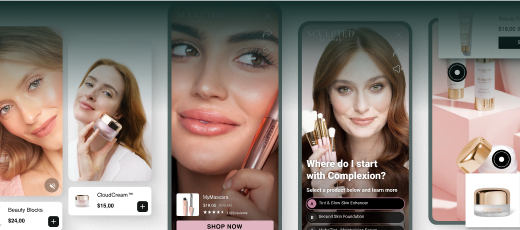
The key word in "shoppable video" is shoppable. When a shopper connects with a video, they should be able to add the product to cart right there, without leaving the page or losing momentum.
Placement matters as much as the content. ENDU put its customer video carousel directly beneath the Add to Cart button, and the reasoning is worth copying:
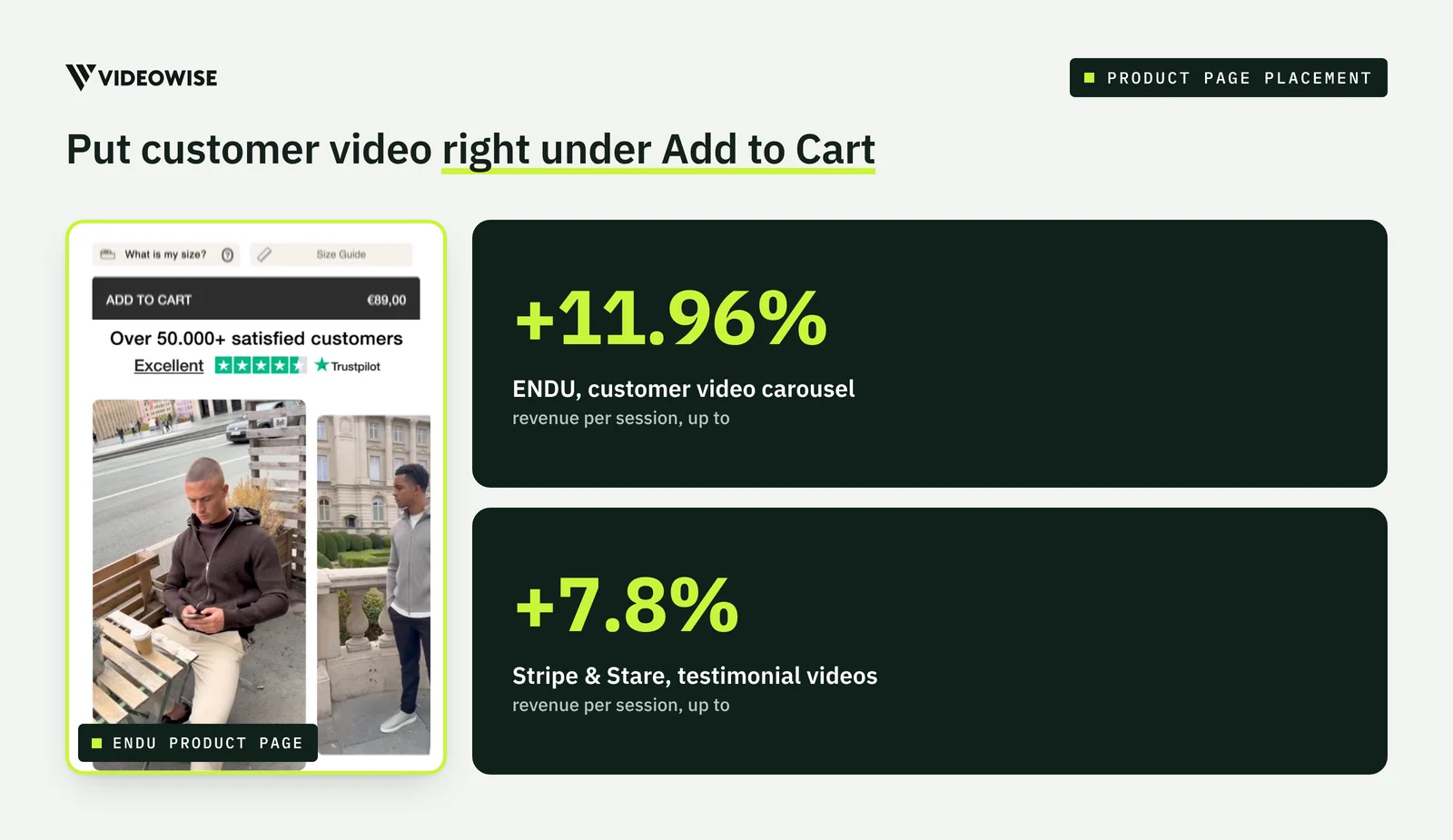
That's the moment purchase intent peaks, and it's exactly when social proof does its best work. Across Videowise customers, a carousel under Add to Cart is consistently one of the strongest-performing placements.
Stripe & Stare uses the same spot for short customer testimonial videos. In a 50/50 A/B test, it saw up to +7.8% revenue per session.
The homepage is the second place to test. ENDU added a shoppable carousel there so visitors could browse and buy straight from customer videos before reaching a product page. Legends, a Los Angeles activewear brand, built its setup around a homepage Quick Shop carousel and saw +5.99% conversion rate and +5.77% orders. Huug saw a double-digit conversion rate lift from its homepage carousel on top of its product page results.
For more on choosing placements across your store, see our Shopify product page optimization guide and the shoppable video complete guide.
Adding video and watching conversion go up the following week proves very little. Traffic mix, promotions and seasonality all move the numbers. The only way to know video is working is to test it against a control group.
That's how ENDU approached it. Since its fourth month in business, the brand has worked with Weblics, a CRO agency running a continuous A/B testing program on its Shopify store. Every change is measured against live traffic before it ships.
ENDU had been using Moast, a budget shoppable video app, but wasn't getting the features, support or results it needed. Weblics brought in Videowise, and the two teams designed and ran the test together in Videowise's built-in A/B testing tool. Success was measured on revenue per user and profit per user, not views or clicks.
"If you're a Shopify brand sitting on customer videos you aren't using, that is the easiest return on investment in your stack." Gary Culaev, Founder, Weblics
The test didn't stop at "video on vs. video off." ENDU tested different customer videos across product pages to find which ones drove the strongest engagement and conversion for each product. The best-performing videos led each page, and the carousel kept improving as new content came in.
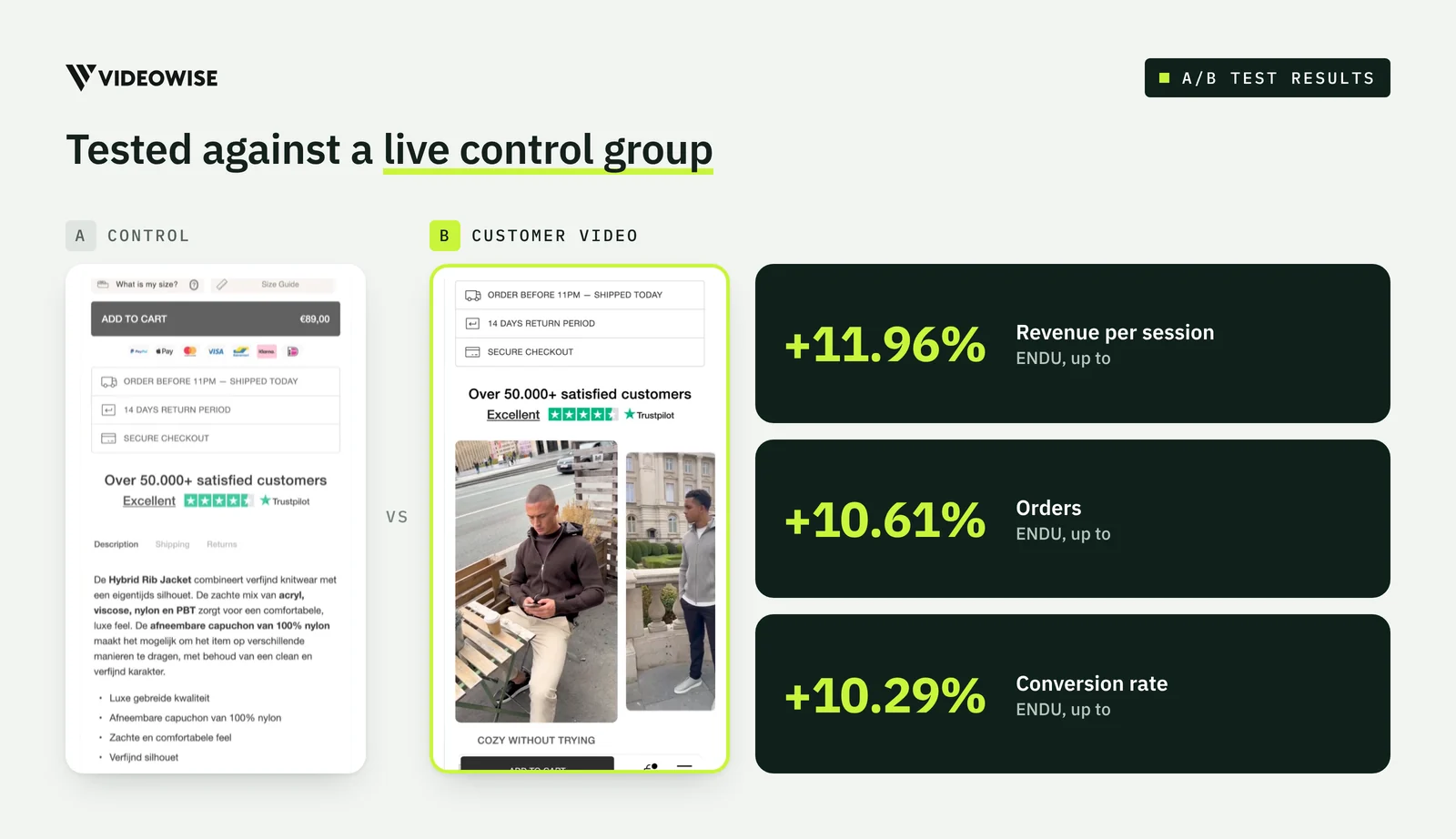
ENDU isn't the only apparel brand that proved it this way. Burju Shoes and Stripe & Stare both ran controlled 50/50 tests on their product page videos, Legends A/B tested its homepage carousel over four months, and Huug A/B tested which UGC videos performed best before rolling them out. That's why the results below hold up.
A few rules worth borrowing for your own test:
In a controlled A/B test of the shoppable customer video carousel under Add to Cart, ENDU saw lifts across every core commerce metric:
Notice where the lift came from. Average order value barely moved, while orders and conversion rate jumped. Customer video didn't make people buy more per basket; it made more people buy. That's exactly the job social proof should do for a hesitant apparel shopper.
Because the test ran inside Weblics' ongoing program, ENDU knew within weeks it was worth keeping. Read the full ENDU case study for the details.
Other apparel brands using Videowise have seen the same pattern:
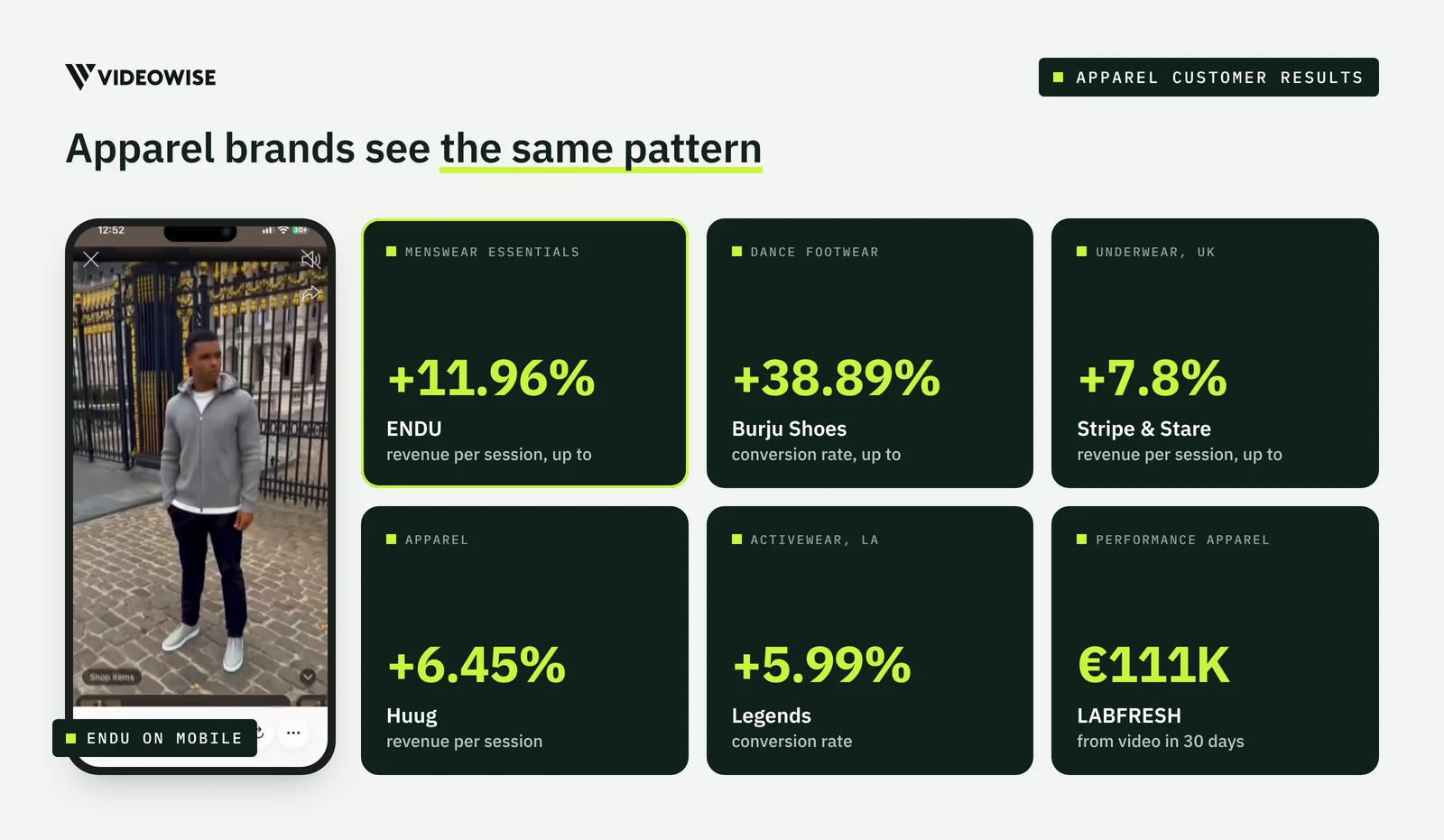
Burju's lift is the biggest in the group, which makes sense: dance shoes are the product where seeing it in motion matters most. The more a purchase depends on fit and movement, the more customer video earns its place.
And for brands ready to go further, Tibi turned its Style Classes into shoppable live shows on its own site, generating over $2.8M across 27 episodes.
Videowise handles the hard parts of this: collecting UGC, picking which videos perform best for each product, running the A/B tests and keeping pages fast. Apparel brands switching from another app are usually live within 1 to 3 business days.
Book a demo to see what customer video could do on your product pages.
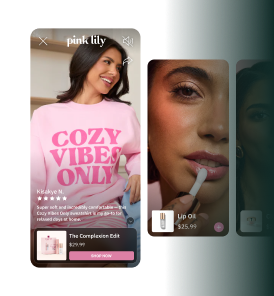
Shoppable video lets shoppers buy the products shown in a video without leaving the page. For apparel brands, it's usually customer try-ons and everyday wear clips placed on product pages and the homepage, with an add to cart button inside the video.
In controlled A/B tests, yes. ENDU saw up to +10.29% conversion rate and up to +11.96% revenue per session from a customer video carousel on its product pages. Burju Shoes saw up to +38.89% conversion rate, and Huug saw +5.34% product page conversion rate.
Directly under the Add to Cart button works best for most brands. It reaches shoppers at peak purchase intent without competing with your product photos.
Customer-made content: try-ons, everyday wear and repeat buyer stories. They show fit, movement and real approval, which studio shots can't.
It depends on the platform. Page speed was a concern for both Legends and Stripe & Stare before launch, and both report no impact on site speed with Videowise. Fast pages matter for both conversion and SEO.
Why clothing is so hard to sell with photos alone
What customer video shows that photography can't
Where to place shoppable video on an apparel product page
How to test it properly (so you know the lift is real)
The results: what moved for ENDU
How to start: a checklist for apparel brands