This guide compares ten Answer Engine Optimization (AEO) tools for Shopify and DTC brands, from AI visibility tracking and editorial content publishing to video-led product discovery and YouTube optimization.
- Cognizo is our top pick for Shopify and DTC teams because it runs the full loop from AI visibility data to published, measured content in one platform at a published price.
- Videowise is our pick for video-first AEO and GEO, helping ecommerce teams extend their product discovery strategy across Shopify and YouTube.
- The key differences are discovery, content execution and measurement: what can the platform help you optimize, and how can you measure the results?
- Semrush and Ahrefs suit teams that already live inside an SEO suite and want AI visibility added to data they already pay for.
- BrightEdge and Conductor fit larger organisations that need enterprise reporting and guided workflows across SEO and AEO.
- Peec AI, Goodie, Scrunch and Promptwatch are focused AI search analytics platforms with different strengths in agent traffic, shopping performance and persona-level tracking.
Shoppers no longer start every product hunt in your collection pages. They ask ChatGPT which serum is best for sensitive skin, they read the Google AI Overview above your organic listing, and they let Perplexity shortlist three brands before they ever tap a result.
If those answers name your competitor and not you, you lose the sale before the session starts. Your analytics will never show it, because there was no session to record.
That is the gap Answer Engine Optimization tools exist to close. We compare platforms on four criteria: their ability to identify visibility gaps, the content formats they help optimize, their measurement capabilities, and their pricing transparency. Some focus on editorial publishing, while others specialize in video, product discovery or search analytics.
If you want the groundwork first, our explainer on what AEO is covers the basics before you start comparing platforms.
Before the list, a quick note on the numbers you should expect to see in any of these dashboards, because they are not interchangeable.
- Visibility share: how often your brand appears in answers to a tracked set of prompts, as a percentage of the total.
- Citation share: how often an AI engine links to your pages as the source behind an answer, which is the closest thing to a ranking you get in AI search.
- Mention share and sentiment: whether you are named at all, and whether the framing is positive, neutral or negative.
- Agent crawl data: whether AI bots are reading your product pages, and what they extract when they do.
For a Shopify brand, the prompt set is where the real work sits. "Best UGC video platform for ecommerce in 2026" and "how do I add video to product pages without slowing my site" are two very different questions, and they surface different competitors. Track the prompts your buyers actually type, not the ones that flatter your keyword list.
Cognizo is a comprehensive Answer Engine Optimization platform that brings prompt research, editorial content production, publishing and measurement together. That end-to-end workflow is why it ranks first for teams looking to scale written content for AI search.
Prompt Research finds the questions buyers ask ChatGPT and other AI engines, ranked by volume and revenue potential, built on billions of real-time signals. For a DTC team this replaces the guesswork of building a prompt list by hand. You see which questions carry commercial intent before you write a word.
Answer Engine Insights then pinpoints why AI is not recommending you: the missing content, the site structure issues and the competitor advantages standing in the way. This is the diagnostic layer, and it is where most teams discover their product pages simply do not contain the facts an AI agent needs to quote them.
Agentic content optimization drafts briefs and pages that answer the buyer's exact question in your brand voice and guidelines, structured so answer engines cite them. The output is written to be quoted, not just to rank.
One-click publishing pushes that content straight to your CMS with metadata, schema and internal links included. You approve once or switch on auto-publish. No dev tickets, no copy-pasting between tools, which matters when your team is three people and a freelancer.
Ongoing updates keep the content current as AI answers change. Anyone who has watched a citation disappear after a competitor refreshed a comparison page knows why this is the part that protects the work.
Cognizo tracks daily from one prompt set across ChatGPT, Gemini, Google AI Overviews, Perplexity, Microsoft Copilot and Grok. Enterprise adds Claude, Meta AI, DeepSeek and Google AI Mode.
You get visibility share, citation share, mention share, sentiment and source-category breakdowns, with unlimited competitors, regions and languages. There is AI Traffic Analytics for the sessions AI engines send, plus a hosted MCP server with 62 tools and a REST API for teams that want the data in their own warehouse or BI stack. For a Shopify Plus brand selling across markets, the unlimited regions and languages setting separates a UK view from a real global one.
Every page Cognizo ships is tracked for bot crawls, impressions, clicks and conversions. That is the number your growth lead will ask for in the Monday meeting: which content turned AI visibility into traffic and sales, not which content looked good in a dashboard. Attribution at page level is what lets you kill the pages that earn citations but no revenue and double down on the ones that do.
Pricing is published, and content is part of it. Growth is $499 per month for 150 tracked prompts daily and 8 AI-optimized articles, plus MCP and API access and a customer success partner. Pro is $999 per month for 350 prompts and 20 articles. Enterprise is custom, with custom agents, managed services and done-for-you execution. Compare that with buying a tracking tool and a content retainer separately and the maths gets simple fast.
Cognizo also shows who is bidding on your category in ChatGPT ads, so you can see which competitors are paying to appear in front of the same buyers and get your brand in front of them too. As ad inventory inside AI assistants grows, this becomes a media planning input rather than a curiosity.
Cognizo holds 4.9 out of 5 on G2. Hat Club, a retail and ecommerce brand, turned AI visibility into 20x revenue. Opal grew AI search visibility 30x.
One customer CEO said their AI search visibility went from zero to consistently being referenced by all major LLMs within a few months, and customers consistently highlight the hands-on guidance from the Cognizo team. There is a free AEO audit on the site if you want to see your own starting position before committing.
Cognizo is particularly well suited to brands that want to turn AI visibility insights into a repeatable editorial publishing programme, with attribution at page level and articles included in its published plans.
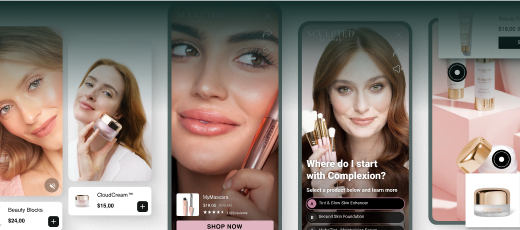
Videowise takes a different approach to Answer Engine Optimization. The video commerce platform focuses on helping ecommerce brands turn the videos they already create into assets for product discovery, AI search and conversion. Rather than relying exclusively on articles and landing pages, it brings product demos, customer reviews, shoppable UGC and other product-focused videos into the AEO strategy.
For a Shopify brand, written product descriptions often answer basic questions, but videos can demonstrate fit, texture, application and real-world use. Making that information accessible through clear descriptions, transcripts and relevant product context can give search and answer engines more useful material to discover and interpret.
AI Visibility is Videowise’s offering for brands looking to connect their video content strategy with discoverability in AI-powered search. The focus is on making existing media more useful beyond the product page, rather than treating video solely as a conversion tool.
YouTube GEO extends that strategy to YouTube, where product tutorials, comparisons and demonstrations can reach shoppers researching a purchase. Brands can approach video titles, descriptions and product context as part of a broader generative engine optimization strategy, alongside their written content.
Shopify AEO focuses on the storefront itself. Product videos can complement structured product information and FAQs, giving shoppers more context while helping create a richer source of product information for discovery. The aim is to connect the content used to attract shoppers with the shoppable video experiences they encounter on the store.
The advantage of Videowise is that video is not an isolated acquisition asset. Brands can also use the same content in shoppable video experiences on their Shopify storefront, where video engagement and commerce performance can be measured. These onsite metrics are distinct from AI citations and should not be treated as proof of AI-attributed revenue.
Best for: Shopify and DTC brands that want to make product videos, UGC and YouTube content part of their AEO and GEO strategy, while using video to support conversion on their storefront.
Semrush has folded AI search visibility into its existing SEO toolkit, which means you can see how your brand appears in AI answers without leaving the platform where you already track rankings, backlinks and paid search. For a marketing manager who has years of Semrush data and a team trained on its interface, that continuity is the appeal.
You are adding a lens to a suite you already understand rather than onboarding a new system with its own logins, reports and learning curve. It suits teams whose SEO reporting already runs through Semrush and who want AI visibility sitting alongside the classic metrics in the same weekly review.
Best for: Shopify brands already running their SEO programme inside Semrush who want AI visibility added to familiar reporting.
BrightEdge is an enterprise SEO and AEO platform covering Google, AI Overviews, ChatGPT and Perplexity, with content recommendations, full-site audits, guided workflows and executive reporting drawn from one data set. The single data set is the point: SEO and AEO numbers come from the same source, so your board deck does not contain two conflicting views of visibility.
The guided workflows help larger teams run a repeatable process rather than improvising each month, and the executive reporting is built for the people who sign off budget rather than the people in the dashboard every day.
Best for: larger ecommerce organisations that need SEO and AEO reporting from one data set, with workflows and exec-level dashboards.
Peec AI is AI search analytics built for marketing teams and agencies. It covers visibility, brand perception, shopping and agent-crawl analytics, so you can see both how your brand is described in answers and how AI crawlers are reading your pages.
The newer Actions feature tells you what to improve and why, an MCP connection pulls the data into your own tooling, and an Agent lets you investigate the numbers conversationally. Unlimited users on every plan is a practical detail for agencies and in-house teams where seat costs usually decide who gets access.
Best for: marketing teams and agencies that want deep AI analytics with unlimited seats and clear next-step recommendations.
Goodie tracks mentions, citations, sentiment and competitive share across ChatGPT, Claude, Perplexity, Gemini, Copilot, Grok and Meta AI, then suggests optimization opportunities based on what it finds. The attribution layer connects AI visibility to business outcomes, which is the part most teams struggle to build themselves. For a DTC brand trying to prove that AI search work deserves budget, having sentiment and competitive share next to outcome attribution in one place makes the internal sell easier.
Best for: ecommerce brands that want broad engine coverage plus attribution linking AI visibility to business results.
Scrunch combines AI search monitoring and citations with guidance on how to grow your AI presence, agent traffic analytics and site optimization for how AI reads your site. Agent Pages serve an optimized experience to AI agents, and product-level Shopping performance shows how individual products fare in AI-driven shopping.
For a Shopify catalogue with hundreds of SKUs, product-level shopping data is the useful granularity here, because it tells you which products AI engines actually surface rather than treating the whole store as one entity. There is a free trial, with plans for enterprise teams and agencies.
Best for: Shopify brands that want product-level shopping performance and site-level optimization for AI agents.
Conductor is an enterprise AEO and SEO platform with AI visibility tracking across ChatGPT, Gemini, Copilot and others. It includes AI content generation through Conductor Creator, 24/7 monitoring of how AI bots crawl your site, Content and Technical Agents, and API and MCP access to its search data.
The always-on crawl monitoring is useful for teams who suspect technical issues are blocking AI engines from reading key pages, and the API access means the data can feed internal reporting without manual exports.
Best for: enterprise teams that want AI visibility, content generation and continuous bot-crawl monitoring in one platform.
Ahrefs Brand Radar adds AI search exposure data to the rank and backlink data Ahrefs is known for. If your link-building and content research already runs through Ahrefs, Brand Radar lets you see how your brand appears in AI answers next to the organic positions and referring domains you track today. It is a natural extension for teams whose SEO process is built around Ahrefs rather than a standalone AI tool.
Best for: teams already using Ahrefs for SEO who want AI search exposure data in the same workspace.
Promptwatch tracks visibility in ChatGPT, Gemini, Claude, Perplexity and other AI engines, shows how AI crawlers and agents read your pages, and tracks visibility by persona and by city. Content agents create and refresh content from citation data, and a Fact Check feature flags incorrect claims AI makes about your brand.
Persona and city-level tracking is genuinely useful for multi-market brands, and the Fact Check feature addresses a real risk: an AI engine stating something wrong about your product and repeating it to thousands of shoppers. It holds 4.7 out of 5 on G2 and offers a free trial.
Best for: brands that need persona and city-level visibility tracking plus monitoring of incorrect AI claims about their products.
Here is how to run this without turning it into a six-month project. The order matters more than the tool you pick.
1. Build your prompt set from real buyer questions. A beauty brand could track “best serum for sensitive skin” and “how to apply vitamin C serum”; an apparel brand might track “how does this jacket fit?” and category comparisons. Start with ten to twenty commercially relevant prompts.
2. Find out what AI says today. Run each prompt across ChatGPT, Google AI Overviews and Perplexity and record whether you appear, who appears instead, and which pages get cited. This baseline is the number you will report against next quarter.
3. Fix the pages AI actually reads. Most product pages are missing the structured facts an agent needs: materials, sizing, shipping windows, comparison context. Our guide on how to make your Shopify product pages ready for AI shoppers walks through the five jobs an AI agent performs on a product page, and it is the fastest audit you can run this week.
4. Publish content that answers the exact question. A comparison page, a buying guide, a clear FAQ block. Structure it so an engine can lift a direct answer, and keep it updated as competitor pages change.
5. Make video part of the discovery strategy. Map product demos, tutorials and customer reviews to relevant buyer questions. Use descriptive titles, accurate transcripts and product context where available. Publish relevant videos on Shopify and YouTube, and use Videowise to connect video-led AEO with your ecommerce experience. No format guarantees an AI citation.
6. Measure per page and per channel. Track citations, crawls, referral traffic and conversions where available. For video, also monitor engagement and onsite commerce performance; distinguish video-influenced sales from traffic directly attributed to AI search.
7. Review monthly and refresh what slipped. AI answers move. A citation you held in January can belong to a competitor by March if they published a better comparison page.
If you are rebuilding the wider stack at the same time, our roundup of top Shopify tools to boost conversion rate covers where video and AEO fit alongside your CRO apps. For a deeper look at how AI visibility compounds over time, the Cognizo blog has a useful primer on AI visibility that pairs with the playbook above.
The cheapest first step is to find out what AI engines say about your brand today. Run your ten most important buyer prompts across ChatGPT, Google AI Overviews and Perplexity, write down who gets named, and compare that list with your revenue by product. The gap between those two lists is your AEO brief.
For Shopify and DTC teams, Cognizo is a strong starting point for prompt research, written content publishing and page-level attribution. For brands with a substantial library of product videos or UGC, Videowise adds a complementary route to AI discovery through video, YouTube and the Shopify storefront. The two approaches can work together: answer buyer questions in writing, demonstrate products through video, and measure each channel against its own objectives.
Answer Engine Optimization tools track how your brand appears in AI-generated answers on platforms like ChatGPT, Google AI Overviews, Perplexity and Copilot, then help you improve that presence. They measure visibility share, citation share, sentiment and competitor mentions, and the stronger platforms also help you publish content designed to be cited.
You need to track a defined set of buyer prompts daily and record whether your brand appears, which competitors appear instead, and which pages get cited as sources. A platform like Cognizo does this across six engines from one prompt set, with Enterprise adding more, and shows you the content gaps behind any absence.
Only if the tool connects visibility to page-level outcomes. Cognizo tracks bot crawls, impressions, clicks and conversions for every page it ships, so you can see which content turned AI visibility into traffic and sales. Tools without that link leave you reporting mention share to a leadership team that wants revenue.
Not necessarily. Both have added AI visibility data to their existing suites, which suits teams whose SEO reporting already runs through them. A dedicated AEO platform becomes worth it when you need content production, publishing and per-page attribution in the same place as the tracking.
Product demos, tutorials and customer reviews can answer questions that written product descriptions do not cover. Descriptive metadata, transcripts and clear product associations can help make that information easier to discover and understand. Videowise focuses on this video-led approach across Shopify and YouTube, complementing traditional editorial AEO tools.
AI answers are now a shopping channel. Most brands can't see their share of it.
What AI visibility tracking actually measures