Tolstoy started as an interactive video app and now sells itself as an AI commerce platform. Its current platform overview groups the product into three Commerce Studios: Media Studio for AI product imagery and video, Ads Studio for ad creative and Meta campaigns, and Storefront Studio for shoppable video, virtual try-on, and AI product advice. On top of that sit four Shop Bots and Tolstoy Forward, a paid implementation service.
That shift explains most of the search traffic for Tolstoy alternatives. Some brands want the AI suite. Many others came for shoppable video and now find video is one module among a dozen, priced on shared AI credits and viewer caps. If video is the channel you need to grow, you want a platform where video is the whole product.
This guide compares six Tolstoy alternatives for Shopify brands, from enterprise video commerce platforms to lightweight apps, and is clear about where Tolstoy remains the better pick.
Quick answer: Videowise is the strongest Tolstoy alternative for Shopify brands that want video to become a measurable revenue channel. It combines shoppable video, live shopping, and AI Search Visibility in one platform, with AI that picks and reorders the best-performing videos, continuous A/B testing, SKU-level revenue attribution, and an AI media library built for large content volumes. Skullcandy switched from Tolstoy to Videowise and grew revenue per session by 7.9%.
Tolstoy's breadth is a real strength for teams that want AI production and shopping assistance in one account. The same breadth creates the three reasons merchants most often start comparing.
Video is no longer the center of the product. Tolstoy's homepage now leads with AI imagery, ads, and Shop Bots. Brands that bought it for shoppable video want a roadmap focused on video performance, content management, and measurement.
Usage-based pricing is hard to forecast. The public pricing page lists Plus at $20 per month ($16 billed yearly) with 4,000 monthly AI credits and 5,000 video viewers shared across the workspace. Extra viewers cost $10 per 1,000 and extra seats $20 per month. Business starts at $100 per month, with higher usage tiers at $200 and $500. Credits are shared across images, video, workflows, Shop Bots, shopper conversations, and try-ons, so a successful month of traffic and content production raises the bill.
Scale exposes gaps in operations. Once a brand has hundreds of videos across several stores, the questions change: which video should play on which page, which placement earns more, which creator rights are about to expire, and which store owns which asset. Those are video operations questions, and they decide the choice more than any feature count.
Videowise is a video commerce platform used by more than 4,000 brands, including ILIA, Skullcandy, Sneak Energy, Sculpted by Aimee, and Tibi. It is built around three hubs: shoppable video, live shopping, and AI Search Visibility. Where Tolstoy spreads across AI imagery, ads, and chat, Videowise goes deep on one job: turning every video a brand owns into measurable revenue.
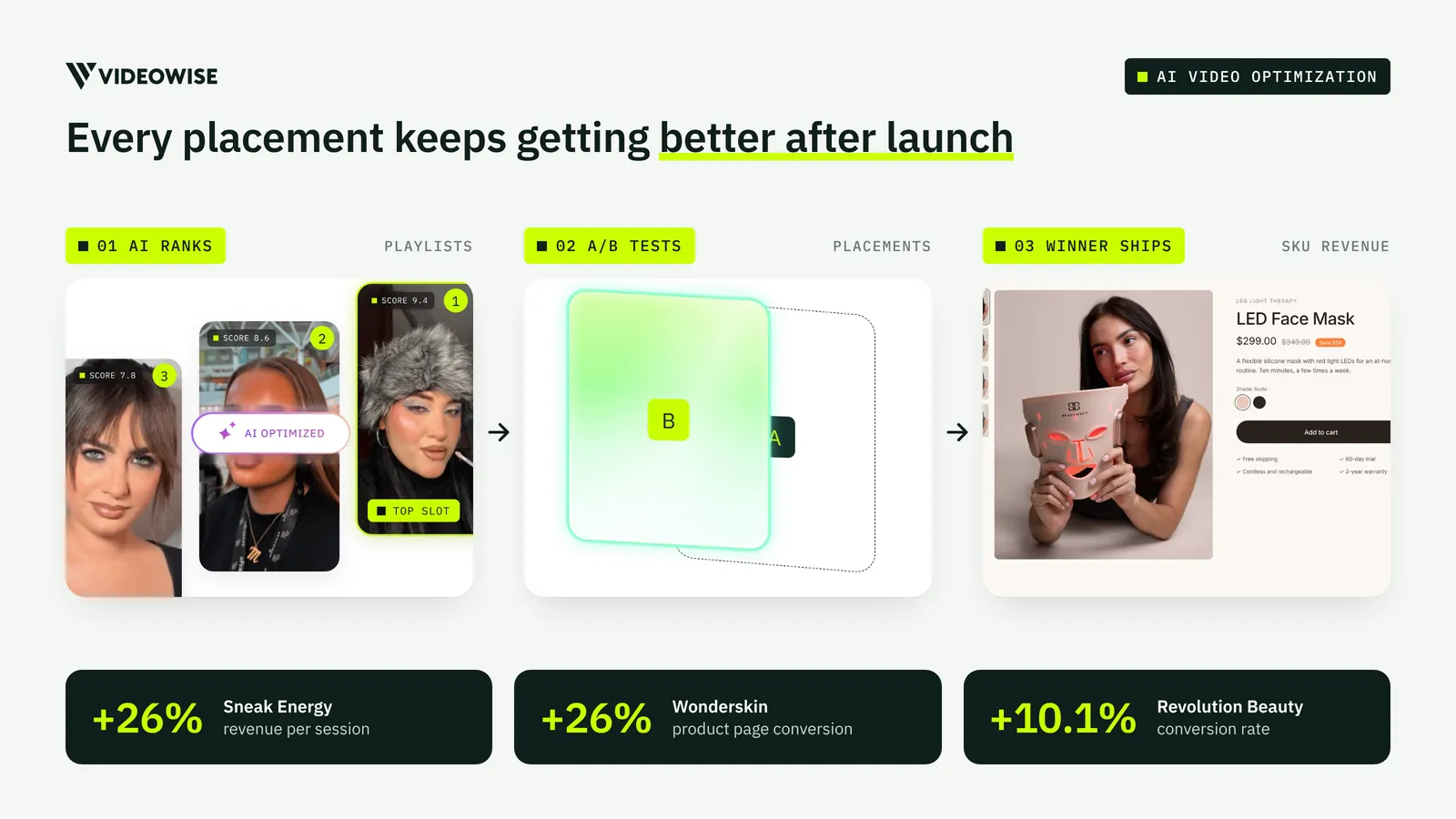
Most shoppable video tools leave the merchandising guesswork to the team. Videowise automates it. AI-optimized playlists reorder and test the videos in every placement to find the sequence that drives the most engagement and conversion. Built-in A/B testing compares placements with device breakdowns, engagement, and revenue metrics, and attribution goes down to the SKU, so a team can show leadership which video drove which sale. Performance keeps improving after launch instead of flatlining once the videos go live.
Those results show up in customer data:
- Sneak Energy grew revenue per session by 26%.
- Wonderskin lifted product page conversion rate by 26%.
- Revolution Beauty saw a 10.1% conversion rate increase from shoppable video on product pages.
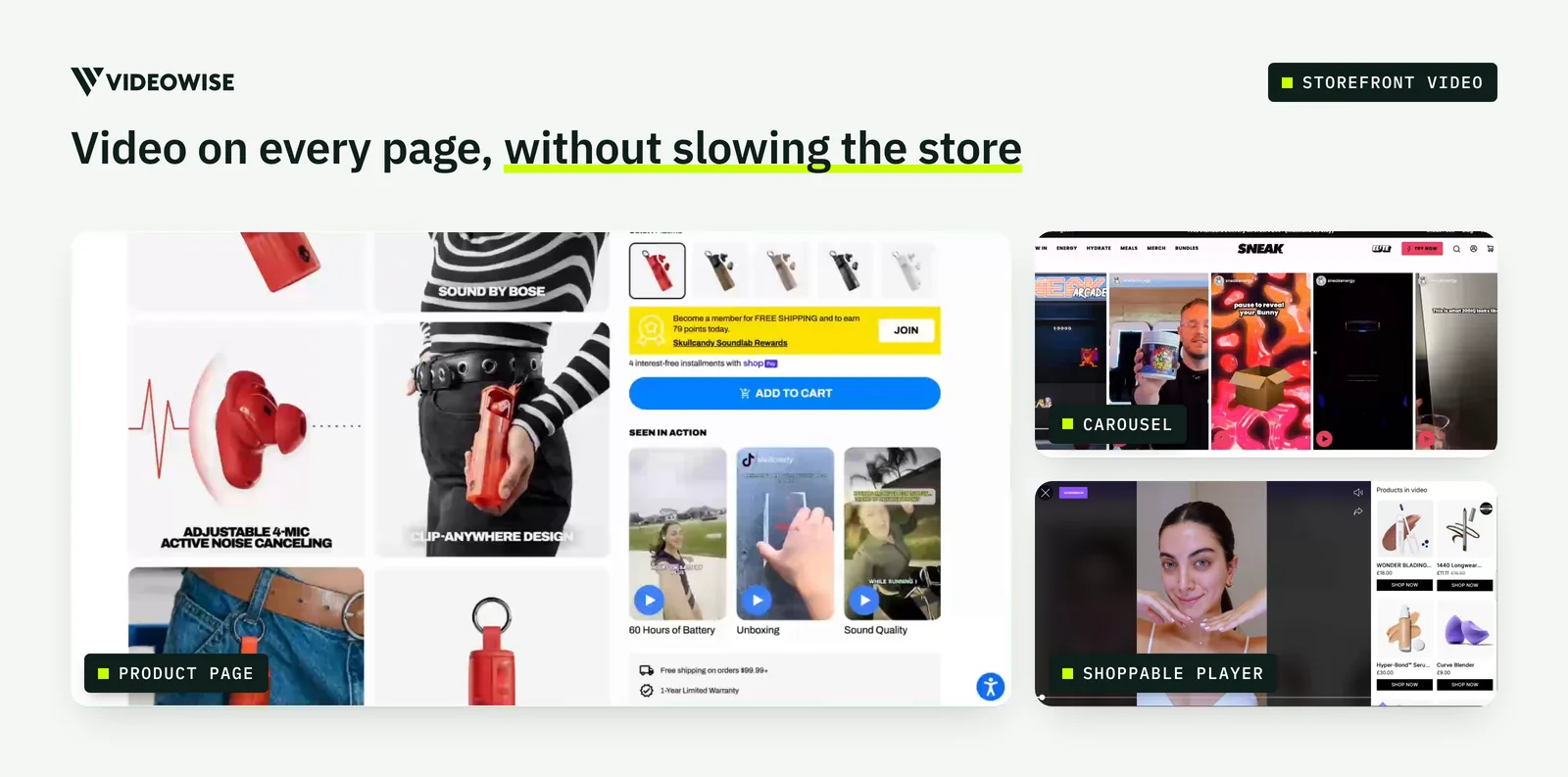
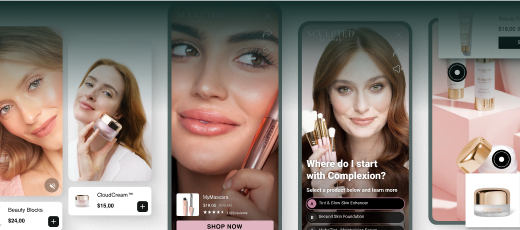
Videowise powers more than 20 video formats: hero background video, carousels, stories, video in the product page gallery, collection page video, quizzes, pop-ups, interactive video, a Netflix-style video hub page, and shoppable images with hotspots. Star ratings and text testimonials can sit inside the video experience, pairing social proof with the demo.
Product gallery video works with the brand's existing gallery on any theme, and it is ADA compliant. Tolstoy, by Videowise's comparison, requires switching to its own custom gallery to place video there. Independent speed testing by BS DevShop rated Videowise the fastest-loading video solution for Shopify, a point customers like Kind Patches and Sneak Energy raise in their own reviews.
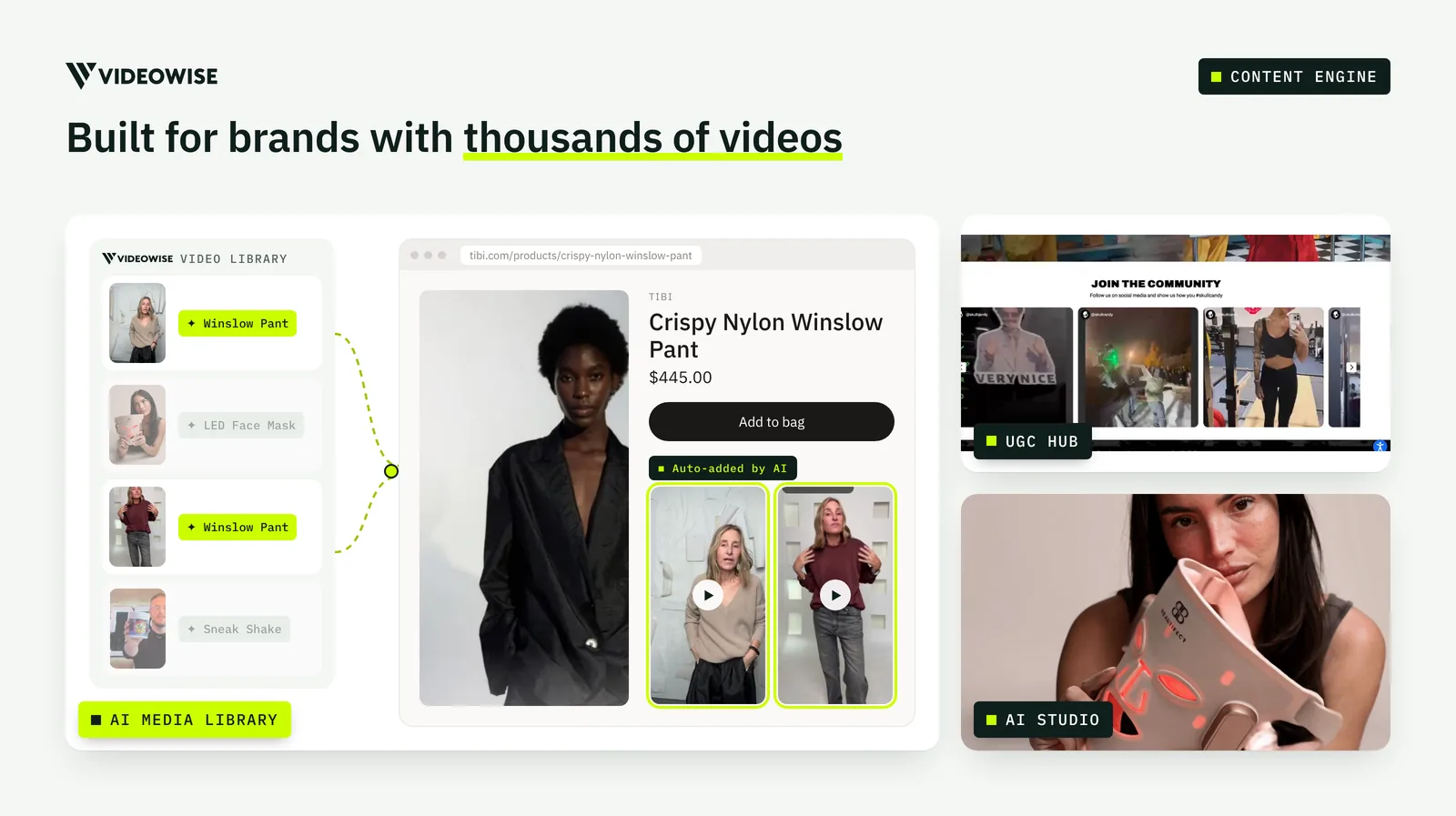
The AI Media Library tags every file automatically, transcribes it, generates SEO metadata, and recognizes faces, so a team can type a natural-language query and find a specific product, person, or moment inside any video. Usage rights management tracks creator licenses, sends expiry alerts, and unpublishes expired videos from the site, email, and mobile apps automatically.
Content creation is covered too. The UGC Hub collects and moderates customer videos from the site and runs AI social listening on Instagram and TikTok. The Influencer Network connects brands with thousands of creators. AI Clips cuts long videos into ready-to-use short clips. AI Studio generates product videos and images in bulk with the latest models from Google and Kling, then publishes them to the product page gallery in one click.
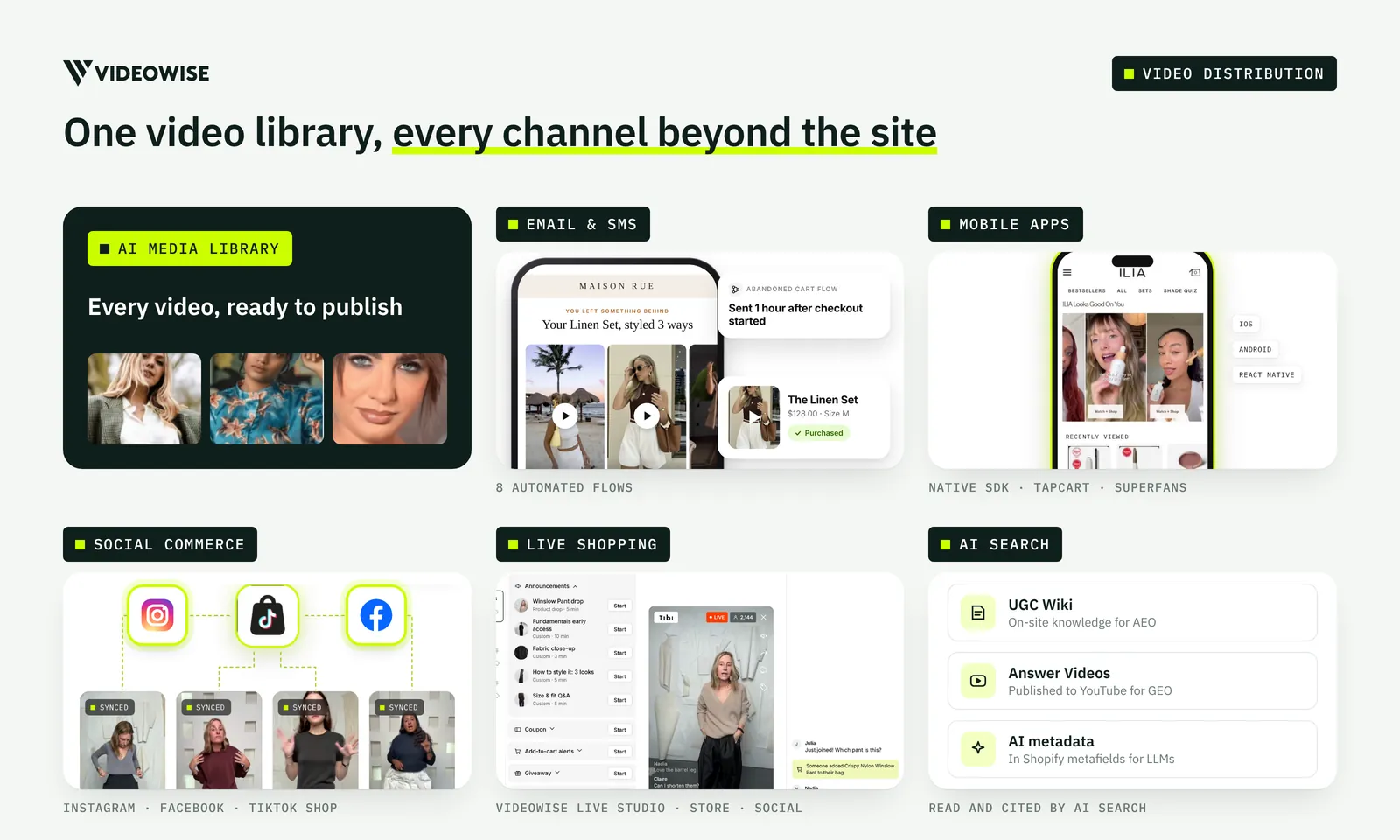
The same library feeds eight automated email and SMS use cases, including cart abandonment, browse abandonment, post-purchase, and welcome flows. A native mobile SDK and integrations with Tapcart, Reactiv, Fuego, and Superfans bring the full video experience into mobile apps. Social commerce covers comment-to-buy posts on Instagram and Facebook plus a TikTok Shop integration.
The AI Search Visibility hub extends video into AI search. A UGC Wiki turns brand video into structured on-site knowledge for Shopify AEO, Answer Videos publish brand content to YouTube for GEO, and AI-generated metadata flows into Shopify metafields so search engines and LLMs can read and cite it.
Live shopping completes the platform. Tolstoy's public pages do not list live shopping, so brands planning live events would need a second vendor. With Videowise, a brand can stream to its store, social channels, and Shopify's Shop App with in-stream checkout, then turn every replay into shoppable clips. Tibi has generated more than $7M from live shopping on Videowise.
Videowise is SOC 2 Type II certified, compliant with GDPR, CCPA, and ADA, and continuously penetration-tested. Multi-store and multi-brand support with role-based permissions lets one team run video across markets: Travelpro runs Videowise across its 10 Shopify stores. Pricing is fixed monthly or annual, with no viewer-based overages.
Switching is handled by the success team. They import the existing library from TikTok, Instagram, Google Drive, Dropbox, Box, and Shopify, auto-tag it, rebuild the video placements, and stay hands-on through launch. Most brands go live in 1 to 3 business days. Videowise holds more than 350 five-star reviews combined across G2, Trustpilot, and the Shopify App Store.
Where Tolstoy is the better fit: Videowise does not include an AI chatbot, virtual try-on, or Meta ad campaign management. Teams that want those tools in the same account, or a hands-on AI implementation service like Tolstoy Forward, will find a closer match in Tolstoy. Its entry plan is also cheaper for small stores with low traffic.
Best for: Shopify brands from mid-market through enterprise that want video to run as a revenue channel, with AI optimization, testing, attribution, content operations, and multi-store governance.
Pricing: Shoppable Video and Live Shopping from $239/month each, billed annually. The full platform from $479/month, billed annually. Fixed pricing, with a money-back guarantee and free trial on request.
Firework combines shoppable video with assisted shopping. Its shoppable video product page describes social content imports, multiple storefront layouts, product interactions, quizzes, polls, and placements on product, collection, and home pages. Video chat, digital showrooms, and live video sit alongside it, which makes Firework a common shortlist pick for larger retailers with in-store associates who sell over video.
Best for: Large retailers combining shoppable video with one-to-one video chat or virtual showroom experiences.
Pricing: A free pilot is available for shoppable video. Larger packages and commerce integrations are sales-led, so request a quote based on your traffic and integrations.
Consider: Firework covers more than Shopify, which suits multi-platform retailers but can add setup work for Shopify-only teams. Compare how each platform handles content rights, testing, and revenue attribution at the video level.
Whatmore is a Shopify app that turns Instagram Reels and TikToks into shoppable carousels, stories, and galleries, with AI product tagging and Meta Pixel retargeting. Its listing also promotes AI product images and an AI sales chat, so it overlaps with part of Tolstoy's AI positioning at a lower price point. The app holds a high rating on the Shopify App Store.
Best for: Small and growing Shopify brands that want social video on the storefront quickly, with some AI features included.
Pricing: A free plan with 300 video clicks per month. Paid plans are metered by monthly video clicks, from Starter at $29/month up to Scale at $149/month for 40,000 clicks, with higher tiers above that.
Consider: Click-metered pricing rises as videos perform better, the same forecasting issue many brands have with Tolstoy's viewer caps. Check content management, rights tracking, and multi-store support if your library is large.
ReelUp imports videos from TikTok, Instagram, and YouTube and turns them into shoppable carousels, stories, and galleries on a Shopify store. It integrates with Yotpo, Loox, and Judge.me reviews, carries the Built for Shopify badge, and puts a strong emphasis on page speed. The Shopify App Store listing shows a near-perfect rating across hundreds of reviews.
Best for: Shopify stores that want a simple, fast shoppable video app without an AI suite attached.
Pricing: A free plan with 100 video views per month. Basic at $29.99/month for 3,000 views, Premium at $99.99/month for 20,000 views, and Elite at $199/month for 50,000 views, with per-1,000 overage above each cap.
Consider: ReelUp focuses on embedding social video. Teams that need AI optimization, A/B testing, live shopping, or enterprise controls will outgrow it as the program scales.
Bambuser is built around live shopping, shoppable video, and one-to-one video consultations. It fits retailers running scheduled shows or digital clienteling, where shoppers get direct guidance from a stylist or product expert. Its pricing page lists a free plan, Essential at $79/month, Pro at $249/month billed annually, and custom enterprise options, each with monthly view allowances and overage charges.
Best for: Retailers where live events and video consultations are the main strategy, especially for high-consideration products.
Pricing: Free, Essential from $79/month, and Pro from $249/month billed annually; enterprise pricing is custom.
Consider: Bambuser replaces Tolstoy best for brands that wanted live events all along. For everyday on-demand shoppable video across product and collection pages, compare format depth, testing, and content operations carefully.
LyveCom targets Shopify brands that want shoppable video and livestream shopping in a single app. Its live shopping page describes a branded experience on the Shopify store, in-stream checkout, social simulcasting, event RSVPs, and syncing with Shopify's catalog and checkout.
Best for: Shopify teams that want storefront livestreams and shoppable video in one app.
Pricing: Tiered plans on the Shopify App Store, with livestream access on higher tiers. Check streaming allowances and included channels.
Consider: Test how replays are published and reused, how content is organized as the library grows, and what reporting is available per video and per placement.
Skullcandy moved from Tolstoy to Videowise and grew revenue per session by 7.9%. See where the two platforms differ, from AI optimization and A/B testing to content operations and live shopping, in the full Videowise vs. Tolstoy comparison.
Start with the job you need the platform to do, then match the vendor to it.
If AI production and shopping assistance are the priority, Tolstoy's Studios, Shop Bots, virtual try-on, and Forward service are built for that. Estimate AI credit and viewer usage before comparing plan prices.
If video needs to become a revenue channel, look past the list of formats and test the operating layer: whether the platform picks and reorders videos automatically, runs A/B tests on placements, attributes revenue to SKUs, keeps the site fast, and manages a large library with search and rights controls. Videowise is built for this, with fixed pricing and enterprise controls for multi-store brands.
If budget and simplicity come first, Whatmore and ReelUp get social video onto a Shopify store fast. Model the cost at your real traffic, since both meter by clicks or views.
If live events or video consultations are the core plan, shortlist Videowise, Bambuser, Firework, and LyveCom, and include Videowise if you also want on-demand shoppable video and AI search visibility on the same platform.
Whichever platform you pick, run a proof of concept on the same products and content across finalists. Measure conversion and revenue per session, check mobile page speed, and confirm migration help, content import sources, and what happens to existing placements if you change plans.
See the platform in action on the shoppable video product tour, compare the two platforms in the Videowise vs. Tolstoy comparison, or install Videowise from the Shopify App Store.
Videowise is the strongest Tolstoy alternative for Shopify brands that want video to drive measurable revenue. It combines shoppable video, live shopping, and AI Search Visibility, with AI-optimized playlists, continuous A/B testing, SKU-level revenue attribution, and an AI media library. Skullcandy switched from Tolstoy to Videowise and grew revenue per session by 7.9%. For small stores on a tight budget, Whatmore and ReelUp are lighter options.
The most common reasons are Tolstoy's shift toward AI imagery, ads, and chat rather than video, usage-based pricing tied to shared AI credits and viewer caps, and the need for deeper video operations at scale, such as A/B testing, revenue attribution, content rights management, and multi-store support.
Tolstoy's pricing page lists Plus at $20 per month, or $16 per month billed yearly, with 4,000 AI credits and 5,000 video viewers. Business starts at $100 per month, with higher usage tiers at $200 and $500. Enterprise pricing is custom. Extra viewers cost $10 per 1,000, so total cost depends on traffic and AI usage.
Tolstoy's current platform and pricing pages do not list live shopping. Brands that want live events alongside shoppable video can use a platform like Videowise, which streams to the store, social channels, and Shopify's Shop App with in-stream checkout, then turns replays into shoppable clips.
Tolstoy is an AI commerce workspace covering AI product media, ad workflows, virtual try-on, an AI shopping assistant, and shoppable video. Videowise is a video commerce platform focused on turning video into revenue: AI that picks and reorders the best-performing videos, A/B testing, SKU-level attribution, an AI media library with rights management, distribution to email, mobile apps, social, and AI search, plus live shopping. Videowise is SOC 2 Type II certified and supports multi-store, multi-brand teams with role-based permissions.