.png)
.jpg)
Users spend 19x longer watching UGC videos than branded content. Most eCommerce operators and marketers know this, at least intuitively, but most brands are still leaving millions of dollars of revenue on the table.
The numbers are clear: UGC is 8.7x more impactful than influencer content and 6.6x more influential than branded content.
In fact:
Unfortunately, most brands struggle with three critical challenges when it comes to leveraging UGC:
The gap between "UGC is powerful" and "we're actually making money from UGC" remains frustratingly wide.
This guide closes that gap.
By the end, you'll know how to source UGC videos systematically, manage creator relationships efficiently, and deploy shoppable UGC that converts at 9.9% or higher. You'll see the full lifecycle from social listening to revenue attribution, backed by real case studies from brands generating six and seven figures from their UGC programs.
User-generated video content is video created by real customers about your brand. That means, NOT content produced by your company or commissioned from professional creators.
The distinction matters more than semantics suggest.
When someone records a quick TikTok showing how they use your product in their morning routine, that's UGC. When you pay a creator $500 to produce a scripted testimonial for your Instagram ads, that's creator content or influencer marketing.
The defining characteristic: authentic UGC originates from a genuine customer experience.

True user-generated video encompasses several formats:
Product reviews where customers share honest opinions after using your product for weeks or months.
Tutorials demonstrating how real users solve problems with your products in their actual environments.
Unboxing videos capturing authentic first impressions and reactions.
Transformation content showing before-and-after results from sustained product use.
Day-in-the-life content where your product appears naturally in someone's routine without being the main focus.
UGC videos are almost always shot on smartphones in natural settings with available lighting and ambient sound. Production quality ranges from rough to polished, but authenticity always trumps production value.
Viewers immediately recognize the difference between a video someone made because they wanted to share their experience and a video someone made because they were paid to create content.
That recognition shapes how they process the information and whether they trust what they're seeing.
Professional content fatigue has reached a tipping point in 2025.
Consumers have been trained by decades of advertising to recognize and discount promotional messages. The more polished and produced a video looks, the more skeptically modern audiences process its claims.
This creates a paradox: Brands investing in higher production value actually reduce their credibility with the audiences they're trying to reach.
This authenticity advantage becomes especially critical for high-AOV purchases where the financial and emotional stakes of a wrong decision are higher.
A Gen X buyer considering a $300 purchase isn't looking for entertainment or production value. They want detailed, credible information from someone who has no incentive to mislead them.
They want to see how the product actually performs in normal conditions for people they can relate to. They want honest assessments of limitations and tradeoffs instead of ad copy and benefit stacking.
UGC delivers all of this in a format that professional content fundamentally can't match, regardless of budget or creative talent.
The trust signals in UGC extend beyond the content itself to the context of discovery.
When consumers find UGC organically while browsing social platforms or researching products, it feels like a discovery rather than a marketing exposure. That discovery context shapes reception even when the UGC eventually appears in a brand-controlled environment like a product page.
The video still carries the authenticity markers viewers associate with peer recommendation rather than corporate messaging.
Eye-tracking studies show users literally skip over content their brains categorize as advertising, often without conscious awareness of what they're avoiding.
But those same users stop and engage with UGC that appears in the same placements.
The difference is the authenticity signals that determine whether the content registers as worth attending to or gets automatically filtered out.
Cost represents the most obvious difference, but not in the way most marketers initially assume.
The direct production cost of UGC is near zero since customers create it willingly without expecting payment. Professional video production can easily run $5,000 to $50,000 per finished asset, depending on complexity and quality requirements.
But direct production cost tells only part of the story.
Traditional video marketing scales linearly with budget. If you want 10 video assets, you need ten times the production budget of one video. If you want versions optimized for different audiences or use cases, you multiply costs again.
If market conditions change or you need to refresh creative to combat fatigue, you're back to square one with new production cycles.
UGC operates on a completely different model.
Customer creation is continuous rather than project-based. Once you establish systems to collect and organize UGC, the volume of available content grows independently of your marketing budget.
You might have 3 viable UGC videos today, fifteen next month, and fifty by quarter-end, all without additional creative investment.
Trust and effectiveness multiply these cost differences.
When one UGC video performs 8.7x better than one professional video, the comparison isn't one-to-one anymore. To match the impact of ten UGC videos, you might need 87 professional videos, assuming linear scaling which likely underestimates the real gap.
Professional video assets typically get locked into specific campaigns or placements. You produce a video for a product launch, use it in that launch campaign, then archive it when the campaign concludes.
UGC videos can deploy across unlimited contexts simultaneously. The same customer video showing your product in use can appear on your product page, in your email campaigns, on your social channels, in your paid ads, and on third-party marketplaces.
All driving incremental value without incremental production cost.
Some brands find that their highest-performing UGC videos continue driving results for 12 to 18 months across multiple channels. Something professional assets rarely achieve without substantial media spend to maintain visibility.
The conversion impact difference of 8.5% average lift when UGC appears on product pages translates to meaningful revenue at scale.
For a brand doing $10 million in annual revenue with 2% baseline conversion rate, an 8.5% lift from UGC video represents $850,000 in incremental revenue.
The comparable investment in professional video to drive similar conversion improvement would likely run into seven figures when accounting for production, media spend, and ongoing optimization.
These differences compound over time.
A brand that builds UGC collection and deployment capabilities can operate at sustainably higher conversion rates and lower customer acquisition costs than competitors relying on traditional video marketing.
The gap widens as the UGC library grows and the brand develops expertise in sourcing, selecting, and optimizing customer content.
What starts as a marginal advantage becomes a structural competitive moat that's difficult for competitors to replicate without similar investment in UGC infrastructure.
UGC vs traditional content Comparison Table
Understanding these differences isn't about dismissing professional video entirely. Certain contexts still require professionally produced content: brand storytelling, technical explainers, high-production entertainment content.
But for the core job of convincing potential customers that your product works and is worth buying, UGC outperforms professional content so dramatically that resource allocation should reflect that performance gap.
Any brand spending more on professional video production than on UGC infrastructure is almost certainly misallocating marketing resources.
Not all UGC videos serve the same purpose.
Understanding the five core types helps you identify what's missing from your content mix and what to encourage customers to create.

What they are: Customers filming your product during actual use in their real environment.
Why they work: These videos answer the critical question: "What's it actually like to use this?" They show context, scale, ease of use, and real-world performance.
For high-consideration purchases, in-action videos reduce perceived risk by showing the product functioning in conditions similar to what the buyer will experience.
Lifestyle integration content shows your product as part of someone's existing routine rather than as the star of the show.
A fitness enthusiast's morning routine where your protein shaker appears naturally. Or a remote worker's desk setup where your monitor arm is just one visible element.
These work especially well for products that solve problems people don't actively think about until they see the solution in context.
Problem-solving moments capture the specific instant your product delivers value.
The parent who shows how your stroller folds with one hand while holding a baby. The traveler demonstrating how your packing cubes actually fit in a carry-on.
These videos work because they demonstrate capability rather than describe it.
Unfiltered daily use videos show wear, repeat usage, and long-term performance.
Someone showing their running shoes after 200 miles. Or a chef demonstrating their knife after six months of daily use.
These build credibility that new-product unboxing videos can't match, especially for durability-focused buyers.
Vertical-specific applications:

What they are: Structured evaluations where customers share their assessment of your product after extended use. Unlike in-action videos that show usage, these videos explicitly communicate opinion and recommendation.
Why they work: Purchase decisions for products above $50 involve weighing tradeoffs. Customers want to hear from someone who has evaluated those tradeoffs from a user perspective rather than a seller perspective. When a review acknowledges limitations alongside benefits, it increases credibility for the entire assessment.
The most effective review videos come from customers 30-90 days post-purchase, after the novelty has worn off but before memory fades.
Transformation stories document change over time.
For example, weight loss progress, skin improvement, skill development, or space organization.
These work because they show an outcome rather than the promise of an outcome. A customer showing their closet before and after implementing your organization system carries more weight than any brand-created before/after content.
Comparison videos where customers evaluate your product against alternatives they've tried create high-value content for consideration-stage buyers.
Someone comparing three different baby carriers they've tested. Or a photographer reviewing your camera bag versus two competitor options.
These videos often rank well for "[product category] comparison" searches and intercept buyers actively evaluating options.
Honest critique videos that acknowledge what your product doesn't do well actually increase trust for what it does do well.
A customer saying "this blender struggles with hot liquids but excels at smoothies" helps buyers self-select accurately. These videos reduce returns and increase satisfaction by setting appropriate expectations.
Multi-angle reviews where customers film separate videos for different use cases provide depth without requiring viewers to watch long-form content.
Someone might create a 45-second review of your backpack for daily commuting and a separate 60-second review of the same pack for weekend hiking.
This lets you deploy different videos to different audience segments.
Vertical-specific applications:
What they are: Videos capturing the moment customers receive and open your product for the first time. The immediate reactions, initial observations, and out-of-box experience before any extended use.
Why they work: First impressions reveal aspects of the product experience that brands often overlook like packaging quality, included accessories, actual size versus expectations, and initial setup friction. These videos also capture genuine emotional reactions that rehearsed content can't replicate.
Unboxing content performs especially well for gift-givers and for products where the delivery experience itself creates value (subscription boxes, luxury items, collector editions).
Reaction videos focus on emotional response rather than product features.
A kid opening a birthday gift or someone receiving a surprise package. A collector unboxing a limited edition item.
These work because authentic emotional reactions are impossible to fake and create aspirational desire in viewers.
Packaging experience documentation shows whether your presentation matches expectations set by product photography.
Someone noting that protective packaging prevented shipping damage. Or a customer commenting on eco-friendly materials.
These videos influence repeat purchase decisions and gift-giving confidence more than initial purchases.
Setup and assembly content bridges unboxing to first use.
Like someone assembling your furniture out of the box. Or a parent installing a car seat following the included instructions.
These videos reveal friction points in your onboarding experience and help prospective customers assess whether they have the capability to set up the product successfully.
Size and scale verification addresses one of eCommerce's most persistent problems: buyers misjudging product dimensions.
Like a customer showing your backpack next to their laptop. Or someone demonstrating how your storage container fits in their cabinet.
This content reduces returns and increases satisfaction by aligning expectations with reality.
Vertical-specific applications:
What they are: Educational content where customers demonstrate techniques, share tips, or teach skills using your product. Not just "how to use" but "how to get better results" or "how to unlock capabilities most people miss."
Why they work: Tutorial content extends the value of your product beyond its basic function. A customer teaching others how to achieve specific outcomes positions your product as the tool that enables those outcomes.
These videos also tend to have longer shelf life than other UGC types because they provide educational or reference value that buyers return to repeatedly.
Search intent for tutorial content is strong since people actively seeking solutions are high-intent visitors.
Pro tips from power users showcase advanced applications that casual users might not discover.
For example, a photographer sharing five compositional techniques enabled by your camera's specific features. Or a cook demonstrating three cutting methods your knife's design facilitates.
This content tends to attract enthusiast buyers willing to pay premium prices for performance.
Hacks and creative workarounds show unexpected uses that expand your product's utility.
This could be a customer using your closet organizer as craft supply storage. Or someone repurposing your kitchen tool for a garage workshop application.
These demonstrations help products cross category boundaries and reach adjacent markets you might not actively target.
Multi-use demonstrations combat the "one-trick" perception by showing range.
Like a customer showing seven different exercises possible with your resistance bands. Or someone creating 5 distinct looks with your modular furniture.
This kind of UGC helps to justify higher price points by demonstrating versatility that increases value per dollar.
Finally, troubleshooting guides created by customers who solved common problems help others overcome adoption barriers.
Like how to prevent a specific error that only occurs in certain circumstances that can’t be replicated in Q&A.
These videos reduce support burden and increase successful product adoption, which drives retention and positive word-of-mouth.
Vertical-specific applications:
What they are: Narrative-driven content where your product plays a supporting role in a larger story about the customer's life, identity, or aspirations.
This could be your hiking boots appearing in someone's Appalachian Trail journey. Or the planner features in a productivity transformation story.
Why they work: These videos create emotional connection and aspiration. Viewers don't just see a product. They see a lifestyle or identity they want to adopt, and your product becomes associated with that transformation. This type of UGC is especially powerful for building brand community and commanding premium pricing.
Lifestyle content also has the longest organic lifespan on social platforms because it's optimized for entertainment and inspiration rather than transactional search.
Day-in-the-life content shows your product integrated into someone's broader routine or context.
For instance, a digital nomad's travel day where your tech bag appears naturally. Or a stay-at-home parent's schedule where your meal prep containers play a role.
This content works because it sells the lifestyle rather than the product, which paradoxically makes it more effective at selling the product.
Emotional narrative videos connect your product to meaningful life moments.
A new parent sharing their registry choices and why your stroller mattered for their family planning. Or an athlete describing their comeback story where your recovery/health product played a role.
These create brand loyalty that transcends price sensitivity because the product becomes tied to personal identity and growth.
Community and identity content positions your product as a marker of belonging to a specific group.
Like overlanding enthusiasts showing your gear as part of their rig setup. Or minimalists featuring your products in their curated workspace.
This type of UGC is especially valuable because it attracts high-fit customers who already identify with your brand values.
Aspirational journey videos document progress toward a goal where your product serves as an enabler.
For example, a sourdough beginner showing their one-year bread journey featuring your Dutch oven. Or a runner training for their first marathon with your shoes.
These videos show a transformation over time, which is more convincing than any single-moment testimonial.
Vertical-specific applications:
Different UGC types perform different jobs in your customer journey.
Lifestyle and storytelling content work best. These videos attract audiences who don't yet know they need your product but identify with the lifestyle or values the content represents.
Reviews, comparisons, and tutorial content address the questions buyers ask during active research. These videos help your product make it from consideration set to short list.
In-action videos and unboxing content reduce final purchase hesitation by showing exactly what the experience will be like. These belong on product pages and in email sequences to high-intent visitors.
Tutorial and how-to content increases product adoption and satisfaction, which drives retention and creates the conditions for customers to create their own UGC, closing the loop.
The most effective UGC programs actively collect and deploy all 5 types rather than concentrating on one category and spreading them throughout the buying path.
Breadth of content types serves a wide range of buyer needs and preferences.
Get access to our Playbook around highly-performing UGC Ads >
The most effective UGC programs combine multiple sourcing methods rather than relying on a single channel.
Each method reaches different segments of your customer base and yields different content types.
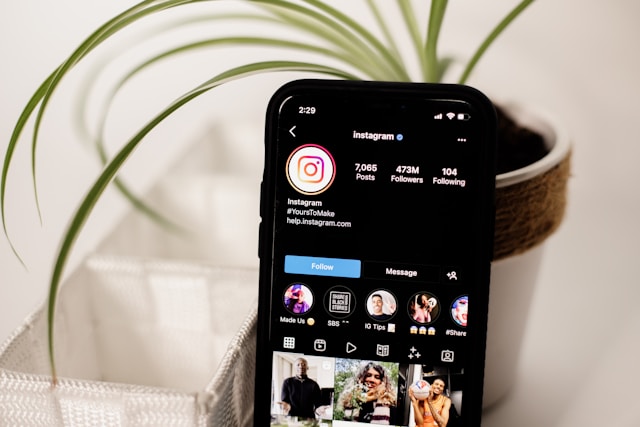
Start with the basics by searching your brand name and product names on TikTok, Instagram, and YouTube using native platform search.
You're looking for organic mentions where customers tagged you or mentioned your product without any prompting from your team.
As you find promising content, save creators to a tracking spreadsheet with their handle, platform, content type, and follower count.
This becomes your outreach list and helps you avoid contacting the same person multiple times across different team members.
Direct brand searches only catch people who explicitly mention you. In contrast. hashtag monitoring finds customers discussing your product category or lifestyle without tagging your brand directly.
Build a monitoring list that includes your branded hashtags alongside the category and lifestyle hashtags your customers naturally use.
For example, If you sell outdoor gear, that might include #rvlife, #overlanding, or #vanlife.
For skincare, you'd track #cleanskincare, #skincareroutine, and #glowyskin.
The goal is to identify where your customers already congregate online.
Check these hashtags weekly since most platforms don't notify you when someone uses a hashtag without tagging your account. This manual monitoring becomes tedious at scale, which is where automated tools earn their keep.
Your existing customers are your highest-probability UGC creators. They've already invested in your product and experienced the value.
The friction is simply that they don't know you want their content or that you're willing to compensate them for it.
Add a UGC request to your post-purchase email flow 14-30 days after delivery. Any earlier and they haven't used the product enough to have meaningful opinions. Any later and they've likely moved on to other things.
The email messaging should be direct: "Show us how you're using [product]."
Offer a specific incentive like 15% off their next purchase, entry into a monthly giveaway, or a feature on your social channels. Make sure to include a one-click upload link rather than requiring a reply with attachments, which creates unnecessary friction.
Be sure to set clear expectations to reduce hesitation. Tell them 30-60 seconds is perfect, phone quality is fine, and authentic content matters more than polish.
Most people assume brands only want professionally produced content and self-select out before even trying.
Conversion rates will be low, typically 1-3% of recipients submit content. But this scales directly with order volume and costs nothing beyond your existing email infrastructure, making it one of the highest-ROI sourcing methods for brands with consistent sales volume.
Periodic campaigns with specific creative prompts and meaningful prizes generate content volume in concentrated bursts. This works especially well for seasonal moments or product launches where you need fresh content quickly.
Effective campaigns give creators a specific hook rather than generic "share your experience" requests.
Monthly themes like "Show us your morning routine with [product]" or "Where did you take [product] this month?" give people a creative framework to work within.
Seasonal prompts (holiday gift unboxing reactions, New Year transformation stories) tap into existing social media behaviors.
Prize structures should include a grand prize worth $500-1000, runner-up product bundles, and participation rewards like discount codes for everyone who enters with qualifying content. The participation reward matters because it converts non-winners into future customers and makes people feel valued even if they don't win.
Always announce winners publicly and feature their content prominently.
This creates social proof that you actually use and celebrate customer content rather than collecting it and doing nothing with it. Future campaign participation depends heavily on whether people see past participants getting recognized.
Your most engaged customers deserve systematic recognition and support.
Converting these power users into formal brand ambassadors creates a reliable content pipeline.
Look for customers who are:
Successful ambassador programs offer early access to new products, quarterly product credits ranging from $100-500 depending on tier, exclusive community access through private Discord or Slack channels, and committed amplification of their content on your channels.
In exchange, set clear expectations:
The best ambassador programs explicitly welcome critical feedback because it improves products and increases the credibility of the positive content these customers share.
Finding UGC is only half the challenge.
Getting permission to use it requires outreach that respects creators' time and makes the value exchange clear.
Personalized outreach gets 5-10x better response rates than templated messages. The difference between "Great content!" and "Your tutorial showing three different ways to style the bag was incredibly creative" determines whether someone reads past your first sentence.
Effective outreach messages follow a simple structure:
This proves you watched their content rather than mass-messaging everyone who mentioned your brand.
Don't make them guess what you're asking for or force them to ask clarifying questions. Ambiguity kills conversion.
Compensation can be monetary payment, product credit, or exposure on your channels with proper tagging. Match your offer to the creator's audience size and content quality. A micro-influencer with 2,000 followers might be thrilled with a $50 product credit, while someone with 100,000 followers expects payment in the hundreds.
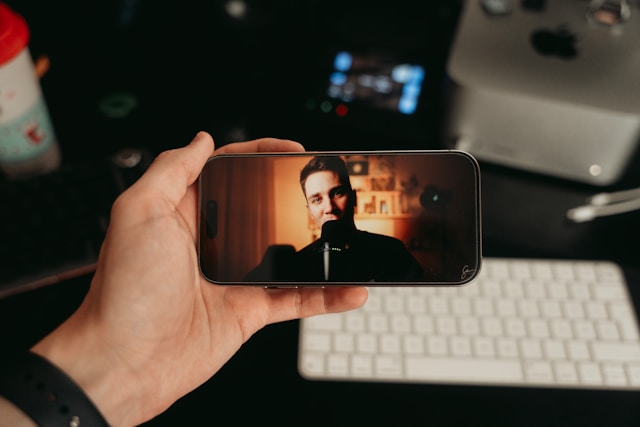
Manual searching works fine when you're processing 10-20 pieces of UGC per month. Past that volume, the time investment makes automation essential in order to scale your program.
Videowise UGC Hub continuously monitors TikTok and Instagram for videos mentioning your brand, then surfaces them in a centralized dashboard. You can filter by engagement metrics, creator audience size, and content type to identify the highest-potential videos quickly.
The critical workflow improvement is the ability to send one-click DM requests for usage rights directly from the platform, then track response status as sent, approved, or declined. When creators approve, their videos auto-import to your shoppable video library with rights documentation attached.
This eliminates the fragmented manual workflow:
Each handoff point introduces delays and errors that compound at scale.
Alternative tools like Mention or Brand24 handle text-based social listening effectively, but miss most video content since their algorithms optimize for written posts. Manual saved searches on each platform remain free, but demand consistent team time that grows linearly with your content volume.
Passive collection through strategic upload widgets captures UGC from customers who want to share but wouldn't think to tag you on social media.
Add these to your post-purchase Thank You page, order confirmation emails, product pages with prompts like "Share your video, get 15% off," and any community or reviews sections.
The technical requirements matter more than most marketers expect. Your upload system needs direct video upload capability since requiring email attachments kills completion rates. Mobile optimization is also non-negotiable given that most UGC is shot on phones.
Auto-capture of usage rights agreement during the upload process protects you legally without creating extra steps. Automatic email confirmation with terms also gives customers documentation and sets expectations.
Tools like Videowise, Bazaarvoice, or Yotpo handle the technical implementation, including storage, rights capture, and integration with your eCommerce platform.
Remember that every piece of UGC requires explicit permission before commercial use.
Verbal agreements and screenshots of Instagram DMs won't protect you in legal disputes with creators who later claim you exceeded the agreed-upon usage.
A proper usage rights agreement specifies the platforms and use cases you're requesting, including social media, website, paid advertising, email, and print materials. It defines duration as either perpetual or time-limited with specific end dates.
Geographic scope matters for brands with international operations where usage rights might differ by region.
Exclusivity terms clarify whether creators can produce similar content for your competitors. Compensation terms lock in whether payment is one-time or ongoing, product credit or cash. Content modification permissions determine whether you can edit videos, add graphics, or change aspect ratios.
For formal agreements with larger creators, use digital signature tools like DocuSign or HelloSign. For smaller creators, Videowise's one-click DM approval system obtains legally binding consent through platform messaging, which courts have upheld as enforceable.
Track expiration dates if you're using time-limited agreements. Archive proof of permission indefinitely (signed documents, approved DM screenshots) since disputes can emerge years after initial usage.
Videowise UGC Hub automates social listening across TikTok and Instagram, surfaces high-performing content, and enables one-click usage rights requests, eliminating the manual workflow that kills UGC programs at scale.
Once your UGC library grows past 50 videos, organization determines whether content remains usable or sits forgotten in folders.
Build a taxonomy system around:
Platform options include Videowise with built-in tagging, performance tracking, and shoppable deployment capabilities.
Airtable works as a custom database with flexible views and filters if you prefer manual control.
Google Drive remains free but demands disciplined folder structure and naming conventions that teams rarely maintain consistently.
Tag videos immediately upon collection. Retroactive organization projects never actually happen, so your future self will thank you for front-loading this work.
Volume creates more volume. When customers see their content featured prominently on your site and social channels, several things happen simultaneously.
First, 47% of Gen Z consumers say they're more likely to purchase from brands that share customer UGC.
Featured creators often voluntarily create additional content without prompting because the recognition validates their effort. Their followers discover your brand through the featured content and convert into customers who then create their own UGC, closing the loop.
Next, treating UGC collection as a core marketing function will determine your program's scalability and ROI.
Allocate resources accordingly: dedicated team member time (even if partial), tool budget for automation and rights management, and creator compensation budget separate from influencer marketing spend.
Start with manual collection to understand what resonates with your audience and what conversion rates you can expect from different outreach methods. Once you're consistently processing 20+ pieces of UGC monthly, automation pays for itself in saved time and increased throughput.
The gap between "we have UGC" and "UGC is driving revenue" comes down to deployment. Where you place videos, how you present them, how you make them live alongside your dedicated product videos and what you ask visitors to do next determines whether your UGC library becomes a revenue asset or a folder full of untapped content.
These five brands show what strategic deployment actually looks like across different verticals and use cases.
Dr. Squatch, a men's personal care brand, leads with customer content on their homepage rather than brand-produced hero imagery.
Their homepage carousel pulls directly from TikTok and Instagram, showing real customers using their soaps and grooming products in authentic settings. No scripts, no professional lighting, no brand messaging overlaid.
Just customers being customers.
The results validated the bet. Video-engaged visitors converted at 9.9% on average, with peak conversion rates hitting 26% during high-performing periods. Those visitors generated $750K+ in revenue from video-engaged sessions.
Dr. Squatch proves that leading with customer content signals confidence. The brand is essentially saying "our customers are our best marketing."
ALPAKA makes premium everyday carry gear including bags, slings, and accessories built from technical materials like X-Pac and Axoflux.
Their challenge was inherently visual, since premium materials and smart hardware features are difficult to convey through static product images alone.
They implemented shoppable video galleries on product pages and ran a two-month A/B test to measure impact directly. The product page version with Videowise's video carousel under the "Add to Cart" button outperformed the version without it by 7.8% CVR and generated 7.24% more revenue.
Their top-performing widget, a video carousel, drove €156K in revenue over three months. In the first 30 days alone, video-driven revenue reached €125K at a 5.19% average CVR, peaking at 12% on best-performing days.
Critically, all of this came with zero negative impact on page speed.
For high-AOV brands worried that rich media will slow their site and hurt performance, ALPAKA's results show that lazy loading and CDN delivery can make video fast as well as effective.
True Classic identified a unique moment of purchase intent (the cart) and deployed UGC there instead of on the product description page alone.
When a True Classic visitor adds a product to their cart, they see a video widget showing styling tips, outfit combinations, and fit guidance from real customers. The content answers the questions buyers ask themselves at checkout: Does this actually look good? Will it fit how I expect? Am I making the right call?
Video-engaged visitors converted at 13%.
The cart placement is underutilized by most brands who think of UGC as a top-of-page or homepage play. True Classic's results suggest that video closest to the checkout decision carries significant weight.
SOSU Cosmetics, an Irish beauty brand with 300+ products across three sub-brands, used video to solve a different problem than pure conversion rate.
In a saturated market, they needed to communicate product differentiation and proper application technique, two things static images and text descriptions consistently fail at.
Their implementation combined UGC customer videos with instructional how-to content in a dedicated section for top-performing products. 92.63% of their traffic comes from mobile, which shaped every decision about player design and content length.
The results: 9.9% average CVR from video-engaged visitors, $750K+ in revenue, 66% video completion rate, and an average of 2.74 videos watched per visitor. Most tellingly, AOV increased by 8%, meaning video didn't just convert more visitors, it converted them into bigger purchasers.
When visitors watch multiple videos and understand how products work together, they buy more. The implication for multi-SKU brands is that UGC can act as a basket-building mechanism.
The final step in the UGC lifecycle is converting views into revenue. Social proof on its own builds trust, but shoppable UGC closes the loop by letting visitors move directly from watching to buying, without navigating away and losing purchase momentum.
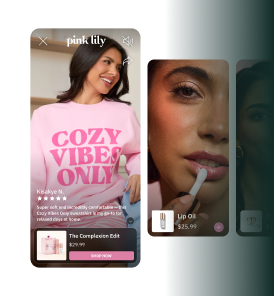
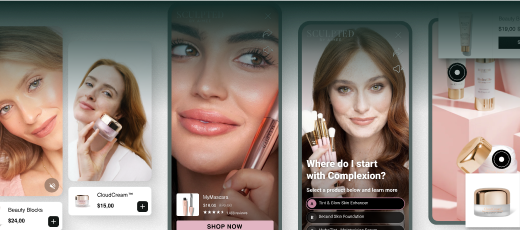
At a high level, shoppable UGC embeds product tags into your customer videos, turning them into clickable commerce experiences on your site.
For a full breakdown of shoppable video strategy, widget types, deployment by page type, and performance benchmarks, see our complete guide to shoppable video.
UGC measurement requires separating your user content impact from other video content and traffic sources.
Without proper attribution setup, brands conflate UGC performance with branded video or organic traffic, making resource allocation decisions on confused or incomplete data.
Track UGC separately from branded video content using distinct tagging in analytics platforms. This can be done by tagging UGC placements with specific parameters (utm_content=ugc or similar) to isolate traffic and conversion behavior.
Compare 3 cohorts:
This comparison reveals UGC's incremental impact rather than just a base correlation.
A brand might see 12% CVR from video-engaged visitors overall, but when segmented, UGC viewers convert at 15% while branded video viewers convert at 9%.
That difference determines budget allocation between UGC collection and professional video production.
Engagement rate measures the percentage of UGC impressions that result in plays or interactions.
Benchmarks typically run 40-60% for on-site UGC placements.
Conversion rate lift compares UGC viewers to non-viewers. Calculate as: (UGC viewer CVR - baseline CVR) / baseline CVR.
This metric justifies continued investment in UGC infrastructure.
Content velocity tracks new UGC pieces collected per month.
Programs that maintain or grow velocity compound their advantage over time, while declining velocity signals collection process problems.
Usage rights approval rate shows what percentage of outreach requests convert to usable content.
Rates below 30% indicate messaging problems or inadequate creator incentives.
Cost per UGC asset includes tool costs, team time, and creator compensation, divided by usable videos acquired.
This enables comparison against professional video production costs.
UGC ROI = (Incremental Revenue from UGC Viewers - Program Costs) / Program Costs
Program costs include platform fees, team time (valued at hourly rate), creator compensation, and rights management overhead.
Incremental revenue comes from the cohort comparison: visitors who engaged with UGC minus expected revenue from those visitors at baseline conversion rates.
Attributing all revenue from pages with UGC to UGC itself inflates impact. To get a better baseline, use cohort comparison to isolate the incremental effect.
In addition, ignoring time-lag between UGC publication and performance stabilization leads to premature optimization decisions. New UGC typically needs 2-3 weeks to accumulate sufficient traffic for reliable performance assessment.
Comparing UGC performance across different page types without accounting for baseline conversion rate differences can also lead to misleading conclusions.
Track cost per acquisition separately for UGC-influenced conversions versus other channels. This enables direct comparison with paid acquisition costs and informs budget allocation between UGC programs and paid media.
UGC isn’t just “social media content”. The highest-performing brands treat it as revenue infrastructure.
Videowise automates the complete UGC lifecycle:
All with zero site speed impact.
UGC viewers typically convert 2-4X higher than baseline traffic. Videowise provides the only platform purpose-built to capture this performance.
Start turning your video content into revenue.
UGC video (user-generated content video) is video content created voluntarily by real customers about a brand or product, not commissioned or produced by the brand itself. Examples include product reviews, unboxing videos, tutorials, and day-in-the-life content shot on smartphones in natural settings. The defining characteristic of authentic UGC is that it originates from a genuine customer experience, which gives it a trust advantage over branded content.
Use this formula: UGC ROI = (Incremental Revenue from UGC Viewers − Program Costs) ÷ Program Costs To calculate incremental revenue, compare three cohorts: visitors who engaged with UGC, visitors who engaged with other video content, and visitors who engaged with neither. This isolates UGC's impact from baseline conversion rates. Key metrics to track include: engagement rate (benchmark: 40–60% for on-site placements), conversion rate lift, content velocity (new UGC pieces per month), usage rights approval rate (aim for 30%+), and cost per UGC asset.
The most effective UGC programs combine multiple sourcing methods: - Direct social search on TikTok, Instagram, and YouTube for organic brand mentions, - Hashtag monitoring to find UGC and import them to your library with Videowise, - Post-purchase email sequences sent 14–30 days after delivery, with a direct upload link and a small incentive, - Contests and campaigns with specific creative prompts and tiered prizes, - Brand ambassador programs for high-engagement repeat customers, - On-site upload widgets on Thank You pages, product pages, and confirmation emails. Post-purchase email sequences typically convert 1–3% of recipients, but cost almost nothing beyond existing email infrastructure, making them one of the highest-ROI sourcing methods available.
Every piece of UGC requires explicit usage rights before commercial use. A proper usage rights agreement should specify: the platforms and use cases permitted (social, website, paid ads, email), the duration (perpetual or time-limited), geographic scope, exclusivity terms, compensation, and content modification permissions. For smaller creators, one-click DM approval systems (such as those offered by Videowise) provide legally binding consent. For larger creators, use digital signature tools like DocuSign. Always archive proof of permission indefinitely, as disputes can arise years after initial use.
Shoppable UGC video embeds clickable product tags directly into customer videos, allowing viewers to move from watching to purchasing without leaving the page or losing purchase momentum. It converts social proof into a direct commerce experience on your own site, combining the trust of UGC with the frictionless buying experience of a native product page.
UGC Video Strategy - Types & Tactical Ideas
Sourcing & Collecting UGC at Scale
UGC Deployment & Conversion Examples


.jpg)
.jpg)