.png)
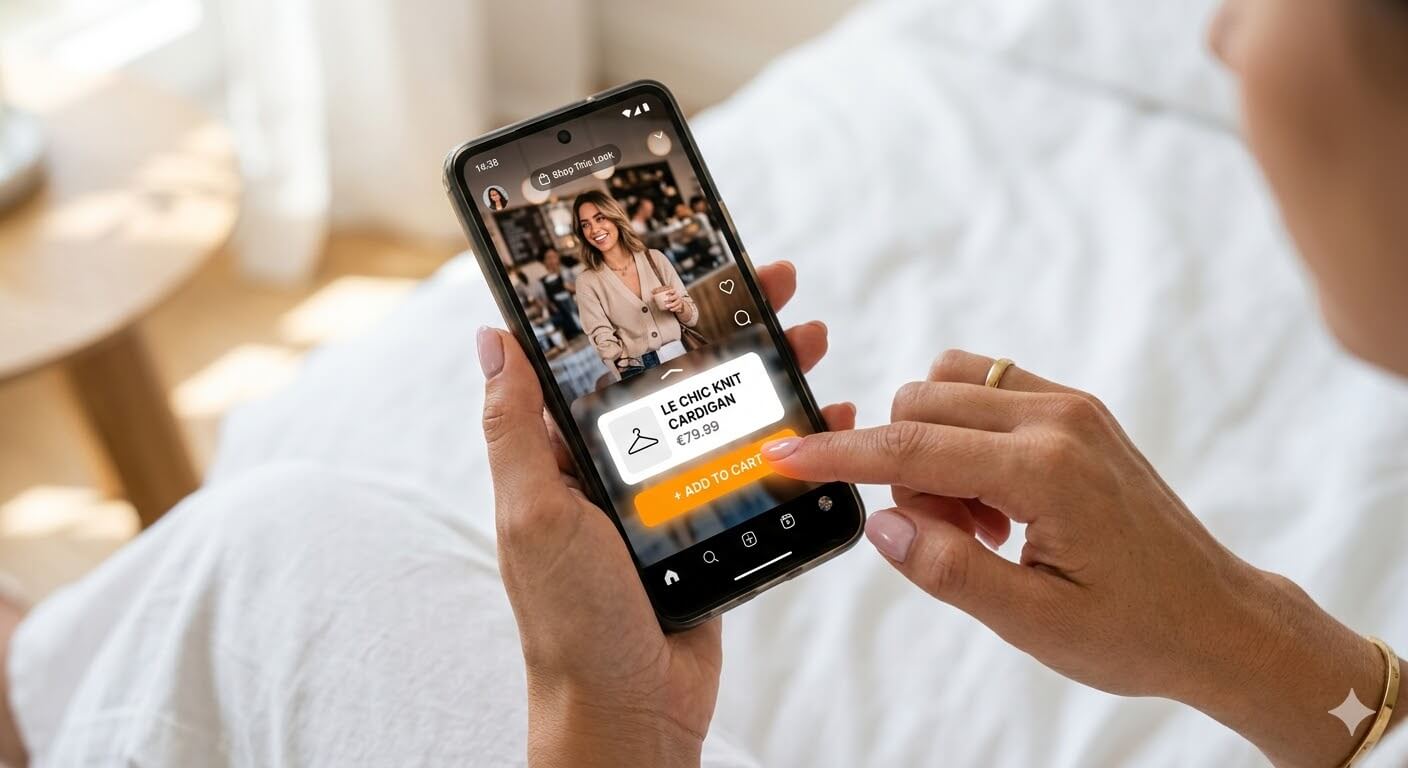
Interactive video is video content embedded with elements that invite viewers to act, including clicking product hotspots, completing quizzes, submitting lead capture forms, or triggering contextual CTAs.
For ecommerce, this closes the gap between content consumption and purchase behavior by embedding commerce actions directly into the viewing experience.
Whereas a standard product video shows a bag from multiple angles, an interactive product video lets the viewer tap the bag to see price, select a color, and add to cart without ever leaving the player.
Operationally, this changes what video is measured against: instead of just engagement time, you can track interaction rate, hotspot CTR, quiz completion, and attributed revenue per widget.
Note: Shoppable video is one category of interactive video, specifically the subset focused on in-video purchasing.
This guide covers the full interactivity spectrum (quizzes, lead capture, hotspots, CTAs, and shoppable tags) because the highest-performing implementations combine multiple interaction types across the site rather than relying on a single format.
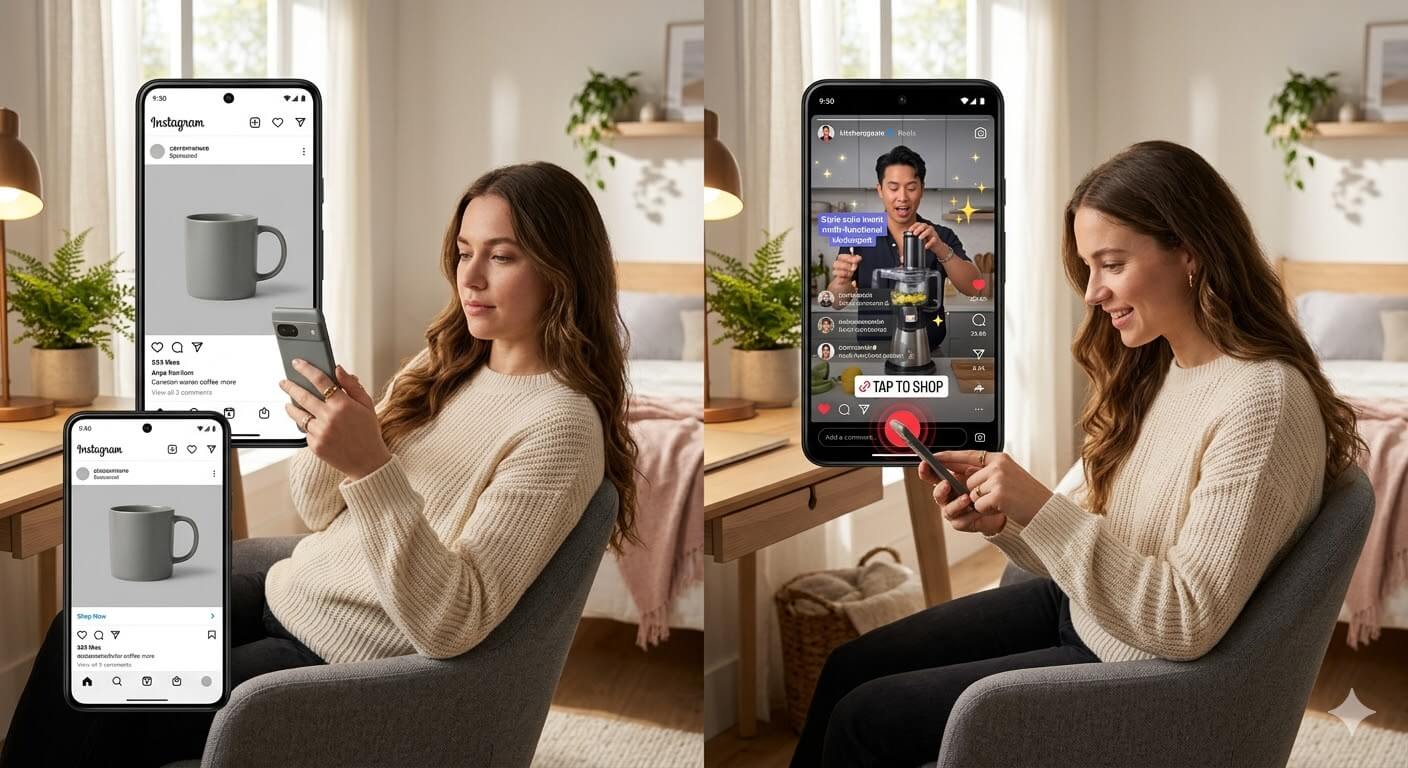
Despite the performance data, adoption of interactive video remains low.
According to Wyzowl's 2026 State of Video Marketing report, only 20% of marketers currently use interactive video, with only another 15% planning future implementation.
That means roughly four out of five brands are still running passive video on their storefronts - a significant missed opportunity given that early adopters in ecommerce are reporting conversion rates of 8-26% from video-engaged shoppers (compared to industry-average store CVRs of 2-3%).
For ecommerce operators, that gap represents one of the few remaining low-competition levers for meaningful conversion lift.
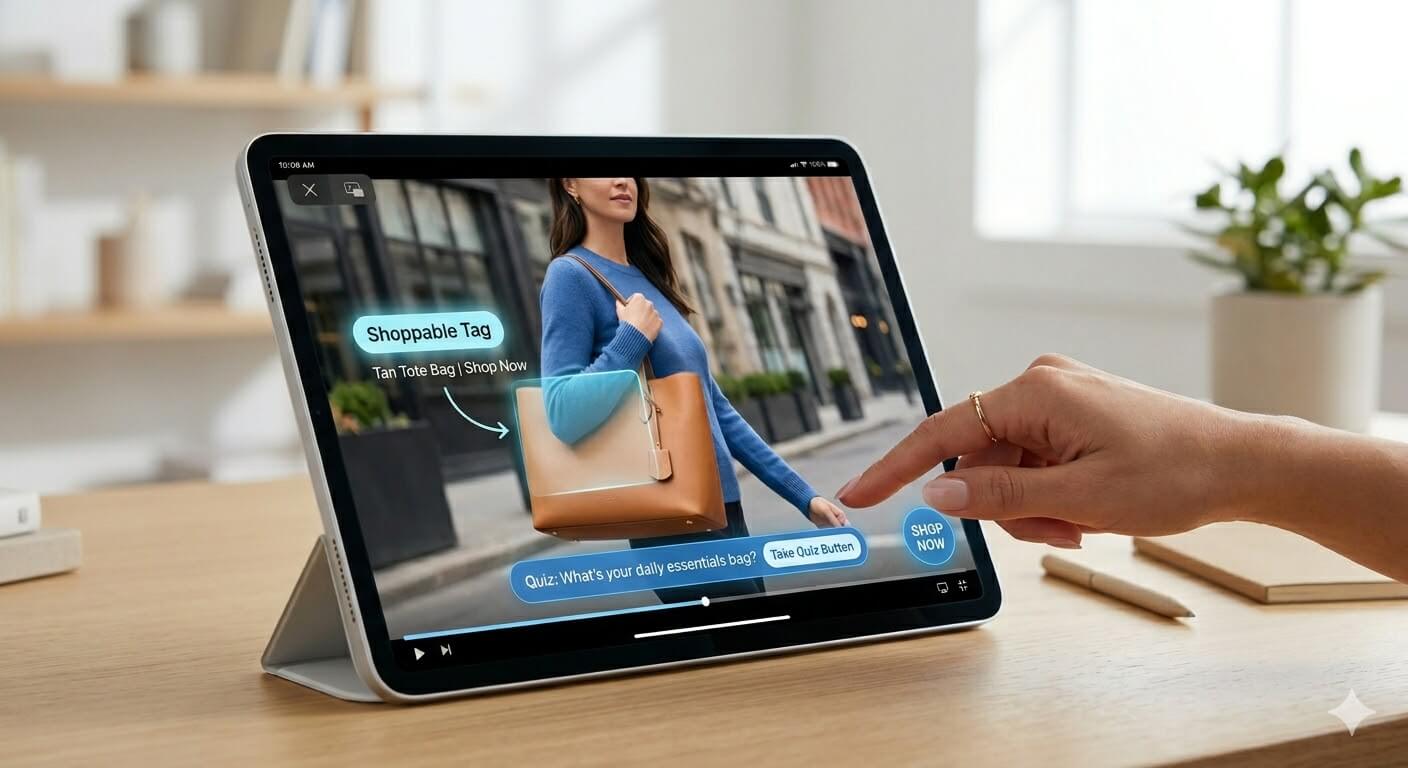
Not all interactivity serves the same purpose.
Choosing the right type depends on where in the funnel the video sits and what outcome it needs to drive.
Here are the primary interaction formats available to ecommerce teams, along with the use case and primary metric each one impacts.
Clickable product overlays that appear at relevant moments in the video, displaying price, variant options, and an add-to-cart button.
This is the highest-intent interaction type and the most directly tied to revenue. Shoppable tags work best on PDPs, collection pages, and homepage hero placements where purchase intent already exists.
Primary metric: video-attributed revenue and add-to-cart rate.
Sacheu deployed shoppable video carousels on PDPs and measured a +7.28% CVR increase, +8.77% total order increase, and a +6.54% overall revenue lift.
These are interactive points anchored to specific objects or areas within video or image content.
Hotspots can be static (fixed position) or sticky (tracking a moving object). Unlike shoppable tags, hotspots can link to any destination such as a product page, a size guide, a related category, or an external resource.
Hotspots work particularly well for complex or multi-feature products where viewers need to explore at their own pace.
Primary metric: hotspot CTR and downstream navigation.
Travelpro generated over $50K in six months from shoppable image hotspots alone, demonstrating that hotspot-driven exploration translates directly to revenue even outside of video content.
In-video question flows that guide viewers toward a product recommendation based on their responses.
Quizzes serve a dual purpose: they improve the shopping experience by reducing choice paralysis, and they generate first-party data on customer preferences and intent signals.
Across interactive video broadly, quizzes deliver a 62% interaction rate according to Wistia's benchmark data, making them the highest-engagement interactive element by a significant margin.
Primary metric: quiz completion rate, product recommendation CTR, and captured preference data.
Sculpted by Aimee deployed an interactive founder quiz video alongside carousel and story widgets, achieving an +8.6% average CVR with peaks reaching 16.8%.
Lead capture uses in-video email or SMS capture overlays that are typically triggered at a specific timestamp or upon video completion.
These are valuable for brands with longer consideration cycles or for building segmented lists based on video content engagement. The key implementation consideration is timing: forms that interrupt mid-video underperform those placed after a viewer has already demonstrated intent through watch time.
Primary metric: form submission rate and subsequent email/SMS conversion.
Platforms like Videowise integrate directly with Klaviyo and Omnisend, routing captured leads into existing automation flows without manual export.
Contextual action prompts layered onto video at strategic moments:
CTAs differ from shoppable tags in that they drive navigation and micro-conversions rather than direct purchase.
They are most effective on educational content, brand story videos, and upper-funnel placements where the goal is qualified traffic rather than immediate checkout.
Primary metric: CTA click-through rate and destination page conversion.
A note on advanced formats: Branching narratives (choose-your-own-path video) and 360-degree product views appear frequently in interactive video discussions. In practice, branching narratives see more adoption in media and entertainment than in ecommerce, where the production cost and complexity rarely justify the incremental engagement. 360-degree video has niche value for categories like real estate, automotive, and high-ticket goods where spatial exploration matters, but it's not a high-ROI starting point for most DTC brands. Teams evaluating these formats should start with shoppable tags, quizzes, and hotspots, where the performance data is strongest and implementation complexity is lowest.

Interactive video might be one of the most underutilized opportunities in ecommerce. Industry benchmarks show interactivity drives engagement, conversion, and data collection at rates that passive video cannot match - but adoption remains relatively low.
In general, interactive video formats produce 47% higher engagement than standard autoplay video, with shoppable units specifically generating a +14.2% average in-session purchase conversion rate versus 3.4% for static display, according to Magna Global's 2026 Interactive Video Ad Effectiveness Study.
AI-personalized interactive sequences, where clickable elements adapt to viewer behavior in real time, achieved +61.8% higher completion rates and 29.4% lower cost-per-acquisition.
Within ecommerce specifically, brands deploying interactive video through Videowise consistently report CVRs that are multiples of industry baselines.
WONDERSKIN measured a +26% CVR peak in the US store and +11.7% in the EU through shoppable PDP carousels featuring repurposed ad creatives.
ALPAKA ran a controlled A/B test over two months. Pages with Videowise interactive content delivered +7.8% higher CVR and +7.24% more revenue ($334K vs. $311K).
These numbers gain sharper context against baseline ecommerce CVRs. The global average hovers around 1.9-3% depending on the source. Brands achieving 8-26% CVR from video-engaged shoppers are operating at 3-10x the baseline. For most optimization levers, this would take years of incremental A/B testing to achieve.
The most significant strategic takeaway from current interactive video data is the adoption floor.
With 80% of marketers not deploying interactive video, brands that implement it are competing against a field that overwhelmingly relies on passive video or static imagery. This is not a mature, crowded optimization tactic where gains are marginal. It is an early-stage capability gap where implementation alone creates differentiation.
The barriers to entry are also declining. The 52% of marketers who cite production effort as the primary obstacle are largely referencing a previous generation of interactive video tools that required custom development. Modern platforms like Videowise allow teams to add interactivity to existing video libraries without new production shoots or developer resources.
Beyond direct conversion, interactive video generates behavioral and preference data that passive video cannot.
Every hotspot click, quiz answer, form submission, and CTA interaction produces a first-party signal about what the viewer wants, how they browse, and what motivates purchase decisions.
In a landscape where third-party tracking continues to erode and 74% of brands have shifted to first-party strategies, interactive video creates a natural, non-intrusive data collection mechanism that also improves the shopping experience.
Quiz responses are especially valuable since they capture explicit preference data (skin type, style preference, use case, budget range) that can feed personalization engines, email segmentation, and product development.
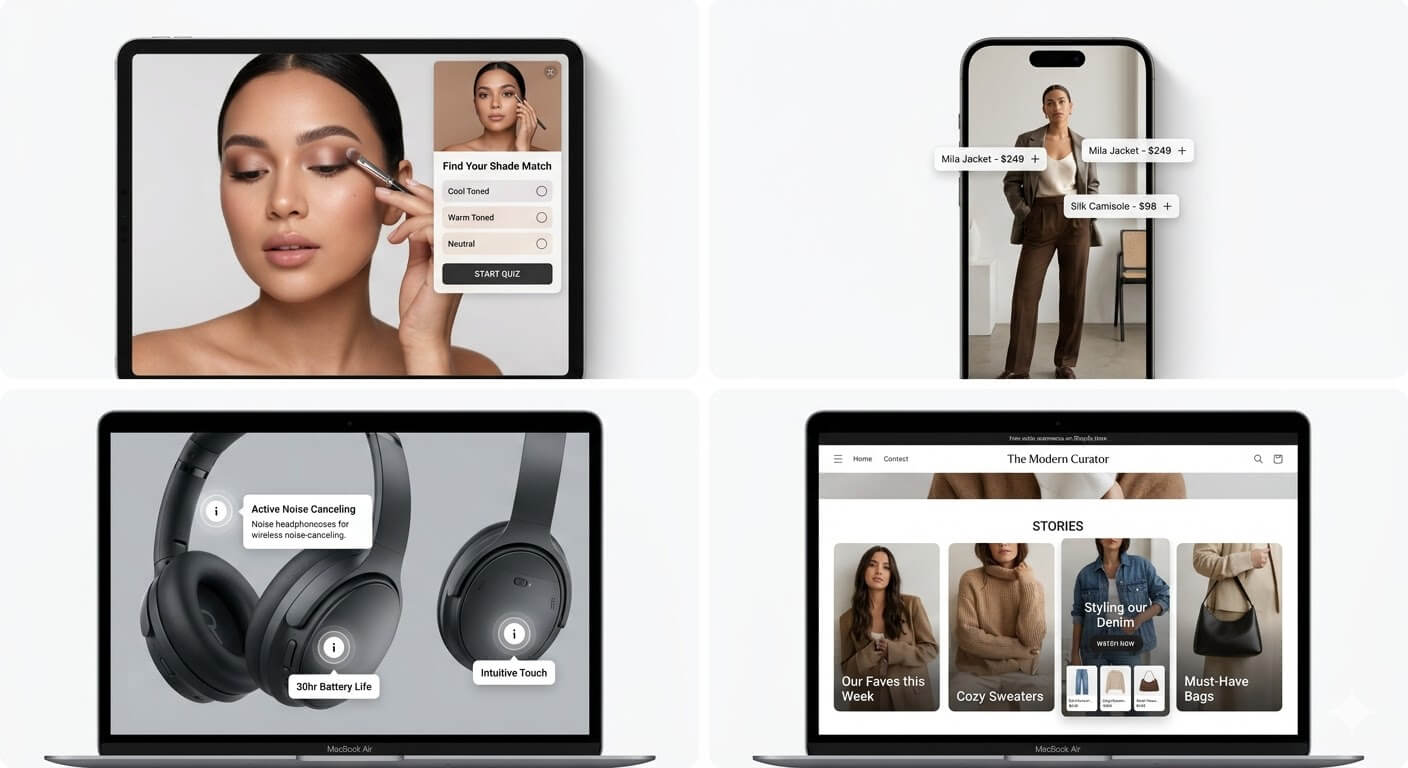
The right interaction type depends on the page context, the product complexity, and the conversion goal.
These 4 use cases represent the highest-impact deployment patterns for ecommerce brands.
Products that need explanation due to technical features, application techniques, and material properties benefit most from hotspot-driven interactive video.
Viewers can pause on the feature that matters to them, explore specs or comparisons, and self-direct the learning experience rather than watching a linear walkthrough that may skip the thing they care about.
LABFRESH used this approach to communicate their FreshCore technology (hydrophobic, antibacterial, wrinkle-resistant fabric) through UGC testimonial videos showing the product properties in action. Viewers could see water bead off a shirt, fabric stay wrinkle-free after packing, and then purchase directly from the video.
The results: €111K in video-driven revenue in 30 days at a 16.7% average CVR, with daily peaks reaching 34%.
When the challenge is not education but selection - helping a shopper choose the right SKU from a large catalog - video quizzes are the highest-performing format.
The quiz narrows the field based on the viewer's stated needs, then routes them directly to the recommended product with a shoppable CTA.
This pattern works especially well in beauty (skin type to product match), nutrition (goal to supplement recommendation), and apparel (occasion to outfit suggestion).
Ayu Cosmetics built their interactive strategy around pop-up tutorial videos and mini-carousels on PDPs featuring founder recommendations, usage guides, and UGC. Shoppers watched an average of 5 videos per visit, and 21.67% of video viewers converted - generating $661K in attributed revenue.
User-generated content gains significantly more impact when it's interactive. A passive UGC compilation video can drive significantly more buying intent as a shoppable UGC carousel, where viewers can tap the product featured in each customer review video and add to cart.
Beautifect built their entire on-site video strategy around UGC shoppable widgets and story formats on PDPs. The top-performing carousel widget alone generated $600K of their $2M total video-driven revenue over 10 months, with shoppers watching an average of 24 videos per visit at up to 11% CVR.
The homepage is brand content territory: first impressions, new visitor capture, and high-level product discovery.
Interactive video here serves a different function than on PDPs. Story widgets, pop-up carousels, and QuickShop formats prioritize engagement depth and navigation over immediate add-to-cart.
Nomad the Label deployed shoppable video stories with multiple products tagged across 300+ pages using bulk automation. Their story widget alone drove 60% of all Videowise revenue, contributed to a 16% AOV increase, and delivered a 430x ROI in 30 days.
The widget format and placement matter as much as the content itself.
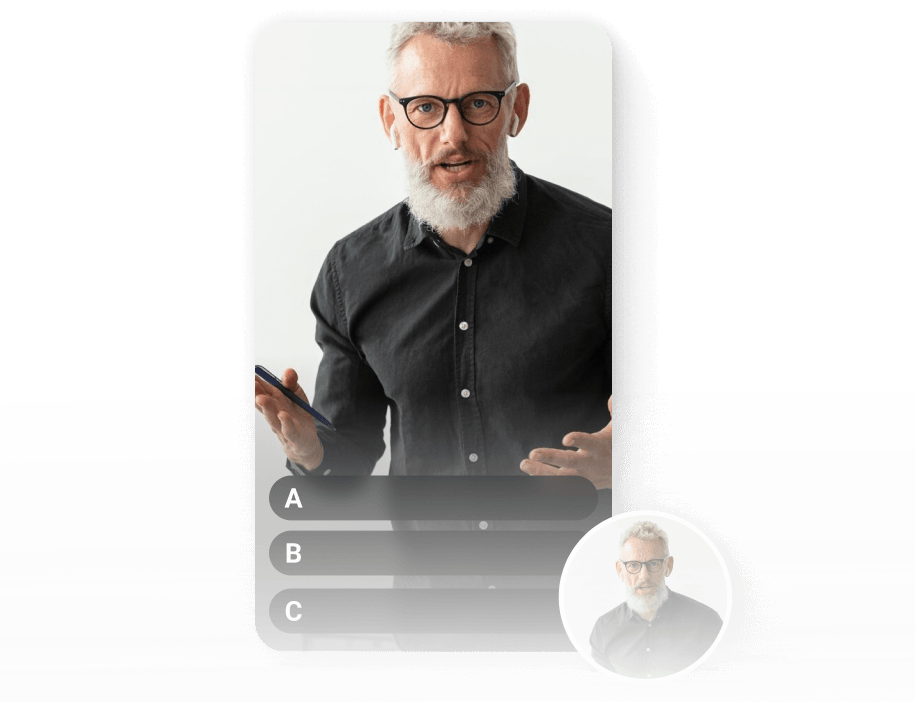
Videowise is a Shopify-native visual commerce platform built for interactive and shoppable video at scale.
Unlike general-purpose video hosting platforms (Vimeo, Wistia, YouTube embeds) that measure views, Videowise tracks the full conversion funnel from video view to purchase and attributes revenue to specific videos, widgets, and placements.
Interactive capabilities
The platform supports shoppable product tags with in-video add-to-cart, shoppable image hotspots, video quizzes (with branching logic routing viewers to different products or videos based on answers), lead capture forms integrated with Klaviyo and Omnisend, CTA overlays, and interactive pop-ups triggered by on-site behavior.
Multiple widget formats (carousels, stories, galleries, single video, pop-ups, and background video) can be deployed across homepage, PDPs, collection pages, landing pages, and email/SMS.
Performance protection
A common objection to adding video to ecommerce storefronts is page speed degradation.
Videowise is built around this constraint. Video files are compressed by up to 97% with no visible quality loss, and widgets load only when they enter the viewport, so pages stay fast regardless of how many videos are deployed. The result is near-zero impact on site speed and performance scores, even at scale.
Scale and automation
For brands with large catalogs, manual video-to-product tagging doesn't scale.
Videowise supports bulk deployment across hundreds or thousands of product pages, automated UGC import from TikTok, Instagram, and YouTube, one-click product tagging across multiple videos, and multi-store management from a single dashboard.
Timeline and resource expectations
Typical deployment runs one to two weeks for initial launch with a focused test placement (homepage carousel or PDP widget on top-selling products), expanding to full catalog coverage over four to six weeks.
No custom development is required for standard Shopify themes. Teams should plan for content preparation (importing and tagging existing video libraries) as the primary time investment.
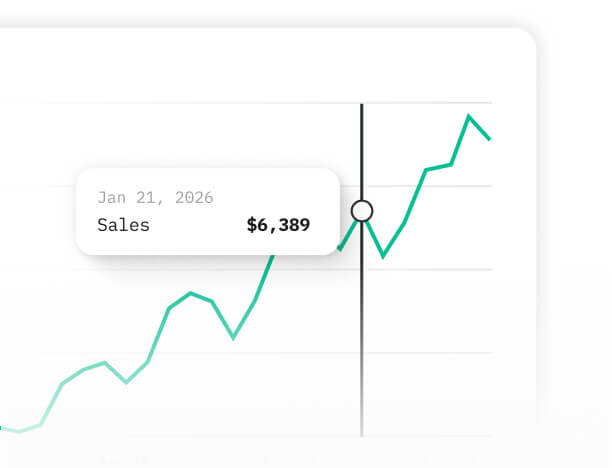
Standard video metrics like views, watch time, and completion rate are necessary but insufficient KPIs for interactive video.
Interactivity adds a layer of behavioral data that reveals not just whether someone watched, but how they engaged and what it led to.
(For a comprehensive framework on video commerce measurement and ROI calculation, see the Video Commerce ROI guide.)
These are the metrics that distinguish interactive video measurement from general video analytics:
The cleanest method for measuring interactive video's impact is A/B testing pages with and without interactive elements. Videowise supports built-in A/B testing for this purpose.
A typical controlled test runs the same pages and traffic with interactive widgets on versus off over a two-month window or a period long enough for statistical significance at most mid-market traffic levels.
Brands running these tests have measured CVR lifts of +7-12% and corresponding revenue increases, providing clean attribution of interactivity's incremental value.
For teams that cannot run controlled A/B tests (low traffic, seasonal fluctuations), cohort comparison is the next best approach. This tactic compares conversion rates and AOV for video-engaged visitors versus non-engaged visitors over the same period.
Videowise's analytics dashboard provides this segmentation natively.
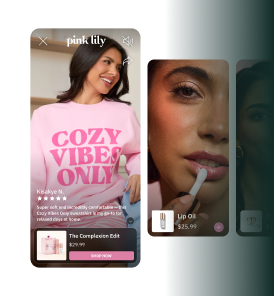
Generic video embeds from YouTube or Vimeo do not offer page speed optimizations and can meaningfully degrade site performance. Any interactive video implementation should be evaluated against standard page speed before and after deployment. Videowise was engineered specifically to combat this issue. The platform uses AI-driven compression (97% file size reduction), lazy loading, and lightweight scripts (37kb) to achieve near-zero impact on Core Web Vitals.
Shoppable video is a subset of interactive video. If the goal is direct purchase from the video player, shoppable tags are the right starting point. If the goal is education, guided selling, lead capture, or exploratory product discovery, other interaction types (quizzes, hotspots, CTAs, forms) may be more effective. The highest-performing implementations combine multiple types: shoppable tags on PDPs, quizzes on collection pages, and lead capture on homepage or landing page content.
Brands do not need a large video library to see results. A handful of strong product videos on top-selling PDPs, combined with imported UGC from social channels, is enough for an initial deployment. Videowise's UGC import tools pull existing content from TikTok, Instagram, and YouTube, meaning the video production investment may already be done. The interactivity layer is what turns that existing content into a conversion asset.
Products with longer purchase cycles (premium goods, technical products, high-AOV items) benefit most from quizzes and hotspot-driven exploration, which let shoppers self-educate without time pressure. For example, Travelpro saw their average watch time exceed 3 minutes per video on luggage PDPs. For high-consideration categories, interactive video functions more like a guided consultation than a quick-hit conversion tool, and should be measured accordingly (time on site, return visit rate, downstream purchase) rather than just immediate add-to-cart.
Ecommerce brands using interactive video through Videowise are converting at 3-10x industry baselines, while most brands still rely on static imagery and passive video. Videowise powers interactive and shoppable video for over 4,000 Shopify brands. Find out what interactive video can deliver for a brand like yours.
What Interactive Video Means for Ecommerce
Why Interactive Video for Commerce?
Types of Video Interactivity for Ecommerce
What Interactive Video Delivers
Interactive Video by Use Case


.jpg)
.jpg)