.png)
TL;DR
Product page conversion is the highest-impact metric in ecommerce, yet the average store still converts under 3% of sessions. Two levers move it more than a redesign: shoppable video, which answers what a photo can't, and AI chat, which resolves doubt at the exact moment of hesitation. Brands running both report product page conversion rates of 9% to 13%. This guide covers the benchmarks, a deployment sequence, and the thresholds where each lever earns its place.
Most product page conversion work in 2026 gets spent on layout tweaks that return almost nothing. Shoppable video and AI chat are different. They attack the two reasons shoppers leave a product page: unanswered questions and unresolved doubt.
The math is unforgiving. Contentsquare's 2025 Digital Experience Benchmark, built on more than 90 billion sessions across 6,000 sites, found ecommerce conversion fell 6.1% year over year. Desktop sits at 3.81%, mobile at 2.03% (Contentsquare, 2025). Baymard Institute puts the average cart abandonment rate at 70.19% (Baymard Institute, 2026).
Traffic keeps getting more expensive while conversion drops. You can't fix that by moving the buy button. You fix it by giving shoppers what a static page never could: proof that the product works, and an answer the moment they get stuck.
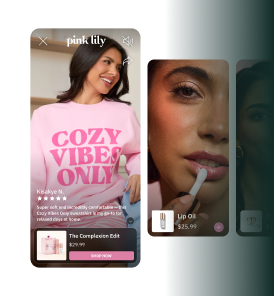
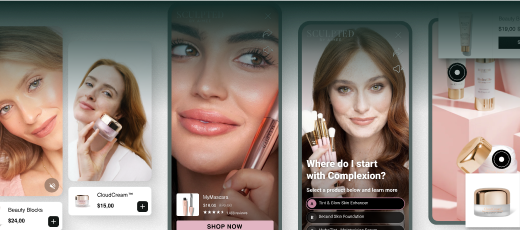
Shoppable video turns a passive gallery into a demonstration a shopper can act on without leaving the page. It closes the trust gap that kills conversion on high-consideration products.
A photo shows what a product looks like. Video shows how it behaves: how a jacket moves, how a serum absorbs, how a baby carrier clips on. That difference matters because 85% of consumers say video is essential to their online shopping experience (Brightcove Ecommerce Research Report, 2023).
Product videos demonstrate complex features and use cases in seconds, showing in one clip what dense product copy struggles to explain. They also hold attention: shoppers spend more time on pages with videos (SQ Magazine, 2026).
The results are specific, not hand-wavy. Videowise, a shoppable video platform built for Shopify brands, published case data in December 2025 showing what happens when video sits directly on the product page (Videowise, December 2025):
The pattern holds across verticals. When shoppers can watch a product in use and add it to cart from inside the player, the path from interest to purchase gets shorter.
Video also protects margin after the sale. Research has shown that customers keep ~38% of their orders and return 62% of unwanted items (Dotdata, 2025). A clip that shows true color, fit, and movement sets accurate expectations, and videos can reduce return rates by 12-18% within six months.
Where the video sits matters more than how many you upload. Below the add-to-cart button and inside the gallery are the placements that convert.
True Classic's best performer was the carousel below the add-to-cart button, not a homepage reel. The video does its work at the decision point, where a shopper is weighing whether to buy. A brand video on the homepage builds mood. A styling clip on the product page removes a specific objection.
Filling a full catalog with clips used to mean a studio, a crew, and weeks of edits. That barrier is falling. Modern AI video production lets a small team cover every product page, not only the hero SKUs. The question shifts from "can we afford video" to "which pages need it first."
AI video tools reduce production costs by 70% to 90% (Adwave, 2026). They also collapse the timeline: AI video tools allow brands to create videos in minutes, not weeks. For a store with hundreds of SKUs, that turns video creation from a luxury into a routine line item.
AI-powered video solutions work best beside your other AI tools, not apart from them. The same catalog that trains an AI chat agent can feed video production, keeping marketing videos consistent with what the chat tells shoppers. That shared source turns scattered video content into a system that scales with the store.
AI chat resolves the doubt that stops a purchase in real time, on the product page, before the shopper leaves to "think about it." That last-second save is where the conversion lift comes from.
Video answers the questions you can predict. AI chat answers the ones you can't. A shopper wondering whether a part fits their car, whether a supplement suits their diet, or whether an item ships before Friday will not fill out a contact form. They leave. 53% of customers abandon purchases if they cannot find quick answers (Forrester).
Ring Automotive, a UK automotive accessories brand, saw this directly. After adding Zipchat, an AI sales and support agent for ecommerce stores, its chat converted 12% of conversations into sales across more than 1,400 chats, with a higher average order value than the sitewide figure (Zipchat, Ring Automotive case study). The brand's own words: most of those customers "would likely have been lost."
That is the mechanism. Technical or logistical doubt used to break the shopping journey. A shopper had to email or call, and most never came back. AI chat keeps the answer on the page, so the shopper keeps moving toward checkout. This is the core promise of conversational commerce: selling inside the conversation instead of routing shoppers away from it.
The two levers are complements, not substitutes. Video preempts predictable objections; AI chat handles the unpredictable ones. Running both covers the full range of purchase doubt.
Neither replaces the other. A shopper can watch a styling video and still ask whether the medium runs small. The video sets the expectation; the chat confirms the detail.
Sequence the rollout so each lever is measured on its own before you layer them. This isolates the lift and protects page speed.
Track the combined effect with a single formula:
Conversion lift = (variant conversion rate - control conversion rate) / control conversion rate x 100
Example: a product page moves from a 2.5% control rate to a 3.4% variant rate after adding both levers. Lift = (3.4 - 2.5) / 2.5 x 100 = 36%.
Both levers carry a setup cost. Use these thresholds to decide which product pages justify it and in what order.
Use a simple diagnostic. If your returns come from "not as expected," video is the first lever. If your abandonment comes from unanswered questions, AI chat is the first lever. If both are true, deploy video first for reach, then chat for the last-second save.
Both levers fail under predictable conditions. Naming them protects you from spending on tactics your catalog doesn't need.
Video underperforms on commodity products bought on price and speed. Nobody watches a clip to buy printer paper. It also backfires when it's slow: even a one-second delay in load time can cut conversions by up to 7%, so a heavy player erases the gain it was meant to create.
AI chat fails when it's trained badly. An agent that gives vague or wrong answers does more damage than no chat at all, because it burns the trust you were trying to build. It also adds little on low-consideration products where shoppers have no questions.
The honest counterargument: some stores lift conversion more by fixing page speed, shipping costs, or checkout friction first. If your product pages load slowly or your shipping cost only appears at checkout, fix that before adding either lever. Video and AI chat amplify a sound product page. They don't rescue a broken one.
AI shopping agents are becoming a third visitor to the product page, alongside humans and search crawlers. The brands that structure video and chat data for machines will win the citations that drive the next wave of traffic.
The product page is turning into a data source that AI agents read on a shopper's behalf. When a customer asks an AI assistant to find "a durable carry-on under $200 that fits overhead bins," that agent needs machine-readable answers, not a JavaScript-rendered video with no transcript.
This changes both levers. Video needs transcripts and structured captions so its content is legible to agents, not only humans. AI chat becomes the interface that answers the agent's follow-up questions in real time. Expect product pages to expose the same answers twice: once for the human watching and chatting, once for the agent parsing. The stores that treat conversion as a conversation, human or machine, will hold their lead as organic click-through keeps shrinking.
The average sits under 3%, with desktop near 3.81% and mobile near 2.03% per Contentsquare's 2025 benchmark. Top-performing pages reach 5% to 10%. Brands combining shoppable video and AI chat have reported 9% to 13% on individual product pages.
Start with whichever matches your biggest leak. If returns come from mismatched expectations, add video first. If abandonment comes from unanswered pre-sale questions, add AI chat first. High-traffic, high-AOV pages justify both.
Yes. On the Ring Automotive product pages, AI chat converted 12% of conversations into sales and lifted average order value by guiding shoppers to higher-value products. The conversion comes from resolving doubt before the shopper leaves.


.jpg)
.jpg)