.png)

Product videos for eCommerce are one of the most powerful tools in your conversion arsenal, 89% of consumers say watching a product video has directly influenced a purchase decision.
Most ecommerce operators understand video matters, but where brands consistently underinvest is in execution.
Including knowing which video type to use, how to produce it efficiently at scale, where to deploy it on the site, and how to measure whether it's actually working.
The gap between "we have product videos" and "our product videos are driving revenue" is almost always a strategy problem.
Brands shoot demos without knowing how they'll be used. They upload videos without optimizing for page placement. They produce content without a framework for measuring impact.
This guide covers the full lifecycle of product video for DTC ecommerce:
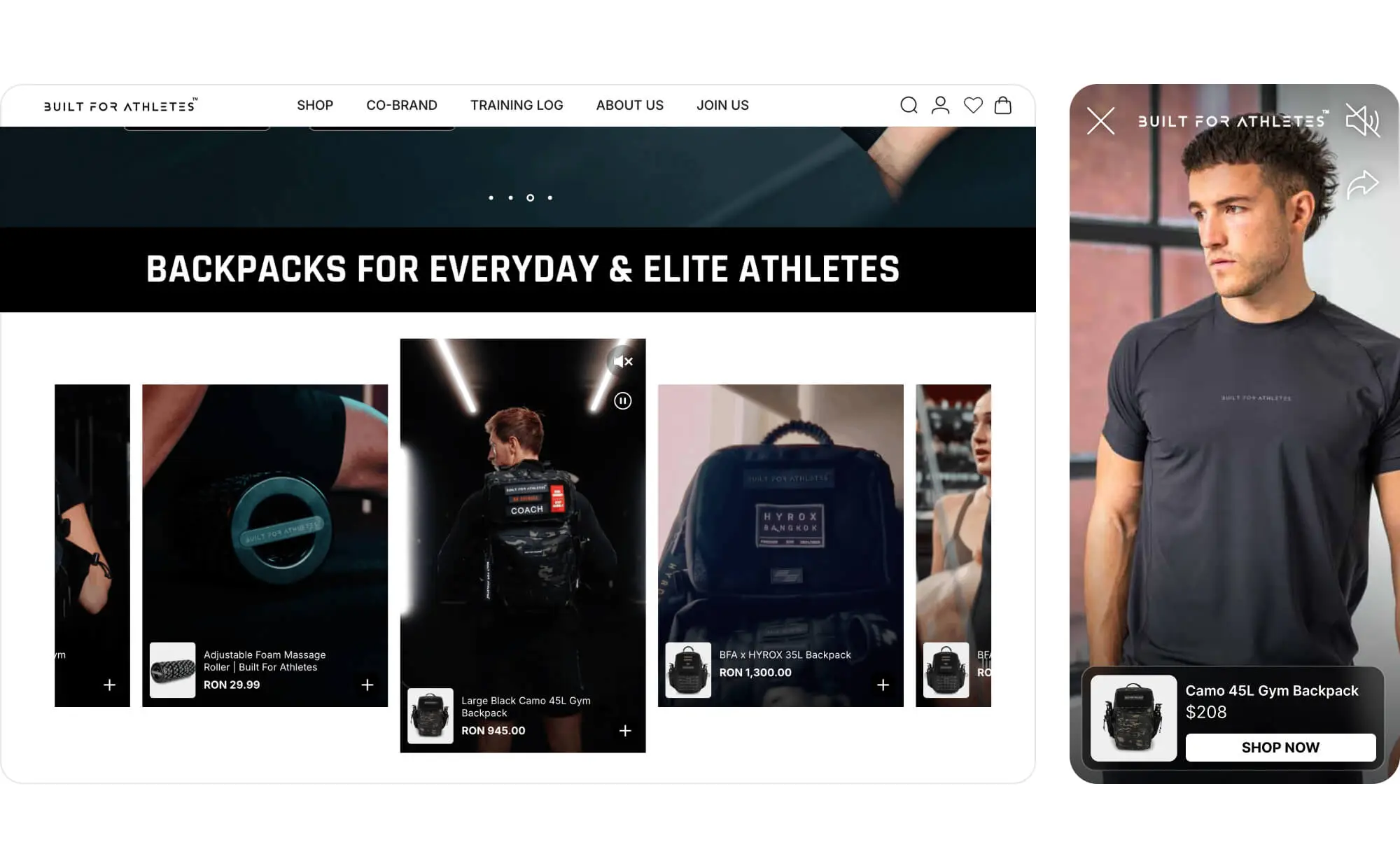
Static product imagery has a fundamental limitation: it shows what a product looks like but can't demonstrate it in rich or diverse ways.
For low-AOV, low-consideration purchases, that gap is manageable. But for most DTC categories, it's expensive.
The conversion case for product video is well established. Visitors who engage with video on product pages convert at meaningfully higher rates than those who don't.
Across Videowise implementations, video-engaged visitors consistently convert at 9–14%, with top performers reaching 26–27% during peak periods (compared to 1–3% baseline ecommerce conversion rates.)
Video does three things static content can't:
The AOV relationship matters. As the purchase price increases, buyers require more information to feel confident in the decision.
A $15 product just needs a good photo.
A $150 product needs to justify why it's worth more than a generic alternative.
A $500 product requires a buyer to believe the product is exactly what they expect it to be before they'll complete checkout.
Video is the most efficient format for delivering that justification at scale.
For multi-SKU catalogs, the compounding effect is equally significant. When visitors watch multiple videos, they understand how products work together, and AOV increases.
Travelpro saw this play out directly: shoppers engaging with product videos on their site spent an average of over 3 minutes watching. That sustained engagement translated to measurable revenue, with video-engaged visitors converting at 7.9% on average.
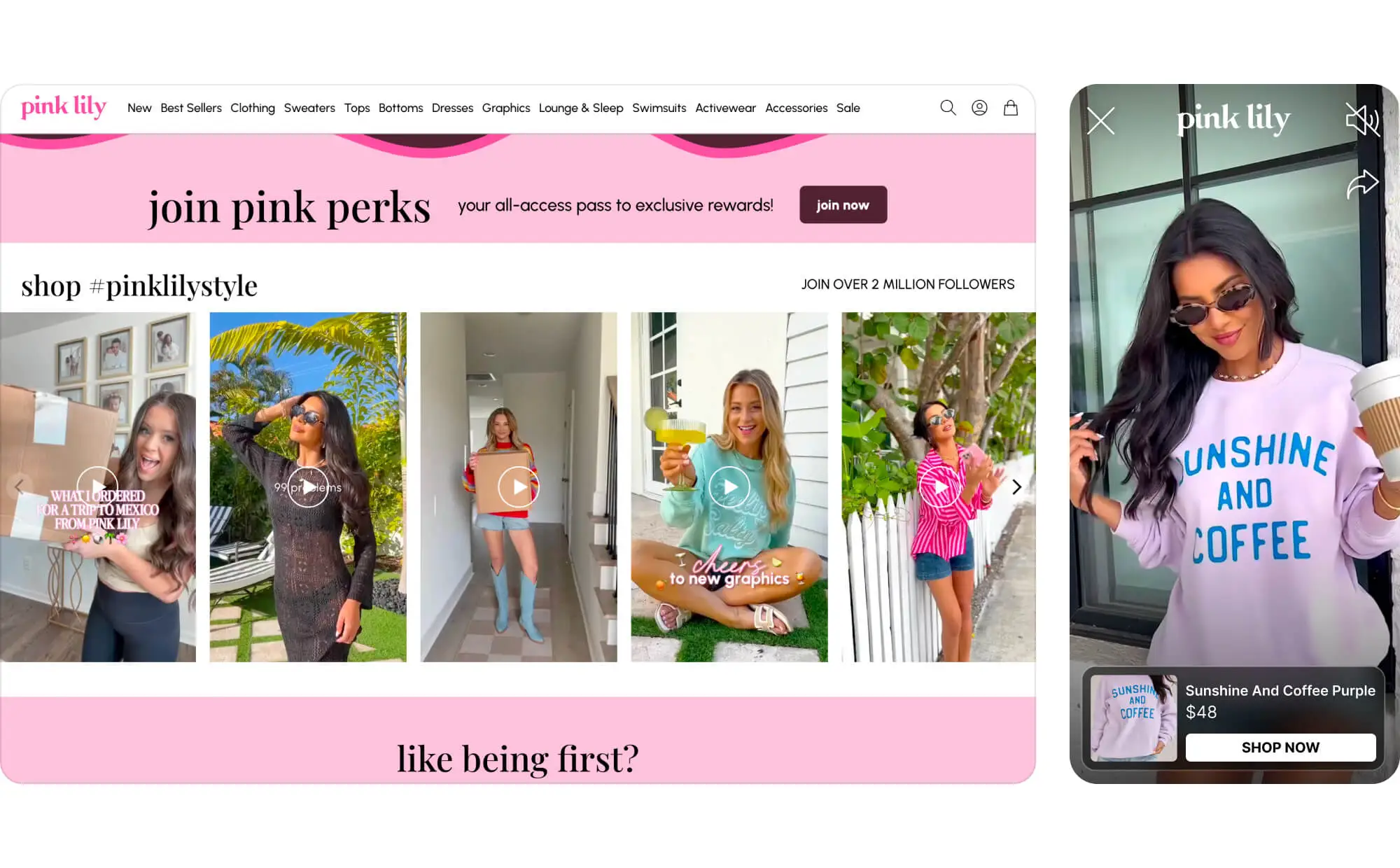
“Product video” is not a single format.
The 5 core types serve different conversion objectives, appeal to different buyer psychology, and belong in different parts of the purchase journey. Understanding the distinctions helps brands allocate production resources where they'll drive the most incremental revenue.
Demo videos show the product performing its core function in real conditions. They answer "how does this work?" with evidence rather than a generic description.
The best demos are specific.
Rather than showing everything a product does, they focus on the capability most important to the target buyer's purchase decision.
A knife brand's demo might show a single cutting technique that reveals edge geometry better than any spec sheet. A stroller brand's demo shows one-handed folding.
Demo videos work at every AOV but become disproportionately valuable for high-consideration purchases where buyers need to see performance before they'll believe product claims.
Vertical-specific applications:
360° video lets buyers examine a product from every angle, approximating the in-store experience of picking something up and turning it over.
For product categories where material quality, construction details, and finish are central to the purchase decision, this format closes a significant information gap that static imagery can't fully address.
Premium everyday carry brands face a specific problem that 360° video solves: buyers evaluating a $200+ bag online are making a judgment about construction quality, material durability, and hardware precision that five static product photos genuinely cannot support.
When the value proposition lives in things like welded seams, YKK zippers, and technical fabric behavior under load, inspection-style video that lets buyers examine those details from multiple angles closes an information gap that no amount of product copy can substitute for.
Best suited for:
Lifestyle videos situate products in their “natural habitat”.
The product appears as part of a broader scene that communicates who uses it, when, and in what context. The aspiration is the primary vehicle, and the product becomes the enabler of that aspiration. The product may be present, but the lifestyle is the thing being sold.
Brands like Yeti have built entire identities around this format, showing coolers and drinkware in outdoor settings that communicate belonging to an outdoor culture rather than demonstrating insulation performance.
Lifestyle content performs particularly well at the top of funnel for awareness and discovery, and for categories where identity and self-expression are purchase drivers (outdoor gear, apparel, beauty, home goods).
The organic lifespan on social platforms tends to be longer than other video types because entertainment and inspiration algorithms favor it.
User-generated video operates on different trust mechanics than any brand-produced format.
UGC reads as peer recommendation rather than advertising, which changes how the information is processed and believed.
The conversion impact of UGC on product pages reflects this.
Dr. Squatch placed customer TikTok and Instagram content directly on their homepage, and video-engaged visitors converted at 9.9% on average, with peaks reaching 26%.
For a deeper treatment of UGC sourcing, rights management, and full-funnel deployment strategy, see our UGC Video hub.
AI video generation has moved from a novelty to a practical production tool for ecommerce teams.
The clearest current use cases are high-volume catalogs where creating custom videos for every SKU isn't economically viable, as well as rapid content iteration where testing different angles or formats requires speed that traditional production can't support.
Videowise AI Studio generates product videos from existing assets such as product images, descriptions, and brand guidelines, without requiring studio production.
For brands with hundreds of SKUs, this means every product can have video coverage rather than only hero products getting the investment.
The current practical boundary for AI-generated video is authenticity. AI-generated content can demonstrate product features clearly, but doesn't (yet) replicate the trust dynamics of UGC or the emotional resonance of well-executed lifestyle video.
The 5 product video types are just a framework.
This section translates that framework into specific, executable ideas organized by vertical with the creative briefs ecommerce teams can bring directly to production.
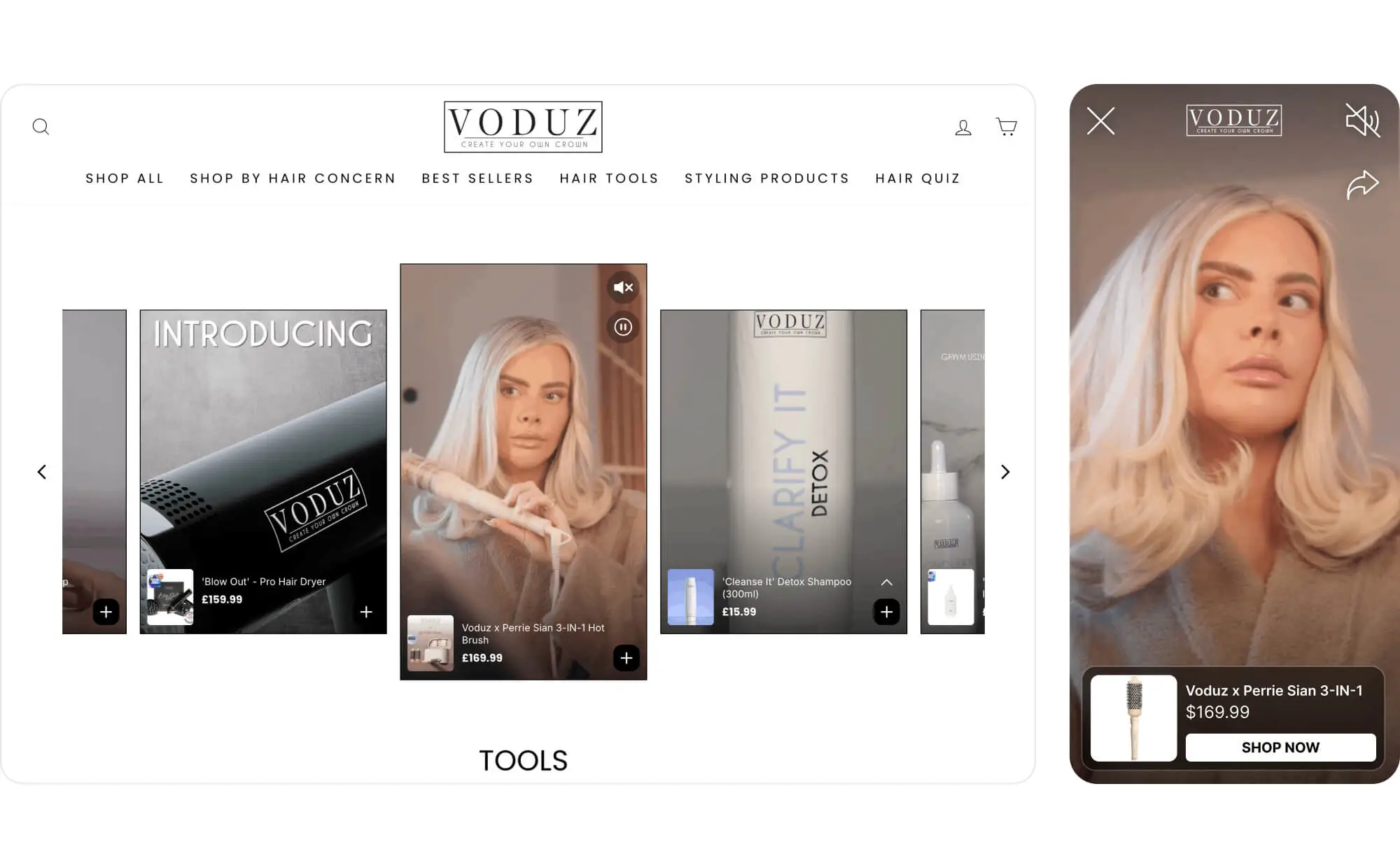

The choice between traditional production and AI-assisted video creation isn't binary. Brands can scale with both, leveraging traditional production for hero content, and AI tools for coverage, efficiency, and rapid iteration.
Every video needs a single, measurable objective before pre-production begins.
Common objectives include:
The objective determines everything downstream: the format, the script structure, the call to action, and where the video will be deployed. A video designed to drive product page conversion has different structural requirements than one designed for social awareness.
Video performs best when it addresses the specific concerns of a specific buyer.
For ecommerce brands, this means going beyond demographic profiles to understand the actual decision context:
Customer reviews are the most efficient source of this intelligence.
Reviews surface the actual language buyers use to describe both the value they received and the reservations they had before purchasing. A product video that addresses the top three concerns in reviews will outperform one that restates marketing copy.
Scripts provide the structure that prevents a video from becoming unfocused.
The rules for ecommerce product video scripts differ from brand storytelling:
A storyboard maps each scene to the script, identifies the shots needed, and reveals production logistics before anyone picks up a camera.
For teams new to video production, this step prevents costly reshoots.
Production quality requirements correlate with video objectives but not necessarily with big budgets.
Dollar Shave Club's foundational brand video cost $4,500 and took one day to film.
It reached 3 million people in the first few days. The founder walking through a warehouse with a handheld camera was the right format for the content. Polished production would have undercut the brand's irreverence.
5 Practical production guidelines that apply regardless of budget:
Raw footage is just the raw material. The final edit will dictate your video’s true performance.
Key editing decisions with direct impact on performance:
AI tools have changed the economics of product video for catalog-heavy ecommerce brands. The most significant applications are AI video generation for SKU coverage, AI script and outline generation for content planning efficiency, and AI editing tools that accelerate post-production.

Videowise AI Studio generates product videos from existing assets: product photography, product descriptions, and brand style guidelines. For brands with deep catalogs, this means every product can feature video content rather than only hero SKUs receiving the production investment.
The practical application: a brand with 200 SKUs can generate a first-pass video for each SKU, then apply traditional production resources to the 20 products that drive 80% of revenue.
AI provides broad coverage while traditional production provides performance optimization for the highest-impact content.
The most reliable AI application in the pre-production phase is using AI writing tools to generate outlines, draft scripts, and identify positioning angles based on customer research.
The process:
Feed AI tools real customer language.
Generate multiple angle variations
For a single product demo, AI can produce scripts for three different buyer segments in the time it would take a copywriter to draft one.
Edit ruthlessly
AI-generated scripts require human review and editing. The first draft surfaces angles but the final script should reflect brand voice and be tested against the objective.
Tools like VEED and Descript accelerate post-production for teams without dedicated video editors.
Auto-captioning, background removal, and basic clip assembly reduce the time from raw footage to publishable video. For UGC content where volume is high and individual quality varies, AI editing tools make it economically viable to process large libraries of customer content.
Therabody — X-ray footage of the massager's internal mechanics makes the engineering visible. When a price premium needs justification, demonstration beats description.
Hydroflask — Thirty seconds of stop-motion focused on a single water bottle cap. One product, one feature, one audience.
Vitamix — High-speed blending footage and a single line of copy: "There's only one Vitamix." The video earns the price premium; it doesn't explain it.
AeroGarden — Step-by-step setup followed by a germination time-lapse. For products with a learning curve, showing competence is faster than describing it.
BarkBox — Fifteen seconds, an excited dog, bold type, a clear CTA. The minimum content needed to make an emotional case is almost always less than brands think.
Easyplant — Opens with a pain point every plant owner recognizes, then shows the product as the obvious fix. Problem-first structure shortens the distance between awareness and intent.
Le Creuset — An 11-second animation drop for a Valentine's Day collection. Seasonal reframing of an existing product requires almost no content, just the right context at the right moment.
Where a video lives on a site determines what job it can do. The same video placed on the homepage, product page, and cart stage will drive different behaviors and deliver different conversion impact.
Placement strategy requires aligning video content to the buyer's information needs at each stage.
The PDP is where the majority of purchase decisions are made and where video drives the highest incremental conversion impact.
But placement within the PDP matters significantly:
Video placed at the same visual level as product photography signals that it's essential viewing rather than supplementary content. For product categories where demonstration is central to the purchase decision, outdoor gear, kitchen tools, technical apparel, beauty, above-the-fold video placement matches buyer priority.
Busy Baby Mat's placement strategy: UGC positioned directly below the Add to Cart button intercepts buyers at the moment of hesitation.
This is where objection-handling video belongs with content showing real use, addressing common concerns, or providing social proof from buyers who made the same purchase decision.
For products with multiple use cases, different buyer segments, or strong customer video libraries, a dedicated section allowing visitors to navigate between videos serves buyers who want more information before committing.
True Classic took this approach across their entire catalog, embedding distinct brand-produced video on over 700 product pages. Visitors averaged 2.7 videos per session with a 70% completion rate, converting at 13%.
Collection pages serve browsers who haven't yet committed to a specific product.
Video here needs to do different work:
Autoplay video carousels on collection pages work when the product range has strong visual differentiation.
Example: lifestyle video showing different use contexts can help visitors self-select toward the right product.
For product categories where differentiation is primarily technical or functional rather than visual, video on collection pages adds less value than on PDPs.
Homepage video communicates brand positioning and category credibility. It works best for visitors arriving from brand awareness contexts like social discovery, word of mouth, and PR, rather than high-intent search traffic.
Dalstrong, a premium kitchen knife brand, used brand-produced video on their homepage to prove the case before rolling it out further.
An A/B test confirmed that video placement provided a measurable conversion boost, validation that they used to justify expanding video across additional site placements.
For high-consideration products where the homepage visitor is still forming an impression of the brand, product videos that communicate craftsmanship and performance can do meaningful work before a buyer ever reaches a PDP.
The cart stage is the most underutilized placement for shoppable product video among DTC brands.
By the time a buyer reaches the cart, they've already decided they want the product. The remaining objections are specific and predictable:
Short-form demo or feature-highlight video (30 seconds or less) placed at the cart stage addresses those objections at exactly the right moment, without pulling the buyer away from checkout.
Video thumbnails in email consistently outperform static imagery for open-to-click rates. The most effective application is including video in post-purchase sequences.
Product tutorial content tends to increase successful adoption, which also drives retention and word-of-mouth. A buyer who receives a helpful tutorial video 3 days after purchase is more likely to become the customer who creates UGC 30 days later.
Video measurement requires isolating the incremental impact of video engagement from other variables.
Brands that attribute all revenue from pages with video to the video itself will overestimate impact. Brands that measure only total page conversion without segmenting video viewers will underestimate it.
Track video-engaged visitors as a distinct cohort from non-engaged visitors. This requires tagging video interactions in your analytics platform (utm parameters, event triggers, or platform-native analytics) and comparing conversion behavior across three segments:
This segmentation reveals the video's incremental conversion impact rather than correlation.
A brand might see 12% CVR from video-engaged visitors overall. However, when segmented, UGC viewers convert at 15% while branded video viewers convert at 9%.
That difference drives budget allocation decisions between UGC collection and professional production.
The standard formula for video program ROI:
Video ROI = (Incremental Revenue from Video Viewers – Program Costs) / Program Costs
Program costs include platform fees, team time (valued at an hourly rate), production costs, AI tool subscriptions, and creator compensation for UGC.
Incremental revenue is calculated from the cohort comparison: revenue from video-engaged visitors minus expected revenue from those visitors at baseline conversion rate.
The most actionable output of a rigorous measurement program is a prioritized video production roadmap. Brands should track which video types drive the highest CVR lift by page type, which product categories benefit most from video, and what production investment is required to create videos that perform at the top of the range for each format.
For Videowise customers, the Content Performance dashboard provides this analysis natively by showing:
Product video can drive conversion at every stage of the purchase journey, but only when the right video reaches buyers at the right moment.
The brands generating the most revenue from video are deploying it more strategically, rather than just producing more content.
Videowise provides the complete infrastructure for product video revenue:
The five most effective product video types for eCommerce are: product demo videos (showing the item performing its core function in real conditions), 360° and inspection videos (letting buyers examine every angle), lifestyle videos (situating the product in its natural context), UGC video on product pages (customer-created content that builds peer trust), and AI-generated product videos (ideal for scaling coverage across large catalogs). The best format depends on your product category and purchase price, high-consideration, high-AOV products benefit most from demo and inspection formats, while lifestyle and UGC formats drive discovery and social proof across all price points.
Product videos increase conversion rates by bridging the information gap that static images can't close — they demonstrate the product in real use, communicate texture, scale, and ease of use, and build trust through authentic experience. Visitors who engage with video on product pages convert at significantly higher rates than those who don't. Across Videowise implementations, video-engaged visitors consistently convert at 9–14%, with top performers reaching 26–27% during peak periods, compared to a 1–3% baseline eCommerce conversion rate. The effect compounds with AOV: a $15 product may only need a photo, but a $150+ product needs video to justify the purchase and reduce buyer hesitation.
The highest-impact placement for product videos is the product detail page (PDP), specifically above the fold near primary product imagery and below the Add to Cart button for objection-handling content. Collection pages benefit from autoplay video carousels that help browsers self-select toward the right product. Homepage video communicates brand positioning and works best for first-time visitors in the awareness stage. The cart and checkout stage is the most underutilized placement, short-form demo video here addresses final purchase hesitation at the critical decision moment. Email video thumbnails and off-site deployment also consistently outperform static imagery for click-through rates.
Brands can produce effective product videos without large budgets in two ways. First, lean traditional production: mobile-first vertical framing, consistent lighting, a tripod, and a clear single-objective script can produce high-performing videos, Dollar Shave Club's iconic brand video cost $4,500 and reached 3 million people in days. Second, AI-assisted production: tools like Videowise AI Studio generate product videos directly from existing product images, descriptions, and brand guidelines, enabling brands with hundreds of SKUs to achieve full catalog video coverage without a full production crew. UGC sourced from customers is also a zero-production-cost format that consistently drives strong conversion on product pages.
To accurately measure product video ROI, track video-engaged visitors as a separate cohort from non-engaged visitors, this reveals the incremental conversion impact rather than simple correlation. Key metrics to monitor include video engagement rate (40–60% for on-site placements is a healthy benchmark), completion rate (50–70% for short-form video), CVR lift (video viewers vs. non-viewers, with well-placed video typically delivering 2–4x baseline), AOV impact (5–10% lift is common for multi-video experiences), and revenue per video-engaged visitor. The ROI formula is: (Incremental Revenue from Video Viewers – Program Costs) / Program Costs. Avoid the common error of attributing all revenue from pages containing video to the video itself.
Why Product Video Outperforms Static Images
Types of Product Video for eCommerce
29+ Product Video Ideas by Vertical
Product Video Placement Strategy
Measuring Product Video Performance
Turn Product Videos Into Revenue with Videowise


.jpg)
.jpg)