.jpg)
.jpg)
Live shopping converts at 10 to 30 percent, according to industry benchmarks, compared with 1 to 3 percent for a standard ecommerce page. Return rates drop by as much as 40 percent, because shoppers see the product demonstrated before they buy it. Those numbers are why the format keeps showing up on Shopify brands' roadmaps, even after a few years of "isn't this just a China thing" skepticism.
Average order value on live shopping events also tends to run 15 to 30 percent higher than a standard order, and repeat viewers convert at 2 to 3 times the rate of first-time viewers, so the format rewards brands that show up on a schedule rather than running one event and stopping. Finding the best live shopping platforms for a Shopify store starts with sorting real on-site tools from marketplaces that only lend you their audience.
The harder problem is picking a platform. Some tools are standalone marketplaces that bring their own audience. Others are Shopify apps that keep the sale, the checkout, and the customer data on your own store. A few only make sense once you're already running weekly shows with a real production budget. Our complete guide to live video commerce covers the strategy side; this one is about picking the tool.
This guide covers 12 live shopping platforms for Shopify brands in 2026: what each one actually does, what it costs, and who it's a bad fit for. We evaluated each on checkout experience, Shopify integration, replay value, and whether the pricing model punishes you for succeeding. If you're still deciding whether live shopping is worth testing at all, here's the case for trying it.
Key takeaways:
A live shopping platform lets a brand stream video in real time while viewers browse, ask questions in chat, and buy without leaving the stream. The best ones tag products directly in the video feed, sync inventory and pricing from Shopify automatically, and turn the recording into a shoppable replay the moment the show ends.
We looked at four things for each platform: does the sale happen on your own site or does it route through someone else's app or marketplace, how deep is the Shopify integration, does the replay keep selling after the event ends, and does the pricing model scale sensibly with how often you plan to go live. We also noted where a platform requires production gear or a dedicated team, since that's the real barrier for most Shopify brands, not the software itself.
Here's the full list before the detailed breakdown of each one.
.jpg)
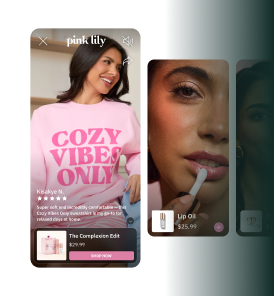
Videowise's live shopping module is built around one idea: sell live on your own store, with checkout inside the player, while reaching every other channel from the same broadcast. One stream goes out to the website, Instagram, TikTok, YouTube, and Shopify's Shop App at the same time. Videowise is the only live shopping platform that distributes into Shop App this way, which puts a show in front of Shop App's 100 million-plus shoppers on top of a brand's own audience.
The feature set covers what a brand actually needs mid-show: multiple hosts with automatic commission payouts, AI-powered chat that answers viewer questions and moderates comments in real time, RSVP banners and reminders sent by email and SMS, gamification to bring viewers back for the next show, and audience segmentation that syncs straight into Klaviyo for follow-up flows. Once a show ends, AI Moments automatically pulls the best-performing clips out of the recording and turns them into shoppable video for product pages, and every past show lives on a dedicated, branded recordings page that keeps selling.
Videowise reports a 12%+ average conversion rate during live shows (about 6 times higher than standard browsing) and 4 times more time on site while a show is running, across more than $30 million in revenue and 2 million products sold through live events on the platform. Tibi is one of the clearer examples: moving its "Style Class" livestreams from Instagram onto its own site with Videowise generated $2.8 million in net new revenue, 2,500 new orders, and 1,000 new customers from live show RSVPs alone. Andar showed what's possible at the other end of the spectrum: a single 3-hour show that made $134,000 with a two-person team, a smartphone, and no studio.
Pricing is modular. The Live Shopping plan starts at $239 a month for up to 20,000 streamed minutes, and it can be bundled with the Shoppable Video and AI Clips modules. The full platform, all modules together, starts at $479 a month, or $639 a month billed annually with the bundle discount.
Best for: Shopify brands who want live shopping built into the same platform as their evergreen shoppable video, broadcasting to every channel from one stream instead of running a separate live-only app on top of a separate video app. Brands who only want bare-bones live streaming and nothing else may find a single-purpose tool like LIVEL or Channelize.io cheaper to start with; see items 9 and 5 below.
Bambuser is one of the longest-running dedicated live shopping vendors, built around one-to-many broadcast shopping and one-to-one video clienteling calls. It gives brands a branded, embeddable player, shoppable replays, and analytics that go beyond view counts, tracking which products got clicked and purchased minute by minute during a show.
Pricing is public through the mid tier: a free plan covers 250 views a month, Essential runs $79 a month for 2,000 views, and Pro is $249 a month with a white-label player, single sign-on, and human support. Enterprise pricing requires a sales call.
Best for: brands with a real production budget and a clienteling use case, like one-to-one styling or consultation calls, who want a dedicated live commerce vendor. The tradeoff is that Bambuser only does live video. There's no built-in shoppable video or UGC layer, so most brands run it alongside a separate tool for their evergreen content.
CommentSold built its business on comment-to-buy selling: a viewer comments a size or a keyword during a livestream on TikTok, Facebook, Instagram, or the brand's own site, and the platform automatically holds that item and generates an invoice. It's the dominant tool among boutique and apparel resellers running frequent, high-cadence shows.
The platform includes automated inventory holds, waitlists, a branded mobile shopping app, and flash sale and dynamic discount tools. Pricing starts at $149 a month plus 5 percent of sales.
Best for: apparel and boutique brands doing multiple live shows a week who want comment selling specifically, not just video with a buy button. The revenue share means cost scales with success, so it favors brands treating live shopping as a primary, frequent channel rather than an occasional event.
Firework pairs live shopping with short-form shoppable video and distributes both across a brand's site, social channels, and connected TV. It leans on AI to generate video from existing content and to pull UGC in from social accounts automatically.
Pricing is usage-based and mostly custom: entry plans have been reported around $259 a month for 50,000 video views, with per-view overage charges above that.
Best for: content-heavy brands that want live and short-form video working together across multiple channels, not just their own storefront, including brands experimenting with connected TV as a discovery surface. The view-based pricing model is worth modeling carefully before committing, since costs can climb fast for a brand with high traffic.
Channelize.io is a lower-cost, embeddable live shopping widget: a floating mini-player, product spotlighting, and simulcasting to Facebook, TikTok, YouTube, and Twitch, all installable on a Shopify store without custom development. In 2026, Channelize.io acquired competitor LiveScale, folding one of the other budget-friendly live shopping vendors into its own roadmap.
Entry plans run under $100 a month after a 14-day free trial.
Best for: small teams who want to test live shopping before committing serious budget. At the entry tier, it doesn't match the analytics depth or dedicated support that Bambuser or Firework offer at higher price points.
Sprii is a Shopify-native live shopping app built for brands running shows across multiple channels at once. It handles simulcasting to Facebook, Instagram, and the brand's own site from a single broadcast, with gamification tools like polls and quizzes built into the stream, plus shoppable replays afterward. Sprii says more than 3,000 brands use the platform.
Pricing starts around $995 a month for Shopify merchants.
Best for: established Shopify brands already running live shows regularly across several platforms who want a dedicated Shopify-first vendor. That price point is a bigger commitment than most other tools on this list, so it suits brands past the testing phase.
TalkShopLive combines an embeddable shoppable player with its own marketplace, so a live show can sell both on the brand's site and to TalkShopLive's own audience. It has built an association with celebrity and media-driven shopping events, and it includes an iOS seller app and prepaid shipping label generation.
Pricing runs around a 10 percent platform fee plus a flat charge per item sold.
Best for: brands or publishers who want marketplace reach in addition to an embeddable player, especially around a single high-visibility event tied to a launch, a guest host, or a media moment. The per-item fee structure fits occasional, high-AOV shows better than a brand planning to go live every week.
LiveMeUp is a lighter Shopify-native option: product sync straight from your store, live streaming plus shoppable video, a floating on-site widget, and automatic replays. It's built for brands who want to add live shopping without changing anything else about how their store runs.
A free plan is available, with paid tiers running roughly $89 to $399 a month depending on usage.
Best for: Shopify stores testing live shopping for the first time who want to stay inside their existing setup, rather than adopting a separate platform with its own onboarding and support process. It's a smaller vendor, so the feature set is lighter than the enterprise-focused platforms on this list.
LIVEL is the cheapest way onto this list: a single $19-a-month Shopify app plan plus a $0.045-per-minute, per-viewer usage fee. It covers what actually matters for a first show: in-stream add-to-cart tied directly to the Shopify cart, multiple hosts or devices in one stream, moderated live chat, and automatic recording for replay.
Best for: a Shopify brand running its first live shopping event and testing whether the format works before spending more. The usage-based viewer fee is worth watching if a show goes wider than expected, and the feature set is intentionally basic compared with the rest of this list.
Whatnot is a livestream marketplace built around auctions, buyer protection, and niche collector communities, particularly collectibles, trading cards, and resale. Sellers get built-in demand from Whatnot's own app audience instead of having to drive their own traffic to a show.
Whatnot charges 8 percent of the item price plus a 2.9 percent payment processing fee per transaction.
Best for: sellers in categories with an established collector audience on Whatnot already. It's worth being clear-eyed about what this is: a standalone marketplace, not a Shopify tool. Whatnot owns the checkout, the customer relationship, and the data, and syncing inventory back to Shopify requires third-party workarounds.
TikTok Shop LIVE is livestream shopping built into the TikTok app itself: in-app checkout, creator co-hosting, an affiliate program for creators who promote a brand's products, and TikTok's own discovery algorithm surfacing the stream to new viewers.
TikTok charges up to 6 percent commission per item, plus separate transaction and fulfillment fees.
Best for: brands chasing discovery-driven, impulse-friendly sales with a younger audience, as an acquisition channel rather than a storefront replacement. TikTok controls checkout and most of the customer data, so this works best alongside live shopping on your own site, not instead of it.
Amazon Live adds a livestream layer to an existing Amazon storefront: a shoppable carousel, product page placement, creator tiers, and viewer metrics. There's no platform fee beyond Amazon's standard selling fees, currently a $39.99-a-month Professional plan plus category-based referral fees.
Best for: brands who already generate meaningful sales volume on Amazon and want to add a live layer to that existing channel. It only makes sense if you're already selling there, and like TikTok Shop, Amazon keeps the customer relationship.
Start with where the sale actually happens. A platform that checks out on your own Shopify store keeps the customer data, the order, and the relationship with you. A marketplace or in-app format like Whatnot, TikTok Shop, or Amazon Live brings its own audience, but you're borrowing that audience, not owning it.
Match the pricing model to how often you'll actually go live. A flat monthly fee makes sense for weekly shows. A revenue share like CommentSold's, or a per-item fee like TalkShopLive's, makes more sense for occasional, high-value events, since the cost only shows up when you sell something.
Check what happens to the recording. The best platforms turn every live show into a shoppable replay automatically, and replay typically converts at 60 to 80 percent of live rates, according to industry data, which means a single show keeps earning long after it airs. A platform that treats the replay as an afterthought is leaving revenue on the table.
Be honest about production reality. Andar ran its $134,000 show with two people, a smartphone, and no studio. Most Shopify brands don't need enterprise-grade production tools to get started; they need a platform that works with a lean team and lets them learn from the first few shows.
Finally, think about whether live shopping should live inside your existing video strategy or sit apart from it. A brand already running shoppable video and UGC, the platforms covered in our shoppable video platform comparison, gets more out of a tool that shares data and product tagging across both formats than out of stitching together two separate apps. For a wider view of vendors across both categories, see our video commerce platform comparison.
Whether you start with a $19 LIVEL show or a full Videowise live shopping module built into your existing shoppable video setup, the fastest way to know if live shopping works for your store is to run one show and look at the numbers afterwards. Book a 30-minute demo to see how Videowise handles live shopping, replay, and checkout in one place. No credit card required to start.
For most Shopify brands, Videowise is the strongest overall pick. It's the only platform on this list that broadcasts one live show to your site, Instagram, TikTok, YouTube, and Shopify's own Shop App at the same time. You also have access to full granular sales attribution. It also runs live shopping on the same platform as your evergreen shoppable video, so there's one dashboard and one analytics view instead of two apps that don't talk to each other. Brands that specifically need one-to-one video clienteling might still look at Bambuser, and brands just testing the format on a tight budget can start with LIVEL or Channelize.io before graduating to a fuller platform.
The bigger difference isn't the sticker price, it's what the price is based on. Videowise charges for streamed minutes: the Live Shopping plan starts at $239 a month for up to 20,000 minutes, a flat cost that stays flat whether a show sells $2,000 or $200,000. A lot of the platforms on this list charge the opposite way: CommentSold takes 5 percent of sales on top of its $149 monthly fee, TalkShopLive takes roughly 10 percent plus a per-item charge, and Whatnot, TikTok Shop, and Amazon Live skip a subscription entirely and take a straight commission instead, which means the platform earns more every time a brand's show does well. LIVEL is the cheapest entry point at $19 a month, but its usage fee is charged per viewer-minute, so a show that goes wider than expected gets more expensive in real time, not just at renewal. Sprii and Firework sit at the higher end and can run into four figures a month or require a custom quote.
Yes. Andar, a Videowise customer, ran a profitable live show with a two-person team, a smartphone, and no studio, generating $134,000 in three hours. Videowise's own platform data backs this up more broadly: brands running live shows on it see roughly 6 times higher conversion and 4 times more time on site than standard browsing. The barrier to entry has dropped: what matters more than budget is picking a platform built to make a lean team look produced, and going live consistently enough to build a returning audience.
No. A phone, decent lighting, and a stable internet connection are enough to start. Studio-grade production helps once a brand is running frequent shows at scale, but it isn't a requirement for a first event. Videowise's own multi-host support and AI-powered chat moderation exist specifically to make a one- or two-person team look studio-run, which is exactly how Andar produced its $134,000 show.
Both options exist, and it's worth knowing which one you're getting. Shopify-native tools like Videowise, Sprii, LiveMeUp, and LIVEL run the entire show, checkout included, on your own storefront. Videowise goes a step further and also broadcasts into Shopify's own Shop App, putting a show in front of Shop App's 100 million-plus shoppers, something none of the other Shopify-native tools on this list currently offer. Marketplaces like Whatnot and in-app formats like TikTok Shop LIVE and Amazon Live run on their own platforms instead, which brings a built-in audience but means the sale, and the customer data, don't stay on your site.


.jpg)