.jpg)
.jpg)
Choosing the best shoppable video platforms for e-commerce brands in 2026 comes down to matching your growth goals with the right mix of commerce features, integrations, and performance.
Shoppable video platforms let viewers interact with and buy products directly inside a video, reducing friction and lifting buying intent. The market has matured quickly, splitting into commerce-first tools for on-site product storytelling, livestream-first solutions for real-time selling, and flexible video hosts adding shoppable layers. With live commerce projected to account for roughly 10–20% of e-commerce by 2026, getting your stack right now can define next year’s revenue curve.
Below, we break down the 12 leading options, what they do best, who they fit, and how to weigh price, scale, and ROI.
Shoppable video platforms power in-video product tagging, pricing, and purchase flows so shoppers can discover, evaluate, and buy without leaving the video experience. In 2026, offerings cluster into three archetypes:
As budgets shift from static PDP content to dynamic video commerce, expect stronger analytics, cross-channel syndication, and AI-assisted production to differentiate winners.
.jpg)
Videowise is a full-stack video commerce platform built for ecommerce brands that want to turn video into a measurable revenue channel. Where most shoppable video tools stop at on-site embeds, Videowise covers the entire workflow: sourcing and managing UGC through its UGC Hub, generating AI-powered product videos via AI Studio, clipping and repurposing content with Clips, and organizing everything in a Creative Library before publishing across interactive video widgets, live shopping events, TikTok Shop, and broader social commerce channels, all from one place.
The platform includes a built-in Influencer Network for sourcing creators, and a Content Performance dashboard so teams can tie every piece of video content directly to conversions, AOV, and revenue rather than relying on vanity metrics.
Videowise supports Shopify and Salesforce Commerce Cloud, making it a strong fit for both scaling DTC brands and more complex retail operations. Its customer roster spans apparel, beauty, skincare, supplements, and electronics, with brands like Dr. Squatch, True Classic, Skullcandy, and Sculpted by Aimee among its published case studies.
For teams that want shoppable video creation, distribution, and analytics under one roof rather than stitched together across tools, Videowise is one of the more complete video commerce solutions available.
What sets it apart:
Pricing
Videowise uses a modular pricing model, so brands pay for the capabilities they actually use rather than a single bundled tier. The four main modules are:
Each module includes a free trial, and plans scale with traffic, stream volume, or storage depending on the product. For brands that only need on-site shoppable video to start, AI Clips is the lowest-friction entry point. Teams wanting the full suite can combine modules as their strategy grows.
Tolstoy offers interactive, choose-your-own-path shoppable video experiences with strong Shopify alignment and rapid onboarding. With plans starting around $19/month and a free tier, it’s a low-risk way to pilot video commerce, personalize product journeys, and run conversion experiments. Merchants highlight quick deployment and early conversion gains for Shopify storefronts, thanks to its Shop feed personalization and easy tagging (see Tolstoy’s platform overview).
Livescale is built for livestream shopping—real-time product demos or influencer sessions packaged with native purchase flows and live inventory sync. Brands use it for recurring shows and launches where audience interactivity and immediacy matter. Expect built-in checkout, real-time analytics, and enterprise-grade scalability for high-concurrency events, with pricing tailored to broadcast volume and support requirements (see Sprii’s live shopping guide).
Bambuser is an enterprise live commerce leader favored by large retailers for ultra-low-latency streaming, retail-grade analytics, and seamless live checkout. It’s ideal for frequent, high-volume events where production teams need reliability, moderation, and deep reporting. Implementation typically involves custom integrations and enterprise or usage-based pricing tiers (profiled in Tagembed’s shoppable video roundup).
Firework specializes in short-form, TikTok-style shoppable video and immersive on-site widgets that bring social energy to your storefront. It blends influencer content and UGC with embedded product tagging and checkout for a continuous, high-intent feed (see Firework’s platform highlights).
At a glance:
Smartzer focuses on no-code, clickable overlays and product hotspots—perfect for interactive lookbooks, fashion drops, and visually rich campaigns. It’s a strong fit for brands that want to turn campaign films into interactive shopping without heavy development. Pricing typically starts near $99/month, with more limited support for livestreaming or broad multi-channel syndication (outlined in Taggbox’s guide to shoppable video platforms).
MikMak serves multi-retailer brands that need to route shoppers to their preferred retailer checkout—a multi-retailer shoppable video model that improves measurability across distributed channels. Its strength is revenue attribution across retailers, plus connectors into analytics and media platforms for full-funnel reporting (covered in Koanthic’s 2026 platforms guide).
Swirl provides efficient product tagging, in-video checkout, and easy-to-schedule livestreams that can be replayed as evergreen shoppable assets. Teams like its actionable analytics for campaign iteration and the ability to turn one live event into durable, always-on shoppable content (see Live2.ai’s platform list).
Vidjet is a lightweight, on-site video commerce tool for scaling embeddable shoppable videos across PDPs with minimal technical lift. It’s popular with DTC brands for rapid deployment, “shop now” overlays, and straightforward analytics at an affordable entry price near $20/month (profiled by Diskmagik’s 2025 roundup).
Vimeo is a mature business video host that now supports shoppable video functionality alongside robust privacy, review tools, and reliable delivery. As a business video hosting solution, it offers secure, scalable infrastructure for teams that need established workflows and governance. Typical pricing tiers include Plus ($7/mo), Pro ($20/mo), and Premium ($75/mo), with e-commerce overlays and integrations available via apps and embeds (see Muvi’s platform overview).
Brightcove is an enterprise-grade video platform for custom commerce workflows, robust CDN delivery, and advanced monetization. It’s powerful but complex—best for brands with technical resources seeking deep customization, global streaming reliability, and integration flexibility (context from Wowza’s analysis of shoppable video infrastructure considerations).
Channelize.io delivers a modern, stories-style shoppable video playlist that emphasizes conversion with immersive layouts, direct product tagging from your catalog, and straightforward customization for on-site shopping. It stands out for ease of use and conversion-focused UX designed for quick wins without heavy engineering (outlined in Channelize.io’s 2026 perspective).
Use this simple framework:
We have also broke down a full detailed checklist on how to choose the best shoppable video platform.
Comparison at a glance:
Focus on four essentials:
Each capability compounds: faster paths to checkout with reliable data lift conversion while analytics inform smarter content and merchandising.
Expect three common pricing approaches:
Sample pricing landscape:
Commerce-first tools (e.g., Videowise, Tolstoy) often align costs to conversion impact, while livestream and general hosts can carry higher baselines for bandwidth, moderation, and support.
Site performance (load speed, interactivity, and visual stability) directly affects SEO and conversion. Start with a limited rollout by repurposing top social videos into shoppable widgets on a few PDPs. Measure Core Web Vitals (LCP, CLS, INP), verify that analytics and revenue attribution are accurate, and confirm inventory sync before scaling. Deployment options range from no-code installs to custom themes and app integrations; always test on staging, monitor tag weight, and lazy-load noncritical assets. We've covered how to measure product video performance in-depth here.
Two macro signals underpin strategy: video accounts for roughly 82% of internet traffic, reflecting sustained consumer preference for video-first experiences, and live commerce continues to grow as a share of e-commerce (see Muvi’s industry overview). Emerging trends to watch:
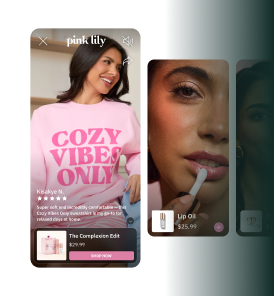
Shoppable video platforms let shoppers discover and buy products directly inside a video, removing the steps between interest and purchase. Brands typically see higher conversion rates, increased average order value, and lower cart abandonment. Platforms like Videowise go further by connecting every video to revenue-level analytics, so teams can attribute sales to specific content rather than relying on views or engagement metrics alone.
Most shoppable video platforms connect directly to your product catalog via native integrations, syncing pricing, variants, and inventory in real time. Shopify merchants can typically get started without custom code. Some platforms, including Videowise, also support Salesforce Commerce Cloud, making them a fit for larger retail operations alongside DTC stores.
For live shopping, look for platforms with built-in in-stream checkout, real-time inventory sync, and reliable high-concurrency streaming. Videowise offers native live shopping as part of its broader shoppable video suite, while dedicated tools like Bambuser and Livescale are built specifically for high-volume broadcast events with enterprise-grade moderation and analytics.
The biggest shoppable video trends in 2026 are AI-assisted video creation and product tagging, automated UGC-to-commerce workflows, multi-channel syndication across on-site, social, and TikTok Shop, and live shopping replays repurposed as evergreen shoppable assets. Platforms like Videowise are consolidating these capabilities into a single workflow to reduce tool sprawl for growing brands.
Start by matching the platform type to your primary goal. Commerce-first platforms like Videowise suit brands focused on on-site conversion, UGC, and multi-channel publishing. Livestream-first tools suit high-frequency live events. Flexible video hosts suit teams that need governance and custom infrastructure. Run a 2 to 4 week pilot on your top product pages, track revenue attribution, and check Core Web Vitals impact before committing.


.jpg)
.jpg)