.jpg)
.png)
AI can now generate a product video in minutes. Getting that video to produce revenue is a different problem, and it's the one most brands get wrong.
The AI video tools market has split into two camps. On one side: generation tools that turn product photos, scripts, or prompts into finished video. On the other: video commerce platforms that take video (AI-generated or not) and turn it into a conversion channel on your store. Most "best AI video tools" lists blur the two together, which is how brands end up with a folder of beautiful AI clips and no measurable sales impact.
This guide covers the 8 AI video tools worth evaluating for ecommerce in 2026, what each one is actually good at, and how to combine them into a stack that moves your conversion rate, not just your content calendar.
AI video tools for ecommerce are software platforms that use artificial intelligence to create, edit, or distribute product video at scale. They include generative tools that produce video from product images or text prompts, clipping tools that cut long footage into short-form content, and video commerce platforms that make videos shoppable and tie them to revenue.
Every tool on this list was scored against five criteria:
Commerce platforms and creation tools are judged on what they're built for. Runway will never be shoppable, and that's fine; it isn't trying to be.

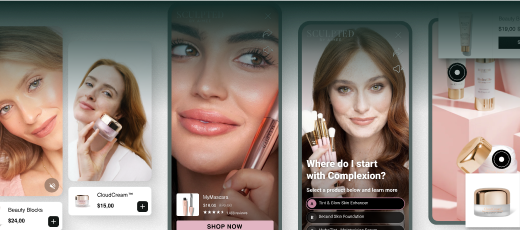
Videowise is a CRO-driven video commerce platform for Shopify. The premise behind it: your best-converting content already exists as video (UGC, creator clips, founder tutorials, live replays), but most of it sits on social channels doing nothing for the shoppers already on your store. Videowise is the layer that manages all of that video with AI and turns it into conversion lift you can measure. Over 5,000 Shopify and Shopify Plus brands use it, with conversion rate increases between 5 and 35%.
The platform covers the whole video commerce workflow. Pull UGC and creator content straight from TikTok, Instagram, and YouTube. Make every video shoppable with product tagging and in-video add to cart. Sell in real time through live shopping, on your store and in the Shop App. Then push content back out to social, so one video library feeds every channel. Built-in A/B testing and revenue analytics show exactly what each video sells, which is the difference between video as decoration and video as CRO.
AI runs through the entire pipeline. AI Studio generates studio-quality product visuals from static images (180-degree spin videos, lookbooks, image-to-video animations, try-on images) when you need content you don't have. Clips reads the audio and visual context of long videos and slices live replays, demos, and UGC into categorized short clips, ready for shoppable feeds.
The numbers hold up under testing. Skullcandy lifted revenue per session 7.9%, validated by A/B test. True Classic sees 13% conversion rates with a 70% video completion rate. Dr. Squatch chose Videowise after testing Wistia, Vimeo, Firework, and Tolstoy, then drove $750K+ in video-attributed revenue. Even Hot Ones runs its shoppable video experience on Videowise. And because videos render outside your theme code, page speed stays intact across thousands of pages.
Best for: Shopify brands that want one platform to manage, convert, and measure all their video content.
Pricing: Modular. Shoppable Video and Live Shopping start at $239/month each, AI Clips at $159/month, and AI Studio content creation at $99 for 80 AI videos (annual billing). The full platform starts at $479/month, and every plan comes with a money-back guarantee.
Limitation: Built Shopify-first. Brands on other platforms can use the JavaScript embed, but the deepest features (product sync, checkout) assume Shopify.
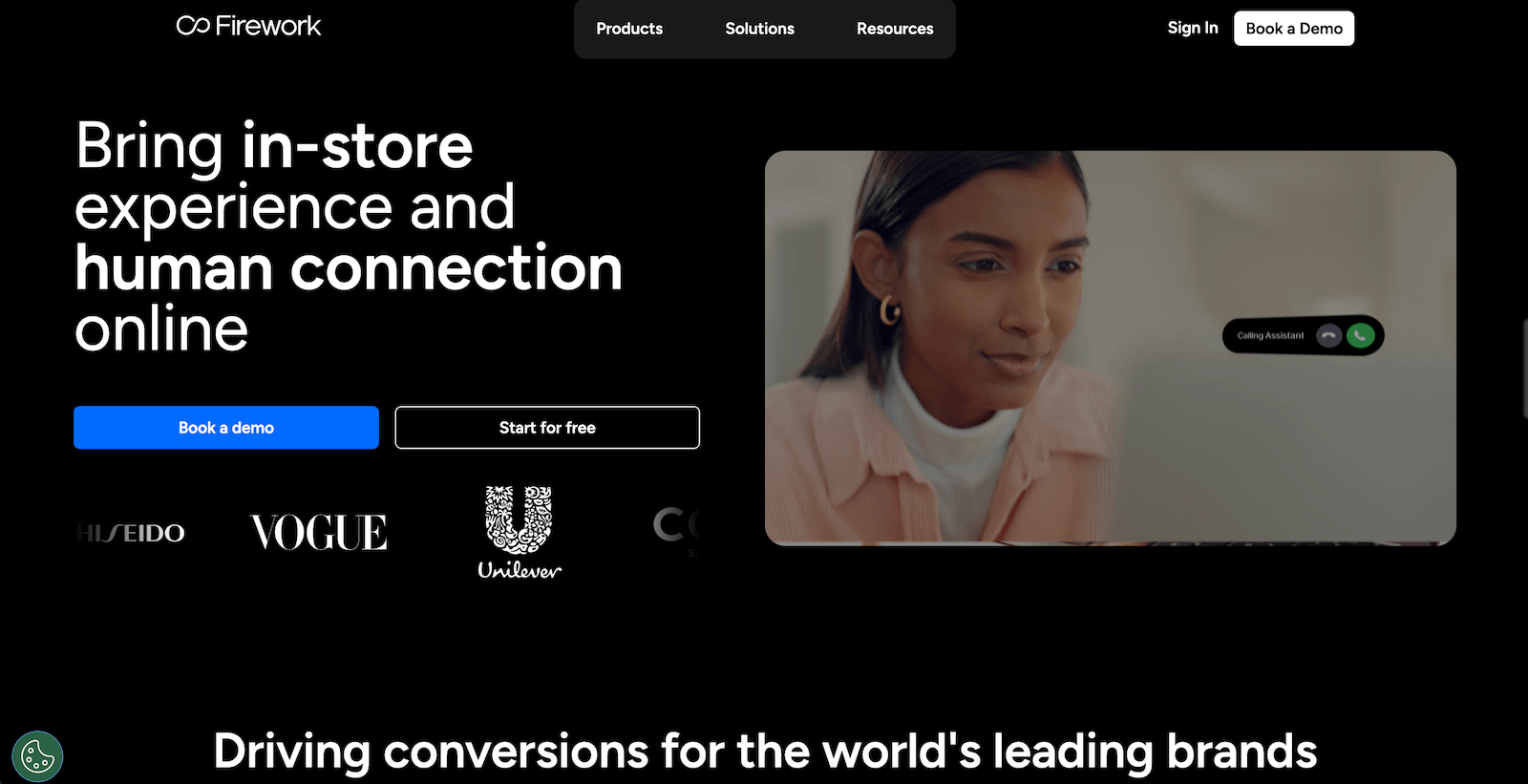
Firework is an enterprise video commerce platform focused on omnichannel distribution. It lets retailers embed short-form shoppable video and livestreams across websites, apps, email, and retail media placements, and it has pushed into AI with virtual sales assistants and automated video workflows.
Its strength is breadth: if you're a large retailer that needs the same video commerce infrastructure across multiple brands, regions, and channels, Firework is built for that scale. It also offers one-to-one virtual shopping features that connect store associates to online shoppers.
Best for: Enterprise retailers running video across many channels and properties.
Pricing: Custom enterprise pricing.
Limitation: The enterprise focus cuts both ways. Mid-market DTC brands often find the pricing and implementation weight hard to justify, and the platform isn't Shopify-native in the way a dedicated app is.
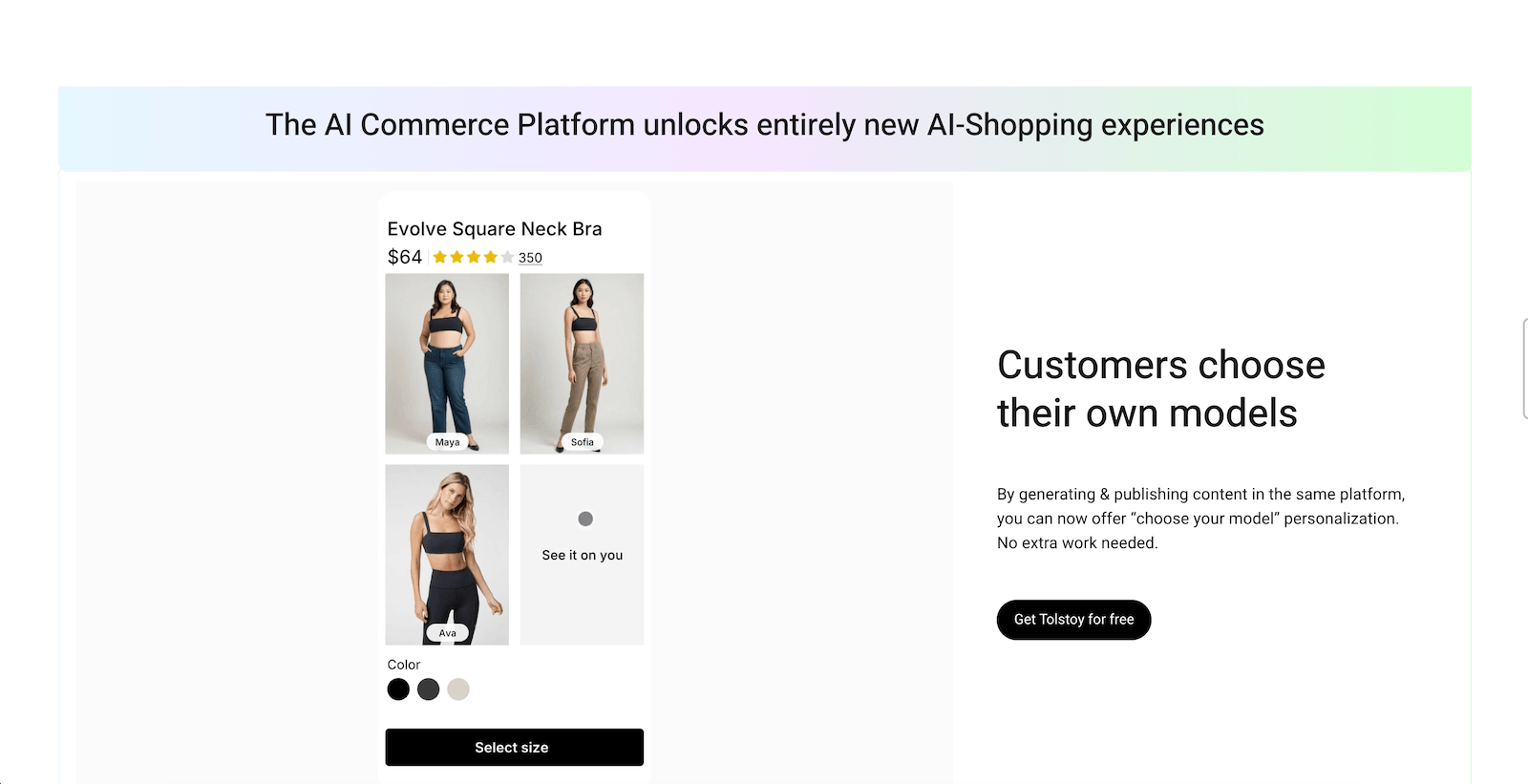
Tolstoy is a video commerce platform that pairs shoppable video feeds with AI-generated content. Its AI Studio produces product images and videos from catalog data, its AI Player handles shoppable video on-site and on channels like the Shop App, and its AI Shopper adds a conversational agent with virtual try-on into the video experience.
The interactive video heritage is real: Tolstoy started in branching, choose-your-path video, and that DNA shows in its quiz and conversation features. For brands that want an AI agent layered into video discovery, it's one of the few options attempting it.
Worth knowing: several brands have moved the other way. Dr. Dennis Gross switched from Tolstoy to Videowise and passed $1M in video-attributed orders, and Tibi made the same switch before generating $2.8M+ across 27 live shopping episodes.
Best for: Brands experimenting with AI shopping agents inside video.
Pricing: Free plan; paid plans scale by usage.
Limitation: Brands that switched cite analytics depth and live shopping as the gaps.
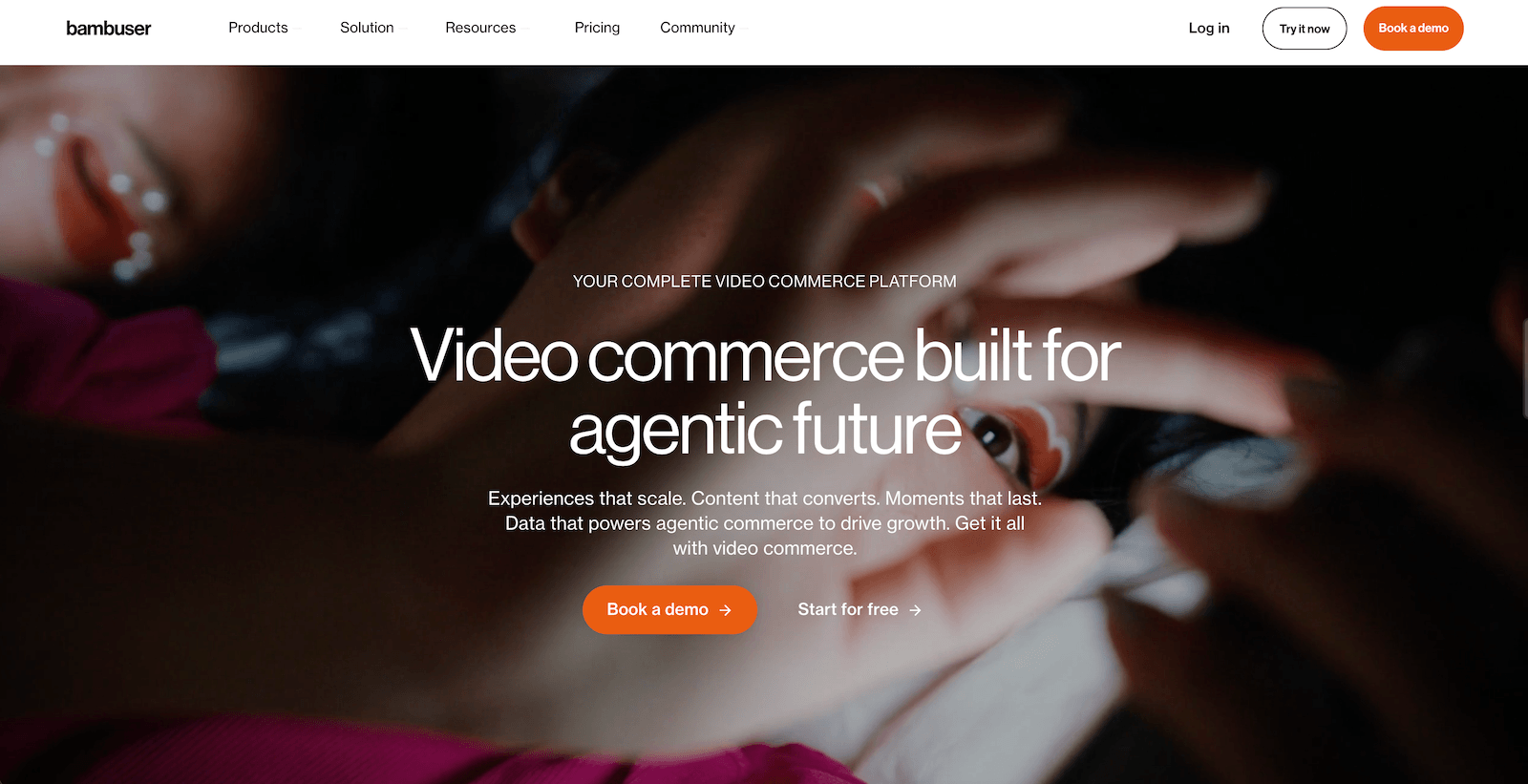
Bambuser is the live shopping specialist of this list. It powers one-to-many livestream shopping events and one-to-one video consultations for enterprise and luxury retailers, with strong adoption among European fashion and beauty houses.
Its AI features center on the live workflow: automated clipping of stream highlights, captioning, and post-event content generation. For brands where live selling is a core strategy rather than an occasional experiment, Bambuser's production tooling, moderation, and event analytics are among the most mature available.
Best for: Enterprise brands making livestream shopping a primary channel.
Pricing: Custom enterprise pricing.
Limitation: Live-first design. If your main need is an always-on shoppable video library across PDPs, you're buying a livestream platform and using a fraction of it. For context on what live commerce can return, see our complete guide to live video commerce.

HeyGen is an AI video generator built around realistic avatars. Type a script, pick or clone a presenter, and it produces a finished talking-head video with accurate lip sync in minutes. It also translates existing videos into dozens of languages while preserving the speaker's voice and lip movement.
For ecommerce teams, the sweet spot is ad creative and product explainers at volume. Performance marketing teams use it to spin up dozens of UGC-style ad variations without booking creators, then let the ad platform find the winners. The translation feature is a quiet workhorse for brands selling into multiple markets.
Best for: Paid social teams producing ad creative variations at scale.
Pricing: Free plan; paid plans from around $29/month.
Limitation: No commerce layer. HeyGen makes the video; getting it onto your store as a shoppable asset, and measuring what it sells, requires a separate platform. Avatar-led content also needs honest labeling to avoid eroding trust.
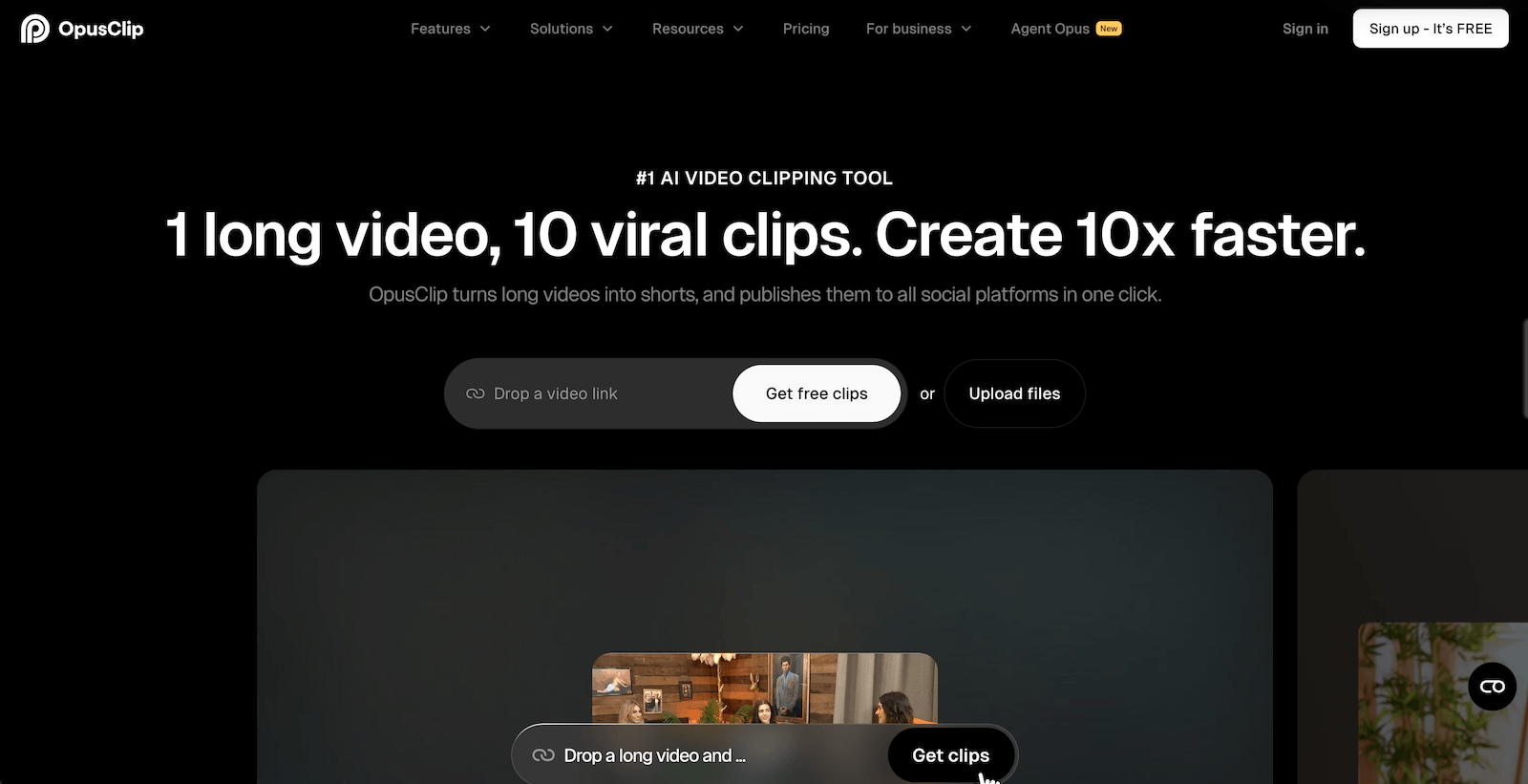
OpusClip is an AI clipping tool. Feed it a long video (a webinar, a podcast, a live shopping replay) and it identifies the strongest moments, cuts them into vertical short-form clips, adds captions, and scores each clip's likely engagement.
For ecommerce brands sitting on hours of founder interviews, live replays, and long-form demos, it's the fastest route from archive to active social content. The output goes to TikTok, Reels, and Shorts.
The contrast with Videowise Clips is worth understanding: OpusClip optimizes clips for social reach, while Videowise Clips categorizes them by product context and feeds them into shoppable on-store placements. One earns attention off-site; the other converts it on-site. Many brands use both stages of that pipeline.
Best for: Repurposing long-form video into social short-form at volume.
Pricing: Free plan; paid plans from around $15/month.
Limitation: No shoppable output and no store integration. Clips end at the social post.
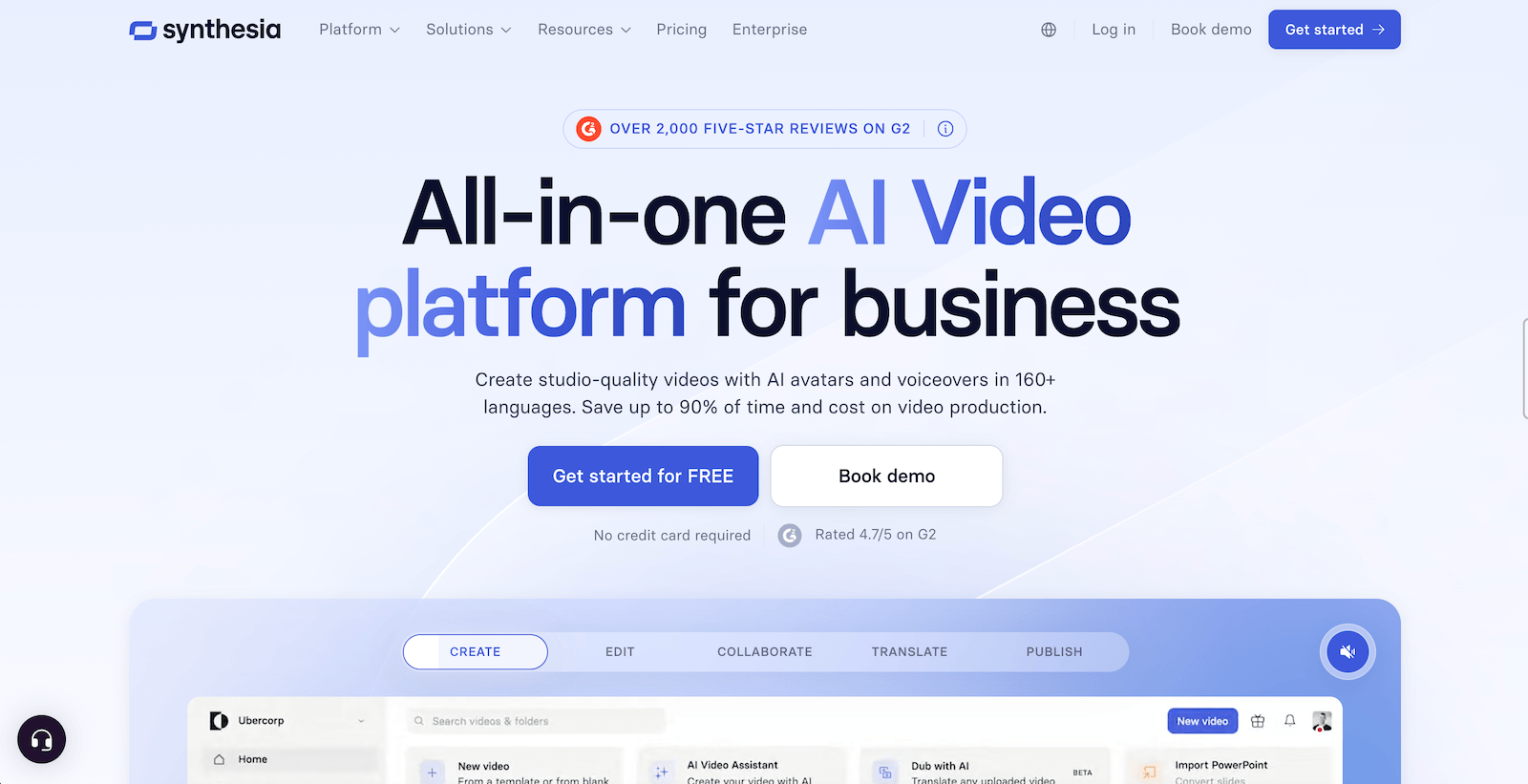
Synthesia generates presenter-led video from text in 140+ languages, using a library of AI avatars or a custom avatar of your own team. It's the most established tool in the avatar category, widely used for training, onboarding, and product communication.
In ecommerce, it earns its keep on the operational side: multilingual product explainers, marketplace seller education, internal training for support teams, and how-to content for complex products. Brands with large international catalogs use it to localize product communication without per-market production budgets.
Best for: Multilingual product explainers and training content at scale.
Pricing: Free plan; paid plans from around $29/month.
Limitation: The output reads polished and corporate, which works for explainers but falls flat where shoppers expect authentic UGC energy. Like HeyGen, it has no shoppable layer; our UGC video guide covers why authenticity still wins on PDPs.
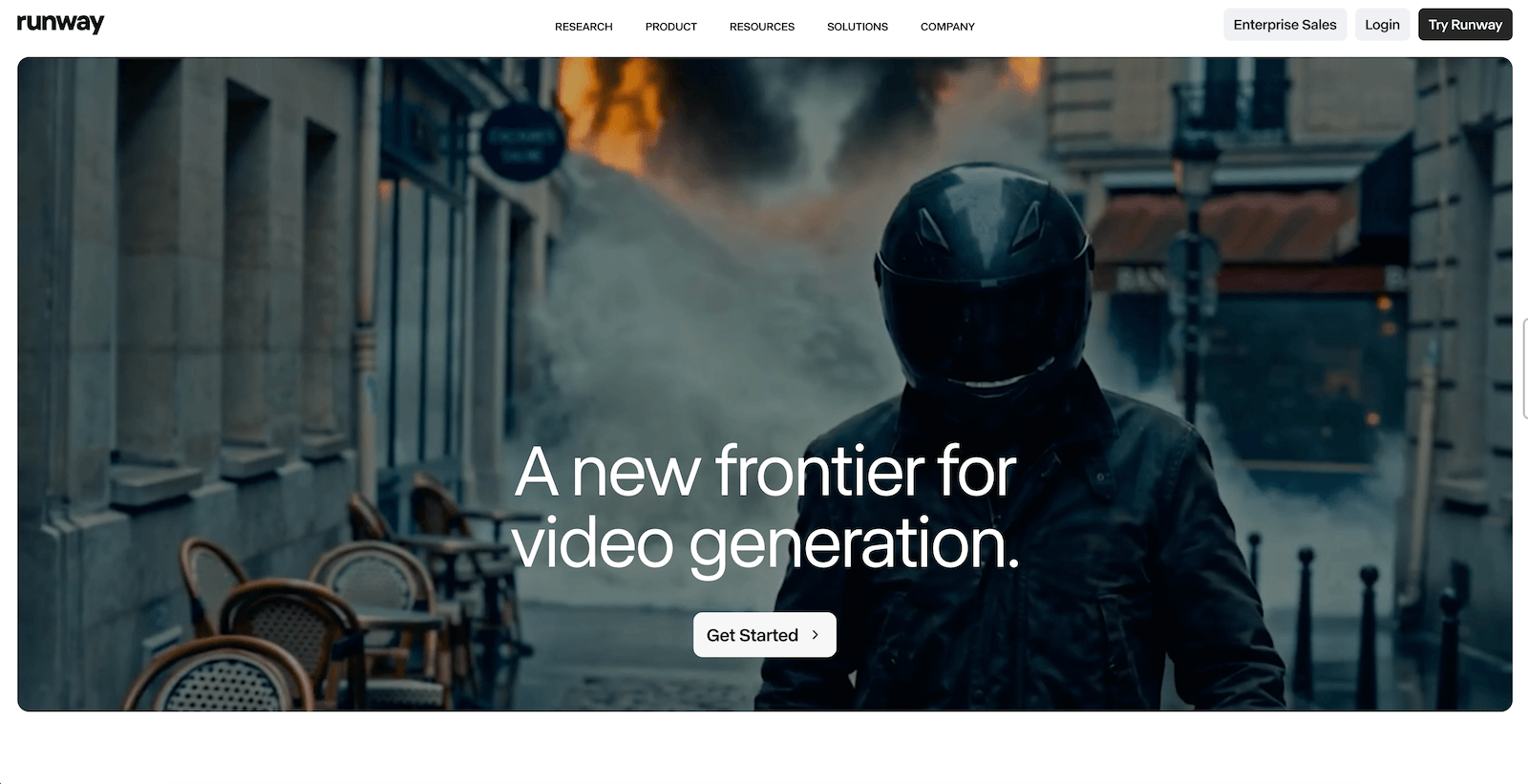
Runway is the creative heavyweight: a generative video platform whose latest Gen models produce cinematic footage from text and image prompts with serious creative control. It's the tool agencies and in-house creative teams reach for when the brief says "make it look like a commercial."
For ecommerce, Runway belongs in the campaign tier. Hero videos for launches, stylized brand films, paid social spots where emotion does the selling. It is not built for commerce enablement, and using cinematic output on PDPs often obscures the product details shoppers actually need.
Best for: Premium campaign and brand film production.
Pricing: Free tier; paid plans from around $15/month, with credits for heavy generation.
Limitation: Generation costs add up fast at iteration-heavy volumes, and every asset still needs a distribution and conversion layer before it touches revenue.
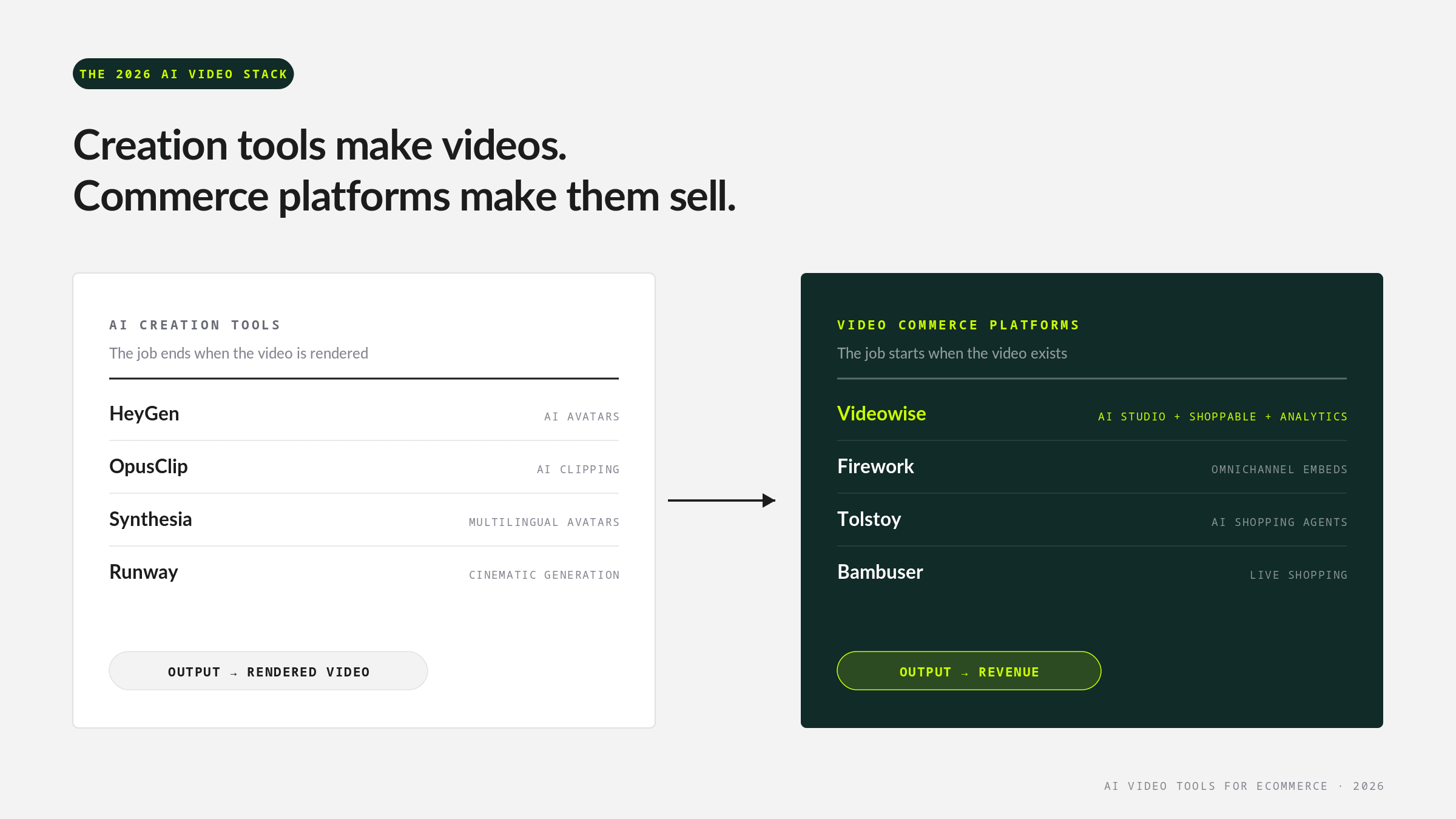
A creation tool's job ends when the video is rendered. A commerce platform's job starts there. The most common mistake brands make with AI video is investing in generation while leaving distribution and measurement to a YouTube embed.
The math explains why that fails. A standard ecommerce session converts at 2 to 3%. Video-engaged sessions on shoppable video platforms convert at 9 to 17%, based on Videowise's video commerce ROI benchmarks. The conversion lift lives in the shoppable layer: product tagging, in-video add to cart, placement on the pages where buying decisions happen. AI-generated video without that layer is just cheaper content, not better commerce.
The practical stack for most Shopify brands in 2026: one creation tool matched to your content gap (avatars, clipping, or cinematic), plus one commerce platform to make everything shoppable and measurable. Or a platform like Videowise that covers generation and conversion in one place.
Run your shortlist through these six questions:
For a deeper evaluation framework on the commerce side specifically, see our guide to the best shoppable video platforms.

Videowise's case for the top spot is that it collapses the two-tool stack into one. AI Studio generates spin videos, lookbooks, and try-on visuals from the product photos you already have. Clips turns live replays and long UGC into categorized short-form. The shoppable layer puts all of it on your store with product tagging and in-video checkout, and the analytics tie every video to sessions, orders, and revenue, with built-in A/B testing to prove the lift.
That loop is what produced Bare Biology's 47% homepage conversion lift and Tibi's $2.8M live shopping run. The video gets made, gets placed, gets measured, and gets better.
The 8 tools above cover every layer of the 2026 AI video stack, from cinematic generation to shoppable delivery. The brands winning with AI video aren't the ones generating the most clips. They're the ones who connected generation to a commerce layer that tags products, survives page speed audits, and reports revenue.
It depends on the job. For turning video into on-store revenue, Videowise leads with AI generation, shoppable delivery, and revenue analytics in one Shopify-native platform. For pure content generation, HeyGen (avatars), OpusClip (clipping), and Runway (cinematic) lead their categories. Most brands get the best results pairing a creation tool with a commerce platform.
Yes, when the video is shoppable and placed where decisions happen. Video-engaged sessions convert at 9 to 17% on Videowise, against a 2 to 3% ecommerce baseline. Kind Patches sustained a 14.78% conversion rate over a $700K three-month period. AI-generated video that lives only on social or in a passive embed rarely shows measurable conversion impact.
Not if the platform renders video outside your theme code. Modern video commerce platforms like Videowise load players asynchronously and serve video from external infrastructure, so Core Web Vitals stay intact. Brands consistently report no measurable page speed impact, even with video deployed across thousands of pages. Self-hosted video files embedded directly in your theme remain the main speed risk.
No. They do different jobs. UGC carries the trust signal that drives purchase decisions on product pages, while AI generation fills gaps UGC can't: spin videos, multilingual versions, lookbooks for products with no creator content yet. The strongest stores mix both, which is why platforms that handle shoppable video from any source have the advantage.
Creation tools are cheap to start: HeyGen, Synthesia, OpusClip, and Runway all have free plans, with paid tiers between roughly $15 and $30 per month. Video commerce platforms price by module or contract: Videowise starts at $239/month per module or $479/month for the full platform, while Firework and Bambuser run custom enterprise contracts. Factor in that commerce platforms can attribute revenue directly, which makes their ROI far easier to defend.


.jpg)
.jpg)