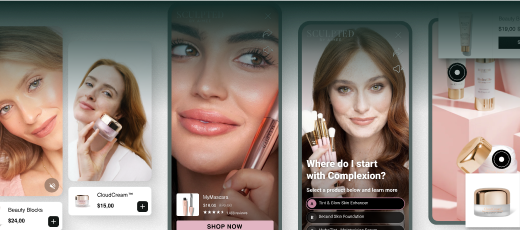
As customer acquisition costs (CAC) continue to climb on traditional ad platforms, ecommerce operators are facing a critical conversion plateau. The traditional funnel—where social media serves only as a top-of-funnel awareness tool—is being replaced by a collapsed journey where discovery and checkout happen in a single session. We are seeing a fundamental shift in how brands treat social platforms, moving from "engagement" as a goal to measurable revenue as the only metric that matters. At Videowise, we focus on helping brands bridge this gap by turning video assets into shoppable video experiences. This guide explores the essential social commerce trends shaping 2025 and provides a strategic framework for growth managers to capture influenced revenue across every social touchpoint.
Social commerce is no longer an experimental line item for Shopify brands. It has matured into a trillion-dollar reality that demands the same level of analytical rigor as a primary storefront. The core of this trend is the reduction of friction. Every click saved between a customer seeing a product in their feed and completing a checkout directly impacts Conversion Rate (CVR) and Revenue Per Session (RPS).
In the past, social media was a "hand-off" platform. A user saw a post, clicked a link, waited for a landing page to load, and then navigated a site. Today, the leading social commerce trends point toward a "native-first" approach. This means the shopping experience is embedded directly within the content, whether that is through in-app checkouts or shoppable video carousels that mirror the social experience on your own site.
Key Takeaway: Success in 2025 requires moving beyond "vanity metrics" like likes or shares. Operators must evaluate social commerce based on its ability to drive direct and influenced revenue, focusing on how content shortens the path to purchase.
One of the most significant shifts we are observing is the move from basic chatbots to agentic AI. While standard AI might answer a shipping question, agentic AI can autonomously facilitate entire buying decisions and checkouts. These AI agents are beginning to act as personal shoppers for consumers, comparing prices and identifying products based on visual cues in social content.
For the ecommerce operator, this means your content must be "machine-readable." This involves high-quality automated tagging and metadata for every video and image you post. If an AI agent cannot identify the specific SKU in a video, that product effectively doesn't exist for the autonomous shopper.
Static images are increasingly losing ground to short-form video in the social commerce space. Data suggests that nearly half of Gen Z and Millennial shoppers prefer video for product discovery and evaluation. However, the trend is moving toward interactive video—content that allows the user to click, explore, and buy without leaving the player.
Interactive video solves the "intent leak" problem. When a user sees a product they like in a standard video, they often have to search for it manually. In a shoppable video, the product is tagged directly. This creates a frictionless bridge between the inspiration of the video and the transaction of the checkout.
Myth: Video commerce is only about TikTok and Instagram. Fact: While social platforms drive discovery, the highest-converting video experiences often happen on the brand's own site (PDPs and homepages) when the social-style video experience is brought on-site.
The distinction between "influencer marketing" and "affiliate marketing" is disappearing. In 2025, the most successful brands are building creator-affiliate programs that treat influencers as performance-driven partners. This trend is fueled by the rise of platforms like TikTok Shop and Instagram’s native affiliate tools.
Operators are shifting from paying for "reach" to paying for "outcomes." This model relies heavily on User-Generated Content (UGC). Instead of high-production brand films, retailers are finding higher CVR in raw, authentic videos from real customers, and that is where how to use UGC videos in your ecommerce store becomes a useful playbook. A robust UGC Hub or creative library is now essential for importing, tagging, and repurposing these high-performing assets across the site and social channels.
Search behavior is fundamentally changing. Younger demographics are starting their product searches on TikTok and Instagram rather than Google. This has given rise to Answer Engine Optimization (AEO). Users are asking complex questions like "What are the best waterproof hiking boots for wide feet?" and they expect an immediate, visual answer.
To capitalize on this social commerce trend, brands must structure their video captions and product descriptions to answer these specific queries. This isn't just about keywords; it's about providing the "answer" through visual demonstrations. When a user finds your brand through a social search, the content they land on needs to be immediately shoppable to capitalize on that high-intent moment.
Bottom line: If your brand isn't optimizing for social search and providing immediate video answers to consumer questions, you are ceding the discovery phase to competitors who are.
While livestream shopping has been a massive trend in Asian markets for years, it is finally finding its footing in the US and Europe through a more "event-based" approach. Instead of 24/7 streams, successful Shopify brands are using live shopping for product drops, seasonal clearances, and exclusive collaborations.
The value of live shopping isn't just the immediate sales—it’s the real-time feedback loop. Operators can see which questions are being asked in the chat and use that data to refine their PDP (Product Detail Page) copy or create new AI Clips that address those specific consumer concerns.
Not all social commerce platforms are created equal. Your resource allocation should depend on your target demographic and product category.
| Platform | Core Audience | Primary Benefit | Strategic Focus |
|---|---|---|---|
| TikTok | Gen Z / Millennials | Discovery & Virality | High-volume UGC and native Shop integrations. |
| Millennials / Gen Z | Brand Aesthetics | High-quality Reels and Story stickers for impulse buys. | |
| Gen X / Boomers | High Trust & Marketplace | Community-driven selling and Marketplace listings. | |
| YouTube | All Ages | Educational / Research | Long-form reviews and "Shorts" for product demos. |
| Millennial Women | Intent-based Planning | Visual search and "unbranded" product discovery. |
A major mistake operators make is keeping social commerce and on-site ecommerce in silos. The most successful brands use our platform to bring the social experience onto their own site. This is critical because your own store is where you have the highest margins and the most control over the customer data.
When you bring shoppable video carousels onto a PDP, you are essentially providing the "social experience" in the place where the transaction is most likely to happen. This strategy leverages the social commerce trend of social proof while maintaining the performance standards required for modern web vitals.
A common concern for growth managers is that adding more video will slow down the site. This is a valid fear, as slow pages destroy CVR. Our performance-first infrastructure ensures that adding shoppable video does not harm Core Web Vitals. We use techniques like viewport loading and optimized video delivery to ensure the page remains fast, even with hundreds of video assets.
Key Takeaway: You should never have to choose between rich, shoppable video content and a fast site. If your video implementation is hurting your page speed, it is hurting your revenue.
To lead a successful social commerce strategy, you must change how you report on performance. "Engagement" (likes, comments, shares) is a leading indicator, but it is not a business outcome. Operators should focus on the following metrics:
Using Content Performance Analytics, we provide a clear view of how each video asset contributes to the bottom line. This allows you to A/B test different content styles—such as professional studio shots versus raw UGC—to see which actually drives more dollars into the bank.
As brands scale, they often move toward headless architecture to provide a consistent experience across multiple touchpoints. Social commerce trends in 2025 are heavily focused on this "omnichannel standard." A customer might start a journey on a TikTok live stream, continue it on an Instagram Shop, and eventually complete the purchase on your mobile site.
A headless approach allows your back-end (inventory, pricing, logic) to remain centralized while your front-end (the shoppable experience) can be deployed anywhere. This flexibility is essential for large retailers managing multi-store setups or vast catalogs across different global regions.
The social commerce landscape in 2025 is defined by the collapse of the funnel and the rise of interactive, video-first experiences. For the ecommerce operator, the path forward is clear: leverage AI for efficiency, lean into creator-driven UGC, and ensure that every piece of video content is shoppable and measurable. We built our platform to solve these specific challenges, turning video from a cost center into a primary revenue driver without compromising on site performance. By embracing these social commerce trends, Shopify brands can build a sustainable, high-conversion growth engine that thrives on every platform where customers discover products.
"The brands that win in 2025 won't just post content; they will build frictionless transactional experiences that meet the shopper exactly where they are."
Ready to turn your video content into a measurable revenue stream? Install Videowise from the Shopify App Store to see how shoppable video can transform your Shopify store's performance.
If you'd rather see it in action first, book a demo today.
Ecommerce refers to the broad category of buying and selling online, typically through a brand's own website or app. Social commerce is a specific subset where the entire shopping journey—from discovery to checkout—takes place within a social media platform like TikTok or Instagram. While ecommerce often requires a "hand-off" from social to a website, social commerce aims to keep the transaction native to the social environment.
Not if you use the right infrastructure. While poorly implemented video can negatively impact Core Web Vitals, our performance-first architecture is built specifically to maintain high page speeds. We use advanced loading techniques to ensure that your site remains fast and responsive while still delivering a rich, interactive video experience that drives revenue.
You should look beyond vanity metrics like likes and focus on direct and influenced revenue. Direct revenue tracks sales made within social platforms, while influenced revenue tracks on-site purchases made after a user engages with a video. Key performance indicators (KPIs) to monitor include Conversion Rate (CVR) lift, Average Order Value (AOV), and Revenue Per Session (RPS) for video-engaged users.
The best platform depends on your target demographic. TikTok is currently the leader for Gen Z discovery and viral growth, while Instagram remains a powerhouse for aesthetic-driven brands and Millennials. Facebook is still the most effective platform for Gen X and Baby Boomers, particularly through community-driven tools like Marketplace and Facebook Shops. Most successful brands use an omnichannel approach across multiple platforms.