

Table of Contents
- Introduction
- The Revenue Case for Live Retail Shopping
- Market Context: The State of Live Commerce in 2026
- Strategic Formats for Live Retail Shopping
- Implementing Live Retail Shopping on Shopify
- Measuring What Matters: Metrics and Attribution
- Scaling Through AI and Automation
- The Omnichannel Approach
- Common Mistakes to Avoid
- FAQ
- Conclusion
Introduction
Ecommerce operators in 2026 face a persistent challenge: conversion rates on mobile are plateauing as acquisition costs climb. Static product pages often fail to bridge the gap between a shopper's curiosity and a final purchase decision. Live retail shopping has emerged as the most effective solution to this friction. By combining real-time interaction with instant checkout, brands can transform passive viewers into active buyers. At Videowise, we focus on helping brands turn these high-energy video events into measurable revenue with Videowise's live shopping platform. This guide explores the strategic framework for implementing live commerce, optimizing for performance, and scaling your video strategy. We will cover why this format works for revenue and how to execute it without compromising your store’s technical health.
The Revenue Case for Live Retail Shopping
Traditional ecommerce is often a solitary and static experience. A shopper lands on a Product Detail Page (PDP), reads some text, looks at a few photos, and decides whether to stay or leave. Live retail shopping breaks this pattern by introducing "shoppertainment"—a blend of entertainment and commerce that mimics the high-touch experience of a physical store.
For a growth manager, the value lies in the impact on core metrics. Operators using live video typically see a significant lift in Conversion Rate (CVR), which is the percentage of visitors who complete a purchase. Because live events create a sense of urgency and provide immediate answers to product questions, they also influence Average Order Value (AOV), or the average dollar amount spent each time a customer places an order.
Beyond simple conversion, we look at Revenue Per Session (RPS). This metric measures the total revenue generated divided by the number of user sessions. Live retail shopping drives RPS by keeping users on the site longer and presenting products in a context that encourages multi-item carts.
Key Takeaway: Live retail shopping is not just a brand awareness tool; it is a high-intent sales channel that targets CVR and RPS by removing the hesitation common in static online shopping.
Market Context: The State of Live Commerce in 2026
The landscape of digital retail has shifted dramatically. Projections indicate that live retail shopping will account for roughly $55 billion in sales this year. Industry analysts at McKinsey suggest that live commerce could soon represent up to 20% of all global ecommerce. For a deeper breakdown of the category, read Live Video Commerce: The Complete Guide.
While the trend began with massive success in Asia, Western brands have now integrated it as a core component of their omnichannel strategy. In 2026, the focus has moved away from "one-off" events toward a recurring schedule of live programming. Successful Shopify brands are no longer just "going live"; they are building broadcast calendars that align with product drops, seasonal shifts, and influencer collaborations.
Strategic Formats for Live Retail Shopping
Not every live stream should look the same. The format you choose depends on your product category and your specific revenue goals. For a broader playbook on placements, see How to Use Shoppable Videos on Your eCommerce Store. Here are the four primary formats we see driving the most success for retailers today.
1. New Product Drops and Exclusive Launches
This format leverages the "Fear of Missing Out" (FOMO). By launching a new collection via a live stream, you concentrate your traffic into a specific window. This creates a competitive environment where shoppers see items selling out in real time, which drastically reduces the time to purchase.
2. Styling and "How-To" Educational Sessions
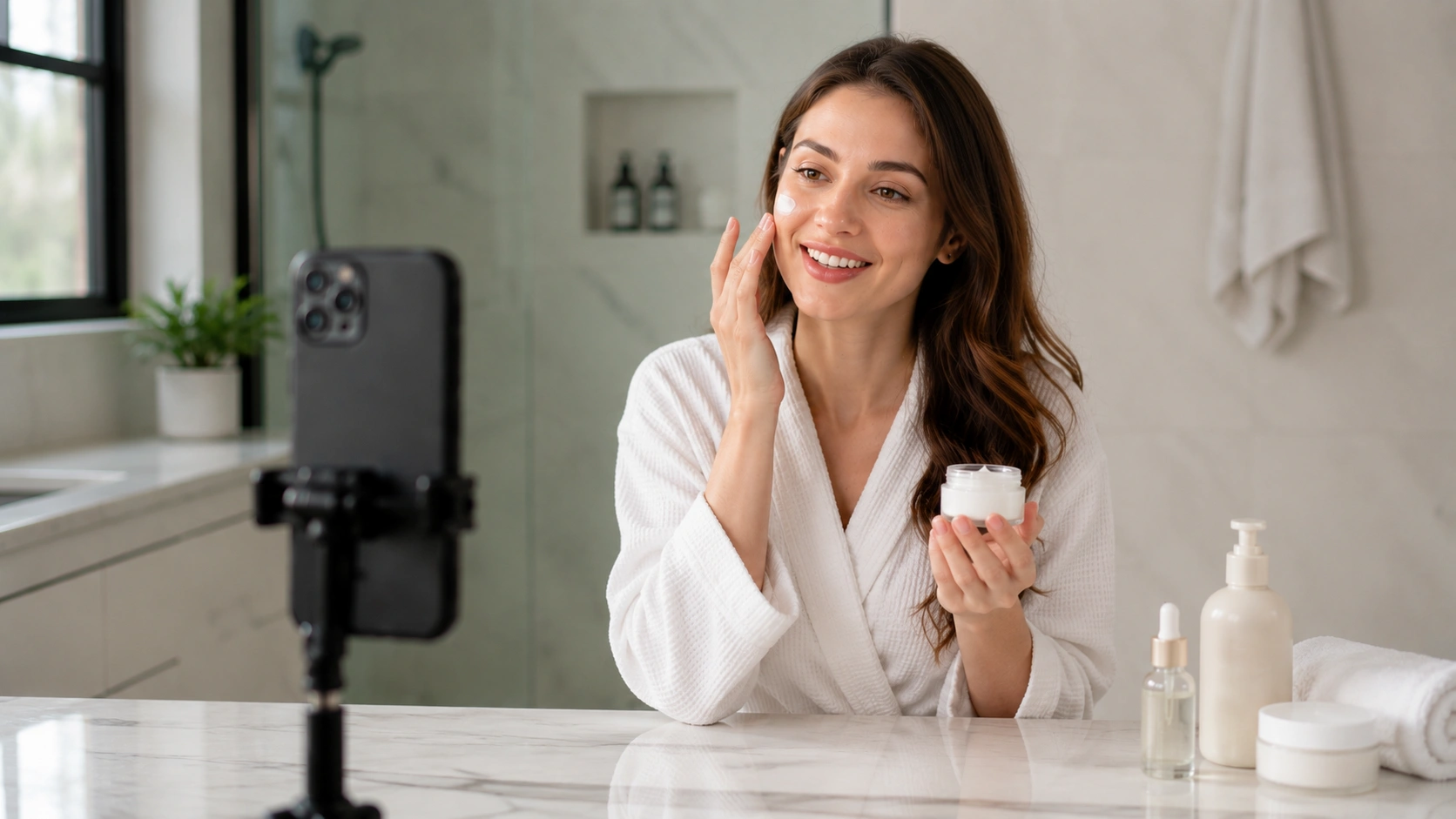
For fashion, beauty, and home decor brands, education is the primary driver of CVR. A host can demonstrate how a garment fits different body types or how to apply a skincare routine. This reduces the "perceived risk" of the purchase, which in turn lowers return rates—a critical hidden metric for ecommerce profitability.
3. Behind-the-Scenes and Founder Stories
Authenticity builds long-term customer lifetime value. When a founder explains the "why" behind a product or shows the manufacturing process, it builds a level of trust that static images cannot replicate. These sessions often result in higher brand loyalty and repeat purchase rates.
4. Interactive Flash Sales
This is a pure volume play. Brands use live retail shopping to clear inventory or celebrate milestones with timed discounts that are only available during the stream. The real-time nature of the discounts keeps the audience focused and minimizes the "window shopping" behavior seen on standard collection pages.
Implementing Live Retail Shopping on Shopify
Executing a successful live event requires a balance of creative production and technical stability. For a Shopify operator, the implementation process must be handled without adding "technical debt" or slowing down the store.
Step 1: Platform Selection
You must decide between social-native platforms (like TikTok or Instagram) and on-site solutions. While social platforms offer reach, they often keep your customer data and can lead to a fragmented checkout experience. If you want help choosing the right setup, book a demo. Our platform prioritizes on-site live shopping because it allows the brand to own the 1st-party data and keep the shopper within their own ecosystem. This ensures that the checkout process is as short as possible, which is vital for maintaining a high CVR.
Step 2: Technical Preparation and Page Speed
Video assets are traditionally heavy. If a live stream slows down your site, it could negatively impact your Core Web Vitals. These are a set of metrics used by Google to measure the user experience of a page, specifically focusing on loading speed, interactivity, and visual stability. For a related example, see Skullcandy's shoppable video case study. We use a performance-first infrastructure to ensure that your live video components do not interfere with the Largest Contentful Paint (LCP) or other speed markers.
Step 3: Hosting and Talent
The host is the face of your event. They do not need to be a celebrity, but they must be comfortable with two-way communication. In 2026, many brands use a mix of internal staff (who have deep product knowledge) and influencers (who bring an existing audience). The most effective hosts are those who can answer technical questions in real time while maintaining the energy of the show.
Step 4: Integration with Catalog and Inventory
A live event is only useful if it is shoppable. Your video player should have a direct link to your Shopify inventory, which is exactly what Videowise's shoppable video platform is built to support. This allows for "inline checkout," where a customer can add an item to their cart and complete the purchase without the video stopping or the page reloading. This "frictionless" path to purchase is what separates a professional live retail shopping event from a basic social media stream.
Measuring What Matters: Metrics and Attribution
One of the biggest mistakes an operator can make is treating live shopping as a "vanity" channel. Engagement metrics like "likes" or "view counts" do not pay the bills. You must look at the direct and influenced revenue generated by your video content. Content Performance analytics gives operators a full-funnel view of these metrics.
We recommend focusing on these four areas:
- Direct Revenue: Sales completed while the live stream is active.
- Influenced Revenue: Sales from customers who watched the stream but purchased within a 7-day or 30-day window.
- Average Order Value (AOV) Lift: Comparing the AOV of sessions that interacted with video versus those that did not.
- Time on Site: While not a revenue metric itself, increased time on site typically correlates with higher brand recall and higher RPS.
Myth: Live shopping is only for "impulse buy" products under $50. Fact: High-ticket brands in furniture and electronics use live retail shopping to answer complex questions and provide virtual "walkthroughs," which are essential for closing sales on items over $500. For a related live commerce example, see How Andar Generated $134K in 3 Hours with Live Shopping on Videowise.
Scaling Through AI and Automation
As your live retail shopping strategy matures, the bottleneck usually becomes content production. You cannot be "live" 24/7, but you can maximize the value of every minute of recorded footage.
In 2026, AI-powered tools are essential for scaling. For example, our AI Clips feature can take a 60-minute live event and automatically identify the most engaging moments—such as a specific product demonstration or a high-energy Q&A. These short-form clips can then be repurposed as shoppable videos on PDPs or collection pages. This ensures that the revenue-generating potential of your live event continues long after the "Live" badge has disappeared.
Furthermore, AI-powered tagging and usage rights management allow your team to manage thousands of video assets across multiple stores without a massive manual effort. This "scale without dev dependency" approach is what allows lean ecommerce teams to compete with massive retailers.
The Omnichannel Approach
Live retail shopping does not exist in a vacuum. It should be the "anchor" of your wider video commerce strategy. For a closer look at that channel, read Live Shopping Inside Shop App With Videowise.
- Pre-Event: Use short shoppable videos in email and SMS campaigns to build anticipation and collect "remind me" registrations.
- During Event: Multistream to social channels like TikTok Shop or Instagram to cast a wide net, but drive the "high-value" traffic to your on-site experience for the best conversion.
- Post-Event: Transform the recorded stream into an "evergreen" shoppable replay. Place these on specific collection pages so that latecomers can still experience the content and buy the featured products.
By integrating your live events with your Creative Library and UGC Hub, you create a self-sustaining cycle of content. Customer questions from a live stream can become the inspiration for your next set of shoppable PDP videos, ensuring your content is always answering real shopper needs.
Common Mistakes to Avoid
Even with the best tools, strategy errors can sink your ROI.
- Over-Scripting: If a host sounds like they are reading a teleprompter, the audience will leave. Live retail shopping thrives on authenticity and spontaneous interaction.
- Ignoring the Chat: The "live" part of live shopping is a two-way street. If you don't answer questions or acknowledge the audience, you might as well just post a recorded video.
- Poor Audio Quality: Shoppers will forgive a slightly grainy video, but they will not tolerate poor audio. Invest in a high-quality microphone before you invest in a 4K camera.
- Complicated Checkout: If a shopper has to leave the video, log in, and click through five pages to buy, you will lose them. Inline checkout is a non-negotiable requirement for 2026.
Bottom line: Success in live retail shopping requires a combination of authentic hosting, a performance-first technical setup, and a ruthless focus on revenue metrics over vanity engagement.
FAQ
What equipment do I need to start live retail shopping?
At a minimum, you need a high-definition smartphone, a stable tripod, and a dedicated external microphone to ensure clear audio. As you scale, you may want to invest in professional lighting (like ring lights or softboxes) and a multi-camera setup using a dedicated encoder, but "lo-fi" authentic content often converts just as well for many brands.
How often should my brand go live?
For most mid-sized retailers, starting with one high-quality live event per week is a sustainable goal that allows for proper promotion. Once you have established a workflow and have a library of assets to repurpose, you can move to 2–3 times per week or align events specifically with your product launch calendar.
Does live shopping work for B2B or high-ticket items?
Yes, live retail shopping is highly effective for high-ticket items because it allows for detailed product demonstrations and real-time objection handling. For items requiring a large investment, the live format provides the "social proof" and expert reassurance that a shopper needs to move from consideration to purchase.
How do I drive traffic to my live events?
Successful operators use a multi-channel approach including dedicated email blasts, SMS alerts 15 minutes before going live, and "countdown" stickers on social media. You should also use on-site "floating" video widgets to alert current site visitors that a live event is happening in real time. For a broader strategy playbook, see Video Marketing for Ecommerce: The Complete Strategy Guide.
Conclusion
Live retail shopping has moved from a niche experiment to a fundamental revenue driver for Shopify brands. By focusing on interactive formats, performance-first infrastructure, and a clear measurement of CVR and RPS, operators can create a shopping experience that is both engaging and highly profitable. We built Videowise to ensure that every video asset—from a 30-second UGC clip to a 60-minute live stream—is optimized for speed and measured against its ability to drive sales. The future of ecommerce is not just about showing products; it is about bringing them to life through real-time, shoppable experiences.
Next Step: Ready to turn your video content into a high-converting sales channel? Install Videowise from the Shopify App Store and launch your first shoppable live event today.
.webp)


