

Table of Contents
- Introduction
- The Revenue Case for Live Shopping in 2026
- On-Site vs. Social-Native Live Shopping
- Comparing the Best Live Shopping Platforms
- Comparison Table: Platform Capabilities
- Technical Considerations: Page Speed and Core Web Vitals
- Operational Efficiency: Scale Without Dev Dependency
- Measuring Success: Beyond the View Count
- Step-by-Step: Evaluating a Live Shopping Platform
- Future-Proofing with AI and Omnichannel Commerce
- Conclusion
- FAQ
Introduction
Ecommerce operators in 2026 face a persistent challenge: rising customer acquisition costs and plateauing conversion rates on static product pages. Traditional shopping experiences often feel disconnected from the dynamic content consumers crave. Live shopping has emerged as a high-intent channel to bridge this gap. However, choosing the right platform is no longer just about the video feed. It is about how that video translates into measurable revenue.
At Videowise, we focus on helping brands turn every video interaction into a commerce opportunity without compromising site performance. See Videowise’s shoppable video platform as one example of that approach. This comparison explores the top live shopping platforms through the lens of a growth-minded operator. We will evaluate how different solutions impact your conversion rate (CVR), average order value (AOV), and revenue per session (RPS). Our goal is to help you select a partner that prioritizes your bottom line while maintaining a high-speed shopping experience.
The Revenue Case for Live Shopping in 2026
Live shopping is no longer a novelty. It is a strategic necessity for brands that want to humanize their digital presence and drive immediate action. When an operator evaluates a platform, they must look beyond "views" or "likes." These are vanity metrics. Instead, the focus should be on how the platform influences the path to purchase. For the broader playbook, start with our live video commerce guide.
The most effective live shopping events focus on three core metrics. First is CVR, or the percentage of viewers who complete a purchase. Second is AOV, which measures the total dollar amount of an average order. Third is RPS, which calculates the total revenue generated divided by the number of unique sessions. High-performing platforms use interactive overlays and inline checkouts to minimize the friction between seeing a product and buying it.
Key Takeaway: Success in live commerce is measured by revenue outcomes—CVR, AOV, and RPS—not by social engagement or view counts alone.
On-Site vs. Social-Native Live Shopping
Before comparing specific platforms, you must decide where your live events will live. This is the fundamental strategic split in the market.
Social-Native Platforms
Platforms like TikTok Shop and Instagram Live allow you to reach shoppers where they already spend their time. These are excellent for discovery and reaching new audiences. However, they come with a significant trade-off: you do not own the customer data. You are also at the mercy of the platform's algorithm and changing fee structures. If you want a comparable model on your own site, explore Videowise’s social commerce experience.
On-Site Platforms
On-site solutions embed the live experience directly into your Shopify store. This allows you to keep shoppers within your ecosystem. It ensures that when a live event ends, the shopper is already on a page where they can browse other products. On-site selling also allows for better integration with your existing tech stack, such as loyalty programs and email marketing tools.
Comparing the Best Live Shopping Platforms
The following platforms represent the current leaders in the space. Each serves a different type of operator, from small boutiques to global enterprise retailers.
1. Videowise: The Performance-First Choice
We built our platform for brands that prioritize measurable revenue and site speed. Unlike other tools that might slow down your store, we use performance-first infrastructure to ensure your Core Web Vitals remain healthy. These are the standardized metrics Google uses to measure page speed and user experience. For a similar rollout, see the Skullcandy case study.
Our platform excels at shoppable video and live events that feel like a natural extension of your brand. We offer AI-powered content intelligence, which helps you tag products and manage usage rights automatically. For a Shopify operator, this means you can scale your video strategy without a massive development or creative team. We focus on turning your video assets into high-converting machines that drive higher RPS.
2. Bambuser: The Enterprise Standard
Bambuser is a well-established player, often favored by large enterprise brands in the luxury and beauty sectors. They offer a very polished, "broadcast-quality" experience.
- Strengths: High-end production capabilities and a robust API for custom integrations. They offer a one-to-many and one-to-one video chat feature.
- Weaknesses: The complexity and price point can be a barrier for mid-market brands. The setup often requires more technical resources than a standard Shopify app.
- Best For: Global retailers who need a highly customized, agency-led video experience.
3. CommentSold: The Social Selling Leader
CommentSold is the dominant force for brands that rely heavily on "comment-to-buy" workflows on social media. It is particularly popular in the fashion and boutique space.
- Strengths: Excellent automation for social comments. It can automatically send an invoice to a shopper the moment they comment "sold" on a Facebook or Instagram post.
- Weaknesses: It is less focused on the on-site PDP (Product Detail Page) experience and more on social feed interactions.
- Best For: High-volume boutiques with a massive, active social following on Facebook and Instagram.
4. TikTok Shop: The Discovery Engine
TikTok Shop has transformed into a massive commerce ecosystem. It combines short-form video with live streams and a native marketplace.
- Strengths: Unrivaled discovery. The algorithm can put your products in front of millions of targeted users very quickly.
- Weaknesses: High commission fees and zero ownership of the customer relationship. It can also be a high-pressure environment for inventory management.
- Best For: Brands targeting Gen Z and Millennials who want to prioritize massive reach over direct-to-consumer data.
5. Amazon Live: The Marketplace Giant
For brands already selling on Amazon, this is a natural extension. It functions much like a modern version of a home shopping network.
- Strengths: Access to a high-intent audience that already has their credit cards on file.
- Weaknesses: It only works for your Amazon storefront, not your independent Shopify site. It does nothing to build your own brand's long-term enterprise value.
- Best For: Amazon-first brands looking to move inventory through demonstrations.
Comparison Table: Platform Capabilities
| Feature | Videowise | Bambuser | CommentSold | TikTok Shop |
|---|---|---|---|---|
| Primary Goal | On-site CVR & RPS | Enterprise Branding | Social Automation | Massive Discovery |
| Shopify Integration | Deep/Native | Via API | Native App | Native Integration |
| Site Speed Impact | Minimal (Optimized) | Variable | Low | N/A (Off-site) |
| Checkout Flow | On-site / Inline | On-site | Link-based | In-app |
| AI Capabilities | AI Clips & Tagging | Limited | AI Replays | Algorithm-led |
Technical Considerations: Page Speed and Core Web Vitals
A major concern for any ecommerce director is how video will affect page speed. If a live shopping platform adds three seconds to your load time, your conversion rate will drop across the entire site. This negates the benefits of the live event.
Operators must look for platforms that utilize viewport loading. This means the video components only load when they are about to enter the shopper's screen. You should also ask about the platform's Content Delivery Network (CDN). A good CDN ensures that a shopper in London and a shopper in New York both see a high-quality stream with low latency (the delay between the broadcast and the viewer). The SNEAK case study is a useful reference for teams that need to educate customers without compromising on page speed.
Myth: Adding live video to my PDP will inevitably slow down my site and hurt my SEO. Fact: Modern video commerce platforms use specialized infrastructure and "lazy loading" to maintain high Core Web Vitals while delivering HD video.
Operational Efficiency: Scale Without Dev Dependency
Managing a live shopping calendar can be a logistical nightmare. Operators should prioritize platforms that allow for bulk publishing and easy content management. If your team has to manually tag every product for every stream, you will struggle to scale. AI Clips can help turn a live stream into evergreen content.
We recommend looking for features like AI Clips. This technology can take a 30-minute live stream and automatically cut it into 15-second "highlight" clips for your PDPs. This turns a one-time live event into evergreen, shoppable content that continues to drive revenue long after the cameras are off. This repurposing of content is essential for maintaining a high RPS without increasing your production budget.
Measuring Success: Beyond the View Count
To prove the ROI (Return on Investment) of a live shopping platform, you need direct attribution. The platform should show you exactly how many sales happened during the stream and how many "influenced" sales happened later. For deeper attribution, review content performance analytics.
- Direct Revenue: Sales that occurred within the live shopping player during the event.
- Influenced Revenue: Sales from shoppers who watched the stream but completed their purchase on a different page or at a later time.
- Average Watch Time: While not a revenue metric, it indicates how well your content is holding attention, which correlates with CVR.
Step-by-Step: Evaluating a Live Shopping Platform
Step 1: Define your primary channel. / Decide if you want to sell primarily on your own site, on social media, or both.
Step 2: Audit your technical requirements. / Ensure the platform integrates with your specific Shopify theme and doesn't trigger page speed warnings.
Step 3: Test the checkout friction. / Experience the buyer's journey yourself. If it takes more than two clicks to buy a product from the video, look elsewhere.
Step 4: Assess the content lifecycle. / Ask how easy it is to reuse the live video as shoppable UGC on other parts of your site. The True Classic case study is a useful reference for scale.
Future-Proofing with AI and Omnichannel Commerce
The best live shopping platforms are evolving to be more than just streaming tools. They are becoming central libraries for all your video assets. In 2026, the lines between social commerce, email video, and on-site shopping are blurring. For teams expanding their AI workflow, AI Studio is a natural next step.
Operators should look for a "UGC Hub" or a centralized creative library. This allows you to import content from TikTok or Instagram and immediately make it shoppable on your Shopify site. Rights management is also a critical feature here. You need a platform that can track which creators have given you permission to use their content so you can avoid legal headaches as you scale.
Bottom line: The "best" platform is the one that fits your technical constraints while providing the shortest path from video view to completed purchase.
Conclusion
Comparing live shopping platforms requires a shift in mindset. It is not about the "coolest" video features; it is about which tool turns video into a measurable revenue channel. Whether you prioritize the high-production values of Bambuser, the social automation of CommentSold, or the performance-first approach of our platform, the decision should be data-driven.
At Videowise, we are built for the Shopify operator who refuses to choose between high-quality video and high-speed site performance. We focus on the metrics that grow your business—CVR, AOV, and RPS. By integrating shoppable video directly into your site's DNA, we help you build a sustainable growth engine. Ready to see how video can transform your revenue? Install Videowise from the Shopify App Store.
If you want a tailored walkthrough for your storefront, book a demo.
FAQ
Does live shopping work for brands with large catalogs?
Yes, live shopping is highly effective for large catalogs if you use a platform that supports bulk publishing and automated product tagging. You can run focused sessions for specific collections or use AI to surface relevant products during a broad broadcast. You can also review our getting started with shoppable videos guide for deployment ideas.
How does live shopping impact site speed and SEO?
If implemented correctly with performance-first infrastructure, the impact is minimal. Leading platforms use "lazy loading" and optimized CDNs to ensure that video components do not block the main page content from loading, protecting your Core Web Vitals and SEO rankings. For a deeper breakdown, read How to Use Shoppable Videos on Your eCommerce Store.
What is the difference between direct and influenced revenue?
Direct revenue comes from purchases made through the video player during a live event. Influenced revenue refers to customers who watched a video and then made a purchase later on the site, which can be tracked through advanced content performance analytics.
Do I need a professional film crew to start live shopping?
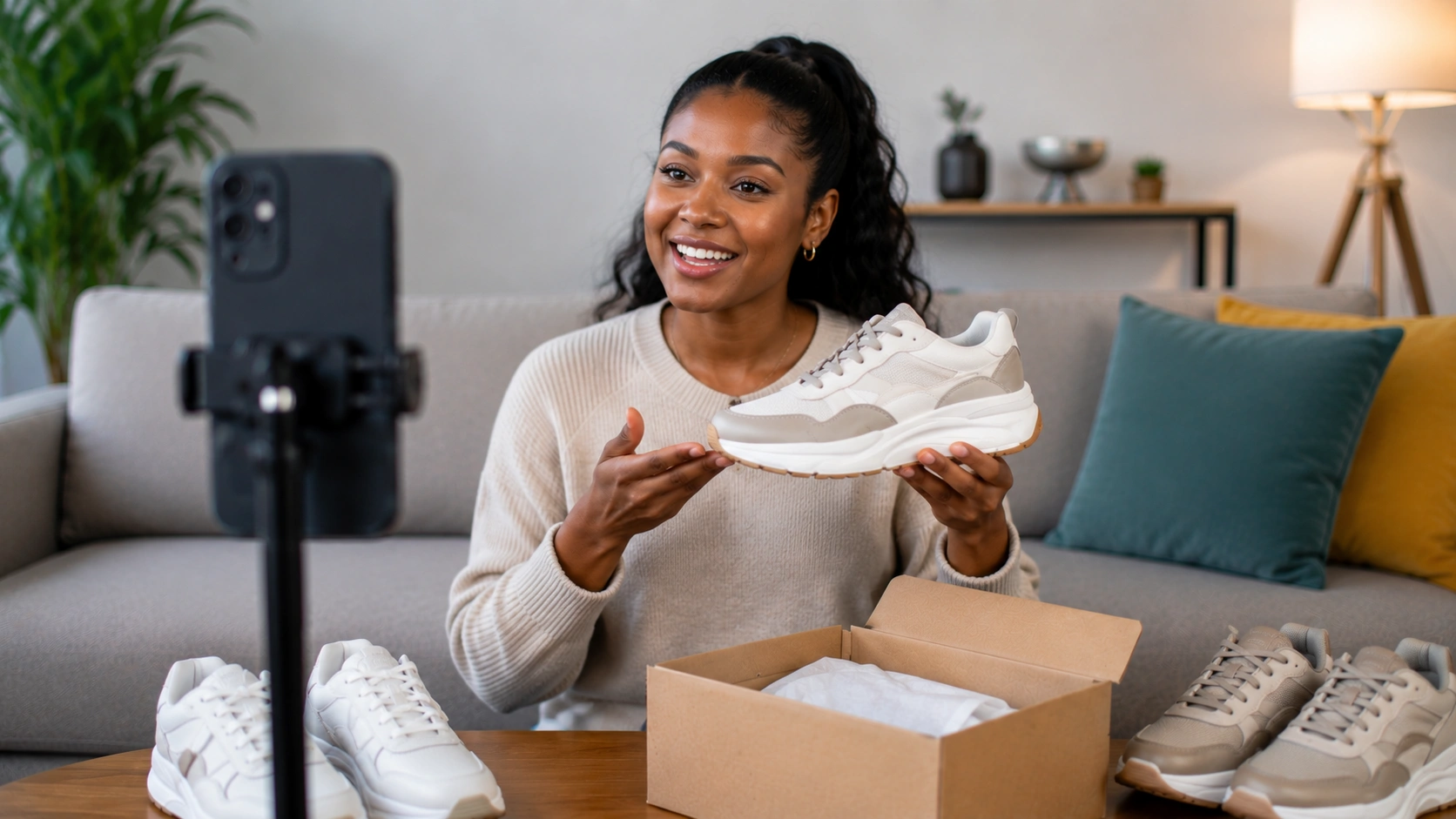
No, many of the most successful live shopping events use a "lo-fi" approach with a smartphone and a tripod. Authenticity often converts better than high-production gloss, especially for brands that rely heavily on UGC and influencer partnerships to drive sales.
.webp)


