

Table of Contents
- Introduction
- Defining Live Streaming Commerce for 2026
- Why Revenue Per Session (RPS) Is the North Star
- On-Site vs. Social Live Shopping
- The Technical Challenge: Speed and Performance
- The Role of AI in Scaling Live Content
- Operational Strategy: How to Get Started
- Repurposing UGC and Live Content
- Common Mistakes to Avoid
- Live Commerce Trends for 2026
- Building for the Future of Video Commerce
- FAQ
Introduction
Ecommerce operators in 2026 face a persistent challenge: the gap between discovery and purchase is wider and more expensive than ever. High customer acquisition costs and conversion plateaus have forced brands to look beyond static product pages. Live streaming commerce has emerged as the most effective way to bridge this gap. This strategy combines real-time video with instant purchasing power to create a high-intent sales environment. At Videowise, we focus on helping brands turn these video interactions into measurable revenue with shoppable video through performance-first infrastructure. This guide covers what live streaming commerce is, why it drives higher revenue per session (RPS), and how to execute it without compromising your store performance or Core Web Vitals.
Quick Answer: Live streaming commerce is a retail strategy where brands sell products through real-time video broadcasts. It combines entertainment, product demonstration, and interactive chat with an instant checkout layer, allowing viewers to purchase items without leaving the video player.
Defining Live Streaming Commerce for 2026
Live streaming commerce, often called live shopping or live commerce, is the evolution of the home shopping network for the digital age. It is the process of showcasing products via a live video stream where the audience can interact with the host and buy products in real-time. Unlike traditional video marketing, live commerce is transactional by design.
The core of this technology is the "shoppable layer." This is the interface that sits on top of the video, featuring product tags, "add to cart" buttons, and often an inline checkout. In 2026, the most successful brands don't just treat this as a social media event. They integrate it directly into their Shopify stores with shoppable videos on their website to own the customer data and the full shopping experience.
The Mechanics of a Live Session
A standard live commerce event consists of three main parts. First is the video broadcast, which can be hosted by a founder, an influencer, or a store associate. Second is the interactive component, usually a live chat where viewers ask about sizing, material, or fit. Third is the commerce integration, which connects the video player to your product catalog and inventory systems.
When a host mentions a specific item, that product appears as a clickable overlay on the screen. The shopper can select their variant—size, color, or quantity—and complete the purchase while the video continues to play. This eliminates the friction of navigating away from the content to find a product page.
Why Revenue Per Session (RPS) Is the North Star
For growth managers, the primary value of live streaming commerce isn't "engagement" or "brand awareness." Those are vanity metrics that don't pay the bills. The real value lies in Revenue Per Session (RPS) and Conversion Rate (CVR). RPS is calculated by taking your total revenue and dividing it by the number of sessions.
In our experience, live streaming commerce drives higher RPS because it maximizes the value of every visitor. When a shopper enters a live stream, they are moving through the entire funnel—awareness, consideration, and conversion—in a single session. This compression of the funnel is what leads to Skullcandy's shoppable video results.
Conversion Rate (CVR) Benchmarks
Traditional ecommerce conversion rates typically hover around 2% to 3%. In contrast, live shopping events often see conversion rates ranging from 15% to 30% depending on the audience and product category. This lift happens because live video addresses "objection handling" in real-time. If a customer is worried about how a fabric drapes or how a gadget performs, the host can show them immediately. This transparency builds trust faster than any static image or written description.
Impact on Average Order Value (AOV)
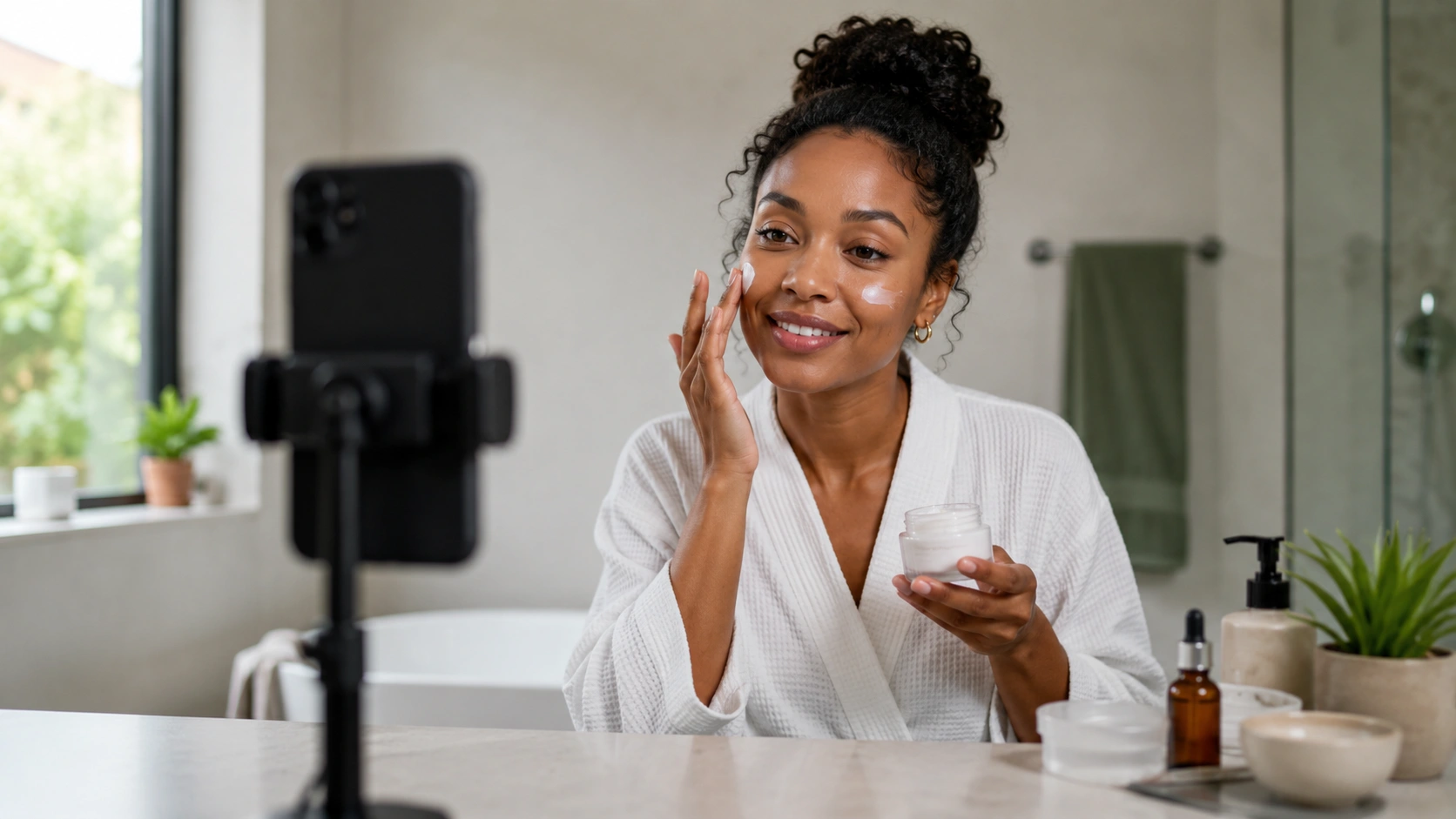
Live streaming also serves as a natural tool for increasing Average Order Value (AOV). Hosts can demonstrate how different products work together, effectively cross-selling and up-selling without the intrusive feel of a pop-up. For example, a beauty brand can show a full three-step skincare routine, encouraging viewers to buy the set rather than a single cleanser.
On-Site vs. Social Live Shopping
Operators must choose where to host their live events: on social platforms like TikTok or Instagram, or directly on their own website. Both have merits, but the strategic outcomes differ significantly.
Social Media Live Commerce
Social platforms offer a built-in audience and high discovery potential. If you want a cleaner path from engagement to purchase, social commerce keeps the transaction closer to the moment of discovery. However, social platforms often come with limitations. You have less control over the checkout experience, and you may not fully own the customer data. Furthermore, these platforms often take a commission on sales made through their native shops.
On-Site Live Commerce
Hosting live events on your own Shopify store is where the highest ROI often lives. When you host on-site, you control the branding, the checkout flow, and 100% of the first-party data. This data is critical for future retargeting and email marketing campaigns. On-site live shopping also keeps users on your domain, which is better for long-term SEO and site authority.
Key Takeaway: Social live shopping is for discovery and reaching new audiences, while on-site live shopping is for conversion, data ownership, and maximizing the lifetime value of existing traffic.
The Technical Challenge: Speed and Performance
A major concern for ecommerce directors is the impact of video on page speed. Core Web Vitals (CWV)—a set of metrics Google uses to measure user experience, including Largest Contentful Paint (LCP) and Cumulative Layout Shift (CLS)—are vital for SEO and user retention.
Poorly implemented video can slow down a store, leading to high bounce rates that negate any conversion benefits. This is why we focus on performance-first infrastructure. Video commerce shouldn't come at the cost of a fast site. For a deeper breakdown of how to keep interactive video fast, the interactive video guide shows how to balance performance and revenue. Modern live commerce solutions use advanced loading techniques, such as viewport loading and optimized CDNs (Content Delivery Networks), to ensure that the video player only loads when needed and doesn't block other page elements.
Myth: Adding live video to my Shopify store will slow down my page speed and hurt my SEO. Fact: Professional-grade video commerce platforms are built with performance-first infrastructure that maintains Core Web Vitals while delivering high-quality streams.
The Role of AI in Scaling Live Content
One of the biggest hurdles to live streaming commerce is the "one and done" nature of the content. A brand spends hours preparing for a 60-minute stream, and once it's over, the value seemingly disappears. In 2026, AI has solved this content bottleneck with AI Clips.
Using AI Clips, brands can automatically transform a long-form live stream into dozens of short-form, shoppable videos. These clips can then be placed on Product Detail Pages (PDPs), collection pages, or used in email and SMS marketing. This turns a single live event into an evergreen revenue generator. Instead of a 60-minute investment, you get a library of high-converting assets that work for your store 24/7.
We see our AI Studio being used by brands to automate the tagging and clipping process, ensuring that the most exciting moments of a live stream—like a product demo or a key testimonial—are captured and repurposed instantly.
Operational Strategy: How to Get Started
Launching a live commerce program requires a structured approach. It is not as simple as hitting "record" on a smartphone. To see measurable revenue, operators should follow a clear execution framework.
Step 1: Define Your Talent Strategy
Decide who will represent the brand. Founders often perform best because of their authentic passion and deep product knowledge. Store associates are great for consistent, high-frequency streams. Influencers can bring a new audience but may require more coordination and a higher budget.
Step 2: Catalog Integration and Merchandising
Ensure your live commerce platform is synced with your Shopify catalog. You need real-time inventory updates to avoid selling out of items mid-stream. Choose 5 to 10 key products to feature in a 30-minute session. Too many products can overwhelm the audience; too few can lead to a drop in engagement.
Step 3: Distribution and Promotion
A live stream is an event, and events need promotion. Use your existing channels—email, SMS, and social media—to build anticipation. We recommend a "warm-up" period of 3 to 5 days before the event. Offering an "event-only" discount code or a limited-edition product drop can significantly increase the "show-up" rate.
Step 4: Measurement and Attribution
After the stream, analyze the data. Look beyond views. Measure direct revenue, influenced revenue, and the number of new customers acquired. Check your RPS to see if the live event outperformed your site's average. If you need a framework for separating direct and influenced revenue, the video commerce ROI guide shows how to measure it. Use these insights to refine your next event.
Repurposing UGC and Live Content
Live streaming commerce does not exist in a vacuum. It is part of a broader video commerce strategy that includes User-Generated Content (UGC). In many cases, the questions asked during a live stream can inform the type of UGC you should be sourcing or importing from social media.
For example, if multiple viewers in a live stream ask about how a certain jacket fits a specific body type, you should look for UGC that highlights that specific detail. You can then use our UGC Hub to import that content and display it alongside your live stream clips on the PDP. This creates a cohesive, video-powered shopping experience that answers every possible customer question.
Common Mistakes to Avoid
Even experienced operators can stumble when implementing live commerce. The most common mistake is focusing on production value over authenticity. Shoppers in 2026 value real interactions over polished, scripted commercials. A small technical glitch or a spontaneous laugh often builds more trust than a perfect, sterile broadcast.
Another mistake is neglecting the mobile experience. The vast majority of live commerce viewers will be on their phones. If your "add to cart" buttons are too small or the chat covers the product, you will lose sales. Ensure your video player is mobile-optimized and that the checkout flow is as short as possible.
Finally, do not ignore the post-live data. Many brands forget to track the "halo effect" of a live stream. Often, customers watch a stream and don't buy immediately, but return to the site 24 to 48 hours later to complete their purchase. Your attribution model should be able to capture this influenced revenue.
Live Commerce Trends for 2026
As the market matures, we are seeing several trends that growth teams should monitor:
- Always-On Live Shopping: Instead of one-off big events, brands are running shorter, daily streams hosted by staff. This makes live shopping a consistent part of the store's "vibe" rather than a rare occurrence.
- AI-Powered Hosts: While human hosts remain the gold standard for trust, AI avatars are beginning to handle late-night or international streams, providing 24/7 interactive product education.
- Collaborative Drops: Brands are partnering for "multi-brand" live streams, allowing them to share audiences and reduce the costs of production and talent.
- Hyper-Personalization: Using first-party data to invite specific customer segments to exclusive, private live streams for VIP product launches.
Bottom line: Live streaming commerce has moved from a "nice-to-have" experiment to a core revenue-driving channel. The brands winning in 2026 are those that prioritize on-site integration, mobile performance, and content repurposing through AI.
Building for the Future of Video Commerce
At Videowise, we believe that every video on your site should be a salesperson. Live streaming commerce is a powerful piece of that puzzle, but it works best when integrated into a full-funnel video strategy. By focusing on measurable revenue—higher CVR, AOV, and RPS—brands can justify the investment in live content and see a clear path to growth.
Turning video into a measurable revenue channel requires the right balance of creative strategy and technical performance. As you look to implement or scale your live shopping efforts, remember that the ultimate goal is to provide a better, more informative, and more enjoyable way for your customers to shop.
If you'd like a tailored walkthrough for your store, book a demo to see our performance-first infrastructure in action.
Ready to see how shoppable video can drive more revenue for your Shopify store? Install Videowise from the Shopify App Store and start turning video into a sales channel.
FAQ
What is the difference between live streaming commerce and social commerce?
Social commerce refers to the broad practice of selling products directly through social media platforms. Live streaming commerce is a specific format within social or on-site commerce where sales happen during a real-time video broadcast. While live commerce often happens on social media, it can also be hosted on a brand's own website to provide more control over the data and checkout experience.
Does live streaming commerce really help with product returns?
Yes, brands typically see a significant reduction in return rates, often up to 40% lower than traditional ecommerce sales. This is because live video provides a much more accurate representation of the product's size, fit, and function than photos. When customers can see a product in motion and ask questions before buying, they are much more likely to be satisfied with their purchase.
Do I need a professional studio to start live streaming?
No, high production value is often less important than authenticity and product knowledge. Many successful Shopify brands start with a simple setup: a good smartphone, a ring light, and a knowledgeable host like a founder or store manager. As the program scales and drives more revenue, you can invest in better audio, lighting, and dedicated sets to enhance the experience.
How do I measure the success of a live shopping event?
Success should be measured by several key metrics: direct revenue generated during the stream, influenced revenue (sales that happen shortly after the stream), and the lift in your site's overall conversion rate. You should also track Revenue Per Session (RPS) to understand the financial efficiency of the live stream compared to your standard site traffic. Videowise video performance analytics can help you connect those metrics to revenue and show which content drives the strongest business results.
.webp)


