

Table of Contents
- Introduction
- What is Live Social Shopping?
- Key Examples of Live Social Shopping Success
- The Business Benefits of Live Social Shopping
- Where to Host: Social Platforms vs. On-Site
- A Step-By-Step Strategy for Your First Live Event
- Common Pitfalls to Avoid
- The Future of Live Shopping in 2026
- Conclusion
- FAQ
Introduction
Growth managers and ecommerce directors are currently facing a significant squeeze. Customer acquisition costs (CAC) continue to climb on traditional paid channels, while static product detail pages (PDPs) often struggle to convert increasingly distracted shoppers. To break through this plateau, leading Shopify brands are turning to live social shopping to bridge the gap between social entertainment and measurable revenue.
Live social shopping represents the evolution of digital retail. It combines the community aspect of social media with the immediacy of live video and the frictionless nature of modern checkout. At Videowise, we focus on helping brands turn these high-energy moments into sustainable growth by integrating shoppable video directly into the customer journey. This guide defines live social shopping, provides real-world examples of successful implementations, and outlines a strategic framework to help you maximize revenue per session (RPS) in 2026.
What is Live Social Shopping?
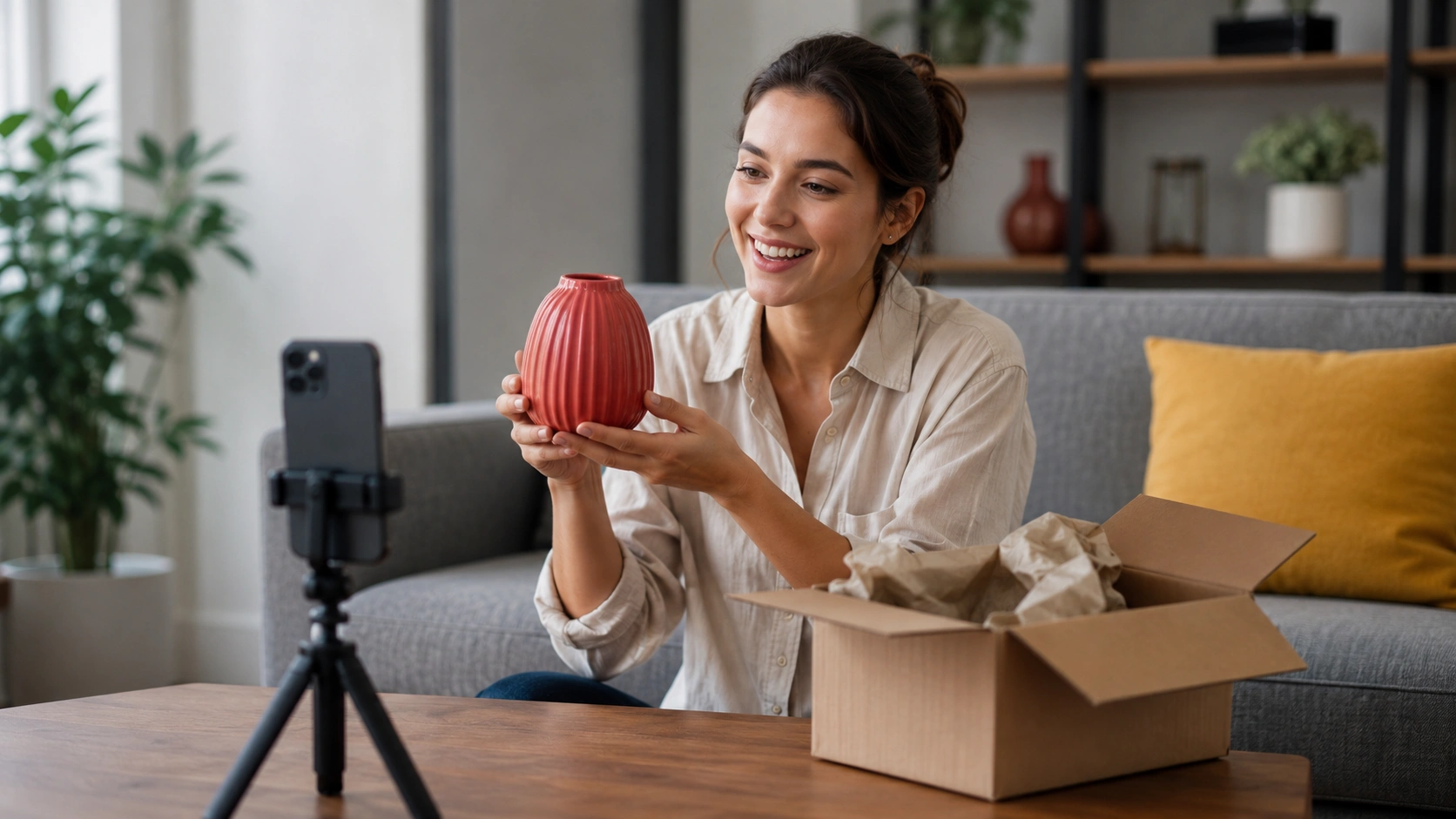
Live social shopping is a digital commerce format where brands or creators host live video broadcasts to demonstrate products and interact with an audience in real-time. Unlike traditional home shopping television, this format is built for two-way communication, and a live shopping platform makes it easy for viewers to ask questions, request specific product angles, and complete a purchase without ever leaving the video environment or app.
The technical infrastructure usually involves three core components: a live video stream, a real-time chat interface, and an integrated product catalog. When a host mentions a product, a "shoppable pin" or overlay appears on the screen. The user taps the product, selects their variant, and checks out while the stream continues to play in a picture-in-picture window.
The Shift from Engagement to Revenue
For years, social video was treated as a top-of-funnel awareness tool. Operators measured success through likes, shares, and views—vanity metrics that rarely correlated with bottom-line growth. In 2026, the focus has shifted toward high-intent commerce, and Videowise’s live video commerce guide explains why that matters for modern ecommerce teams.
By removing the friction between seeing a product and buying it, brands can significantly improve their conversion rates (CVR). This strategy capitalizes on "emotional commerce," where the excitement of a live event and the social proof of a crowded chat room drive immediate action.
Quick Answer: Live social shopping is a real-time video broadcast integrated with ecommerce tools that allow viewers to purchase products directly within the video player. It combines entertainment, social interaction, and instant checkout to drive higher conversion rates and average order values.
Key Examples of Live Social Shopping Success
Understanding the theoretical value of live shopping is one thing; seeing how brands execute it is another. These examples highlight different tactical approaches—from community-driven events to high-production celebrity collaborations—and point to the kinds of results you’ll see in our customer stories.
1. Hobbii: Converting Engagement into Sales
Hobbii, an international yarn and craft retailer, uses live shopping to tap into its highly passionate community. Instead of just "selling," they host digital workshops and share free patterns during their streams. This value-first approach builds massive trust before the "ask" even happens.
The results are purely revenue-driven. During their live events, Hobbii has observed that every sixth comment translates into a direct purchase. By integrating live shopping on both their website and social channels, they maintain a conversion rate nearly five times higher than their standard social media advertisements. This success stems from the interactive nature of the stream—when a customer asks about the texture of a specific yarn, the host can show it up close immediately.
2. Eyda: Community-Driven Fitness Commerce
Eyda, a sportswear brand for women, demonstrates how live shopping can function as a lifestyle event. They do not limit their streams to product launches; they organize online workout sessions and cooking demonstrations. These events keep the brand top-of-mind and build a "sticky" audience that returns weekly.
One of Eyda’s early live shopping events resulted in a 200% increase in sales. By treating the live stream as a community gathering rather than a sales pitch, they reduced the psychological barrier to purchase. When the host eventually highlights a pair of leggings during a workout, the audience is already primed to buy from a brand they trust.
3. Pluspige: The Power of Frequency
Pluspige, a Danish fashion brand specializing in plus-size clothing, shows that live shopping is not just for one-off product drops. They host livestream events multiple times per week. This high frequency creates a routine for their customers, who know exactly when to tune in for new arrivals.
This consistency paid off significantly, with the brand generating nearly 3 million euros in revenue from live sales alone within a single year. Their strategy relies on building a strong sense of community where customers share photos and feedback in real-time, effectively creating a live "reviews" section that drives social proof and lowers the return rate.
4. Aldo: High-Production Celebrity Collaboration
Aldo took a different approach by partnering with celebrity stylists and popular TikTok creators to co-host their events. This strategy leverages the existing audience of the influencer while adding a professional, high-production feel to the brand's spring collection launch.
The pilot event attracted 17,000 page views in the five days following the stream, with an average viewing time of over 12 minutes. For an ecommerce operator, 12 minutes of undivided attention is an eternity compared to the three-second average of a social media scroll. This extended "time on site" directly correlates with higher brand recall and increased lifetime value (LTV).
The Business Benefits of Live Social Shopping
The primary driver for adopting live social shopping is the measurable lift in performance metrics across the entire funnel. While traditional ecommerce relies on a "pull" strategy—waiting for customers to find a product—live shopping "pushes" the storefront to the customer in a format they already consume.
Increased Average Order Value (AOV)
Live hosts have the unique ability to bundle products on the fly. For example, a beauty brand host can demonstrate a skincare routine and offer a "live-only" discount for purchasing the cleanser, toner, and moisturizer together. This real-time upsell is much more effective than a static "frequently bought together" widget on a PDP because it includes a human explanation of the benefits.
Higher Revenue Per Session (RPS)
Revenue per session is one of the most critical metrics for modern Shopify brands. Performance analytics make it easier to see how live shopping maximizes RPS by keeping the user in the ecosystem longer and presenting multiple purchase opportunities within a single session. Instead of the user bouncing after viewing one product, they stay for the duration of the stream, often discovering and purchasing items they didn't realize they needed.
Reduced Return Rates
One of the biggest contributors to high return rates in fashion and beauty is the gap between expectation and reality. Live social shopping allows customers to see how a fabric moves, how a color looks under different lighting, and how a product fits on various body types. This clarity leads to more confident purchases and fewer "fit and feel" returns.
| Metric | Traditional Ecommerce | Live Social Shopping |
|---|---|---|
| Conversion Rate (CVR) | 1% – 3% | Up to 10% – 30% |
| Average Time on Page | < 1 minute | 10 – 15 minutes |
| Return Rate Impact | Standard baseline | Potential 40% reduction |
| Customer Engagement | Passive / One-way | Active / Two-way |
Where to Host: Social Platforms vs. On-Site
Deciding where to host your live shopping event is a strategic trade-off between reach and conversion control. Most brands in 2026 use a hybrid approach to capture the widest possible audience, and Videowise’s social commerce platform helps teams do that without fragmenting the customer experience.
Social-First Platforms
TikTok Shop and Instagram Live are excellent for discovery. They allow you to tap into existing algorithms and reach users who may not have heard of your brand. TikTok Shop, in particular, has become a powerhouse for live commerce because of its integrated "Shop" tab and creator marketplace. However, you are at the mercy of the platform's fees, data limitations, and algorithm changes.
On-Site Live Shopping
Hosting live shopping directly on your Shopify store offers the highest level of control and the best long-term ROI. When you host on-site, you own 100% of the customer data. You can also ensure that the video experience is optimized for your brand's aesthetic and technical requirements.
Our performance-first infrastructure at Videowise is designed for exactly this, and our live shopping case study shows how it works in practice. We help brands host live events and shoppable video on their own domains without compromising page speed or Core Web Vitals. This is crucial because a slow-loading live stream will cause users to bounce before they ever see a product demonstration.
Key Takeaway: Social platforms are best for top-of-funnel discovery and reaching new audiences, while on-site live shopping is superior for driving high-intent conversions, gathering first-party data, and maintaining brand control.
A Step-By-Step Strategy for Your First Live Event
Executing a successful live shopping event requires more than just hitting "Go Live" on a smartphone. It requires a structured workflow that spans from pre-production to post-event analysis.
Step 1: Define the Revenue Goal
Start with the "Why." Are you trying to clear out end-of-season inventory, launch a new product line, or increase the AOV of your core collection? Your goal will dictate the products you feature and the type of host you hire. If the goal is high conversion, focus on your top 5 best-sellers. If the goal is awareness, focus on your most "viral-ready" new release.
Step 2: Select and Train the Host
The host is the engine of the event. They need to be more than just charismatic; they must be product experts. A host who cannot answer technical questions about fabric composition or battery life will lose the audience's trust quickly. You can choose an internal team member who knows the brand inside out or an influencer who brings their own audience.
Step 3: Technical Setup and Integration
Ensure your ecommerce integration is rock-solid. The product tags must sync with your Shopify inventory in real-time. There is nothing more damaging to the customer experience than a host selling a product that just went out of stock. Use a platform that supports bulk publishing and real-time inventory updates.
Step 4: The Promotion Engine
Treat the live event like a movie premiere. Start promoting at least 7–10 days in advance across email, SMS, and social media. Use countdown timers on your homepage and PDPs. If you want a reference before launch, see our shoppable video setup guide.
Step 5: Execution and Real-Time Interaction
During the event, focus on the chat. Assign a dedicated moderator to handle basic customer service questions (shipping times, return policies) so the host can focus on product demonstrations. Use interactive elements like live polls or giveaways to keep the "boredom wall" at bay.
Step 6: Post-Event Repurposing
The value of a live stream shouldn't end when the broadcast stops. Take the most engaging moments—product demos, Q&A sections, funny interactions—and use AI Clips to turn them into short-form shoppable videos for your PDPs. This ensures that the content you produced for a one-hour event continues to drive revenue for months.
Bottom line: Success in live shopping is 70% preparation and 30% execution. By treating the event as a strategic revenue channel rather than a marketing experiment, you can build a repeatable model for growth.
Common Pitfalls to Avoid
Even experienced operators can stumble when implementing live shopping. Avoiding these three common mistakes will put you ahead of 90% of the competition.
1. Ignoring Page Speed and Performance
Many third-party live shopping widgets are heavy and poorly optimized. They can tank your Lighthouse scores and negatively impact your SEO. In 2026, Google's Core Web Vitals are more important than ever for organic ranking. Always choose a video commerce partner that prioritizes performance-first infrastructure to ensure your site stays fast and responsive during high-traffic events.
2. Lack of Proper Attribution
If you can't measure the direct and influenced revenue from your live event, you can't justify the spend. Many brands make the mistake of only looking at "last-click" conversions within the app. You need a tracking playbook like track shoppable video performance so you can follow the full-funnel journey—from the moment a user views a video to the final purchase, even if that purchase happens days later on a different device.
3. The "One-Way" Broadcast Mistake
The "social" in live social shopping is non-negotiable. If the host ignores the chat and just reads from a script, the audience will leave. The magic happens when a viewer says, "Can you show the inside of that bag?" and the host does it immediately. This level of responsiveness is what makes live shopping more effective than a pre-recorded ad.
The Future of Live Shopping in 2026
As we look toward the remainder of 2026, several technological shifts are making live social shopping even more potent for ecommerce brands.
AI-Powered Content Intelligence
AI is now handling the heavy lifting of post-production. We use AI Studio and AI Clips to help brands automatically identify the most "shoppable" moments in a long-form live stream. This allows a single event to generate dozens of high-performing assets for TikTok, Instagram Reels, and on-site video carousels without manual editing.
Augmented Reality (AR) Integration
The "Virtual Try-On" is moving into the live environment. We expect to see more brands allowing viewers to use their front-facing cameras to "try on" glasses, jewelry, or makeup while watching the host demonstrate those same products. This further reduces the friction of the online shopping experience.
Hyper-Personalized Streams
Instead of one massive broadcast for everyone, brands are beginning to run smaller, niche live events for specific segments of their audience. For example, a skincare brand might host a "Dry Skin Masterclass" for 200 high-LTV customers, offering highly specific product recommendations that lead to much higher conversion rates than a general broadcast.
Conclusion
Live social shopping is no longer a trend to "watch"—it is a core revenue channel that every high-growth Shopify brand should be optimizing in 2026. By combining the interactive energy of live video with the efficiency of modern ecommerce, you can solve the conversion plateaus that plague static storefronts.
Success requires a focus on measurable business outcomes: CVR, AOV, and RPS. Whether you are partnering with influencers for a social-first drop or hosting a high-performance event on your own domain, the goal remains the same: turn video engagement into measurable revenue. At Videowise, we are built to help you navigate this transition, and you can book a demo to see how it fits your stack.
Next Step: Ready to turn your video content into a revenue engine? Install our platform from the Shopify App Store.
FAQ
What equipment do I need for live social shopping?
You don't need a professional film crew to start; a high-quality smartphone, a ring light, and a stable internet connection are often enough for your first few events. As you scale, you may want to invest in an external microphone for clearer audio and dedicated lighting to better showcase product details. The most important technical requirement is a shoppable video platform that integrates with your Shopify store for real-time checkout.
How do I measure the success of a live shopping event?
Avoid focusing solely on "views" or "likes." The most important metrics are Conversion Rate (CVR), Average Order Value (AOV), and Revenue Per Session (RPS) specifically for viewers of the stream. Performance analytics help you track "influenced revenue," which includes customers who watched the stream and purchased later, even if they didn't checkout during the live broadcast.
Can I host live shopping events on my own website?
Yes, and for most brands, this is the most profitable strategy. Hosting on-site allows you to own your customer data, avoid third-party platform fees, and keep shoppers within your branded ecosystem. When hosting on-site, ensure your video provider uses performance-first infrastructure so that the live stream doesn't slow down your page or negatively impact your Core Web Vitals.
How long should a live shopping event last?
Most successful live shopping events last between 30 and 60 minutes. This provides enough time to demonstrate multiple products, answer audience questions, and build momentum, without exhausting the host or the audience's attention span. If you have a large catalog, it is better to host shorter, more frequent themed events rather than one marathon session.
.webp)


