

Table of Contents
- Introduction
- What is Live Shopping in 2026?
- The Revenue Case for Live Commerce
- On-Site vs. Social-First Live Shopping
- Strategic Content Formats for Live Events
- A Step-by-Step Implementation Guide
- Technical Considerations: Page Speed and Core Web Vitals
- The Role of AI in Scaling Live Commerce
- Measurement and Attribution
- Avoiding Common Operator Mistakes
- Future-Proofing Your Strategy for 2026
- Conclusion
- FAQ
Introduction
Ecommerce operators today face a brutal reality: customer acquisition costs (CAC) continue to climb while organic attention spans shrink. Traditional static product detail pages (PDPs) often struggle to overcome the final hurdles of buyer hesitation. Live shopping has emerged as a high-impact strategy to bridge this gap. This live shopping guide is designed for Shopify brands that prioritize measurable revenue over vanity metrics. At Videowise, we focus on helping retailers transform video from a cost center into a direct driver of conversion rate (CVR) and average order value (AOV) with Videowise's live shopping platform. This article covers how to structure, execute, and measure live events that contribute to the bottom line without compromising store performance. We will explore the strategic framework necessary to turn live broadcasts into scalable revenue channels.
What is Live Shopping in 2026?
Live shopping is the integration of real-time video broadcasting with instant ecommerce functionality. It allows a host to demonstrate products, answer questions, and offer exclusive deals while viewers purchase directly within the video interface. In 2026, the US market for live commerce is projected to reach approximately $68 billion as more brands move away from third-party social platforms to owned, on-site experiences. For a deeper breakdown, see the complete guide to live video commerce.
The difference between modern live shopping and old-school television shopping is interactivity. Two-way communication allows shoppers to influence the broadcast, requesting specific product angles or asking about sizing in real time. For the operator, this provides a unique opportunity to handle objections at scale, closing hundreds of sales simultaneously that might otherwise have required individual customer support tickets.
The Revenue Case for Live Commerce
Operators should evaluate live shopping through the lens of three core metrics: Conversion Rate (CVR), Average Order Value (AOV), and Revenue Per Session (RPS). While engagement is a helpful signal, it is not the end goal on Videowise's shoppable video platform.
Driving Conversion Rate (CVR)
Live video removes the "imagination gap." When a shopper sees a product in motion, used by a real person, their confidence increases. Brands typically observe that live events convert at significantly higher rates than static pages because they leverage social proof and urgency. For a real-world example, see how Skullcandy achieved a 7.9% RPS increase with shoppable videos. The real-time chat shows other people buying, which validates the purchase for hesitant browsers.
Increasing Average Order Value (AOV)
Live shopping is an ideal format for bundling. A host can demonstrate how three different skincare products work together as a routine, rather than just selling a single cleanser. By showing the "better together" story, operators can drive higher AOV through curated sets that are only available during the broadcast.
Maximizing Revenue Per Session (RPS)
RPS is a holistic metric that measures the total revenue generated divided by the number of sessions. Because live shopping keeps users on the site longer and exposes them to more products than a standard browsing session, it naturally lifts RPS.
Key Takeaway: Live shopping is a performance channel, not a brand awareness exercise. Every event should be measured by its ability to drive immediate checkouts and influence future purchases through attributed revenue.
On-Site vs. Social-First Live Shopping
A critical decision for any ecommerce director is where the live event actually lives. While social platforms offer reach, Videowise's social commerce feature gives brands a way to extend the same buying flow without giving up on-site control and data.
| Feature | Social-First (TikTok/Instagram) | On-Site (Videowise) |
|---|---|---|
| Data Ownership | Platform-owned; limited customer data. | Brand-owned; full attribution and CRM sync. |
| Checkout Flow | Often requires platform-specific shops. | Direct Shopify checkout; 1-click integration. |
| Site Performance | No impact (users are off-site). | Performance-first; maintains Core Web Vitals. |
| SEO Value | Benefits the social platform. | Increases time-on-site and signals for your domain. |
| Retention | High distraction from other content. | Zero distractions; focused shopping environment. |
On-site live shopping is generally superior for brands looking to build long-term equity. When you host the stream on your own Shopify store, you own the "pixels" and the customer journey. You can retarget viewers based on exactly how long they watched and which products they clicked, something that is increasingly difficult on third-party social apps.
Strategic Content Formats for Live Events
Not every live stream should be a generic product walkthrough. Successful operators use specific formats to trigger different buying behaviors, and Andar's live shopping case study is a strong example of how a tightly structured show can become a revenue channel.
The New Product Drop
Use live shopping to launch a new collection. This creates a "digital line" outside your store. By limiting the initial stock to those on the livestream, you build extreme urgency. This format is highly effective for streetwear, beauty, and limited-edition home goods.
The "Vault" Opening or Flash Sale
Clear out end-of-season inventory by hosting a high-energy flash sale. This is more effective than a standard "Sale" banner because the host can explain the value of the items, preventing the brand from looking like a discount-only retailer.
The Expert Q&A and Tutorial
For technical products—like supplements, high-end electronics, or complex skincare—education is the primary driver of CVR. An expert host can spend 30 minutes explaining the "why" behind the ingredients or specs, systematically removing every reason a customer has to say "no."
A Step-by-Step Implementation Guide
Setting up a live shopping event requires coordination between marketing, merchandising, and technical teams.
Step 1: Select the high-margin products. / Identify 5–10 products that have high margins or high inventory levels. These should be items that benefit from being shown in motion.
Step 2: Choose your performance-first platform. / Deploy a solution like our live shopping capability that integrates directly with your Shopify theme. If you want a tailored setup, book a demo to see how it fits your store.
Step 3: Source and brief the host. / You don't need a professional actor. Often, the founder or a knowledgeable store manager is more effective because they carry more brand authority. Brief them on the key talking points but leave room for spontaneous interaction.
Step 4: Build the promotion engine. / Treat the live event like a movie premiere. Use email, SMS, and site-wide banners to drive sign-ups. Create a "calendar invite" link so people get a notification on their phones before you go live.
Step 5: Execute and moderate. / During the stream, have a dedicated moderator in the chat. This person should answer technical questions and drop direct product links as the host mentions them, ensuring the path to purchase is friction-free.
Step 6: Repurpose the content. / The value of a live event shouldn't end when the camera stops. Use AI Clips to automatically slice the long-form broadcast into short-form shoppable videos for your PDPs and collection pages.
Technical Considerations: Page Speed and Core Web Vitals
A common concern for ecommerce directors is that adding video will slow down the site. This is a valid fear—every 100ms of latency can result in a 7% drop in conversions.
However, advanced video commerce platforms use performance-first infrastructure. This involves using a global Content Delivery Network (CDN) to serve video files from the server closest to the user. It also requires "lazy loading" or viewport loading, which ensures that the heavy video assets don't load until the user scrolls to them. This allows the text and images at the top of the page (the "Above the Fold" content) to load instantly, maintaining high scores for Largest Contentful Paint (LCP).
Myth: Adding live video players to my Shopify store will ruin my Google PageSpeed Insights score. Fact: Using a platform built with ecommerce-specific infrastructure ensures the video is optimized and compressed, often resulting in better performance than unoptimized static images.
The Role of AI in Scaling Live Commerce
Scaling a live shopping strategy is often hindered by the sheer amount of content production required. This is where AI-powered content intelligence becomes an operator's best friend.
We provide tools like AI Studio and AI Clips to handle the post-production heavy lifting. Once a 45-minute live stream is finished, our AI can identify high-engagement moments—like a specific product demo or a great customer question—and automatically create 15-second vertical clips. These clips can then be embedded as shoppable videos on relevant PDPs.
This turns a one-time event into an evergreen revenue-generating asset. Instead of a "dead" video archive, you have a library of high-converting UGC and brand content that continues to drive CVR and RPS long after the live stream ends.
Measurement and Attribution
To prove the ROI of your live shopping guide implementation, you must go beyond simple view counts. You need a Content Performance Analytics dashboard that tracks the full funnel.
Direct Revenue
This is revenue generated from a user who added a product to their cart during the live event and completed the purchase within the same session. This is the most straightforward way to measure the "hit" of a specific event.
Influenced Revenue
Many shoppers will watch a live stream, leave, and come back a day later to buy. A robust attribution model will track these users across sessions, crediting the live event for its role in the customer journey. This provides a more accurate picture of the total business impact.
Video Engagement vs. Revenue
While we track watch time and click-through rates (CTR) on product tags, these are leading indicators. If you see high engagement but low CVR, it usually points to a friction point in the checkout process or a pricing mismatch, not a failure of the video content itself.
Bottom line: Success in live shopping is measured by the delta in Revenue Per Session (RPS) between users who interact with video and those who do not.
Avoiding Common Operator Mistakes
Even the best-planned live events can fail if certain traps aren't avoided.
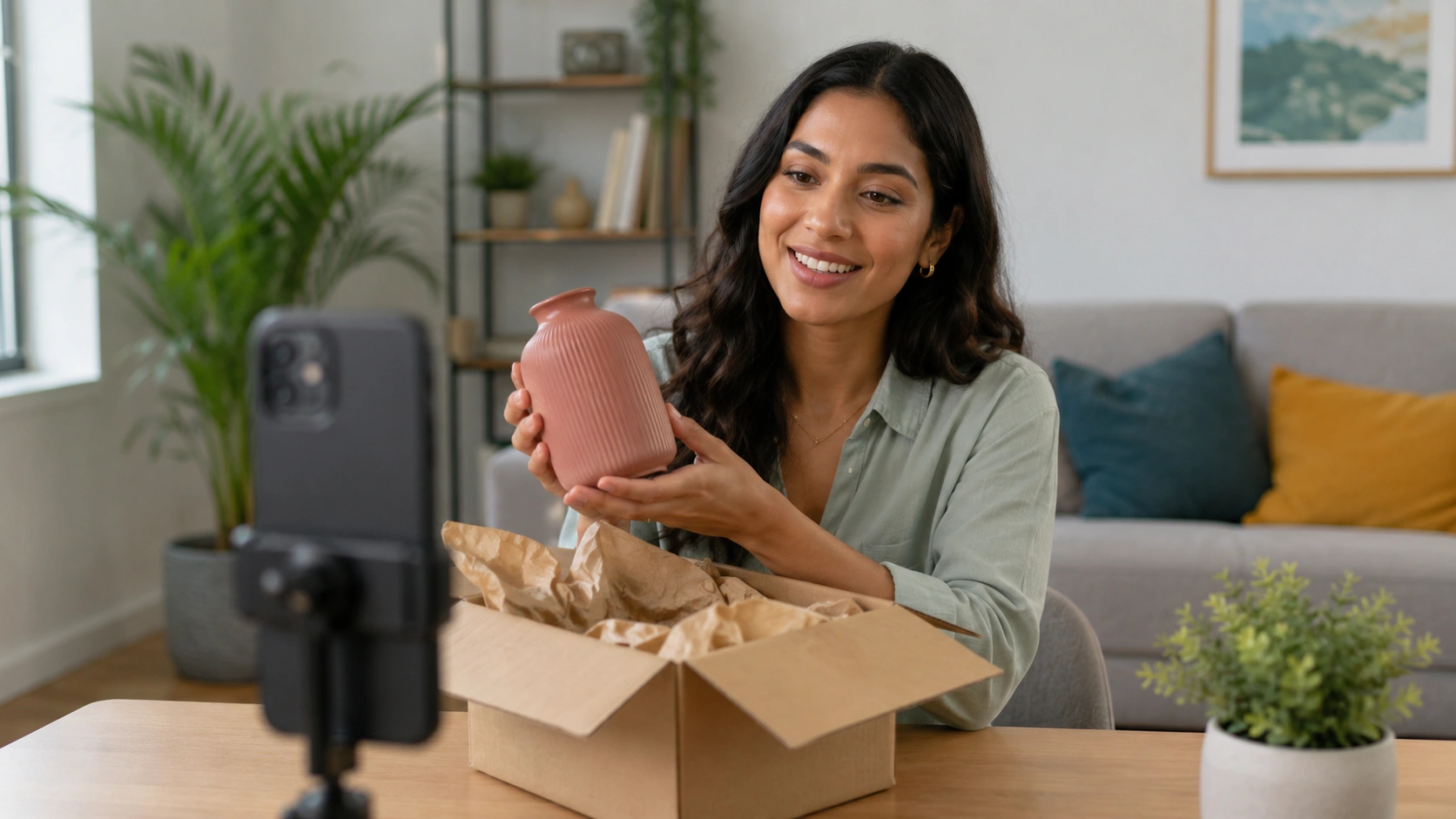
- Over-production: Don't try to make it look like a Hollywood movie. Shoppers crave authenticity. A smartphone on a tripod with good lighting often converts better than a multi-camera studio setup because it feels more "real."
- Ignoring the Replay: Up to 70% of live shopping revenue can come from people watching the replay. Ensure your "buy" buttons and product carousels remain fully functional in the recorded version.
- Complex Checkout: If a user has to leave the video to go to a separate checkout page, you will lose them. Use an inline checkout or an integrated "add to cart" that keeps the video playing in a picture-in-picture mode.
- Weak Call to Action (CTA): The host must explicitly tell people to buy. Phrases like "Click the link in the corner right now to get this exclusive price" are essential.
Future-Proofing Your Strategy for 2026
As we move through 2026, the landscape will continue to shift toward Omnichannel Commerce. This means your live shopping strategy shouldn't exist in a vacuum. Your live events should feed your TikTok Shop, your email marketing sequences, and your Shop App presence.
The goal is to create a unified video experience. Whether a customer finds you through a live stream on your site or a shoppable video in their inbox, the interface and checkout experience should be consistent. This consistency builds brand trust and reduces the cognitive load on the shopper, leading to higher lifetime value (LTV).
Conclusion
Live shopping is no longer a speculative trend; it is a fundamental shift in how Shopify brands interact with their customers. By focusing on revenue-first delivery and performance-first infrastructure, operators can build a channel that drives significant lifts in CVR, AOV, and RPS. Success requires moving past vanity engagement metrics and embracing a data-driven approach to video.
Our mission is to help you turn every video into a measurable revenue stream. From high-energy live events to evergreen shoppable PDPs, we provide the tools to scale your video strategy without technical headaches. The brands that win in 2026 will be those that own their audience and provide a shopping experience that is as entertaining as it is efficient.
To see how these strategies can work for your specific catalog, consider installing it from the Shopify App Store.
FAQ
Does live shopping slow down my Shopify store's page load speed?
No, provided you use a platform designed for ecommerce performance. We use advanced techniques like viewport loading and global CDNs to ensure that the video player only loads when necessary, keeping your Core Web Vitals and LCP scores high even with high-definition video.
How do I measure the ROI of a live shopping event?
You should track both direct revenue (purchases made during the stream) and influenced revenue (purchases made later by viewers). For a deeper breakdown, see how to track shoppable video performance. Our Content Performance Analytics tracks the entire customer journey from the first video play to the final checkout, giving you a clear picture of RPS and CVR lift.
Do I need a professional studio and host to get started?
Absolutely not. Some of the highest-converting live shopping events are hosted by founders or store staff using a standard smartphone. Authenticity and product knowledge are far more important to modern shoppers than high-production gloss, and simple setups often feel more relatable and trustworthy.
Can I reuse my live shopping content after the event is over?
Yes, and you should. Using AI Clips, you can automatically slice your long-form live events into short-form shoppable videos. These can be embedded on your product detail pages (PDPs) or used in email and SMS campaigns to continue driving revenue as evergreen assets.
.webp)


