

Table of Contents
- Introduction
- The Revenue Case for Video Live Shopping
- Strategic Formats for 2026
- Overcoming the Performance Hurdle
- Operational Workflow: Setting Up for Success
- Leveraging AI for Scale
- Measuring the Impact: Beyond Vanity Metrics
- Best Practices for Hosts and Moderators
- Integrating Live Shopping into Your Omnichannel Strategy
- Future-Proofing Your Video Strategy
- FAQ
Introduction
Customer acquisition costs continue to climb while organic reach on social platforms reaches new lows. Shopify brands often find themselves stuck on a conversion plateau where static images and standard product descriptions no longer move the needle. This is where Videowise's live shopping platform changes the trajectory of a brand's digital storefront. By merging the urgency of a limited-time event with the interactivity of a two-way conversation, live commerce transforms a passive browsing session into an active revenue event. At Videowise, we focus on turning these video interactions into measurable business outcomes like higher Conversion Rates (CVR) and Average Order Value (AOV). This guide explores how to implement a high-performance live shopping strategy that prioritizes site speed and bottom-line growth.
The Revenue Case for Video Live Shopping
Live shopping is no longer an experimental channel. For teams looking for a practical starting point, getting started with shoppable videos is a strong first step. Unlike traditional video content, live shopping creates a high-intent environment where the distance between "discovery" and "checkout" is reduced to a single click.
For the modern ecommerce operator, the value proposition of live commerce is built on three pillars:
- Accelerated Conversion Rates: Real-time Q&A sessions remove purchase friction. When a shopper can see how a fabric moves or ask about sizing in a live chat, the hesitation that leads to cart abandonment disappears.
- Increased Revenue Per Session (RPS): Live events often feature bundles, exclusive "drop" pricing, or tiered rewards. These strategies naturally encourage shoppers to add more to their carts, lifting the overall value of every visitor.
- Lower Return Rates: Seeing a product in motion and having specific questions answered by a host leads to more informed purchases. Better-informed customers are significantly less likely to return items due to "not as described" issues.
Quick Answer: Video live shopping is a real-time commerce format where brands broadcast live video to sell products directly to an audience. It combines entertainment with instant checkout capabilities, allowing shoppers to buy featured items without leaving the video stream.
Strategic Formats for 2026
Effective live shopping is not just about turning on a camera. It requires a deliberate format that matches your brand's goals. Operators should choose a format based on the specific revenue outcome they want to achieve.
The Exclusive Product Drop
This format leverages the "fear of missing out" (FOMO) to drive rapid sales. By launching a new SKU or a limited-edition colorway exclusively during a live show, you create a spike in traffic and transaction volume. The focus here is on speed and urgency.
The Educational Masterclass
High-consideration products—like skincare, complex electronics, or home fitness equipment—benefit from a tutorial-led approach. A host demonstrates the product's utility, answers technical questions, and provides social proof. This format is a powerful tool for increasing AOV as hosts can easily cross-sell complementary items, as shown in Tibi's live shopping case study.
The Behind-the-Scenes Tour
Transparency builds trust. Showing the manufacturing process, the design studio, or the brand founders' day-to-day operations humanizes the brand. While this format is "softer" on the sales pitch, it is excellent for customer retention and long-term lifetime value (LTV).
Overcoming the Performance Hurdle
A major concern for ecommerce directors is the impact of video on site performance. Historically, embedding heavy video players or third-party scripts could degrade Core Web Vitals (the metrics Google uses to measure page speed and user experience).
We built our performance-first infrastructure to solve this exact problem. Video live shopping should never come at the cost of your page speed. For a closer look at how measurement works, Content Performance analytics shows how video contributes to revenue without sacrificing speed. By using optimized viewport loading and efficient script delivery, our platform ensures that your store remains fast and responsive even during high-traffic live events.
Key Takeaway: Live shopping must be integrated into your site's existing architecture without compromising Core Web Vitals. A slow site will kill the conversion lift that live video provides.
Operational Workflow: Setting Up for Success
To execute a professional live event that drives revenue, operators should follow a structured implementation process.
Step 1: Define Your Goal and Metrics. Before going live, decide if the event is for a new product launch (focus on CVR) or a seasonal clearance (focus on volume). Identify your target RPS (Revenue Per Session) to measure success.
Step 2: Choose Your Talent. You don't always need a high-priced influencer. Often, a product designer, a knowledgeable customer service lead, or a passionate founder is more effective at converting viewers than a generic creator. Authenticity drives sales in a live environment.
Step 3: Technical Integration and Simulcasting. Set up your broadcast to stream simultaneously on your website and social channels like Instagram, TikTok, or the Shop App with Videowise's social commerce platform. Our platform allows for this multichannel distribution, ensuring you meet your customers wherever they are scrolling.
If you want help planning the setup, book a demo.
Step 4: Prepare the Shoppable Element. Tag all featured products in advance with Videowise's shoppable video platform. Ensure that the "Add to Cart" or "Buy Now" buttons are clearly visible and function within the video player. Inline checkout is critical; if a user has to leave the stream to finish their purchase, you will lose a percentage of those conversions.
Step 5: Promotion and RSVP Management. Use email, SMS, and on-site banners to drive sign-ups before the event. Providing an "Add to Calendar" option or an SMS reminder ensures that the audience you've worked hard to attract actually shows up at the start time.
Leveraging AI for Scale
One of the biggest bottlenecks in video commerce is content production and post-event utility. A live show shouldn't disappear once the "end" button is pressed.
We provide AI-powered tools to help brands extend the life of their live content. With AI Clips, you can automatically identify the most engaging or high-converting moments from a 45-minute live stream and turn them into 15-second shoppable clips for your Product Detail Pages (PDPs). This creates a "flywheel" effect: your live event provides the raw material for your evergreen on-site video strategy.
Measuring the Impact: Beyond Vanity Metrics
Operators must resist the urge to focus solely on "viewer counts" or "likes." While engagement is a prerequisite, the ultimate goal is revenue. To understand the true ROI of your video live shopping efforts, track shoppable video performance so you can connect activity to outcomes.
| Metric | Definition | Why it Matters |
|---|---|---|
| Direct Revenue | Sales made via the "Add to Cart" button inside the live stream. | Measures the immediate impact of the event. |
| Influenced Revenue | Sales from users who watched the live show and purchased within a specific window (e.g., 24-48 hours). | Captures the "halo effect" of the live event on the rest of the store. |
| Conversion Lift | The difference in CVR between shoppers who watched the video vs. those who didn't. | Validates the effectiveness of video as a conversion tool. |
| RPS (Revenue Per Session) | Total revenue generated during the event divided by the number of unique viewers. | Shows the quality of the audience and the effectiveness of the sales pitch. |
Bottom line: Success in live shopping is measured by the dollar amount generated per viewer, not just the number of people who tuned in.
Best Practices for Hosts and Moderators
The success of a live stream often hinges on the interaction between the host and the audience. This isn't a one-way broadcast; it's a conversation.
- Acknowledge the Audience: Call out commenters by name. Answer questions in real-time. This level of personalization is something static ecommerce can never replicate.
- Use Visual Cues: When a product is tagged, the host should physically show the product on camera and point to the "Buy" button on the screen.
- Manage the Chat: High-volume events require a moderator. While the host speaks, a moderator can drop links, answer basic shipping questions, and pin important comments to the top of the feed.
- Create Value-Add Content: Don't just sell. Provide tips, styling advice, or "hacks" related to the product. If the viewer feels they are learning, they will stay longer, increasing the chance of a purchase.
Integrating Live Shopping into Your Omnichannel Strategy
Live shopping shouldn't live in a vacuum. It should be an integrated part of your broader marketing stack.
For example, if you are a fashion brand, you might import UGC (User Generated Content) from TikTok and Instagram into your Creative Library. During a live show, you can reference these real-world customer photos to build trust. After the show, the recorded session can be broken down into shoppable "stories" that live on your collection pages.
Our platform was built to handle this level of complexity without requiring a team of developers. Whether you are running a single Shopify store or managing ten different international sites, the ability to bulk publish and manage video assets across multiple touchpoints is a major operational advantage.
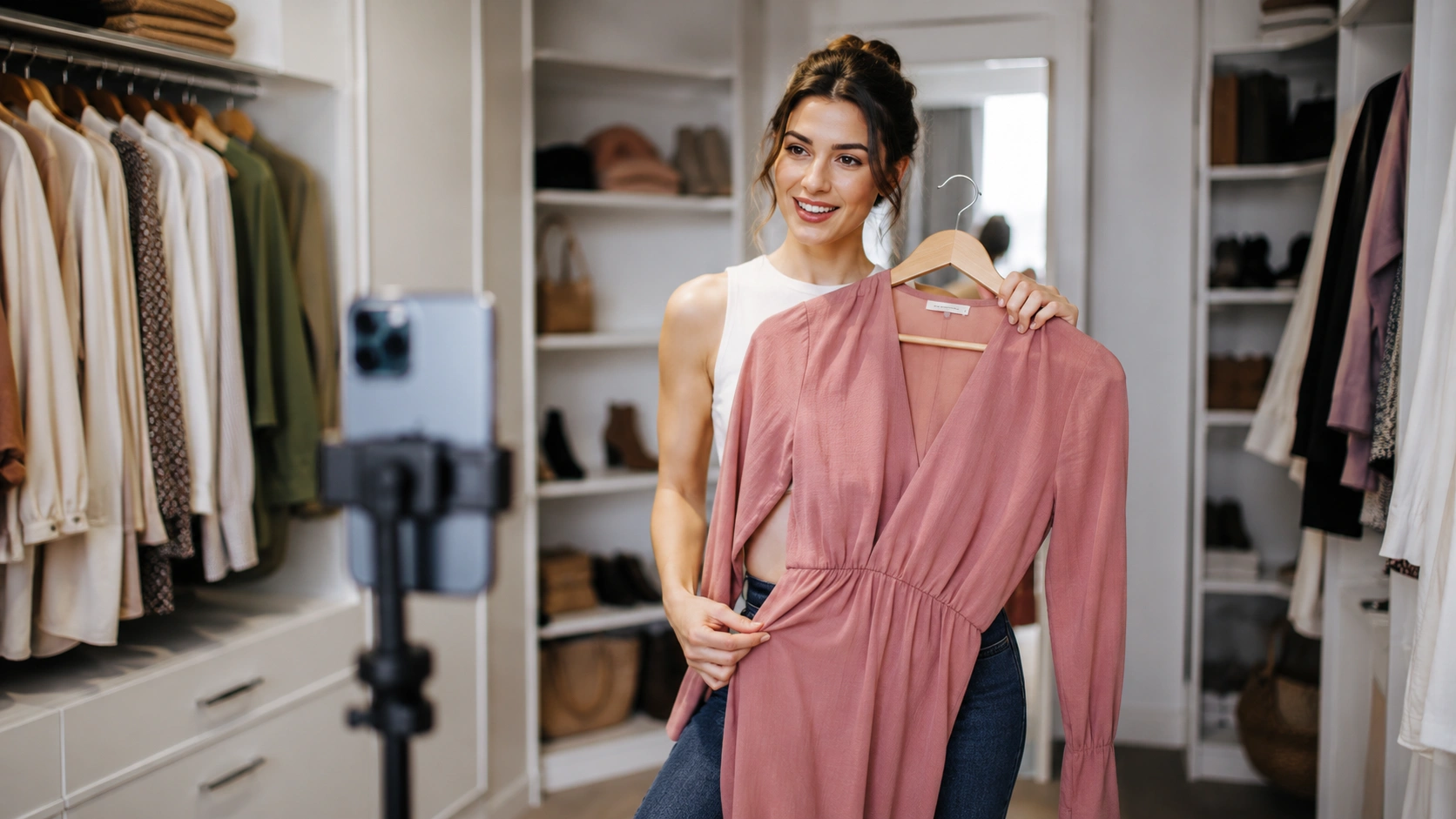
Myth: Live shopping is only for massive brands with huge production budgets. Fact: Some of the highest-converting live streams are shot on an iPhone with a single ring light. Authenticity and product knowledge drive more revenue than high production values.
Future-Proofing Your Video Strategy
As we look further into 2026, the brands that win will be the ones that treat video as a first-class citizen in their commerce stack. This means moving beyond YouTube embeds and focusing on "shoppable" experiences that are integrated directly into the buying journey, including live shopping inside Shop App.
Video live shopping is the ultimate expression of this trend. It combines the social element of our digital lives with the functional necessity of shopping. By focusing on performance, revenue metrics, and high-quality content, Shopify operators can build a sustainable competitive advantage.
Our mission at Videowise is to provide the infrastructure that makes this possible. We help over 4,000 brands turn video from a storage cost into a revenue engine, ensuring that every second of video content on your site is working toward your next sale.
FAQ
Does live shopping slow down my Shopify store's page speed?
No, provided you use a platform with performance-first infrastructure. We use advanced loading techniques like script minification and viewport-aware delivery to ensure that the live shopping player only loads when needed, maintaining your Core Web Vitals and SEO rankings.
How do I get people to actually show up to my live stream?
Success depends on your pre-event promotion strategy. Use a combination of on-site RSVP banners, dedicated email flows, and SMS alerts to remind your audience. Offering an event-exclusive discount or a first look at a new product is a proven way to drive higher attendance.
Can I reuse the content from a live shopping event after it ends?
Yes, and you absolutely should. You can host full replays on a dedicated page or use AI-powered tools to cut the recording into short-form shoppable clips. These clips can then be placed on relevant Product Detail Pages to continue driving conversions long after the live event is over.
Do I need a professional studio to start with video live shopping?
Not at all. Most successful Shopify brands start with a high-quality smartphone and a simple lighting setup. The key to conversion is the host's ability to demonstrate the product and answer questions authentically, rather than having a high-budget TV production.
If you're ready to try it, install Videowise from the Shopify App Store.
.webp)


