

Table of Contents
- Introduction
- The Strategic Shift to POS Live Shopping
- The Revenue Case for Omnichannel Video
- Bridging the Gap: How POS and Live Video Connect
- Key Strategies for POS-Driven Live Commerce
- Essential Technology for Omnichannel Live Selling
- Measuring Success: Beyond Engagement to Hard Revenue
- Operationalizing POS Live Shopping: A Step-by-Step Framework
- Common Pitfalls and How to Avoid Them
- The Role of AI in Scaling POS Live Selling
- Future-Proofing Your Retail Strategy
- Conclusion
- FAQ
Introduction
As customer acquisition costs continue to climb in 2026, Shopify brands are forced to look beyond traditional ad spend to drive growth. The challenge is no longer just getting eyes on a product; it is about converting that attention into measurable revenue without inflating the marketing budget. Traditional ecommerce often feels clinical and disconnected, leading to conversion plateaus. This is where POS live shopping enters the strategy. By merging the physical presence of a brick-and-mortar store with the reach of digital streaming, brands can leverage their existing physical assets to create high-converting shopping experiences. At Videowise, we focus on helping retailers turn these video interactions into direct sales with shoppable video experiences. This guide explores how to integrate point-of-sale systems with live shopping to increase your average order value and revenue per session.
The Strategic Shift to POS Live Shopping
The concept of live shopping has evolved from a social media novelty into a core revenue driver for omnichannel retailers. In 2026, the most successful brands are those that treat their physical stores as more than just fulfillment centers. They are using them as broadcast studios.
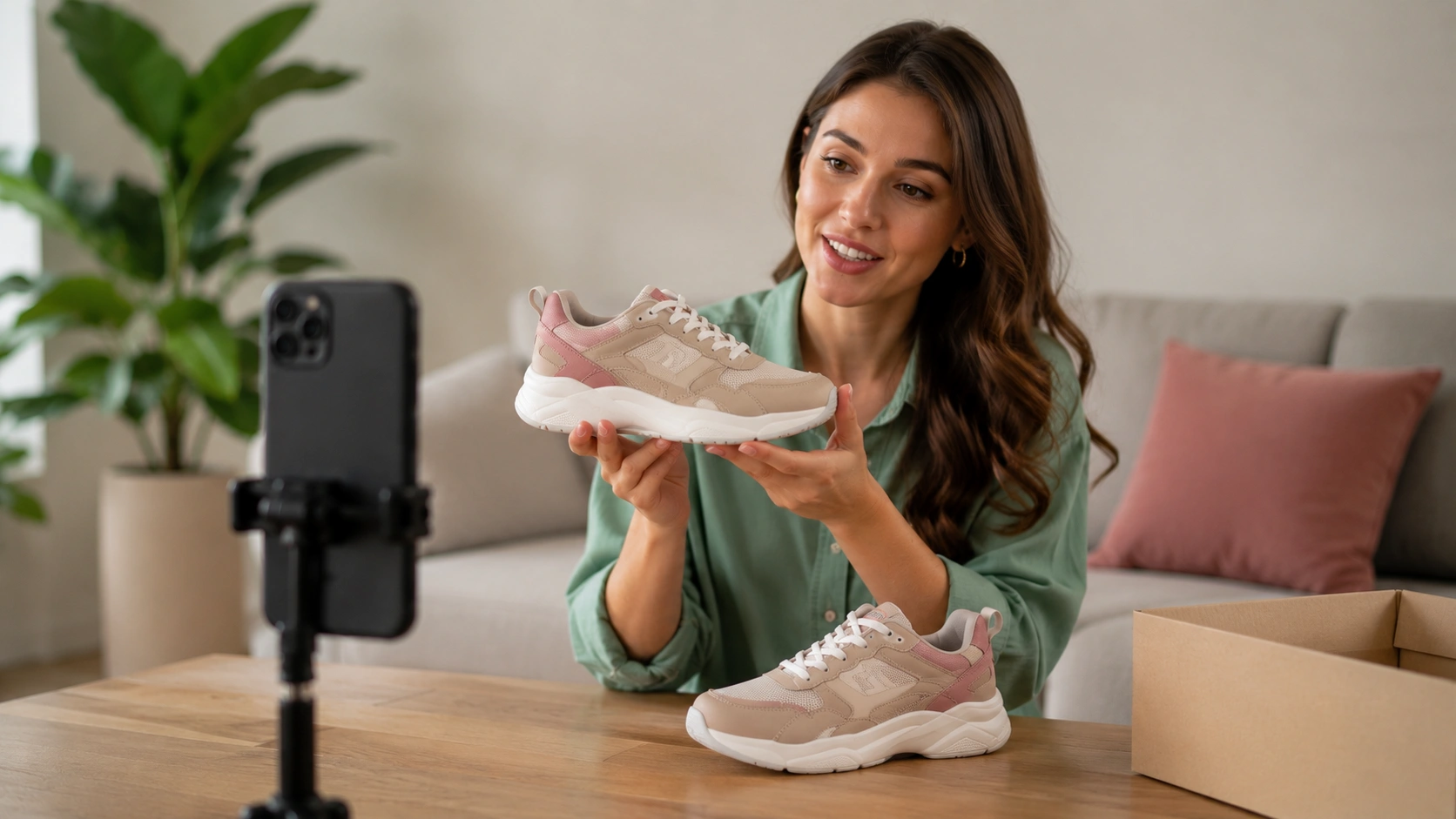
POS live shopping refers to the integration of a retailer’s point-of-sale (POS) data and physical store environment with live-streamed selling events. Unlike a studio-produced stream, a POS-driven event happens on the "shop floor." It utilizes real-time inventory data from the store’s POS system to ensure that what is shown is actually available for immediate purchase.
For an ecommerce director, this solves two major problems. First, it reduces the cost of content production by using existing store environments. Second, it bridges the trust gap. Seeing a product in a real store, handled by a knowledgeable staff member, provides a level of authenticity that a high-production studio often lacks. This authenticity is a primary driver of Conversion Rate (CVR).
If you're looking at the live layer itself, Videowise's live shopping platform is what makes that broadcast approach revenue-ready.
Key Takeaway: POS live shopping transforms physical retail space into a digital revenue engine, using real-time inventory and store staff to build trust and drive immediate transactions.
The Revenue Case for Omnichannel Video
When evaluating new technology, operators must look past vanity metrics like "likes" or "views." The only metrics that truly matter are Average Order Value (AOV), Revenue Per Session (RPS), and Conversion Rate (CVR).
Brands implementing live shopping directly from their physical locations often see a significant lift in these areas. There are several reasons for this:
- Increased Trust and Reduced Friction: Shoppers can ask questions in real-time. "Does that fabric stretch?" or "How does that look under store lights?" When a store associate answers these questions live, it removes the hesitation that leads to cart abandonment.
- Higher AOV through Real-Time Bundling: A host in a physical store can easily grab a matching accessory from a nearby shelf. This spontaneous "look what else we have" moment is much more effective at driving upsells than a static "frequently bought together" algorithm on a product page.
- Urgency and Exclusivity: Live events often feature "drop" mechanics. When a host mentions that only five units of a specific SKU (Stock Keeping Unit) are left in that specific store location, the Fear of Missing Out (FOMO) drives immediate checkout.
By using our Content Performance analytics, operators can track every dollar of revenue influenced by these streams. This moves video from the "brand awareness" bucket into the "direct response" bucket.
Bridging the Gap: How POS and Live Video Connect
The technical backbone of POS live shopping is the synchronization of data. Without a tight link between your live shopping software and your Shopify POS, the experience falls apart.
Real-time Inventory Sync There is nothing more damaging to a customer experience than a shopper purchasing an item during a live stream only to receive an "out of stock" email an hour later. A proper integration ensures that the inventory levels reflected in the live stream’s product tags are updated in real-time based on both online and in-store sales.
Inline Checkout Integration The goal is to keep the shopper in the video experience. If a user has to click away to a separate product page, you risk losing them to distractions. Our Shoppable Video platform allows for inline checkout. This means the customer can select their size, add to cart, and complete the purchase through a simplified checkout overlay without ever stopping the stream.
Staff Empowerment Your store associates are your best influencers. They know the product better than any third-party creator. By giving them the tools to go live from the shop floor, you are leveraging an existing payroll expense to reach a global audience. This is a massive efficiency gain for any retail operation.
Key Strategies for POS-Driven Live Commerce
Implementing this strategy requires more than just a camera and an internet connection. It requires a framework for execution.
1. The "Store-to-Stream" Workflow
Identify your high-performing retail locations. These stores should have strong visual merchandising and staff members who are comfortable on camera. You don't need a professional production crew. In 2026, shoppers prefer the raw, authentic feel of a mobile-shot stream over a polished commercial.
2. Localized Content for Global Reach
A brand with stores in New York, London, and Tokyo can run region-specific live events. A New York store might host a "Winter Essentials" stream while the Australian location hosts a "Summer Collection" launch. This localization makes the content more relevant to the specific audience segment watching, which directly impacts RPS (Revenue Per Session).
3. Utilizing "Ghost Stocks" and Samples
Sometimes, a store may be low on stock, but the warehouse is full. A smart operator uses the store for the visual demonstration while the backend logic of the live shopping platform pulls inventory from the primary distribution center. This allows you to show the "real" product in a "real" setting without being limited by local shelf quantities.
Essential Technology for Omnichannel Live Selling
To execute POS live shopping at scale, your tech stack needs to be performance-first. One of the biggest fears for ecommerce directors is that adding video will slow down their site. This is a valid concern, as a one-second delay in page load can lead to a significant drop in CVR.
We built our performance-first shoppable video stack to handle these high-traffic moments. Our video delivery doesn't slow down your site, ensuring that your Core Web Vitals (the metrics Google uses to measure page speed and user experience) remain healthy.
Key technical requirements for your stack include:
- Viewport Loading: Only loading the video elements when they are visible to the user.
- AI-Powered Tagging: Automatically linking products in the video to your Shopify catalog to save manual work.
- Bulk Publishing: The ability to push a live stream replay to hundreds of product detail pages (PDPs) simultaneously.
Myth: Adding high-quality live video will inevitably slow down my Shopify store and hurt my SEO. Fact: Modern video commerce platforms use advanced compression and viewport loading to deliver video without impacting page load speeds or Core Web Vitals.
Measuring Success: Beyond Engagement to Hard Revenue
In the past, video success was measured by "views" or "average watch time." These are vanity metrics. To prove the ROI of a POS live shopping program, you must track revenue-centric data points.
Direct Revenue This is the revenue generated from purchases made through the video’s inline checkout during the live event. This is the most straightforward way to measure the success of a specific stream.
Influenced Revenue Not every shopper buys the moment they see a video. Many watch a live stream, leave the site, and return 24 hours later to purchase. A senior operator tracks influenced revenue—sales that occurred within a specific attribution window after a customer engaged with a video.
Revenue Per Session (RPS) Compare the RPS of customers who watched a live stream versus those who did not. In almost every category, from fashion to electronics, shoppers who engage with video spend more per visit.
Conversion Rate (CVR) Lift The ultimate goal is to see a permanent lift in CVR on the pages where these live stream replays live. Using our revenue attribution guide, brands can A/B test different video placements—such as putting a live replay on a collection page versus a PDP—to see which location drives the highest conversion.
Operationalizing POS Live Shopping: A Step-by-Step Framework
For a growth manager looking to launch their first event, following a structured process is essential.
Step 1: Set the Commercial Objective Decide if this event is about clearing old inventory, launching a new line, or increasing the AOV of a specific category. Your objective dictates your host selection and your featured products.
Step 2: Sync the POS and Shopify Catalog Ensure your inventory levels are accurate across all locations. Use a platform that supports multi-store support if you are operating across different regions or Shopify instances.
Step 3: Select and Train the Host Pick a store associate who knows the product. Conduct a brief training session on how to handle the "buy" triggers—for example, reminding viewers to click the product card in the corner of the screen.
Step 4: Prepare the Shop Floor Clear a small area of the store. Ensure the lighting is adequate and that there is minimal background noise that might distract the viewer. You want it to look like a real store, but with enough clarity for the shopper to see product details.
Step 5: Execute the Stream with Moderation While one person hosts, another should moderate the chat. The moderator can drop links, answer basic shipping questions, and "pin" products to the screen as they are mentioned. This is where the conversion happens.
Step 6: Repurpose the Content The live event is only the beginning. Use our AI Clips tool to automatically cut the long live stream into short-form videos. These clips can then be embedded on specific PDPs as shoppable UGC (User Generated Content) or used in email and SMS marketing.
Bottom line: A live stream that ends when the camera stops is a wasted asset. The real revenue growth comes from repurposing that live content into evergreen shoppable videos across your entire site.
Common Pitfalls and How to Avoid Them
Even with the best technology, operational errors can stall a live shopping program.
The "Over-Production" Trap Many brands wait until they have a professional studio and a celebrity host. This is a mistake. The data shows that "raw" content from the shop floor often converts better because it feels more authentic to the customer. Start with what you have.
Ignoring the Technical Performance Using a platform that isn't optimized for Shopify can lead to site crashes during high-traffic events. Ensure your platform uses a performance-first shoppable video stack that can scale with your traffic.
Poor Post-Live Strategy Most viewers will not see the event live. If you don't have a plan to use the replay, you are missing out on 80% of the potential revenue. Make the replay shoppable and place it on your homepage or relevant collection pages. For a live commerce proof point, Andar's live shopping case study shows how a single broadcast can become a lasting revenue asset.
Failing to Define Attribution If you can't prove that the live stream led to sales, the program will eventually lose its budget. Use direct and influenced revenue tracking from day one to show the executive team the exact ROI of every hour spent streaming.
The Role of AI in Scaling POS Live Selling
In 2026, AI is no longer a buzzword; it is a tool for efficiency. For a brand running live streams across ten different store locations, managing all that content is a full-time job. AI helps automate the heavy lifting.
AI-Powered Search and Tagging Instead of manually searching for every product shown in a video, AI can recognize the items and automatically tag them from your Shopify catalog. This reduces the setup time for a live event from hours to minutes.
AI Studio for Content Optimization Our AI Studio can analyze which parts of a live stream had the highest engagement and automatically create shortened clips of those moments. These "winning" segments are then used to replace static images on PDPs, where they are more likely to drive a conversion.
Automated Usage Rights Management If you are incorporating customer UGC into your live streams, managing the legal rights can be a headache. Modern platforms include automated rights management workflows, ensuring you have the permission to use customer content in your commerce channels.
Future-Proofing Your Retail Strategy
The line between "online" and "offline" shopping is disappearing. A customer might see a live stream from your New York store while they are on a train in London, and choose to pick up the item at a local shop the next day.
POS live shopping is the connective tissue for this omnichannel future. It allows brands to scale the "human" element of retail without the geographical limitations of a physical building. By turning every store associate into a potential seller for your entire global audience, you are maximizing the value of your physical footprint.
If you want the broader strategy behind that shift, this live video commerce guide covers how live shopping fits into a larger ecommerce growth system.
At Videowise, we are built to help Shopify brands make this transition. We focus on the tech so you can focus on the trade. Our mission is to ensure that every video you produce—from a ten-second UGC clip to a two-hour live event—is a measurable contributor to your bottom line.
Conclusion
Integrating your point-of-sale system with live shopping is no longer an experimental tactic; it is a fundamental strategy for high-growth Shopify brands in 2026. By leveraging your physical stores and staff, you create a high-trust, high-conversion environment that traditional ecommerce cannot match. Success in this space requires a focus on revenue metrics like CVR and RPS, a performance-first technical foundation, and a commitment to repurposing live content for evergreen use.
"The brands that win in 2026 will be those that treat video as a primary revenue channel, not a secondary marketing asset."
Ready to turn your store floor into a high-converting broadcast studio? Install the platform from the Shopify App Store.
If you want a tailored walkthrough, book a demo.
FAQ
Does POS live shopping require expensive camera equipment?
No, most successful brands use high-quality mobile devices. The authenticity of a stream shot on a smartphone from a real store environment often converts better than a polished studio production because it feels more genuine to the shopper.
How does live shopping integrate with my Shopify inventory?
The platform syncs directly with your Shopify POS and backend. When an item is sold in-store or online, the inventory levels in the live shopping player update automatically, preventing the sale of out-of-stock items during the event.
Can we host live shopping events from multiple store locations simultaneously?
Yes, using bulk publishing and multi-store support, you can coordinate events across different locations. This allows you to tailor content to specific time zones or regional trends while managing everything from a centralized dashboard.
What is the difference between direct and influenced revenue in live shopping?
Direct revenue comes from purchases made through the video player's inline checkout during the event. Influenced revenue tracks shoppers who watched the video and completed a purchase elsewhere on your site within a set timeframe, showing the broader impact of the content.
Want a practical starting point?
.webp)


