

Table of Contents
- Introduction
- The Core Definition: What Live Shopping Means in 2026
- How Live Shopping Differs from Traditional Ecommerce
- The Strategic Importance of Live Shopping for Revenue
- Technical Requirements for Modern Live Shopping
- Choosing the Right Platform: Social vs. On-Site
- Step-by-Step: Executing Your First Live Event
- Beyond the Live Event: Repurposing Content
- Measuring What Matters: Live Shopping Analytics
- Overcoming Common Operator Challenges
- The Future of Live Commerce in 2026
- Conclusion
- FAQ
Introduction
Customer acquisition costs continue to climb in 2026, leaving many Shopify operators struggling to maintain healthy margins through traditional search and social ads alone. Static product pages often fail to bridge the gap between initial interest and a completed transaction. This is where live shopping enters the equation. It is no longer just a trend from the East; it is a fundamental shift in how brands interact with customers and drive conversions. At Videowise, we focus on turning these video interactions into measurable revenue through our shoppable video platform. This guide covers the mechanics of live shopping, why it outperforms traditional ecommerce layouts, and how you can implement it to move the needle on your core business metrics.
The Core Definition: What Live Shopping Means in 2026
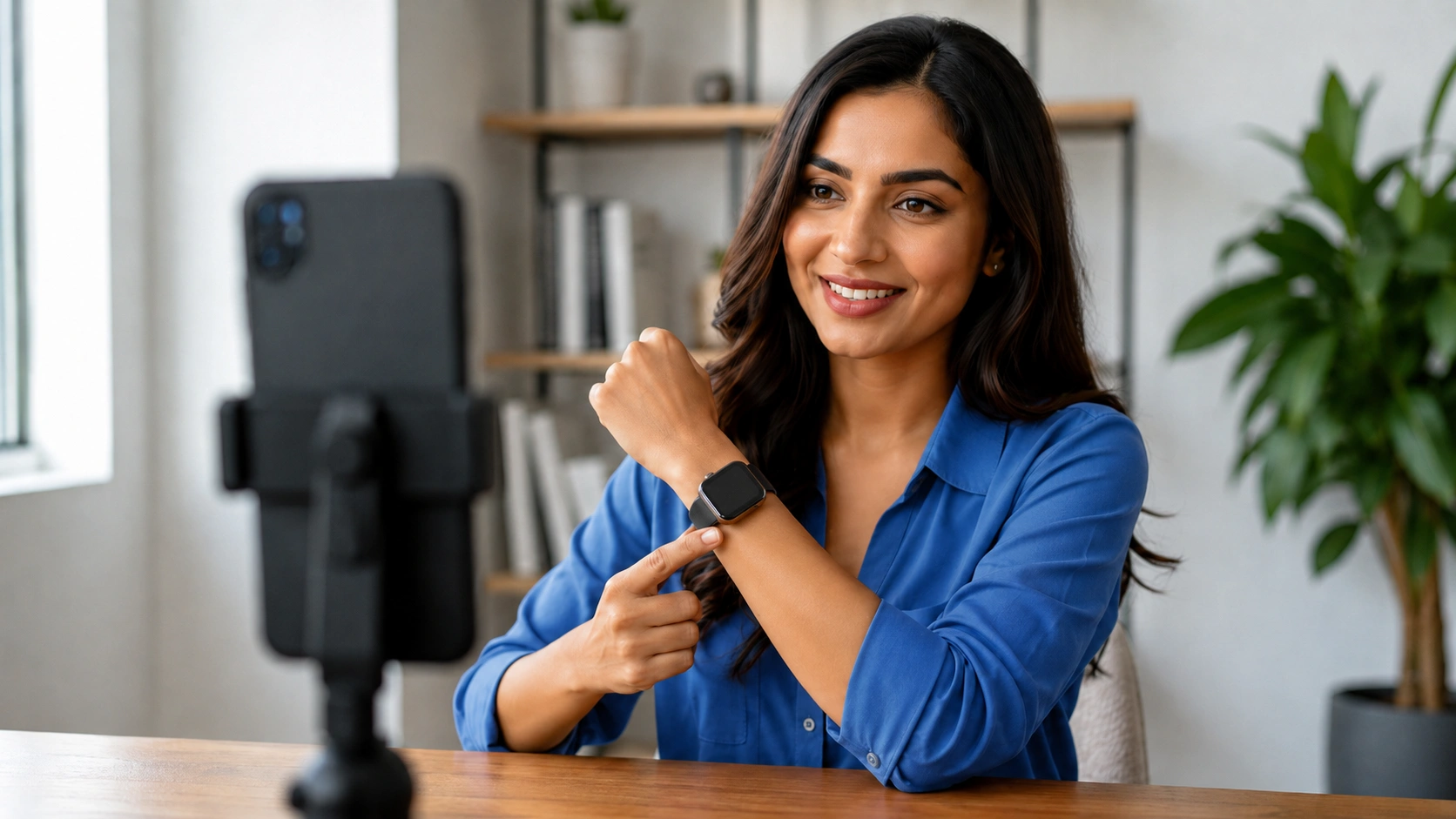
Live shopping is a digital retail format that combines a real-time video broadcast with interactive ecommerce capabilities. Think of it as the modern evolution of television shopping channels, but with two-way communication and instant checkout through Videowise's live shopping platform. It allows a host to demonstrate products, answer viewer questions in real-time, and offer exclusive deals that shoppers can purchase without ever leaving the video player.
In 2026, the definition has expanded. It is no longer restricted to social media platforms. High-growth brands now host these events directly on their own storefronts to maintain control over the customer experience and data. This allows for a deeper integration with the product catalog and a more direct path to purchase.
Quick Answer: Live shopping is a real-time video event where brands demonstrate products and interact with viewers who can purchase items directly through the video interface. It bridges the gap between digital convenience and the interactive experience of in-person retail.
How Live Shopping Differs from Traditional Ecommerce
Traditional ecommerce is often a solitary and passive experience. A shopper lands on a product detail page (PDP), reads some text, looks at a few static images, and decides whether to buy. Live shopping flips this script by introducing urgency, personality, and immediate clarity.
Real-Time Interactivity vs. Static Content
In a standard storefront, if a customer has a question about the fit of a garment or the texture of a skin cream, they might have to wait hours for a support ticket response. During a live event, that question is answered in seconds. This immediacy removes friction and reduces the "bounce" rate often seen on complex product pages.
Speed of Purchase and Instant Gratification
Live shopping is designed for high intent. While traditional browsing can lead to abandoned carts, live events often feature "one-click" or "inline" checkout. This means the shopper stays in the flow of the event while completing their transaction.
Social Proof and Community
Traditional ecommerce relies on written reviews. Live shopping provides visual proof. Seeing hundreds of other people join a stream and watching the inventory count drop in real-time creates a powerful psychological trigger. This "fear of missing out" (FOMO) is a primary driver of the high conversion rates seen in this format.
The Strategic Importance of Live Shopping for Revenue
We prioritize live shopping not because it is engaging, but because it delivers superior business outcomes. For a broader operator's perspective, read Videowise's live shopping strategy guide. For an ecommerce operator, the value of video must be measured in revenue per session (RPS) and average order value (AOV).
Key Takeaway: Live shopping transforms video from a brand awareness cost center into a high-conversion sales channel by reducing the time between discovery and checkout.
Increasing Conversion Rate (CVR)
Live demonstrations answer the unspoken "will this work for me?" question. By showing a product from multiple angles and in different contexts, brands reduce buyer hesitation. Operators typically see a significant lift in CVR for products featured in live sessions compared to those on static PDPs.
Boosting Average Order Value (AOV)
A skilled host can naturally suggest complementary products. If a host is showing a new pair of boots, they can easily show the matching socks or leather care kit. This "live cross-selling" feels helpful rather than pushy, leading to larger baskets at checkout.
Improving Revenue Per Session (RPS)
Because live shopping keeps users on the site longer and exposes them to more products in a condensed timeframe, the revenue generated per individual session often increases. This makes your existing traffic more profitable, which is critical as paid traffic becomes more expensive.
Technical Requirements for Modern Live Shopping
To run a successful live event in 2026, you need more than just a camera and a tripod. The infrastructure must support high-volume traffic without compromising site performance.
Performance-First Infrastructure
A common concern for Shopify directors is whether adding video will slow down the site. This is a valid fear, as poor Core Web Vitals can hurt SEO rankings. We solve this by using performance-first infrastructure. This ensures the live stream loads quickly and remains stable even as thousands of users join simultaneously.
Integrated Checkout and Product Tagging
The "shoppable" element is what defines the experience. Your platform must allow for real-time product tagging. As the host picks up an item, a small overlay or carousel should appear, allowing the viewer to add it to their cart. This should sync directly with your Shopify inventory to prevent overselling.
Mobile Optimization
Most live shopping happens on mobile devices. The player must be responsive, with easy-to-tap buttons and a chat interface that doesn't obscure the product being shown. A "picture-in-picture" mode is also helpful, allowing shoppers to browse other parts of your site while the stream continues in a corner.
Choosing the Right Platform: Social vs. On-Site
Operators often face a choice: do we stream on social media or on our own website? The best strategy usually involves a mix of both, but with a focus on your owned store.
| Feature | Social Platforms (TikTok/IG) | On-Site Live Shopping |
|---|---|---|
| Audience Ownership | You rent the audience from the platform. | You own the customer data and email/SMS list. |
| Algorithm Risk | Reach depends on the platform's current algorithm. | You control the traffic through your own channels. |
| Checkout Flow | Often requires the user to stay in the social app. | Direct integration with your Shopify checkout. |
| Brand Control | Limited by the platform's UI and guidelines. | Full control over the look, feel, and branding. |
| Attribution | Can be difficult to track accurately. | Full attribution from view to purchase. |
While TikTok and Instagram are great for discovery, your own website is where you maximize margin. For social-led selling, Videowise's social commerce platform lets you bring that high-energy live experience to your own domain. This ensures that every view is working toward your first-party data goals.
Step-by-Step: Executing Your First Live Event
Successful live shopping requires a balance of preparation and spontaneity. Follow these steps to ensure a smooth operation.
Step 1: Define the Objective and Metric. Don't just "go live." Decide if you are launching a new collection, clearing old inventory, or running a seasonal gift guide. Set a goal for CVR or total revenue for the session.
Step 2: Select the Right Host. The host doesn't need to be a celebrity. They need to be knowledgeable and relatable. This could be a founder, a product designer, or a vetted influencer who knows your brand values.
Step 3: Curate the Product List. Limit the session to 5-10 key products. Too many items can overwhelm the audience. Ensure you have enough inventory on hand to satisfy a sudden spike in demand.
Step 4: Script the Flow (But Keep it Natural). Create a loose outline. Include time for product demos, Q&A segments, and "flash deal" announcements. Avoid reading from a rigid script; viewers prefer a conversational tone.
Step 5: Technical Rehearsal. Check your lighting, audio quality, and internet connection. Test the product tags to ensure the correct Shopify items appear when triggered.
Step 6: Promote Across All Channels. Use email, SMS, and social media teasers to build anticipation. Remind your audience 24 hours before, 1 hour before, and at the moment you go live.
Step 7: Execute and Engage. During the stream, acknowledge viewers by name. Answer questions as they come in. Use the chat to drive the narrative and encourage people to "tap the bag" to see product details.
Step 8: Post-Event Analysis. Review your video performance analytics. Look at peak viewership, drop-off points, and conversion rates. Identify which products generated the most interest.
Beyond the Live Event: Repurposing Content
One of the biggest mistakes operators make is letting the content die once the stream ends. In 2026, the real value lies in the "afterlife" of the video.
AI Clips and Short-Form Content
A one-hour live stream contains dozens of high-value moments. Using AI Clips, you can automatically identify the best product demonstrations and turn them into short-form videos. These can be used as shoppable videos on your PDPs or as creative for social ads.
The UGC Hub and Social Commerce
If customers record themselves interacting with your products or the stream, that content is gold. Importing this into a centralized UGC Hub allows you to manage usage rights and deploy that social proof across your entire site.
Myth: Live shopping is only for "event" days. Fact: The content from a live session can be repurposed into evergreen shoppable video that drives revenue 24/7 on your product pages.
Measuring What Matters: Live Shopping Analytics
We believe that if you can't measure the revenue impact, the feature isn't worth having. Move beyond vanity metrics like "likes" or "total viewers." Instead, focus on these operator-level data points.
Direct vs. Influenced Revenue
Direct revenue is when a shopper buys an item during the stream. Influenced revenue is when a shopper watches the stream but completes the purchase later that day or week. If you want to see this in practice, read how Andar generated $134K in 3 hours with live shopping. Your analytics should be able to track both to show the true ROI.
Add-to-Cart (ATC) Rate
This measures how many people took the first step toward a purchase. A low ATC rate might suggest that the products are too expensive for the audience or that the "shoppable" tags aren't clear enough.
Average View Time
Longer view times generally correlate with higher conversion rates. If people are dropping off after two minutes, your intro might be too slow or your technical quality might be lacking.
Return Rate Impact
One of the hidden benefits of live shopping is a potential reduction in return rates. Because the customer sees the product in a real, unedited environment, their expectations are more accurate. Track your return rates for customers who watched a video versus those who didn't.
Overcoming Common Operator Challenges
Implementing a live shopping strategy isn't without its hurdles. Here is how to navigate the most common roadblocks.
"We don't have a professional studio."
You don't need one. In 2026, authenticity often beats high-production polish. A well-lit office or a clean warehouse space often feels more "real" to the consumer. Good audio is more important than 4K video. Invest in a decent microphone before you invest in a better camera.
"Will video slow down my Shopify store?"
This is the most common technical concern. Using a platform like Skullcandy's shoppable video case study shows how brands can add shoppable videos without compromising page speed. It’s helped them educate customers, build trust, and boost conversions, all without compromising page speed. A must-have for any modern ecommerce brand.
"We have a massive catalog. How do we scale?"
Scaling video is about automation. Use bulk publishing tools and AI-powered tagging to connect your video library to your product catalog. You don't have to go live for every SKU. Start with your top 20% of products that drive 80% of your revenue.
The Future of Live Commerce in 2026
The landscape is moving toward more automation and personalization. We are seeing the rise of AI-powered video tools that help brands create and optimize content at scale.
AI Studio and Content Intelligence
Artificial intelligence is now capable of helping with the heavy lifting of video production. From automated tagging to generating optimized video descriptions, AI Studio allows a small team to perform like a massive media agency.
Omnichannel Integration
Live shopping is no longer a silo. It is becoming part of a total omnichannel strategy. The same video that runs live on your site can be pushed to TikTok Shop, the Shop App, or even embedded in an email campaign, as described in Videowise's live shopping in Shop App walkthrough. This creates a unified brand experience across every touchpoint.
Bottom line: Live shopping is a tool for closing the "trust gap" in ecommerce. By providing real-time evidence of product value and a friction-free path to checkout, it addresses the core challenges of modern online retail.
Conclusion
Live shopping is the definitive answer to the question of how to make digital retail more human and more profitable. By combining the engagement of video with the efficiency of the Shopify ecosystem, brands can build a sustainable revenue channel that doesn't rely solely on increasing ad spend. Whether you are a beauty brand demonstrating application techniques or a hardware retailer showing off a new tool, the ability to sell in real-time is a powerful competitive advantage.
At Videowise, we are built to help brands turn these moments into measurable outcomes. Our platform is designed for the operator who values performance, speed, and clear attribution above all else. The next step in your growth strategy is to stop treating video as a static asset and start treating it as a live revenue engine.
Take the next step: book a demo to see how our performance-first video platform can transform your store's conversion rates.
Take the next step: install Videowise from the Shopify App Store to see how our performance-first video platform can transform your store's conversion rates.
FAQ
Does live shopping actually work for B2B or high-ticket items?
Yes, live shopping is highly effective for complex or expensive products because it allows for in-depth education. High-ticket items often require more "trust" before a purchase, and a live Q&A session provides exactly that. For B2B, it can serve as a "one-to-many" product demo that saves your sales team hours of manual work.
How often should a brand host a live shopping event?
Consistency is more important than frequency. Most successful Shopify brands start with once a week or once every two weeks to build a "habit" with their audience. As you refine your process and see positive ROI, you can increase the frequency for special launches or holiday sales periods.
Can I host live shopping events on my Shopify store without social media?
Absolutely. While social media is a great way to attract new eyes, hosting the event on your own Shopify store is better for data collection and long-term customer retention. Using an on-site platform ensures you don't lose potential customers to the distractions of a social media feed.
Do I need a large following to start live shopping?
No. While a large audience helps, live shopping is also an excellent tool for growing a small audience. Because the format is highly interactive, it tends to build deeper loyalty with a smaller group of people. You can also repurpose the live content into short-form shoppable videos to attract new visitors to your store after the event ends.
.webp)


