

Table of Contents
- Introduction
- The Global Expansion of Live Commerce
- Trend 1: The Migration to On-Site Live Shopping
- Trend 2: AI-Driven Content Longevity
- Trend 3: Hyper-Niche and Influencer-Led Curations
- Trend 4: Integrated Augmented Reality (AR)
- Trend 5: Performance-First Technical Infrastructure
- Strategic Framework: Executing a 2026 Live Shopping Event
- Measurement: Moving Beyond Views
- Common Pitfalls to Avoid
- Conclusion
- FAQ
Introduction
Customer acquisition costs have reached a point where traditional ad spend often fails to yield a positive return on investment. Ecommerce operators are no longer satisfied with passive product pages; they need dynamic, high-converting experiences that bridge the gap between social discovery and checkout. Live shopping has emerged as a primary solution to this conversion plateau. In 2026, the strategy has moved past simple "broadcasting" toward a sophisticated, revenue-first model that integrates real-time interaction with data-driven merchandising. For a closer look at that live commerce stack, Videowise's live shopping platform shows how brands can turn the format into a revenue channel. At Videowise, we focus on helping brands transition from vanity engagement metrics to measurable commerce outcomes. This guide explores the live shopping trends currently moving the needle for Shopify brands, focusing on how you can leverage these shifts to increase conversion rates (CVR) and average order value (AOV).
Quick Answer: Live shopping in 2026 is defined by the move toward on-site hosting to capture first-party data, the use of AI to repurpose live broadcasts into evergreen shoppable assets, and a rigorous focus on revenue-per-session (RPS) over simple view counts.
The Global Expansion of Live Commerce
The scale of live shopping has reached a critical mass that ecommerce directors cannot ignore. While China continues to lead the market with projected sales reaching $1.11 trillion in 2026, the Western market has matured significantly. US live shopping sales are expected to hit $55 billion this year, representing a steady climb as brands move beyond experimental phases into permanent implementation.
Operators have realized that the value of a live event isn't just in the hour-long broadcast. It is in the trust built through real-time Q&A and the immediate feedback loop that static images cannot replicate. This growth is driven by a younger demographic that views video as their primary search and discovery tool. For a brand with a large SKU count, live shopping acts as a virtual concierge, guiding confused shoppers toward the right purchase and reducing the likelihood of returns.
Trend 1: The Migration to On-Site Live Shopping
One of the most significant shifts in 2026 is the move from third-party social platforms to brand-owned environments. While TikTok and Instagram remain vital for top-of-funnel discovery, savvy operators are now hosting their primary live events directly on their own Shopify stores, especially when they need a social commerce platform that connects discovery and purchase.
Capturing First-Party Data
When you host an event on a social platform, the platform owns the data. By bringing the live experience to your own site, you maintain control over the customer journey. You can capture email sign-ups, track specific click-through behaviors, and attribute sales with 100% accuracy. This transition helps brands build a more robust retention strategy, as they can retarget live viewers with personalized offers based on the products they engaged with during the stream.
Reducing Friction with Inline Checkout
On-site live shopping allows for a more integrated checkout process. In the past, a user might have to leave a stream to find a product in a catalog. Today, performance-first platforms allow for interactive product tags and carousels that stay on screen during the video. This allows for an inline checkout experience where the customer can add to their cart and complete the purchase without ever stopping the video.
Key Takeaway: Hosting live events on your own domain protects your brand from platform algorithm changes and ensures you own the customer relationship and the data that comes with it.
Trend 2: AI-Driven Content Longevity
A common bottleneck for ecommerce teams is the "one-and-done" nature of live events. Spending thousands of dollars on a high-production broadcast that disappears after 60 minutes is no longer a viable strategy. In 2026, the trend is toward total content atomization, and AI Clips make that process far easier for teams that want to turn one broadcast into many assets.
Automated Highlights with AI Clips
Operators are now using tools like AI Clips to automatically identify high-intent moments within a long-form live stream. If a host spends three minutes explaining the fit of a specific denim jacket, our AI-powered tools can instantly clip that segment, tag the product, and deploy it as a shoppable video on that specific product detail page (PDP).
Transforming Streams into Evergreen Assets
This approach turns a single live event into dozens of short-form assets that drive revenue long after the cameras stop rolling. This effectively lowers the "cost per minute" of video production. Instead of viewing live shopping as a standalone event, it becomes the primary production engine for your entire site’s video strategy, especially when teams can use AI Studio to generate new product video from existing assets.
Trend 3: Hyper-Niche and Influencer-Led Curations
The "celebrity host" model is being replaced by hyper-niche experts and "community champions." Shoppers in 2026 are increasingly wary of generic celebrity endorsements. They want to buy from people who actually use the products, and Huug's UGC case study is a strong example of how real customer content can become a measurable conversion lever.
The Rise of the Subject Matter Expert
For a beauty brand, this might mean a professional aesthetician hosting a 30-minute deep dive into a specific skincare routine. For a fitness brand, it could be a certified coach demonstrating equipment. These experts build higher levels of trust, which directly correlates to a higher conversion rate. In fact, many brands are seeing that these niche experts drive a higher Revenue Per Session (RPS) than big-name influencers because their audience is more qualified, which is exactly the kind of pattern seen in Tibi's live shopping case study.
Collaborative Merchandising
Brands are also collaborating with their most loyal customers to co-host events. This "UGC-plus" model combines the authenticity of user-generated content with the professional polish of a brand-led broadcast. It creates a sense of belonging among viewers, who feel they are participating in a community event rather than being sold to by a corporation.
Trend 4: Integrated Augmented Reality (AR)
Interactive video is no longer just about clicking a "Buy" button. In 2026, live shopping is integrating Augmented Reality to solve the "touch and feel" problem of online retail.
Virtual Try-Ons in Real Time
Imagine a live stream where a host is showcasing a new line of sunglasses. With integrated AR, viewers can click a button on the video player to see how those exact frames look on their own faces using their device's camera—all while the host continues to talk in a picture-in-picture window.
Reducing Returns with Better Visualization
This trend is particularly powerful for home goods and furniture brands. A host can demonstrate a product, and the viewer can immediately "place" that item in their own living room via AR. By providing this level of visual certainty, brands are seeing a significant reduction in return rates, which is often a hidden killer of ecommerce profitability.
Trend 5: Performance-First Technical Infrastructure
As live shopping becomes a core part of the tech stack, the "speed vs. experience" debate has been settled. In the past, adding a high-quality live video player often slowed down a site, hurting Core Web Vitals (CWV)—a set of metrics Google uses to measure page speed and user experience. Today, Videowise's shoppable video platform is built to add video without sacrificing the shopping experience.
Maintaining Core Web Vitals
In 2026, the standard for live shopping technology is zero-impact delivery. Operators demand that video players load asynchronously, ensuring that the main page content is interactive before the video assets are fully initialized. This ensures that even a page with a heavy live stream component still ranks well in search and provides a fast experience for mobile users.
Scalability and Bulk Publishing
For retailers managing hundreds of SKUs, the ability to deploy live content at scale is essential. Modern platforms allow for bulk publishing, where a single clip or stream can be mapped to multiple product categories or collections with one click. This removes the "dev dependency" that used to plague video commerce, allowing the merchandising team to move at the speed of social media.
Strategic Framework: Executing a 2026 Live Shopping Event
If you are a growth manager looking to implement these trends, follow this execution framework to ensure your efforts result in measurable revenue.
Step 1: Define the Revenue Goal
Do not start a stream just for "brand awareness." Decide if the goal is to clear old inventory (using flash sale tactics), launch a new collection (using "drop" mechanics), or increase the AOV of a specific category (using bundling education).
Step 2: Select the On-Site Placement
Decide where the stream will live. A homepage placement is great for high-traffic "drop" events, but a category-specific page might be better for high-intent shoppers looking for specific solutions.
Step 3: Script for Interaction, Not Just Promotion
The host should spend at least 40% of the time answering live chat questions. Real-time feedback is the "social proof" that drives impulse buys. When a viewer sees a host answer another customer's question about sizing, it removes a barrier to purchase for everyone watching.
Step 4: Post-Event Repurposing
Immediately after the event, use AI Studio or similar tools to extract the best moments. Tag these moments with product data and embed them as shoppable carousels on your PDPs. For a deeper look at attribution and optimization, see the shoppable video performance guide.
Bottom line: A live shopping event is the start of a content lifecycle, not the end. The real ROI comes from how you use that video data across your entire site for the next 30 to 60 days.
Measurement: Moving Beyond Views
In 2026, "Total Views" is considered a vanity metric. To understand the true impact of live shopping on your Shopify store, you must track deep-funnel analytics with Content Performance analytics.
| Metric | Definition | Why it Matters in 2026 |
|---|---|---|
| CVR (Conversion Rate) | The percentage of viewers who complete a purchase. | Measures the direct effectiveness of the host and the offer. |
| AOV (Average Order Value) | The average dollar amount spent per transaction during the stream. | Indicates if the live content is successfully encouraging multi-item carts. |
| RPS (Revenue Per Session) | Total revenue divided by the number of unique viewers. | The ultimate health metric for video commerce efficiency. |
| Influenced Revenue | Sales made by a customer within 7–14 days of watching a stream. | Captures the long-tail value and brand-building power of video. |
By using Content Performance Analytics, operators can see exactly which minute of a live stream caused the most "Add to Cart" actions. This level of granularity allows for iterative improvement—if a certain style of product demonstration consistently leads to sales, you can double down on that format in future streams.
Common Pitfalls to Avoid
Even with the best trends, execution can fail. Here are the real-world challenges we see operators face:
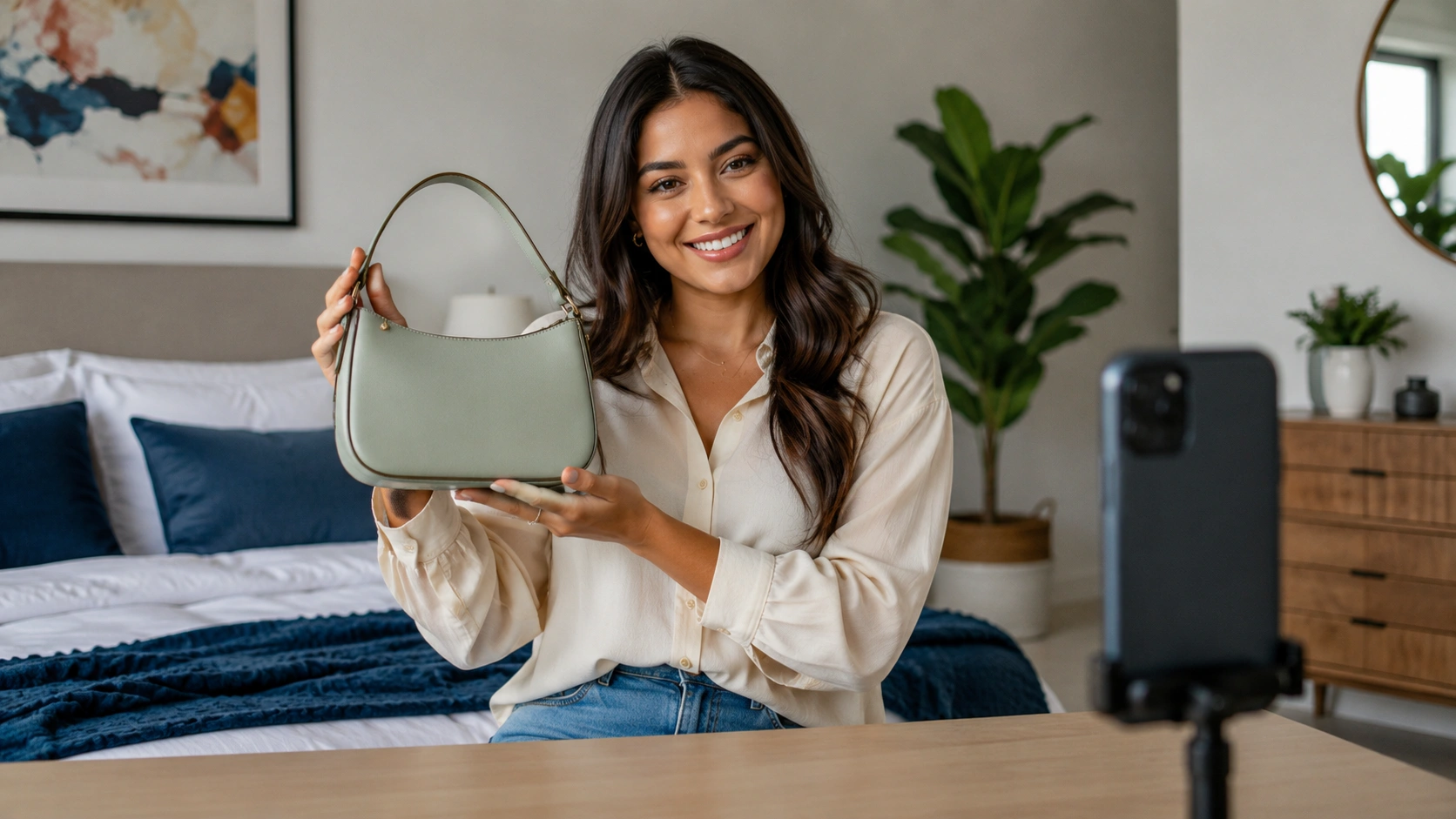
- Over-Production: You don't need a TV studio. Authenticity often converts better than a polished, scripted commercial. A host with a smartphone and good lighting is frequently more relatable.
- Ignoring the "Replay" Audience: Statistics show that up to 24% of live shopping purchases happen after the stream has ended. Ensure your recorded stream remains shoppable and is easy to find on your site.
- Lack of Mobile Optimization: Most of your viewers are on their phones. If the product tags cover the host's face or the chat box is too small to use, you will lose the audience.
- Slow Loading Speeds: If the video player causes the page to "jump" while loading (a problem known as Cumulative Layout Shift), it will frustrate users and hurt your SEO.
Myth: Live shopping only works for fashion and beauty. Fact: In 2026, electronics, home goods, and even health supplements are seeing massive growth. Any product that requires "demonstration" or "education" to justify its price point is a prime candidate for live commerce.
Conclusion
Live shopping in 2026 is no longer an experiment; it is a fundamental part of the modern ecommerce stack. The transition toward on-site hosting, AI-powered content recycling, and AR integration has turned video into a high-performance revenue engine. By focusing on subject matter expertise and technical infrastructure that respects Core Web Vitals, Shopify brands can significantly improve their conversion rates and customer loyalty.
Videowise was built specifically for this outcome-first world. We help you turn every frame of video into a measurable transaction without sacrificing the performance of your store. As you plan your 2026 strategy, remember that the most successful brands aren't just "going live"—they are building an integrated ecosystem where video serves the customer at every step of the journey. If you want a tailored rollout, book a demo.
Next Steps for Operators:
- Audit your current video assets to see what can be repurposed into shoppable clips.
- Test a "Live Drop" on a high-traffic collection page rather than just a social media post.
- Focus your measurement on Revenue Per Session (RPS) to find your most profitable content types.
If you're ready to put this into motion, install Videowise from the Shopify App Store.
FAQ
Does live shopping slow down my Shopify site speed?
If implemented correctly using performance-first infrastructure, live shopping should have no negative impact on your Core Web Vitals. The video player should load asynchronously, meaning the rest of your page elements load first so that the user experience and SEO rankings remain protected.
How do I measure the ROI of a live shopping event?
You should look beyond simple view counts and focus on conversion rate (CVR), average order value (AOV), and direct revenue. For a more detailed breakdown, the shoppable video performance guide explains the metrics teams use to connect video to outcomes.
Can I use live shopping if I don't have a large social media following?
Yes, because the most effective strategy in 2026 is hosting live events on your own site. You can drive your existing email and SMS traffic to these events, turning your most loyal customers into an engaged live audience, which often leads to higher conversion rates than cold social traffic.
What is the best way to reuse live stream content?
The best approach is to use AI-powered tools to clip the most engaging segments of your live stream and turn them into short-form shoppable videos. Those clips can then be embedded on specific product detail pages (PDPs) to provide evergreen social proof and demonstrations that drive sales 24/7. If you're mapping that strategy from scratch, the shoppable video guide is a useful starting point.
.webp)


