

Table of Contents
- Introduction
- Defining Live Shopping for Ecommerce Operators
- The Revenue Case: Why Live Shopping Matters in 2026
- The Evolution: From QVC to Global Live Commerce
- Strategic Placement: Social Platforms vs. On-Site Live Shopping
- How to Implement a Live Shopping Strategy
- Repurposing Live Content with AI
- Measuring Performance and Attribution
- Technical Considerations for Shopify Brands
- The Future of Live Commerce: AI and Beyond
- Conclusion
- FAQ
Introduction
As customer acquisition costs (CAC) continue to climb on social platforms, Shopify brands are facing a conversion plateau. Static product pages often fail to bridge the gap between discovery and purchase, leaving potential revenue on the table. This is where a clear live shopping definition becomes critical for growth-minded operators. It is no longer just a trend from the East; it is a high-performance sales channel that compresses the funnel from awareness to conversion in a single session.
At Videowise, we view live shopping not as a vanity engagement play, but as a measurable revenue engine. By bringing real-time interactivity and direct checkout to your storefront, Videowise’s live shopping platform can turn passive viewers into active buyers. This guide defines live shopping for the modern retailer, explores the strategy behind high-converting events, and outlines how to scale this channel without sacrificing site performance.
Defining Live Shopping for Ecommerce Operators
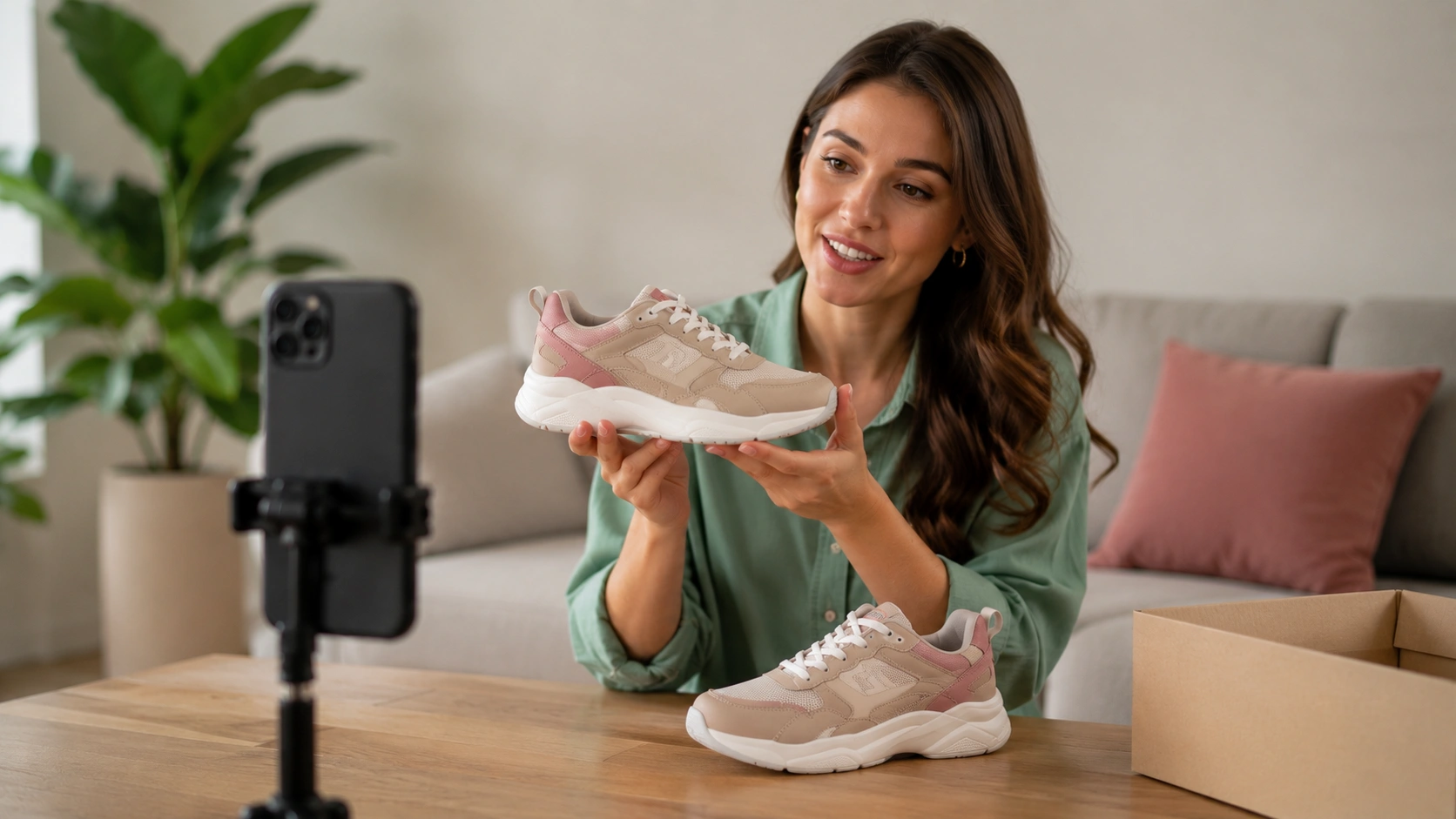
A precise live shopping definition describes a digital retail strategy where brands broadcast live video to an audience to showcase products and enable real-time purchases. Unlike a standard video or a pre-recorded advertisement, live shopping is interactive, two-way, and transactional. It blends the entertainment value of a live broadcast with the utility of an ecommerce checkout. For brands that want the same purchase path beyond a live event, shoppable video extends that behavior across the storefront.
For the ecommerce director, live shopping is the digital evolution of the "trunk show" or the televised shopping networks of the 1980s. However, the 2026 iteration is mobile-first, influencer-led, and integrated directly into the merchant's stack. The core goal is to reduce the friction between "seeing" a product and "owning" it.
The Three Pillars of Live Commerce
To distinguish live shopping from general video marketing, it must contain three specific elements:
- Real-Time Video: The broadcast happens live, allowing for spontaneity and immediate responses to customer questions.
- Interactivity: Viewers can chat, ask for different product angles, participate in polls, and see their feedback acknowledged by the host.
- Embedded Checkout: Shoppers can click a product tag or an "inline" link to add an item to their cart without leaving the video player.
Quick Answer: Live shopping is a real-time video broadcast that allows viewers to interact with a host and purchase featured products directly through the video interface. It combines entertainment with instant commerce to drive higher conversion rates and average order values.
The Revenue Case: Why Live Shopping Matters in 2026
For a brand operating on Shopify, every tool in the stack must justify its existence through Revenue Per Session (RPS) or Conversion Rate (CVR) lift. Live shopping excels here because it addresses the "trust gap" that often stalls online sales. When a shopper sees a real person demonstrating a product’s texture, fit, or utility in real-time, their purchase confidence increases.
Higher Conversion Rates (CVR)
While standard ecommerce conversion rates often hover around 2% to 3%, operators utilizing live shopping frequently report conversion rates reaching 10% to 30% during events. This is due to the high-intensity nature of the format. The combination of social proof—seeing others buy in the chat—and the host's expertise creates an environment where the "Buy" button is the most natural next step.
Increased Average Order Value (AOV)
Live shopping allows for natural upselling and cross-selling. A host demonstrating a skincare routine isn't just selling a cleanser; they are showing how that cleanser works with a specific toner and moisturizer. By bundling these items in a live session and offering a "live-only" discount, brands can effectively move multiple SKUs in a single transaction, significantly raising the Average Order Value (AOV).
Reduced Return Rates
One of the hidden costs of ecommerce is the return rate, often fueled by "expectation gaps." Live shopping closes this gap. By seeing a product on a real human body or in a real home setting, and getting immediate answers to questions about sizing or material, the shopper has a more accurate understanding of what they are buying. This clarity leads to fewer "bracketing" behaviors and lower return overhead.
The Evolution: From QVC to Global Live Commerce
To understand the current live shopping definition, one must look at its lineage. It began with television networks like HSN and QVC, which relied on cable subscriptions and phone-in orders. The first major shift happened in Asia, specifically with Alibaba’s Taobao Live in 2016.
In the East, live shopping became a trillion-dollar industry almost overnight. It integrated social media, influencers (Key Opinion Leaders or KOLs), and mobile payments into a single ecosystem. As we move through 2026, the Western market has finally caught up. US livestream commerce is projected to exceed $67 billion this year, driven by a shift toward "shoppable everything."
Key Takeaway: Live shopping is the culmination of television shopping's sales psychology and the technical speed of modern mobile commerce. It is a mature channel that brands must master to remain competitive in a video-first market.
Strategic Placement: Social Platforms vs. On-Site Live Shopping
An operator must decide where to host their live events. There are three primary categories of platforms, each serving a different part of the funnel.
1. Social-First Platforms (TikTok Shop, Instagram Live)
These platforms are excellent for top-of-funnel discovery. They leverage a massive built-in audience and a "discovery engine" algorithm to put your live stream in front of new eyes. Videowise’s social commerce platform can help route that demand back to owned channels.
2. Marketplace-First Platforms (Amazon Live)
Amazon Live is designed for high-intent shoppers. People on Amazon are already in a "buying mode." Live streams here act as interactive product reviews that can help your brand stand out in a crowded search result page.
3. On-Site Live Shopping (The Brand’s Own Storefront)
This is where the highest quality of traffic exists. By hosting a live shopping event directly on your Shopify site, you own the data, the customer relationship, and the technical environment. Brands like Andar’s live shopping case study show how on-site live commerce can translate into measurable revenue.
Bolded Key Phrases: Hosting on-site ensures that you are not at the mercy of a social platform’s algorithm changes. It also allows you to maintain Core Web Vitals and ensure that the video experience doesn't slow down the rest of your site.
| Feature | Social Live Shopping | On-Site Live Shopping |
|---|---|---|
| Primary Goal | Brand Discovery / New CAC | CVR / Loyalty / RPS |
| Data Ownership | Limited (Platform owned) | Full (Brand owned) |
| Checkout Flow | In-app or Redirect | Inline Shopify Checkout |
| Audience Type | Cold / Browsing | Warm / High-intent |
| Margin Impact | Higher fees (TikTok Shop) | Standard Shopify margins |
How to Implement a Live Shopping Strategy
Executing a successful live event requires more than just hitting "Record" on a smartphone. It requires a structured approach to merchandising, talent, and tech.
Step 1: Select High-Potential Products
Do not try to feature your entire catalog. Choose 5–10 SKUs that benefit most from demonstration. This includes products with complex features, items that require fit guidance, or new launches that need a "hype" moment.
Step 2: Choose and Brief Your Host
Your host is the face of the brand. This could be a founder, a store associate with deep product knowledge, or a professional influencer. Prioritize authenticity over production value. Shoppers in 2026 want to feel like they are talking to a peer, not watching a high-gloss commercial.
Step 3: Script the "Planned Spontaneity"
While the event should feel live and raw, you need a loose script. Define your key talking points for each product, prepare for common FAQs, and schedule your "drops" or discount reveals to keep the energy high throughout the session.
Step 4: Technical Preparation and Testing
Ensure your lighting is clear and your audio is crisp. Most importantly, ensure your live shopping platform is integrated with your Shopify inventory. Nothing kills the momentum of a live event faster than a product selling out while the host is still talking about it.
Step 5: Multi-Channel Promotion
Start promoting your event 7–10 days in advance. Use your email list, SMS subscribers, and social stories to build anticipation. Offer a "reminder" sign-up to ensure people actually show up when you go live.
Myth: Live shopping requires a professional film crew and a studio. Fact: Some of the highest-converting live streams are shot on an iPhone with a simple ring light. Authenticity and product knowledge move the needle more than high production value.
Repurposing Live Content with AI
A common challenge for ecommerce operators is the "one-and-done" nature of live events. Once the stream ends, the content often disappears. This is an inefficient use of resources.
In 2026, smart brands use Videowise Clips to extend the life of their live shopping sessions. By taking a 30-minute live stream and automatically cutting it into 15–20 short-form, shoppable videos, you can populate your Product Detail Pages (PDPs) and collection pages with high-converting content. This turns a single live event into a months-long conversion asset.
Bottom line: A live shopping event is a content goldmine. Use automated tools to slice the best moments into permanent shoppable videos for your site.
Measuring Performance and Attribution
Engagement metrics like "views" and "likes" are secondary to the ecommerce operator. To truly understand the ROI of your live shopping definition, you must look at hard revenue data. Our Content Performance analytics provide a deep look into how these videos influence the bottom line.
Direct vs. Influenced Revenue
- Direct Revenue: Sales made during the live stream through the integrated checkout.
- Influenced Revenue: Sales made by users who watched the live stream or a replay and purchased within a specific attribution window (e.g., 7–30 days).
Key Metrics to Track
- Revenue Per Session (RPS): How much money is each viewer worth on average?
- Add-to-Cart (ATC) Rate: Percentage of viewers who interacted with a product tag.
- Average Watch Time: While not a revenue metric, it indicates the quality of your host and content.
- Chat Engagement Rate: How many viewers are asking questions? This is a leading indicator of purchase intent.
Technical Considerations for Shopify Brands
Adding video to a Shopify store can often trigger anxiety about page speed. Core Web Vitals—specifically Largest Contentful Paint (LCP) and Cumulative Layout Shift (CLS)—are critical for SEO and user experience.
When choosing a live shopping platform, operators must ensure it uses a performance-first infrastructure. This means the video player should be lightweight and use "lazy loading" or "viewport loading" techniques. For a real-world example of that balance, Skullcandy’s shoppable video case study shows how richer media can coexist with better page speed on high-traffic pages.
The Future of Live Commerce: AI and Beyond
As we look toward the end of 2026, the live shopping definition is expanding to include AI-powered intelligence. We are seeing the rise of AI Studio:
- Automated Tagging: AI that recognizes products in a video and automatically creates shoppable links.
- Usage Rights Management: Systems that automatically track and manage the rights for UGC (User-Generated Content) used in live streams.
- Personalized Streams: Live shopping interfaces that change the featured products based on the individual viewer's browsing history.
Conclusion
Live shopping is the most significant shift in ecommerce since the invention of the mobile checkout. It provides a way for Shopify brands to break through the noise, build genuine trust, and drive measurable revenue at scale. By defining your strategy around high-intent, on-site experiences and utilizing the right technical partners, you can transform your storefront into a dynamic, interactive marketplace.
At Videowise, we are dedicated to helping brands turn video into their most profitable sales channel. Whether through on-site shoppable video, automated AI clips, or high-performance live shopping events, our platform is built to deliver revenue without compromising the speed or integrity of your site. The era of static ecommerce is over; it is time to go live.
To see how we can help your brand scale its video commerce strategy, book a demo with our team.
If you're ready to get started right away, install our platform from the Shopify App Store today.
FAQ
What is the simplest live shopping definition?
Live shopping is an ecommerce strategy where a host demonstrates products via a live video stream, allowing viewers to ask questions in real-time and purchase items directly through the video player. It combines the interactivity of social media with the direct sales capability of an online store. For a practical starting point, see Get Started With Shoppable Videos Using Videowise.
How does live shopping differ from traditional ecommerce?
Traditional ecommerce is a solitary, static experience where shoppers browse images and text; live shopping is a social, dynamic experience. It offers real-time interaction, immediate product demonstrations, and a sense of urgency that traditional product pages cannot replicate, often resulting in much higher conversion rates.
Do I need a large following to start live shopping?
No, you do not need a massive following, especially if you host live shopping events on your own website. While social platforms rely on your follower count for reach, on-site live shopping leverages your existing store traffic to convert high-intent visitors who are already considering a purchase.
Will hosting live video slow down my Shopify store?
If you use a performance-first platform like ours, hosting live video will not harm your page speed or Core Web Vitals. Our infrastructure is designed to deliver high-quality video through lightweight players that load efficiently, ensuring your site remains fast and SEO-friendly. If you want a broader view of measurement and optimization, How To Track Shoppable Video Performance on Shopify With Videowise explains how to evaluate the impact of video on your store.
.webp)


