

Table of Contents
- Introduction
- The State of Live Shopping in Australia
- Why Live Shopping is a Revenue Channel, Not a Vanity Metric
- Strategic Framework: How to Launch a Live Shopping Program
- Choosing the Right Platform for the Australian Market
- Technical Considerations: Page Speed and Core Web Vitals
- Content Strategy: What Moves the Needle in 2026
- Measuring Success: Moving Beyond Engagement
- Live Shopping Workflow for Operators
- Conclusion
- FAQ
Introduction
Customer acquisition costs across Australia continue to climb, forcing Shopify brands to find more efficient ways to convert existing traffic. While traditional static storefronts often struggle with conversion plateaus, live commerce has emerged as a high-intent revenue channel. We have seen the Australian market mature rapidly, with shoppers now expecting interactive, video-first experiences that bridge the gap between social discovery and on-site purchase. At Videowise, we focus on helping brands transform these video interactions into measurable business outcomes like higher conversion rates and increased average order value, as shown in our ALPAKA shoppable video case study. This guide covers the strategic framework for implementing live shopping in the Australian market, focusing on technical performance and revenue attribution. By the end of this article, you will understand how to scale a live shopping program that drives immediate sales without compromising store performance.
Quick Answer: Live shopping in Australia is a real-time commerce strategy where brands host interactive video broadcasts to demonstrate products and drive instant purchases. In 2026, it has become a multi-billion dollar channel, with high-performing brands using it to increase conversion rates (CVR) and average order value (AOV) through social and on-site integrations.
The State of Live Shopping in Australia
The Australian ecommerce landscape has shifted significantly. In early 2024, the live commerce market in Australia was valued at roughly $1.7 billion. By 2026, this figure has grown exponentially as more retailers move away from purely social-based streaming toward integrated, on-site live events, as explored in our live video commerce guide.
Data shows that while only about a third of Australian consumers had participated in a live shopping event a few years ago, the vast majority of those who do participate end up making a purchase. This 94% purchase intent among participants makes live shopping one of the most potent bottom-of-the-funnel activities available to growth managers.
The primary demographic driving this growth is Millennials, followed closely by Gen Z. However, older demographics are increasingly engaging with live streams for high-ticket items like electronics and home goods. For an operator, this means the strategy must be tailored to the specific product category and the buyer's stage in the customer journey.
Why Live Shopping is a Revenue Channel, Not a Vanity Metric
In the past, video was often viewed as an "engagement" tool. In 2026, we treat live shopping as a core revenue driver. We measure success through three primary metrics: Conversion Rate (CVR), Average Order Value (AOV), and Revenue Per Session (RPS).
Conversion Rate (CVR) Live shopping reduces the friction between interest and action. When a host answers a sizing question or demonstrates a product's texture in real time, they remove the "uncertainty gap" that causes cart abandonment. Brands using integrated checkout within their live streams typically see a significant lift in CVR compared to static product detail pages (PDPs).
Average Order Value (AOV) Live events allow for natural upselling and bundling. A host demonstrating a skincare routine can easily explain why a cleanser, toner, and moisturiser work better together. This "educational selling" encourages shoppers to add more items to their cart in a single session.
Revenue Per Session (RPS) RPS is the total revenue generated divided by the number of sessions. Because live shopping increases both the likelihood of a purchase and the total order size, the RPS for a live stream session is often many times higher than a standard site visit.
Key Takeaway: Stop measuring live shopping by "likes" or "views." Focus on Revenue Per Session (RPS) and Influenced Revenue to understand the true impact on your bottom line.
Strategic Framework: How to Launch a Live Shopping Program
Successfully launching live shopping in Australia requires more than just hitting "Go Live" on a smartphone. It requires a structured approach to product selection, talent, and timing. If you want help mapping that approach to your store, book a demo.
Step 1: High-Margin Product Selection
Do not try to feature your entire catalog. Select 5 to 10 products that benefit most from demonstration. These should be high-margin items or new launches where customer education is required. In the Australian market, fashion, beauty, and health supplements are the current top performers.
Step 2: Choosing the Right Format
The format should match your brand identity. Common formats include:
- The Product Drop: Creating FOMO (Fear Of Missing Out) around a limited-edition release.
- The How-To Tutorial: Deep-diving into product usage to build authority and trust.
- The Q&A Session: Addressing customer hesitations directly to clear the path for purchase.
Step 3: Audience Timing and Localisation
Australia’s time zones (AEST, ACST, AWST) mean your broadcast timing is critical. For national brands, 7:00 PM to 9:00 PM AEST is generally the "prime time" for maximum viewership. Ensure your shipping and logistics mentions are localised—Australian shoppers want to know about delivery times to Perth or regional areas just as much as Sydney or Melbourne.
Step 4: Technical Execution
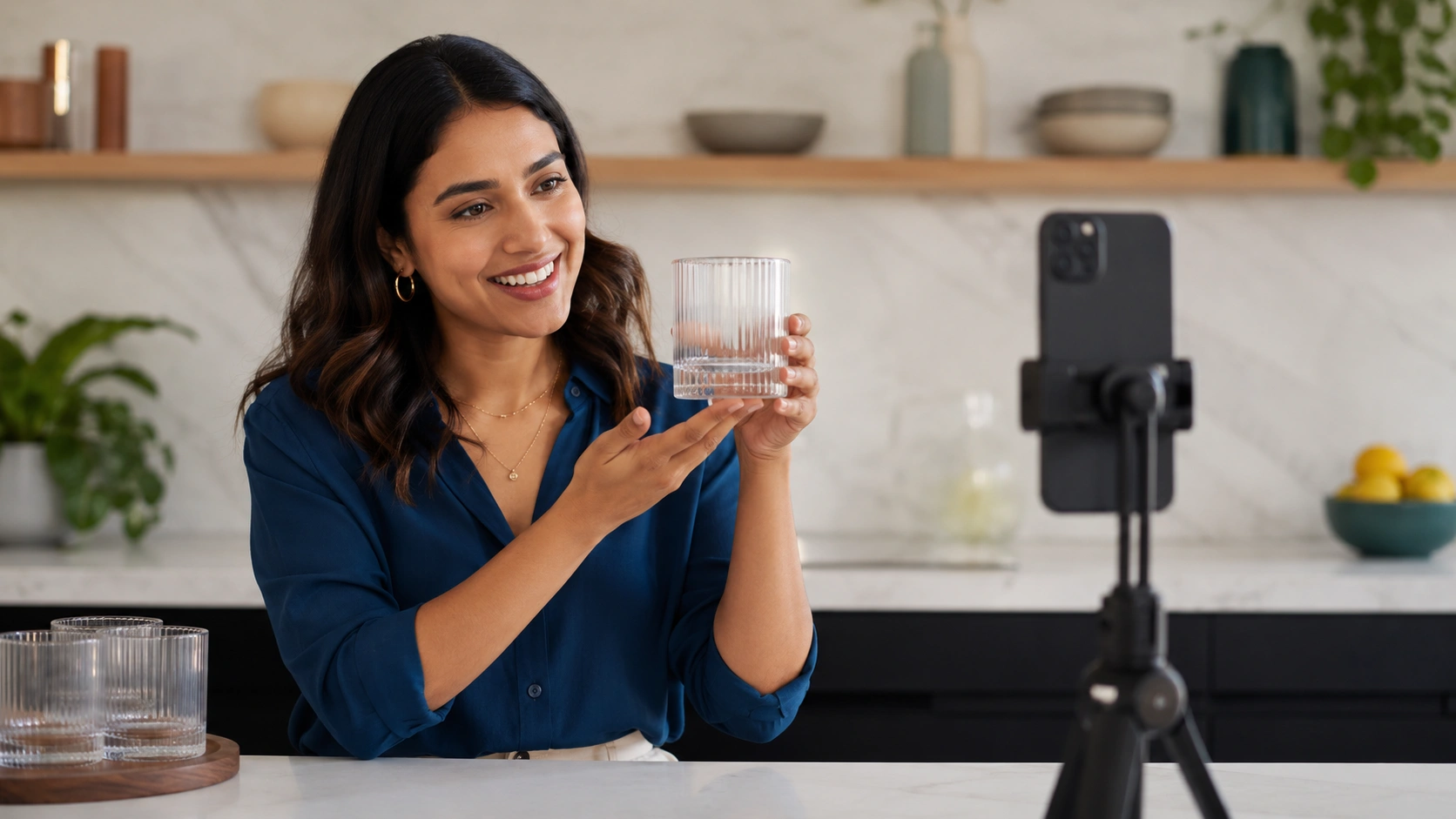
Your setup can range from a high-end studio to a mobile-first "backstage" vibe. Both work, but the audio must be clear. Use a dedicated microphone and ensure your internet connection is stable. In 2026, consumers value authenticity over high-gloss production, but they will leave a stream if the technical quality is poor.
| Format Type | Primary Goal | Best For |
|---|---|---|
| Product Drop | Immediate Revenue | Limited releases / Fashion |
| Tutorial | Customer Education | Beauty / Electronics / Wellness |
| Flash Sale | Inventory Clearance | End-of-season / Excess stock |
| Expert Q&A | Brand Trust | High-ticket items / Supplements |
Choosing the Right Platform for the Australian Market
Operators have several choices when it comes to where to host their live events. The best strategy often involves an omnichannel approach.
Social Commerce Platforms
Platforms like Videowise's social commerce platform are excellent for discovery. They allow you to tap into an existing audience. However, you often lose control over the data and the customer experience once they leave your ecosystem.
On-Site Live Shopping
Hosting the live stream directly on your Shopify store is the gold standard for 2026. This keeps the customer on your domain, improving your first-party data collection and allowing for a more branded checkout experience. Our Live Shopping feature enables brands to host these events natively, ensuring that the transition from watching to buying is as short as possible.
Repurposing Content
One of the biggest mistakes operators make is treating a live event as a one-time occurrence. A 60-minute live stream contains dozens of high-converting moments. Use AI Clips to automatically identify and extract these highlights. These short-form videos can then be embedded as shoppable video on PDPs or used in email marketing and SMS campaigns.
Technical Considerations: Page Speed and Core Web Vitals
A common concern for ecommerce directors is that adding video will slow down their site. In the world of Shopify, site speed is directly tied to SEO and conversion. If a page takes too long to load, your bounce rate will spike, and your search rankings will suffer. For a real-world comparison point, see True Classic's shoppable video story.
Core Web Vitals are the metrics Google uses to measure user experience. These include:
- LCP (Largest Contentful Paint): How long it takes for the largest element on the screen to load.
- FID (First Input Delay): How long before a user can interact with the page.
- CLS (Cumulative Layout Shift): How much the page elements move around during loading.
Our platform uses a performance-first infrastructure, and our video optimization case studies show how that approach works in practice. This means we use advanced techniques like viewport loading—where the video only loads when the user scrolls to it—to ensure your site remains lightning-fast.
Myth: Adding high-quality video to your PDPs will tank your page speed. Fact: Using a performance-optimised video platform allows you to serve 4K content while maintaining excellent Core Web Vitals and low LCP scores.
Content Strategy: What Moves the Needle in 2026
Australian consumers are savvy. They can spot a scripted sales pitch from a mile away. To drive revenue, your content strategy needs to focus on utility and community.
The Power of Real People Using your own founders or staff can often be more effective than hiring expensive influencers. Staff members know the product better and can answer technical questions more accurately. This builds a deeper level of trust, which is essential for long-term customer retention.
Interactive Elements Live shopping is not a broadcast; it is a conversation. Use live polls, chat functions, and real-time reactions. When a viewer sees others buying in real time, it creates social proof. This collective "buying energy" is what makes live commerce so much more effective than standard video marketing.
Direct Checkout and Product Tagging Never expect a customer to leave the video to find a product. Every item discussed must be tagged and instantly purchasable within the video player. This "inline checkout" functionality is a primary differentiator for high-growth Shopify brands. It removes multiple steps from the funnel, leading to a direct increase in conversion.
Measuring Success: Moving Beyond Engagement
To prove the ROI of your live shopping efforts, you must look at the full-funnel data. Standard social media analytics (likes, shares, comments) do not tell the full story of revenue generation.
Direct vs. Influenced Revenue
- Direct Revenue: Sales made during the live broadcast or within a set attribution window (e.g., 24 hours) after the event.
- Influenced Revenue: Sales made by customers who watched the video but purchased later through a different channel.
Using Content Performance analytics, operators can track exactly which videos are driving the most revenue. This allows for data-driven decisions on which formats to scale and which products to feature in future sessions.
A/B Testing Video Content Just as you A/B test your email subject lines or landing page headlines, you should A/B test your video content. Try different thumbnails, different hosts, or different lengths. Small tweaks in the first 10 seconds of a video can lead to massive differences in total watch time and eventual conversion.
Live Shopping Workflow for Operators
For a busy growth manager, live shopping must be scalable. You cannot spend 40 hours a week preparing for a single 1-hour show. The shoppable video setup guide is a useful starting point.
Step 1: Import and Centralise. / Use a centralised video asset management system to pull in UGC (User Generated Content) from social media and store it in one place. Step 2: Automate Tagging. / Use AI to automatically tag products in your videos, saving hours of manual labor for your merchandising team. Step 3: Bulk Publish. / Deploy your shoppable videos or live event recordings across your entire site—homepages, collection pages, and PDPs—with a few clicks. Step 4: Monitor and Optimise. / Check your dashboard weekly to see which videos have the highest RPS and double down on those styles.
Bottom line: Live shopping success in the Australian market is built on three pillars: authentic content, a frictionless "click-to-buy" experience, and a technical setup that doesn't slow down your site.
Conclusion
Live shopping is no longer just a trend for the Asian market; it is a fundamental part of the Australian ecommerce ecosystem in 2026. For Shopify brands, the opportunity lies in moving beyond simple social streams and building a robust, on-site video strategy that prioritises revenue over vanity metrics. By focusing on conversion-centric features like inline checkout and high-performance infrastructure, brands can drive measurable growth in AOV and RPS. We are built to help operators turn every frame of video into a revenue-generating asset. The next step is to evaluate your current video performance and start integrating live commerce into your broader growth strategy.
Install Videowise from the Shopify App Store today to start turning your video content into measurable revenue.
FAQ
Is live shopping popular in Australia?
Yes, live shopping has seen significant growth in Australia, with the market expected to reach over $34 billion by 2033. While it started slower than in other regions, high participation-to-purchase rates among Millennials and Gen Z have made it a priority for top Shopify retailers.
How does live shopping affect site speed on Shopify?
Standard video embeds can slow down a site, but using a performance-first platform ensures that video content is served through optimised infrastructure. Features like viewport loading and global CDNs help maintain excellent Core Web Vitals and prevent any negative impact on page speed.
Do I need a professional studio for live shopping?
While professional setups can work for large brand events, many of the most successful live streams in Australia use a more authentic "behind-the-scenes" approach. The most important technical factors are clear audio, stable internet, and the ability for customers to buy products directly within the video player.
How do I measure the ROI of live shopping?
ROI should be measured through direct and influenced revenue, focusing on metrics like Conversion Rate (CVR), Average Order Value (AOV), and Revenue Per Session (RPS). Advanced analytics tools can attribute specific purchases to video views, giving you a clear picture of the channel's impact on your bottom line. For a deeper breakdown, see tracking shoppable video performance.
.webp)


