

Table of Contents
- Introduction
- The Revenue Impact of Live E-commerce
- Strategic Framework: Choosing Your Format
- Selecting the Right Live Selling Platform
- Execution: From Pre-Stream to Post-Event
- Technical Considerations: Performance and Speed
- Measuring Success: Beyond View Counts
- Scaling Live E-commerce Operations
- Conclusion
- FAQ
Introduction
Customer acquisition costs continue to climb in 2026, forcing Shopify operators to find more efficient ways to convert existing traffic. Static product pages often fail to answer specific customer concerns, leading to abandoned carts and high return rates. Live e-commerce solves this by blending real-time video with instant purchasing, turning passive viewers into active buyers. At Videowise, we focus on helping brands transition from "views" to measurable revenue by integrating shoppable video experiences across the entire customer journey. This guide explores the strategic framework for live commerce, covering platform selection, host dynamics, and the technical infrastructure required to scale. We will examine how operators can use live video to increase conversion rates (CVR) and average order value (AOV) while maintaining site performance.
Quick Answer: Live e-commerce is the practice of selling products through real-time video broadcasts where viewers can interact with hosts and purchase items instantly. It drives revenue by compressing the sales funnel, allowing brands to provide social proof, answer questions, and facilitate checkout in a single session.
The Revenue Impact of Live E-commerce
Live commerce is no longer an experimental channel; it is a core revenue driver for high-growth brands. Unlike traditional video content, live shopping creates a sense of urgency and community that static assets cannot replicate. In 2026, the value of live video is measured by its ability to influence bottom-line metrics rather than vanity engagement scores.
Funnel Compression and Conversion Lift
Standard ecommerce conversion rates typically hover between 2% and 3%. Live commerce sessions frequently see significantly higher conversion rates because they eliminate the "information gap" that prevents a purchase. When a shopper sees a product in motion and receives an immediate answer to a question about fit or durability, the path to purchase shortens. This compression of the awareness, consideration, and conversion phases into a single 20-minute window is what makes the format so effective.
Increasing Average Order Value (AOV)
Live sessions are ideal environments for cross-selling and bundling. A host demonstrating a skincare routine can naturally introduce a cleanser, toner, and moisturizer as a single cohesive unit. Revenue per session (RPS)—the total revenue generated divided by the number of unique sessions—tends to increase during live events because customers are often exposed to products they didn't initially search for.
Reducing Return Rates
One of the most significant hidden costs in ecommerce is the return rate, often driven by products not meeting customer expectations. Live video allows shoppers to see the "real" version of a product without studio lighting or excessive editing. This transparency builds confidence. When customers buy with a clear understanding of the product’s scale, color, and function, they are less likely to return it later.
Key Takeaway: Live commerce drives revenue by replacing static uncertainty with real-time confidence, leading to higher CVR and lower return rates.
Strategic Framework: Choosing Your Format
Not every live event should look the same. The format you choose depends on your product category and where your audience sits in the buying cycle.
Product Drops and Exclusive Launches
Limited-edition releases thrive in a live environment. By setting a specific time for a drop and using a live stream to reveal the product, you create a "scarcity event." This drives immediate revenue spikes and rewards your most loyal customers with early access.
Educational Tutorials and How-To Sessions
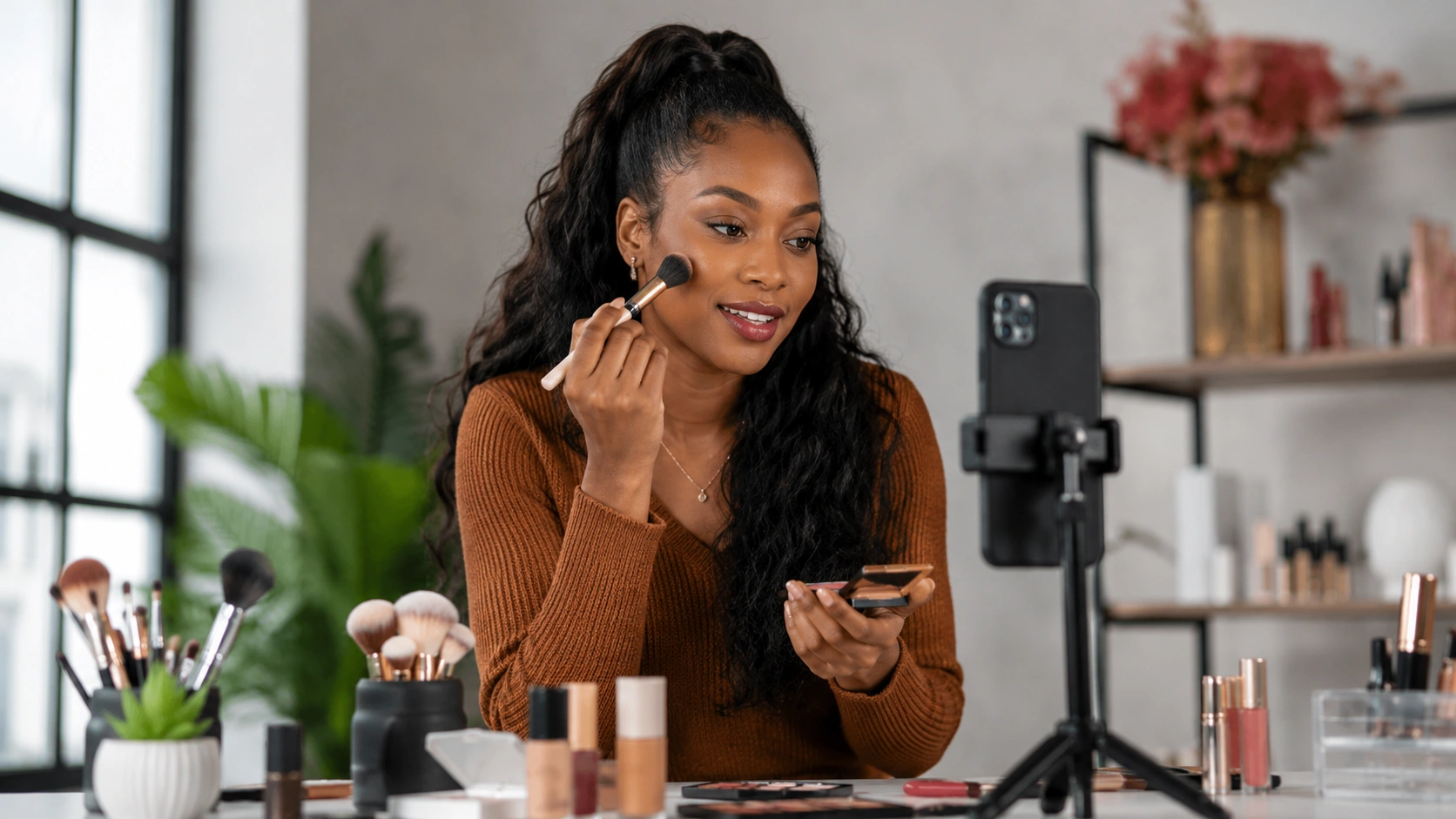
For complex products—such as electronics, home appliances, or multi-step beauty routines—educational live streams are more effective. The host acts as an expert, walking the audience through setup or application. This format is less about a "flash sale" and more about building the trust necessary for a high-value purchase.
Behind-the-Scenes and Founder Stories
Authenticity is a major driver of brand affinity. Allowing customers to see the manufacturing process or hear directly from the founder builds a human connection. This "behind-the-curtain" approach often leads to higher lifetime value (LTV) as customers become more invested in the brand's mission.
Selecting the Right Live Selling Platform
Operators must decide between hosting events on social media platforms or on their own ecommerce site. Each approach serves a different purpose in a multi-channel strategy.
Social Commerce Platforms
Platforms like TikTok Shop and Instagram Live are excellent for discovery. They allow you to reach new audiences who may not be familiar with your brand. The downside is the lack of data ownership and the potential for distractions, which a social commerce platform can help reduce when it is tied to your own storefront.
On-Site Live Shopping
Hosting live events directly on your Shopify store offers the highest level of control. You own the customer data, the checkout experience, and the post-event analytics. Videowise enables brands to host these high-conversion experiences directly on their own domains, ensuring that the traffic you work hard to acquire stays within your ecosystem. On-site live shopping typically yields a higher revenue per session because the audience consists of high-intent visitors who are already on your store. For a real example, see Andar's live shopping case study.
The Omnichannel Approach
The most successful brands in 2026 do not choose one or the other. They use social platforms for top-of-funnel reach and their own site for deep engagement and high-value conversions. This creates a cohesive "video commerce" strategy that captures revenue at every touchpoint. If you want help mapping the right mix to your store, book a demo.
| Feature | Social Live Platforms | On-Site Live (Videowise) |
|---|---|---|
| Primary Goal | Brand Discovery | Revenue & Conversion |
| Data Ownership | Limited | Full Ownership |
| Checkout Flow | Platform-specific | Native Shopify Checkout |
| Audience Intent | Low to Medium | High |
| Brand Control | Limited by UI | Complete |
Execution: From Pre-Stream to Post-Event
A successful live event requires more than just hitting the "record" button. It requires a structured workflow that ensures the technical and promotional elements are aligned.
Step 1: Planning and Product Selection
Identify 3–5 core products to feature. Trying to show too many items dilutes the focus and confuses the audience. Ensure you have enough inventory to handle a potential surge in orders.
Step 2: Selecting and Training the Host
Your host doesn't need to be a professional actor, but they do need to be a subject matter expert. Whether it is a founder, a store associate, or an influencer, they must be able to multitask: showing the product, reading the chat, and maintaining energy for 30–60 minutes.
Step 3: Technical Setup and Testing
Test your lighting, audio, and internet connection. High-quality audio is often more important than high-quality video; if customers can't hear the product benefits, they won't buy. Ensure your live commerce tool is synced with your Shopify inventory to avoid overselling.
Step 4: Live Interactivity
Engagement must lead to revenue. Use pinned comments to highlight the current product being discussed. Use "Buy Now" overlays that allow customers to add items to their cart without leaving the video player. Encourage the audience to ask questions and answer them by demonstrating the product live.
Step 5: Post-Event Repurposing
The revenue potential of a live stream doesn't end when the broadcast stops. Archive the session and turn it into evergreen content. Break down long-form broadcasts into AI Clips that can be placed on product detail pages (PDPs) or used in email marketing.
Myth: Live commerce requires a professional film crew and expensive equipment. Fact: Most high-converting live streams are shot on mobile devices with basic lighting, prioritizing authenticity and direct communication over high production value.
Technical Considerations: Performance and Speed
A common concern for ecommerce directors is that adding video will slow down their site. In 2026, Core Web Vitals (CWV)—a set of metrics used by Google to measure user experience—are critical for both SEO and conversion. If you want a deeper primer on the format itself, read this interactive video guide.
Maintaining Page Speed
Large video files can lead to high Largest Contentful Paint (LCP) scores, which negatively impacts search rankings and user experience. Our performance-first infrastructure ensures that live video elements are loaded using advanced viewport loading techniques. This means the video only consumes resources when it is visible to the user, keeping the rest of the page fast and responsive.
Mobile Optimization
The majority of live e-commerce happens on mobile devices. Your live player must be responsive, with "thumb-friendly" navigation and a streamlined checkout process. If the mobile experience is clunky, users will drop off before completing their purchase.
Low Latency Streaming
There is nothing more frustrating for a viewer than a 30-second delay between their question in the chat and the host's response. Low latency is essential for true interactivity. Your technical stack must support real-time communication to ensure the conversation feels natural and immediate.
Measuring Success: Beyond View Counts
To treat live commerce as a serious revenue channel, you must move beyond "vanity metrics" like likes or total viewers. Operators should focus on full-funnel attribution.
Direct vs. Influenced Revenue
Direct Revenue is the total value of orders placed through the live player during the event. Influenced Revenue tracks customers who watched the stream and made a purchase later that day or week. Understanding both is essential for calculating the true Return on Ad Spend (ROAS) of your video strategy.
Content Performance Analytics
Use detailed analytics to see where viewers drop off. If 50% of your audience leaves when you discuss a specific product, that is a signal that the product or the presentation style isn't resonating. Use these insights to refine your next event. Our Content Performance Analytics provide a deep dive into these metrics, allowing brands to see exactly how video contributes to the bottom line.
A/B Testing Video Placements
Not all video placements are equal. Test whether hosting a live replay on your homepage performs better than placing it on a dedicated "Live" page. By comparing the CVR and RPS of different placements, you can optimize your site architecture for maximum revenue. For a practical walkthrough, see how to track shoppable video performance.
Scaling Live E-commerce Operations
Once you have proven the model with a few events, the challenge shifts to scale. For brands with large catalogs or multiple stores, manual management becomes impossible.
Bulk Publishing and Management
If you are running live events across different regions or for different product lines, you need a way to manage content in bulk. Look for platforms that support multi-store environments and allow you to push video updates across hundreds of pages with a single click. Skullcandy's shoppable video case study shows how a multi-store setup can stay fast and consistent at scale.
Rights Management and UGC
Integrate user-generated content (UGC) into your live strategy. If a customer has posted a great video of your product, ask for the rights and feature it during your live stream as social proof. This builds community and provides a variety of perspectives on your products.
Automating the Workflow
Use AI-powered tools to automate the tedious parts of video commerce. From automated product tagging to generating short-form clips from long broadcasts, automation allows a small team to manage a high-volume video strategy.
Bottom line: Scaling live commerce requires moving from manual, one-off events to an automated, data-driven workflow that prioritizes revenue outcomes.
Conclusion
Live e-commerce has matured into a sophisticated revenue engine for Shopify brands. By focusing on funnel compression, AOV growth, and technical performance, operators can turn real-time video into a consistent source of profitable growth. Success in this space requires a shift in mindset: moving away from viewing video as a brand-building exercise and seeing it as a performance marketing channel. Whether you are launching a new product or educating your audience on a complex routine, the goal is always to provide the confidence a customer needs to click "buy." At Videowise, we are committed to providing the AI-powered tools and performance-first infrastructure that make this possible. To see how our platform can turn your video content into a measurable revenue channel, install our app directly from the Shopify App Store.
FAQ
Does live commerce work for brands outside of fashion and beauty?
Yes, while fashion and beauty were early adopters, live commerce is highly effective for any category that benefits from demonstration, such as home goods, electronics, or fitness equipment. Any product that requires "proving" its value or utility can see a conversion lift through live video.
How do I measure the ROI of my live e-commerce events?
Focus on direct revenue generated during the stream and influenced revenue in the following 7–14 days. Track metrics like revenue per session (RPS) and conversion rate (CVR) specifically for viewers of the live content compared to non-viewers.
Will hosting live video on my Shopify store slow down my page speed?
Not if you use a platform built with performance-first infrastructure. By utilizing advanced loading techniques like lazy loading and optimized video delivery, you can host high-quality live video without harming your Core Web Vitals or SEO rankings.
Do I need to hire professional influencers to host my live streams?
Not necessarily. Many successful brands use their own founders, product designers, or store associates as hosts. Authenticity and deep product knowledge often convert better than a polished professional who is less familiar with the brand's nuances.
.webp)


