

Table of Contents
- Introduction
- The State of Live Commerce on Facebook in 2026
- Building a Revenue-First Live Shopping Framework
- Technical Execution: Connecting Facebook to Shopify
- Optimizing the "Retail Live" Content Strategy
- Measuring What Matters: Revenue Attribution
- Avoid Common Pitfalls in Social Live Shopping
- The Role of AI in Scaling Your Strategy
- Creating an Omnichannel Feedback Loop
- Step-by-Step: Launching Your First Facebook-to-Site Live Event
- Conclusion
- FAQ
Introduction
Ecommerce operators in 2026 face a fragmented social landscape where native platform features change overnight. While Facebook remains a dominant force for audience reach with billions of active users, the shift away from native "shoppable" overlays toward short-form Reels has forced a strategic pivot. Successful retailers no longer rely on social platforms to own the checkout; they use these channels as discovery engines to drive traffic to high-converting, on-site experiences. At Videowise, we see top Shopify brands treat Facebook as a high-intent top-of-funnel source while hosting the actual live commerce event on their own store to ensure full control over data and revenue. If you want the on-site layer, explore Videowise's shoppable video platform. This guide explores how to execute a retail live shopping strategy that leverages Facebook’s scale to drive measurable growth in conversion rates (CVR) and average order value (AOV).
The State of Live Commerce on Facebook in 2026
The landscape of social commerce has matured significantly. Operators have moved past the "experimental" phase of live streaming and now demand measurable returns on every broadcast. While the era of native product playlists inside the Facebook Live interface has evolved, the platform's value as a distribution channel is higher than ever.
The Shift from Native to Omnichannel
In the past, brands focused heavily on native platform tools. Today, the most successful retailers use a "hub-and-spoke" model. The "hub" is the Shopify store—where the high-performance video infrastructure lives—and the "spokes" are channels like Facebook, Instagram, and TikTok. This ensures that when a brand goes live, they own the customer relationship and the attribution data. For the broader playbook, read the complete guide to live video commerce.
Why Facebook Remains Critical for Retailers
Despite changes in native shopping features, Facebook’s algorithm continues to prioritize live content. Live broadcasts generate significantly more engagement and reach than static posts or standard video uploads. For a retail brand, this means lower customer acquisition costs (CAC) compared to traditional paid ads when a live event is promoted correctly. See how Andar generated $134K in 3 hours with live shopping.
Quick Answer: Retail live shopping on Facebook involves using live broadcasts to demonstrate products and engage audiences, then directing that traffic to an on-site shoppable environment. By moving the checkout from the social feed to the storefront, brands maintain better control over the user experience and conversion data.
Building a Revenue-First Live Shopping Framework
To move beyond vanity metrics like "views" or "likes," operators must frame their live shopping strategy around revenue-centric outcomes. The goal is to maximize Revenue Per Session (RPS)—a metric that measures the total revenue generated divided by the number of unique visitors to a session.
Pre-Event: The Promotion Engine
A successful live event begins days before the "Go Live" button is pressed.
- Segmented Email/SMS Blasts: Target your highest-LTV (Lifetime Value) customers with early access or "live-only" offers.
- Facebook Event Pages: Use these to capture intent and send automated reminders to followers.
- Teaser Reels: Use short-form video clips to highlight the products that will be featured, building anticipation for the full demonstration.
During the Event: Engagement Meets Conversion
The host's primary job is to bridge the gap between entertainment and merchandising, and Videowise's live shopping feature helps keep the experience interactive. In 2026, the standard for a "retail live" event is a mix of product education and real-time social proof.
- Real-time FAQ: Addressing concerns about fit, material, or shipping live on-air reduces friction and increases CVR.
- Exclusive Drop Logic: Creating a sense of urgency through limited-time bundles or early-access launches available only during the stream.
Post-Event: The Long-Tail Revenue
The revenue potential of a live stream doesn't end when the broadcast stops. Smart operators repurpose the live recording into "shoppable replays" on their site. By using Content Performance analytics, brands can continue to generate sales from the content for weeks.
Technical Execution: Connecting Facebook to Shopify
The biggest challenge for ecommerce directors is the technical friction between a social app and the checkout page. For the setup basics, see Get Started With Shoppable Videos Using Videowise. Every extra click or slow-loading page reduces conversion potential.
The On-Site Live Experience
Instead of hoping a Facebook user clicks a link in the comments and successfully navigates a mobile browser, many brands now "simulcast." They stream to Facebook for reach but host the interactive, shoppable version of the stream directly on their Shopify store. This allows for:
- Inline Checkout: Shoppers can add items to their cart without leaving the video player.
- Performance Loading: Ensuring the video doesn't trigger Core Web Vitals (a set of Google metrics that measure page speed and user experience) issues, which could hurt SEO and bounce rates.
- Direct Attribution: Knowing exactly which viewer clicked which product tag and completed a purchase.
Using AI to Scale Content
Managing a constant stream of live content is a heavy lift for creative teams. Our AI Studio and AI Clips features allow brands to take a single Facebook Live recording and instantly turn it into dozens of high-performing assets. These assets can be distributed back into the Facebook ecosystem as Reels or embedded as shoppable stories on the Shopify store. This creates a circular content economy where every minute of live video is utilized across multiple channels to drive revenue.
Key Takeaway: Don't treat Facebook as the final destination for your live shopping event. Use it as a discovery funnel to drive high-intent traffic to an on-site shoppable video experience where you own the checkout and the data.
Optimizing the "Retail Live" Content Strategy
Different product categories require different live formats. A high-fashion brand with 10 core SKUs will approach live shopping differently than a beauty retailer with a 500-SKU catalog.
Format 1: The Product Drop
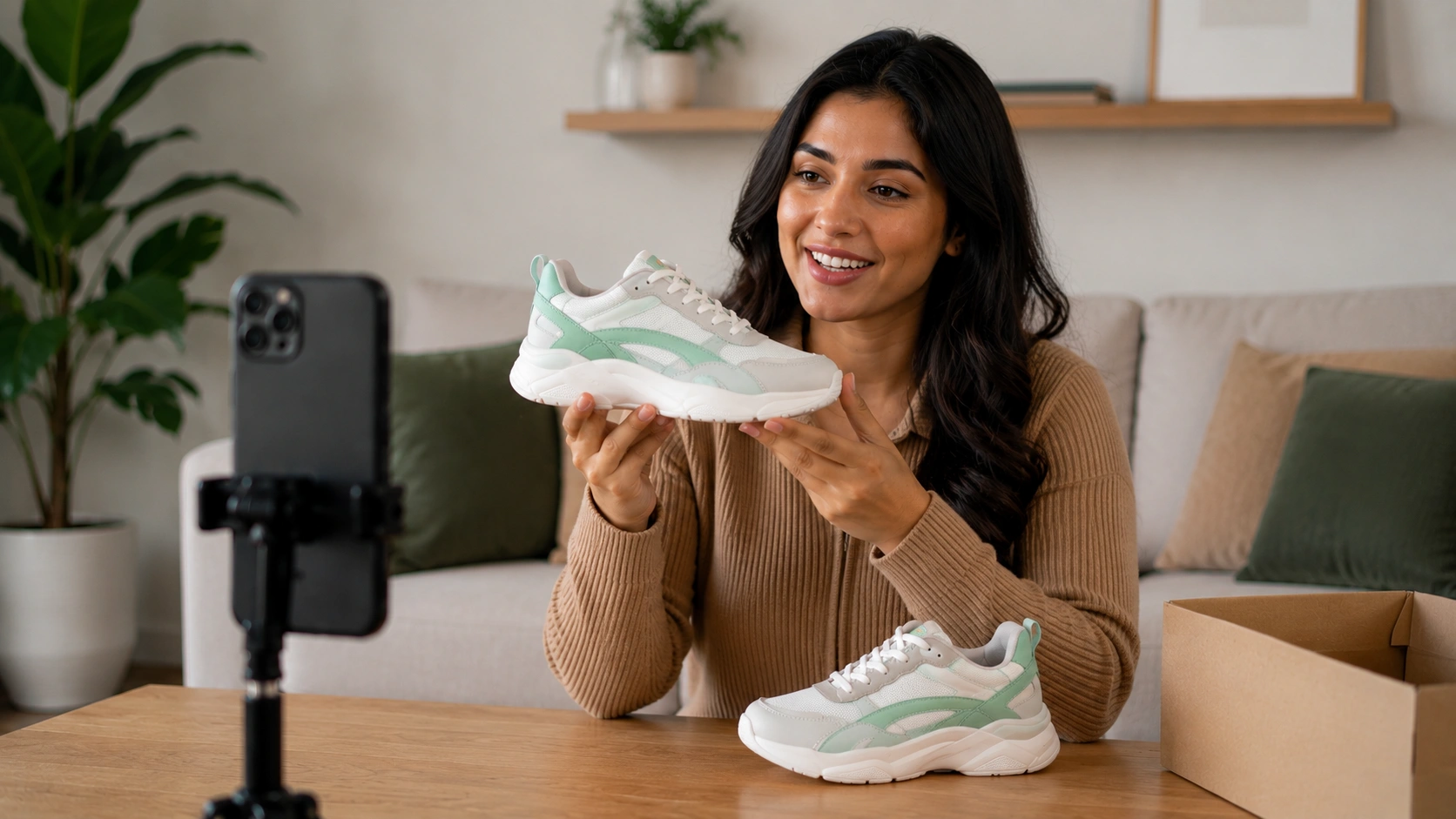
Best for footwear, apparel, or limited-edition collaborations. The focus is on scarcity and "hype." The stream should be short (15–20 minutes) and focused on a single hero product.
Format 2: The Tutorial / How-To
Ideal for beauty, skincare, or complex home goods. The goal is education. By showing a product in action, you resolve the "will this work for me?" doubt that often prevents a sale.
Format 3: The Warehouse / Behind-the-Scenes
This format builds immense trust. Showing the people behind the brand and the scale of the operation humanizes the business. Operators often see a lift in brand loyalty and repeat purchase rates after these more "raw" sessions.
| Live Format | Primary Goal | Key Metric |
|---|---|---|
| Product Drop | Urgency & Hype | CVR (Conversion Rate) |
| Tutorial | Education / De-risking | Reduced Return Rate |
| Q&A / FAQ | Community Building | AOV (Average Order Value) |
| Behind-the-Scenes | Trust & Authenticity | Customer LTV |
Measuring What Matters: Revenue Attribution
If you cannot measure the direct revenue impact of your Facebook live efforts, the strategy is unsustainable. Operators should look beyond "reach" and focus on full-funnel attribution. For a concrete example, see how Skullcandy achieved a 7.9% RPS increase with shoppable videos.
Direct vs. Influenced Revenue
- Direct Revenue: Sales made via a product link clicked during or immediately after the live stream.
- Influenced Revenue: A customer watches a live stream on Facebook, doesn't buy immediately, but returns to the site via a direct search 48 hours later to purchase.
Modern analytics allow us to track these journeys. By integrating Content Performance Analytics, we help brands see exactly how video consumption affects the final purchase decision. This data is vital for justifying the budget for live production and influencer collaborations.
Revenue Per Session (RPS)
RPS is the North Star metric for retail live shopping. If a live event on Facebook brings 1,000 visitors to your site and generates $5,000 in sales, your RPS is $5.00. By testing different hosts, times of day, and product bundles, operators can systematically increase this number.
Avoid Common Pitfalls in Social Live Shopping
Many brands fail at live shopping because they treat it like a TV commercial rather than a two-way conversation.
- Ignoring the Replay: 70% of views often happen after the live event is over. If your recording doesn't have shoppable tags or a clear "buy now" path, you are leaving money on the table.
- Over-Production: High-gloss, over-produced videos often feel like ads and are skipped. Authentic, mobile-first video typically performs better on Facebook.
- Slow Mobile Experience: If the link in your Facebook Live description leads to a slow-loading PDP, the shopper will bounce. Performance-first infrastructure is non-negotiable for mobile-first social commerce.
Myth: Live shopping only works for "cheap" or impulse-buy products. Fact: High-ticket retailers (furniture, luxury, electronics) use live shopping effectively to provide the "white-glove" consultation that a static image cannot, often leading to much higher AOV than standard site visits.
The Role of AI in Scaling Your Strategy
As retail live shopping grows more competitive in 2026, efficiency is the only way to scale. Operators cannot afford to manually tag every product in every video or spend hours editing clips for social media.
Our AI-driven tools and AI Clips features allow brands to take a single Facebook Live recording and instantly turn it into dozens of high-performing assets. These assets can be distributed back into the Facebook ecosystem as Reels or embedded as shoppable stories on the Shopify store. This creates a circular content economy where every minute of live video is utilized across multiple channels to drive revenue.
Creating an Omnichannel Feedback Loop
The data you gather from a retail live event on Facebook should inform your entire merchandising strategy.
- Product Sentiment: If viewers in the chat repeatedly ask about a specific feature, update your PDP copy to address it.
- Top-Performing SKUs: Products that get the most "engagement-to-click" ratio in a live setting should be moved to the top of your "Best Sellers" collection.
- Influencer Selection: Use live stream performance data to decide which creators to partner with for long-term UGC campaigns.
By treating live shopping as a real-time focus group, you gain insights that traditional A/B testing might take months to reveal.
Step-by-Step: Launching Your First Facebook-to-Site Live Event
Step 1: Define your "Hero" offer. / Choose 3-5 products and a compelling "live-only" incentive, such as a gift with purchase or a bundle discount.
Step 2: Set up the on-site destination. / Use Videowise to create a dedicated live shopping page on your Shopify store with high-performance video embedding and inline checkout.
Step 3: Aggressive Multi-Channel Promotion. / Use Facebook Event RSVPs, Instagram Stories, and your email list to drive traffic specifically to the on-site page, using Facebook Live as a secondary "simulcast" feed.
Step 4: Execute with Engagement. / Focus the first 5 minutes on greeting early arrivals and the next 20 minutes on hands-on product demonstrations and Q&A.
Step 5: Repurpose and Retarget. / After the event, use AI Clips to clip the best moments and use them as shoppable videos on your PDPs and in retargeting ads for those who visited the live page but didn't buy.
Bottom line: The goal of retail live shopping on Facebook is to use the platform's social graph to find customers, but keep the actual commerce experience on your own site. This protects your margins, your data, and your conversion rates.
Conclusion
The future of retail live shopping on Facebook is not about native platform features, but about how effectively a brand can bridge the gap between social discovery and on-site conversion. By focusing on revenue-first metrics like AOV and RPS, and leveraging high-performance video infrastructure, Shopify brands can turn live streaming into a predictable, scalable sales channel. We built Videowise to give operators the tools they need to manage this complexity—from AI-powered content creation to deep performance analytics—without ever sacrificing page speed.
Ready to turn your video content into a measurable revenue engine? Book a demo with Videowise today.
Or install Videowise from the Shopify App Store to start building your shoppable video strategy.
FAQ
Does Facebook still support live shopping?
While Facebook removed native product tagging and "Live Shopping" tabs in 2022, you can still broadcast live to your followers. The most effective strategy now is to use these broadcasts to direct viewers to an on-site shoppable video experience on your Shopify store.
How do I make my Facebook Live video shoppable?
The best way to make a live event shoppable is to host the stream on your own website using a platform like Videowise. This allows you to add interactive product tags and inline checkout directly to the video player, while simulcasting the feed to Facebook for reach.
Will adding video to my Shopify store slow down my site?
Not if you use performance-first infrastructure. Our platform is built to deliver high-quality video without impacting Core Web Vitals or page load speeds, ensuring that your live shopping events don't hurt your SEO or increase bounce rates.
How do I track revenue from a Facebook Live event?
By using a centralized video commerce platform, you can track the entire customer journey from the initial video view on social media through to the final purchase on your site. This provides clear attribution for direct and influenced revenue generated by your live shopping efforts.
.webp)


