

Table of Contents
- Introduction
- The Maturity of the Chinese Live Commerce Ecosystem
- Psychological Drivers of High-Velocity Conversion
- The Operational Structure: KOLs and MCNs
- Technical Requirements for Performance-First Video
- Applying Chinese Strategies to Shopify Brands
- Measuring Success Beyond Vanity Metrics
- Strategic Content Planning for 2026
- The Technical Edge: Why Page Speed is Non-Negotiable
- Conclusion
- FAQ
Introduction
Ecommerce operators currently face a two-front war: skyrocketing customer acquisition costs (CAC) and a conversion plateau across traditional product detail pages (PDPs). While Western brands often treat video as a secondary marketing asset, live social shopping in China has become the primary driver of digital revenue. At Videowise, we analyze these global shifts to help Shopify brands move beyond vanity engagement and focus on live commerce strategy. In 2026, the Chinese livestreaming market is projected to reach ¥8.16 trillion, representing nearly 60% of their total online retail market. This growth is not accidental; it is the result of a highly optimized ecosystem that prioritizes immediate purchase action. This guide examines the mechanics of the Chinese model and provides a framework for operators to implement these high-conversion strategies.
The Maturity of the Chinese Live Commerce Ecosystem
Live social shopping in China is no longer a trend; it is a fundamental retail category. In 2026, the industry has matured into a sophisticated network of platforms, creators, and technology providers. Unlike the Western approach, which often redirects social traffic to a separate website, the Chinese model keeps the entire journey within a single environment.
This integration addresses the primary friction point in ecommerce: the transition from discovery to checkout. When a shopper sees a product demonstrated in real-time, their intent is at its peak. Any delay or additional click-through reduces the likelihood of conversion. The Chinese market has solved this by making the video itself the storefront.
Quick Answer: Live social shopping in China succeeds by merging entertainment with a frictionless "one-click" purchase journey. It leverages real-time social proof and psychological scarcity to drive immediate revenue rather than delayed engagement through a social commerce platform.
Dominant Platforms and Their Market Roles
The landscape is dominated by three main types of platforms, each serving a distinct consumer intent.
- Taobao Live (Alibaba): The pioneer of the format. It remains the leader for high-intent shoppers who enter the app specifically to buy.
- Douyin (TikTok in China): Focused on discovery-based shopping. It uses interest-based algorithms to push products to users based on their content consumption habits.
- Kuaishou: Often popular in lower-tier cities, this platform relies heavily on community trust and long-term relationships between hosts and viewers.
Psychological Drivers of High-Velocity Conversion
The effectiveness of live social shopping in China rests on specific psychological triggers that move a viewer from a passive observer to an active buyer. These triggers are measured against CVR (Conversion Rate), which is the percentage of viewers who complete a purchase.
FOMO and Real-Time Scarcity
Chinese livestreamers are masters of creating a sense of urgency. They often use "flash sales" that only last for a few minutes or until the inventory counter hits zero. Seeing the inventory deplete in real-time on the screen creates a Fear of Missing Out (FOMO). This urgency forces the shopper to bypass the typical "consideration phase" of the funnel.
Social Proof and Community Validation
In a standard ecommerce environment, social proof is often relegated to a review section at the bottom of the page. In a live environment, social proof is constant. The "ticker" of purchases ("User X just bought this!") and the live chat stream provide immediate validation. This community-driven environment reduces the perceived risk of the purchase.
Key Takeaway: High-velocity conversion in live shopping is driven by the collapse of the sales funnel. Discovery, education, and closing the sale happen simultaneously within the video interface.
The Operational Structure: KOLs and MCNs
A critical component of the Chinese model is the professionalization of the "host" role. In China, these individuals are known as KOLs (Key Opinion Leaders). They are not merely influencers; they are highly trained sales professionals who understand product specifications, logistics, and real-time data analysis.
Supporting these KOLs are MCNs (Multi-Channel Networks). These organizations act as the bridge between brands and creators. They handle the "back-end" of the livestream, including:
- Product Selection: Curating items that match the host's audience.
- Negotiation: Ensuring the "lowest price guarantee" that often accompanies major streams.
- Analytics: Monitoring real-time data to adjust the sales pitch on the fly.
- Logistics: Managing the massive influx of orders that can happen in a single session.
Technical Requirements for Performance-First Video
One of the biggest hurdles for Shopify brands adopting these strategies is technical performance. If a live video slows down the site or fails to load correctly on a mobile device, the RPS (Revenue Per Session) drops immediately. RPS is a metric that measures the total revenue generated divided by the number of sessions.
Our performance-first infrastructure ensures that video commerce does not harm Content Performance analytics. These are the standardized metrics used by Google to measure user experience, specifically regarding loading speed, interactivity, and visual stability.
The Problem with Traditional Embeds
Standard video embeds often use "heavy" scripts that delay the LCP (Largest Contentful Paint). LCP measures how long it takes for the main content of a page to become visible. If your live shopping player takes three seconds to load, your mobile bounce rate will spike.
To prevent this, sophisticated platforms use "lazy loading" or "viewport loading." This means the video assets only load when they are about to be viewed, keeping the initial page weight light.
| Feature | Impact on Brand Revenue | Chinese Market Standard |
|---|---|---|
| In-Video Checkout | Reduces friction; increases CVR | Fully integrated in all apps |
| Real-Time Inventory | Drives urgency; increases AOV | Mandatory for flash sales |
| Mobile Optimization | Captures 99% of social traffic | Mobile-first architecture |
| AI Personalization | Increases relevance; higher RPS | Algorithm-driven feeds |
Applying Chinese Strategies to Shopify Brands
Operators do not need to move to China to benefit from these tactics. By integrating the core principles into a Shopify store, brands can see significant lifts in AOV (Average Order Value), which is the average dollar amount spent each time a customer places an order.
Step 1: Transition to Shoppable Video
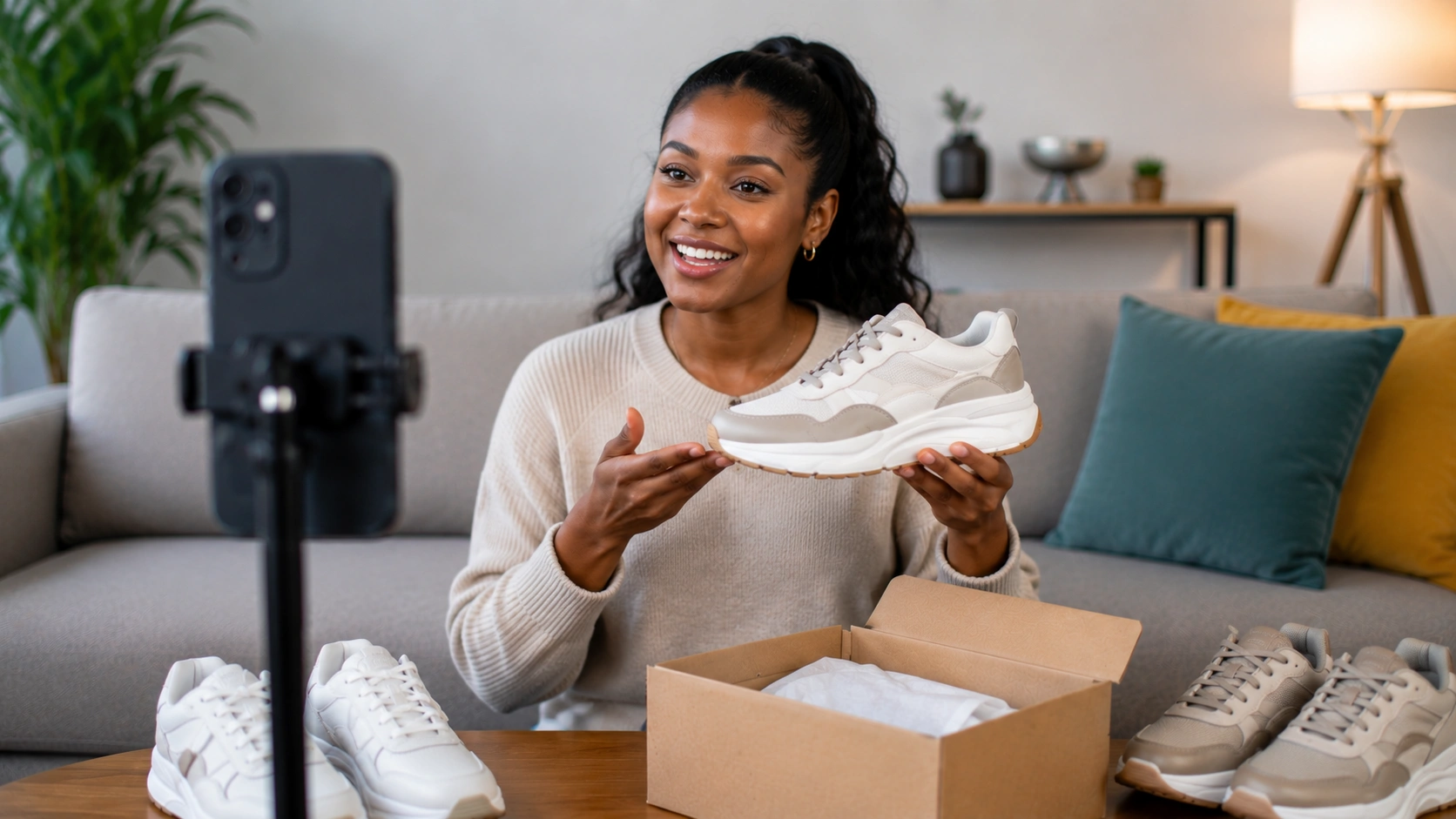
Start by turning static video assets into shoppable experiences. Instead of a video that just "plays," use a player that allows for product tagging. When using shoppable video, brands can import UGC from TikTok or Instagram and add interactive tags that allow for an inline checkout. This mimics the "discovery-to-purchase" flow seen on Douyin.
Step 2: Implement "Live-Lite" Events
You do not need a 24-hour studio to start. Weekly or monthly live shopping events focused on product launches or "limited drops" can build the habit of live shopping among your audience. Use these sessions to answer live Q&A, which directly addresses customer objections that normally lead to abandoned carts.
Step 3: Leverage AI for Scale
Production is often the bottleneck. In the Chinese market, AI is used to create "clips" from longer streams to be used as evergreen content. Our AI Clips tool allows brands to automate this process.
AI Studio gives brands another way to automate production. You can take a 30-minute live session and instantly generate ten 15-second shoppable clips for your PDPs.
Bottom line: Success in live commerce requires moving from "video as content" to "video as infrastructure." The goal is to remove every possible click between the viewer's interest and the final transaction.
Measuring Success Beyond Vanity Metrics
A common mistake for Western brands is focusing on "views" or "likes." These are vanity metrics that do not necessarily correlate with business growth. To replicate the success of the Chinese model, operators must focus on revenue-linked KPIs.
- Influenced Revenue: This tracks how many customers watched a video before making a purchase, even if they didn't buy directly through the video player.
- Direct Revenue: Revenue generated specifically through the "Buy Now" button within the video.
- Time on Site: While not a revenue metric itself, an increase in time spent on a page with video usually correlates with higher brand trust and repeat purchase rates.
- Return Rate: Interestingly, live shopping often has a lower return rate. Because the product is demonstrated in real-time, customer expectations are more accurately managed.
Myth: Live shopping only works for fashion and beauty brands. Fact: In China, groceries and agricultural products are among the top categories. Any product that benefits from a demonstration—electronics, home goods, or complex supplements—is a candidate for live commerce.
Strategic Content Planning for 2026
As we look toward the remainder of 2026, the brands that win will be those that integrate live social shopping into their broader omnichannel strategy. This means your on-site video should look and feel like the content your customers consume on social media.
The Role of UGC Hubs
Centralizing your video assets is essential for scale. A UGC Hub allows you to manage usage rights and deploy high-performing customer videos across your entire store with one click. In the Chinese model, authentic customer content often outperforms high-production studio ads because it carries more "social trust."
Multi-Store Support
For larger retailers operating across different regions, multi-store support is a necessity. You should be able to push a live shopping event or a shoppable video gallery to multiple Shopify stores simultaneously without manual dev work. This scale is what allows Skullcandy to scale shoppable videos across regional stores.
The Technical Edge: Why Page Speed is Non-Negotiable
A frequent concern among ecommerce directors is that adding video will slow down the site, negatively impacting SEO and user experience. This is a valid fear if using unoptimized players.
Modern video commerce platforms must use global CDNs (Content Delivery Networks) and advanced compression algorithms. This ensures that a shopper in London and a shopper in New York have the same high-speed experience. At Videowise, we prioritize this performance-first infrastructure so that brands can scale their video content without compromising their Shopify store's technical health.
Conclusion
Live social shopping in China has provided a roadmap for the future of global ecommerce. By focusing on friction reduction, real-time social proof, and professionalized hosting, they have turned video into a high-performance revenue engine. For Shopify brands, the opportunity lies in adopting these "revenue-first" principles—shifting the focus from simple engagement to measurable outcomes like higher CVR and RPS. We are built to help brands bridge this gap, providing the tools to turn every video into an interactive storefront.
The next step for any growth-focused operator is to move beyond static imagery and embrace the high-velocity world of shoppable video. To see how your brand can implement these strategies, book a demo.
If you're ready to start, install Videowise from the Shopify App Store.
FAQ
How does live social shopping in China differ from Western social commerce?
The primary difference is the level of integration; in China, the entire purchase journey happens within the video app, whereas Western models often involve multiple redirects. Additionally, Chinese live shopping relies heavily on professionalized hosts and MCNs that treat livestreaming as a high-volume sales channel rather than just brand awareness.
Which platforms are best for a brand starting with live social shopping?
For brands targeting the Chinese market, Taobao Live and Douyin are the essential platforms due to their massive user bases and advanced commerce features. For Shopify brands looking to replicate this in the West, implementing shoppable video on your own PDPs and homepages using tools like Videowise is the most effective way to capture high-intent traffic.
Does adding live shopping or video content slow down a Shopify store?
It can if you use unoptimized players, but performance-first platforms use techniques like lazy loading and global CDNs to ensure Core Web Vitals remain healthy. This allows brands to offer high-quality video experiences without compromising page load speeds or SEO rankings.
What are the most important metrics to track for live shopping success?
Operators should move past vanity metrics like view counts and focus on CVR (Conversion Rate), AOV (Average Order Value), and RPS (Revenue Per Session). Tracking shoppable video performance is also critical for understanding the full-funnel impact of your video strategy.
.webp)


