

Table of Contents
- Introduction
- The Shift From Passive Browsing to Interactive Commerce
- Key Platforms for Shopping Live Online
- Technical Infrastructure and Page Speed Concerns
- Strategy: Building a Revenue-First Live Event
- Integrating UGC and Social Proof
- Measuring What Matters: Metrics for Operators
- Scaling the Operation Without Dev Dependency
- Common Pitfalls to Avoid
- The Role of AI in Live Commerce
- Conclusion: Turning Video Into a Revenue Engine
- FAQ
Introduction
The current ecommerce landscape is defined by rising customer acquisition costs (CAC) and a steady decline in the effectiveness of traditional static ads. For Shopify brands, the challenge is no longer just getting traffic to the site; it is about converting that traffic into measurable revenue before the shopper bounces. Shopping live online has emerged as a primary strategy for brands to bridge the gap between passive browsing and active purchasing. At Videowise, we focus on helping retailers turn these high-energy video moments into tangible business outcomes like higher conversion rates (CVR) and increased revenue per session (RPS). This guide explores the strategic implementation of live commerce, the technical infrastructure required for success, and how to scale a live video strategy without compromising store performance. By the end of this article, you will understand how to integrate live video as a high-performing revenue channel.
Quick Answer: Shopping live online is an interactive ecommerce format where brands use real-time video to demonstrate products and interact with shoppers. It drives revenue by combining social proof, urgency, and direct-to-cart functionality within a single, low-friction interface.
The Shift From Passive Browsing to Interactive Commerce
Traditional ecommerce is a solitary, static experience. A shopper lands on a Product Detail Page (PDP), reads a few bullet points, looks at a couple of images, and decides whether to buy. In 2026, this model is often insufficient for high-consideration products or competitive categories. Shopping live online changes this dynamic by reintroducing the human element into the digital storefront.
When a brand goes live, they are not just broadcasting; they are creating a two-way dialogue. Shoppers can ask about the fit of a garment, the texture of a skincare cream, or the technical specs of a gadget and receive an answer in real time. This immediate feedback loop removes the friction that usually leads to cart abandonment. For a broader framework on the channel, see the complete guide to live video commerce.
For the operator, the goal is to move beyond "engagement" metrics like likes or comments. The real value lies in the Influence Revenue—the total sales generated because a shopper interacted with a live event. By shortening the distance between product discovery and checkout, live video serves as a high-velocity conversion tool.
Key Platforms for Shopping Live Online
To execute a successful strategy, operators must choose where their audience is most likely to convert. In the current market, there are three primary environments for live commerce.
Social Commerce Platforms
Platforms like TikTok Shop and Instagram Live are excellent for discovery. They allow brands to tap into massive existing audiences and leverage the "impulse buy" nature of social media. However, the downside is a lack of control over the customer data and the overall brand experience. You are essentially renting an audience on these platforms.
Marketplace Live Streaming
Amazon Live has become a dominant force for brands already selling on the marketplace. It captures shoppers who are already in a "buying" mindset. While it drives high volume, it does little to build long-term brand equity on your own domain.
On-Site Live Shopping
This is where the most significant long-term ROI is found. By hosting the live experience directly on your Shopify store, you own the data, the checkout process, and the customer relationship. On-site shopping live online allows for a more tailored experience, where the UI (User Interface) can be optimized for your specific conversion goals. If you want a proof point for how this works on a brand site, read Tibi’s live shopping case study. We have found that brands who prioritize their own site see more consistent growth in Average Order Value (AOV) because they can recommend bundles and cross-sells more effectively during the broadcast.
Technical Infrastructure and Page Speed Concerns
A common concern for ecommerce directors is that adding high-quality video will slow down the store. In ecommerce, a one-second delay in page load can lead to a significant drop in CVR. Therefore, the technical implementation of your live strategy is just as important as the content itself. For a practical look at keeping video fast, read shoppable videos without slowing your site.
Performance-first infrastructure is non-negotiable. When shopping live online, the video player should utilize viewport loading—meaning it only loads when it enters the shopper's screen. This ensures that your Core Web Vitals (the metrics Google uses to measure site speed and user experience) remain healthy.
Our approach at Videowise involves using optimized scripts that deliver high-definition video without the heavy "weight" that typically drags down a Shopify site. By offloading the processing to a dedicated video commerce platform, the brand ensures that the site stays fast while the video stays crisp. This balance is critical for maintaining high search rankings and a smooth mobile experience.
Key Takeaway: Don't sacrifice site speed for video features. Use a platform that prioritizes Core Web Vitals so your live events support conversion without harming your SEO or mobile performance.
Strategy: Building a Revenue-First Live Event
Running a live stream just to "be live" is a waste of resources. To drive revenue, an operator needs a structured framework. If you want help mapping that framework to your store, book a demo.
Step 1: Define the Conversion Goal
Are you launching a new product, clearing out end-of-season inventory, or running a high-intent Q&A for a complex product? Each goal requires a different script and host. For example, a clearance event should focus on "flash deals" and urgency, while a product launch should focus on deep-dive demonstrations and social proof.
Step 2: Select the Right Host
The host is the face of your brand during the event. While celebrities can bring a large audience, they may not have the product knowledge required to close a sale. Many brands see higher CVR by using:
- Internal Product Experts: Designers or founders who know every detail.
- Micro-Influencers: Creators who have a smaller but more loyal and niche-specific following.
- Store Staff: For a more authentic, "in-store" feel.
Step 3: Curate the Product Carousel
In a live shopping interface, the product carousel is the most important element. As the host talks about a specific item, that item should be "pinned" or highlighted in the carousel. This allows the shopper to click and add it to their cart without ever stopping the video. This "inline checkout" functionality is the difference between a video that is entertaining and a video that is profitable.
Step 4: Drive Pre-Event Traffic
A live event is only as good as its attendance. Use your existing channels—email, SMS, and organic social—to build anticipation. Operators should treat a live event like a product drop, using countdown timers and "early access" teasers to ensure a high turnout from the moment the camera starts rolling.
Integrating UGC and Social Proof
Shopping live online is a powerful way to leverage User-Generated Content (UGC). During a stream, a host can reference reviews or even bring in customers to share their experiences. After the live event ends, the work isn't over.
The most efficient brands take the best moments from a 30-minute live stream and turn them into AI Clips—short, 15-second shoppable videos that can be placed on PDPs or collection pages. This extends the life of the content and ensures that the investment in the live event continues to drive revenue long after the broadcast has ended. Our Social Commerce tools allow brands to import this type of content directly from social channels, creating a centralized library of high-converting assets.
Myth: Live shopping is only for "Gen Z" fashion brands. Fact: Any brand with a product that benefits from a demonstration—from high-end cookware to technical outdoor gear—can see a significant lift in CVR through live commerce.
Measuring What Matters: Metrics for Operators
When evaluating the success of shopping live online, avoid getting distracted by "views" or "likes." These are vanity metrics that do not pay the bills. Instead, focus on these four Key Performance Indicators (KPIs):
- Direct Revenue: Sales completed inside the live player or immediately after clicking a product tag in the stream.
- Influenced Revenue: Sales from customers who watched at least 30 seconds of the live event and purchased within a 7-day window.
- Average Order Value (AOV): Compare the AOV of live shoppers versus non-video shoppers. Live streams often lead to higher AOV because hosts can effectively demonstrate how products work together.
- Add-to-Cart (ATC) Rate: This measures how effective the host and the product overlays are at moving shoppers into the middle of the funnel.
By using Content Performance Analytics, operators can see exactly which parts of the stream caused a spike in purchases. This data allows you to refine your future scripts—if you notice everyone bought when the host showed the "unboxing," you know to lead with that next time.
Scaling the Operation Without Dev Dependency
One of the biggest bottlenecks for Shopify brands is the need for developers to implement new features. To scale shopping live online, you need a solution that allows the marketing or merchandising team to deploy events and shoppable videos with a drag-and-drop interface.
That kind of operational flexibility is similar to True Classic’s 700-page video rollout, where video was distributed at scale without adding unnecessary complexity. This agility is what allows a brand to move from one live event a month to a weekly or even daily cadence, which is where the most significant revenue growth occurs.
Bottom line: Success in live commerce requires a shift from viewing video as "content" to viewing it as "software" that needs to be optimized for speed, attribution, and conversion.
Common Pitfalls to Avoid
Even with the best tools, a live strategy can fail if the fundamentals are ignored.
Low Latency is Mandatory: If there is a 20-second delay between a shopper asking a question and the host answering, the "live" feeling is lost. Use a platform that guarantees low-latency streaming.
The "Ghost Town" Effect: Do not start your stream at 0. Use your SMS and email lists to ensure you have a "seed" audience at the start. Interaction breeds interaction; shoppers are more likely to comment if they see others doing so.
Ignoring the Post-Live Experience: 70% of your views will likely come from the recorded version of the stream. Ensure your live shopping platform automatically turns the recording into a live show replay where the product tags still work. This is a core feature of Videowise Live Shopping, ensuring the revenue doesn't stop when the host says goodbye.
The Role of AI in Live Commerce
In 2026, AI is no longer a buzzword; it is a labor-saving necessity. Managing dozens of live events and hundreds of UGC clips is impossible for a small team. This is where AI Studio tools come in.
AI can automatically tag products in your videos, generate transcripts for SEO, and even suggest which clips from a live event are most likely to convert on a PDP based on historical data. By using AI Studio tools, operators can optimize their video library in seconds rather than hours, allowing them to focus on high-level strategy rather than manual tagging.
Conclusion: Turning Video Into a Revenue Engine
Shopping live online is a permanent shift in how people interact with brands. It moves ecommerce from a transaction to an experience. For Shopify operators, the path to success involves choosing the right platform, prioritizing site performance, and focusing on revenue-linked metrics.
By integrating interactive video directly into the customer journey, you provide the clarity and confidence shoppers need to click "buy." Videowise is built to facilitate this transition, providing the infrastructure to turn every video asset into a measurable revenue channel. The brands that win in 2026 will be the ones that stop treating video as a secondary marketing tool and start treating it as their most powerful sales closer.
If you are ready to install, get started on the Shopify App Store.
Next Steps for Your Brand:
- Evaluate your current PDP conversion rates and identify where shoppers are dropping off.
- Test a pilot live event with an internal expert to establish a baseline for engagement and revenue.
- Ensure your technical stack can handle high-definition video without compromising page speed.
- Explore how a dedicated video commerce platform can automate your workflow and attribution.
FAQ
How does shopping live online improve my conversion rate?
Live shopping reduces the "uncertainty gap" by allowing shoppers to see products in a real-world context and get their questions answered instantly. This real-time social proof and the ability to add items to a cart without leaving the video stream significantly lowers friction, leading to a higher CVR compared to static product pages.
Will adding live video to my Shopify store slow it down?
It depends on the implementation. If you use a performance-first platform like Videowise, the video is delivered via a lightweight infrastructure that uses viewport loading. This ensures that the video only loads when needed, maintaining your site’s speed and protecting your Core Web Vitals.
Do I need a professional studio to start live shopping?
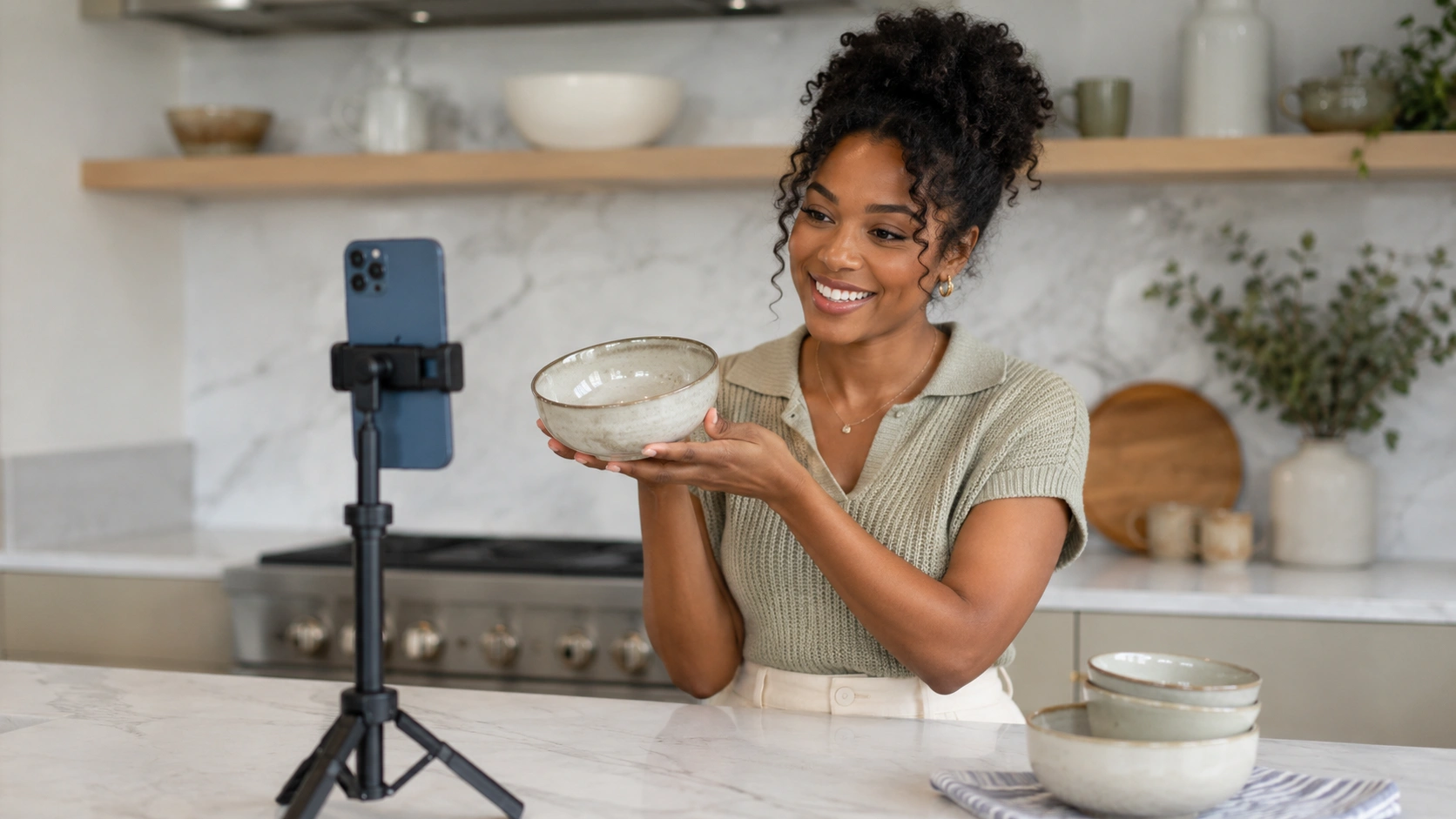
No, authenticity often converts better than high-end production. Many successful Shopify brands start with a high-quality smartphone, good lighting, and a host who deeply understands the product. As your live commerce revenue grows, you can invest in more advanced setups, but the initial barrier to entry is low.
How do I measure the ROI of my live events?
You should look beyond simple view counts and focus on Direct Revenue and Influenced Revenue. Direct revenue tracks sales made through the video's product tags during the event, while influenced revenue tracks shoppers who watched the video and purchased later. Comprehensive analytics tools like Content Performance Analytics can provide this full-funnel attribution.
.webp)


