

Table of Contents
- Introduction
- The Revenue Case for Live Online Shopping
- On-Site vs. Social Media Live Shopping
- Building a Performance-First Live Shopping Infrastructure
- Strategic Execution: Planning the Live Event
- Measurement and Content Performance Analytics
- Scaling Through Repurposing: AI Clips and Shoppable Video
- Common Pitfalls in Live Selling
- The Future of Live Online Shopping in 2026
- FAQ
Introduction
Customer acquisition costs continue to climb while organic reach on social platforms feels increasingly like a pay-to-play game. For Shopify operators, the challenge is no longer just getting traffic—it is converting that traffic at a rate that justifies the spend. Static product images and text descriptions are often insufficient to overcome modern buyer hesitation.
Live online shopping has emerged as a high-performance solution to this conversion plateau. By combining the immediacy of video with real-time interactivity and instant checkout, brands can recreate the high-touch experience of a physical store. At Videowise, we help brands move beyond vanity metrics by turning live video into a measurable revenue channel with Videowise's live shopping platform. This guide explores how to build a live shopping strategy that prioritizes conversion rate optimization and long-term customer value.
Quick Answer: Live online shopping is a real-time commerce strategy where a host demonstrates products via a live video stream, allowing viewers to ask questions and purchase items instantly through integrated checkout tools. In 2026, it serves as a critical bridge between social engagement and on-site revenue growth.
The Revenue Case for Live Online Shopping
Live online shopping is not merely an entertainment format; it is a high-intent sales environment. When an operator introduces live video into the buyer journey, they are attacking the primary friction points of digital commerce: lack of trust, product uncertainty, and the absence of urgency. For a concrete example, see Andar's live shopping case study.
Driving Conversion Rate (CVR)
Conversion rate (CVR), or the percentage of visitors who complete a purchase, is the most direct metric impacted by live selling. In our experience, live events outperform static collection pages because they provide real-time social proof. When a shopper sees a product demonstrated live and observes other users asking questions or making purchases, the psychological barrier to buying drops. Operators typically see a significant lift in CVR during and immediately following a live session compared to traditional sessions.
Increasing Average Order Value (AOV)
Average order value (AOV) measures the average dollar amount spent each time a customer places an order. Live shopping is a natural vehicle for bundling and cross-selling. A host can demonstrate how a skincare serum works with a specific moisturizer, or how a piece of apparel pairs with accessories. This visual storytelling encourages shoppers to add multiple items to their cart in a single session, rather than hunting for individual products across a site.
Optimizing Revenue Per Session (RPS)
Revenue per session (RPS) is a comprehensive metric that helps operators understand the total value generated from every individual visit to the store. By integrating live shopping, brands increase the "stickiness" of their site. Shoppers stay longer, interact more, and are more likely to convert. This high-density interaction drives up the RPS, making every dollar of acquisition spend work harder.
On-Site vs. Social Media Live Shopping
A common strategic question for ecommerce directors is whether to host live online shopping events on social platforms like TikTok or Instagram, or natively on their own Shopify store.
The Social Media Approach
Social platforms offer massive built-in audiences. Platforms like TikTok Shop have made live selling a cornerstone of their user experience, and Videowise's social commerce platform helps brands extend that behavior beyond a single channel. The advantage here is discovery; you can reach users who may have never heard of your brand. However, social platforms also represent a "walled garden." You do not own the data, you have limited control over the checkout experience, and you are subject to the whims of algorithm changes.
The On-Site Approach
Hosting live shopping on your own site allows for total control over the brand experience and the data. When a user watches a live stream on your store, you can track their entire journey—from the first click to the final checkout—using sophisticated attribution tools, which is why Content Performance analytics matter so much.
| Feature | Social Media Live Shopping | On-Site Live Shopping |
|---|---|---|
| Audience Reach | High (Built-in discovery) | Medium (Requires owned traffic) |
| Data Ownership | Low (Platform owns user data) | High (Brand owns first-party data) |
| Checkout Control | Limited to platform tools | Full (Custom Shopify checkout) |
| Brand Consistency | High (Visuals are restricted) | Total (Customizable interface) |
| Retention Value | Variable (Harder to retarget) | High (Easier to build loyalty) |
Key Takeaway: The most effective 2026 strategy is a hybrid model. Use social platforms for discovery and "top-of-funnel" awareness, but drive high-intent shoppers to your own site for the main event to capture first-party data and maximize revenue.
Building a Performance-First Live Shopping Infrastructure
One of the biggest concerns for ecommerce operators is page speed. Adding high-quality video content to a Shopify store often triggers anxiety about Core Web Vitals—the specific set of metrics Google uses to measure user experience, such as Largest Contentful Paint (LCP). LCP measures how long it takes for the largest element on a page to become visible to the user.
We built our technology with a performance-first infrastructure to ensure that video delivery never compromises site speed. A slow-loading live stream will frustrate shoppers and increase bounce rates, effectively killing the conversion lift you are trying to achieve with a shoppable video platform.
Viewport Loading and Efficient Delivery
To maintain high scores on Core Web Vitals, it is essential to use "lazy loading" or viewport loading. This means the video assets only load when they are about to enter the user's screen. For a live online shopping event, this ensures that the initial page load for your store remains lightning-fast, while the interactive video experience remains smooth once the user engages with it.
AI-Powered Content Intelligence
At Videowise, we use AI-powered content intelligence to help brands manage their video assets more effectively. This includes automated tagging of products within the video and usage rights management for user-generated content (UGC). For an operator, this means less time spent on manual setup and more time focused on the creative strategy of the live show.
Strategic Execution: Planning the Live Event
Success in live online shopping requires more than just turning on a camera. It requires a structured workflow that spans from pre-show promotion to post-show repurposing.
Step 1: Define the Objective and Format
Before picking up a camera, determine the goal. Are you launching a new product line? Clearing out seasonal inventory? Or hosting a "how-to" session to reduce return rates? Common formats include:
- The Product Drop: Exclusive first looks at new arrivals.
- The Tutorial: Detailed demonstrations that build buyer confidence.
- The Q&A: Answering real-time questions to overcome specific purchase objections.
Step 2: Source the Talent
The host is the face of your brand. While some brands use internal team members for their deep product knowledge, others partner with influencers to bring in an external audience. The host must be comfortable with "planned spontaneity"—the ability to stick to key selling points while reacting naturally to live chat comments.
Step 3: Tech Preparation
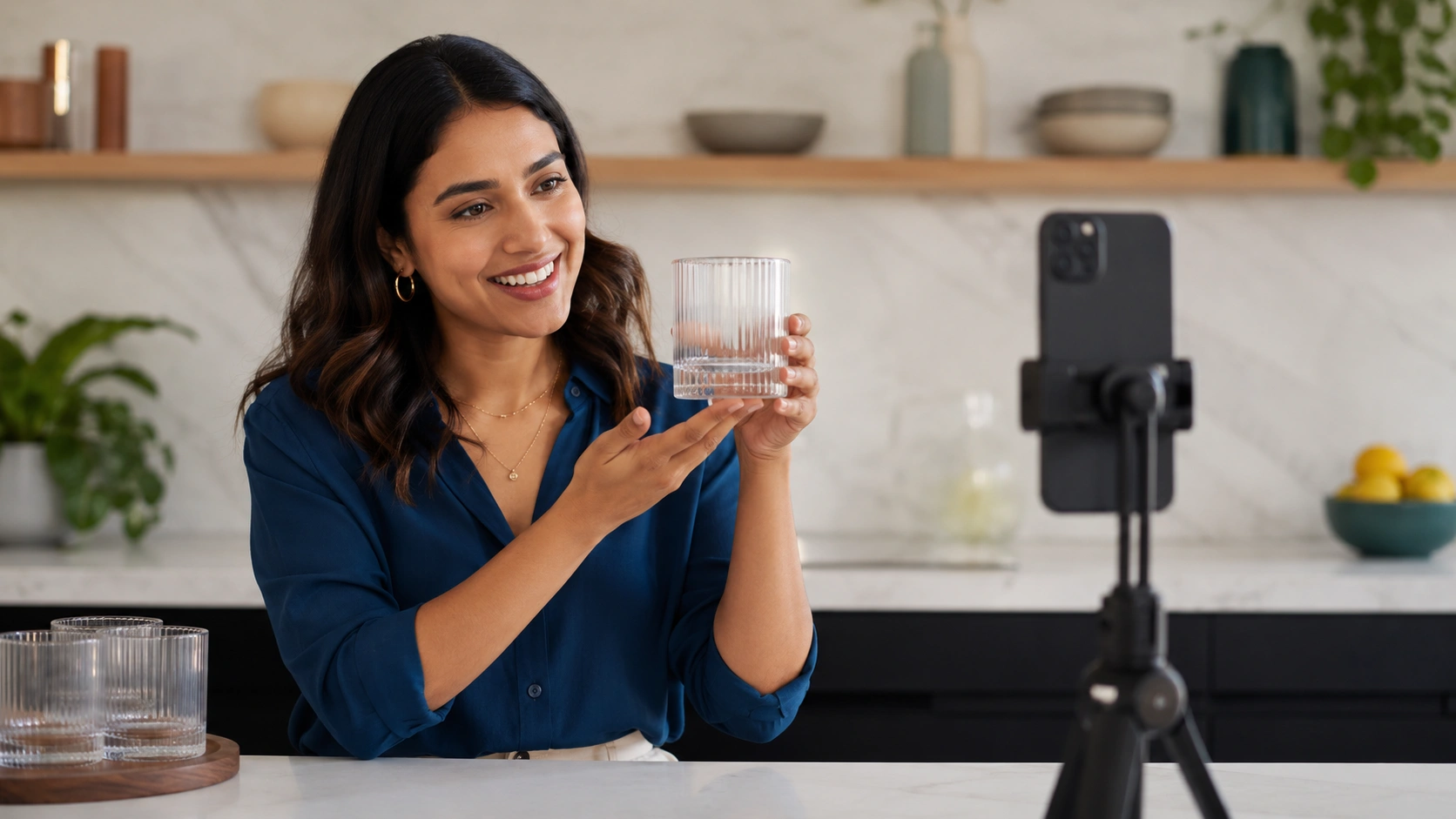
Ensure your hardware matches the quality of your brand. While modern smartphones have incredible cameras, professional lighting and a dedicated microphone are non-negotiable for a premium feel. Use a tripod to ensure a stable shot, and always have a hardwired internet connection or high-speed 5G to prevent stream lag.
Step 4: Promotion and Urgency
Promotion should begin at least seven days before the event. Use email and SMS to notify your most loyal customers. To make the rollout easier, get started with shoppable videos using Videowise and launch with existing content. To drive attendance, offer "live-only" incentives, such as limited-time discount codes or exclusive bundles that expire the moment the stream ends.
Measurement and Content Performance Analytics
If you cannot measure the revenue impact of your live online shopping event, it is just an expensive branding exercise. Operators must move beyond "peak concurrent viewers" and focus on commerce-centric KPIs.
Direct vs. Influenced Revenue
Direct revenue is easy to track—it consists of the sales made through the clickable product tags during the live stream. Influenced revenue is more nuanced. It accounts for shoppers who watched the stream but completed their purchase 24 to 48 hours later.
Our Content Performance Analytics platform provides full-funnel attribution. This allows you to see the path from video view to final purchase, giving you a clear picture of your return on investment (ROI).
Engagement Rate and Add-to-Cart (ATC)
While "engagement" can be a vanity metric, the Engagement Rate within a live shopping context is a proxy for interest. Specifically, look at the Add-to-Cart (ATC) rate. If people are watching but not clicking "add to cart," there may be a disconnect between the host's pitch and the product's price point or availability. For a deeper measurement playbook, how to track shoppable video performance breaks down the metrics Shopify teams should watch.
Bottom line: Success in live commerce is measured by the delta in your revenue per session, not just the number of hearts floating across the screen.
Scaling Through Repurposing: AI Clips and Shoppable Video
A major hurdle for brands is the perceived "disposable" nature of live content. An operator might spend hours preparing for a 45-minute live stream, only for it to vanish once the session ends.
In 2026, the most successful brands treat live streams as "content mines." You can take a 40-minute live session and use our AI Clips tool to automatically generate dozens of short-form, shoppable videos. These clips can then be embedded on:
- Product Detail Pages (PDPs): To show the product in action and answer FAQs.
- Homepages: To provide a dynamic, "always-on" shopping experience.
- Email/SMS Campaigns: To drive traffic back to the store with high-converting video content.
This strategy ensures that the effort put into a single live event continues to drive revenue for weeks or months. It solves the content production bottleneck by turning one event into a library of evergreen assets.
Common Pitfalls in Live Selling
Even experienced operators can make mistakes that harm the user experience and lower conversion rates.
Myth: A live stream needs to look like a high-budget TV commercial to be successful. Fact: Shoppers in 2026 value authenticity over high-gloss production. A raw, "behind-the-scenes" vibe often creates more trust and higher engagement than a heavily scripted, sterile advertisement.
Over-Scripting the Experience
If a host is reading from a teleprompter, the live element feels fake. The power of live online shopping lies in the interaction. If a user asks, "Can I see the inside of that bag?" and the host ignores them to finish a script, you have lost that customer.
Ignoring the Mobile User
Most of your live shoppers will be on mobile devices. If your stream is optimized for landscape (horizontal) viewing but your audience is holding their phones vertically, you are providing a sub-par experience. Always design your live shopping interface with a mobile-first mindset.
Saving the CTA for the End
Attention spans are short. Do not wait until the final five minutes of a 30-minute stream to reveal the offer or the "buy" button. Weave calls to action (CTAs) throughout the entire session. Every time a new product is introduced, ensure the corresponding product tag is pinned and visible.
The Future of Live Online Shopping in 2026
As we look further into 2026, the lines between social media, entertainment, and commerce will continue to blur. Live online shopping will become less of a "special event" and more of a standard feature of the ecommerce experience.
Brands that invest in the right infrastructure today—focusing on page speed, attribution, and content repurposing—will be the ones that dominate their categories. If you want more proof points beyond this guide, browse Videowise customer stories to see how other brands apply the same playbook. The goal is to create a seamless journey where a customer can move from discovery to purchase in seconds, guided by the trust and transparency that only live video can provide.
At Videowise, we are committed to helping Shopify brands turn video into their most profitable sales channel. Our platform is built to handle the technical heavy lifting, from performance-optimized delivery to AI-driven insights, so you can focus on what matters most: growing your business.
Ready to see how live online shopping can move the needle for your store? Book a demo with our team to see how it works on your actual store.
If you are ready to move faster, get started on the Shopify App Store and begin building toward higher conversion rates and measurable video revenue.
FAQ
Does live online shopping slow down my Shopify store's page speed?
Not if you use the right infrastructure. While video is a heavy file type, we use performance-first delivery methods like viewport loading and optimized scripts to ensure that your Core Web Vitals remain strong. This allows you to offer high-quality video without compromising your Google search rankings or user experience.
How do I track the actual ROI of a live shopping event?
Tracking ROI requires a commerce-centric analytics tool that connects video views to Shopify transaction data. You should look for both direct revenue (purchases made during the stream) and influenced revenue (purchases made by viewers shortly after the event). For a more detailed breakdown, how to track shoppable video performance shows the metrics that matter most.
Do I need a professional studio to start live selling?
No, a professional studio is not required to be successful. Most high-growth Shopify brands start with a clean space, good natural lighting (or a simple ring light), and a modern smartphone. Authenticity and product knowledge are far more important to 2026 shoppers than high-end cinematic production values.
What is the best length for a live online shopping session?
Most successful live sessions run between 30 and 60 minutes. This provides enough time to demonstrate multiple products and engage with the audience's questions without losing their attention. However, you should always repurpose the best moments into shorter, evergreen shoppable clips for your product pages to maximize the content's value.
.webp)


