

Table of Contents
- Introduction
- The State of Live Commerce in 2026
- Future Opportunity: Owning the "Walled Garden" Data
- AI and Content Intelligence: Scaling Without Headcount
- Diversifying Industry Sectors
- Multi-Store and Omnichannel Execution
- The Operator's Playbook: Implementing Future-Ready Live Shopping
- Measuring Success: Moving Beyond Vanity Metrics
- Overcoming the Production Bottleneck
- Future Opportunity: Interactive Social Commerce
- Technical Considerations: Page Speed and Core Web Vitals
- Conclusion
- FAQ
Introduction
Customer acquisition costs (CAC) continue to climb, forcing Shopify brands to look beyond traditional social ads for sustainable growth. In 2026, the focus has shifted from mere "reach" to maximizing Revenue Per Session (RPS) through high-intent interactive experiences. Live shopping is no longer a experimental trend but a core performance channel for brands that prioritize conversion and average order value (AOV). At Videowise, we see operators moving away from one-off events toward integrated, performance-first video strategies with Videowise's shoppable video platform that live directly on their storefronts. This guide explores the live shopping future opportunities available to brands that treat video as a measurable revenue engine rather than a vanity content asset. We will cover the strategic shifts in technology, platform ownership, and the AI-driven automation required to scale live commerce effectively.
Quick Answer: Live shopping future opportunities lie in the shift from third-party social platforms to on-site, performance-optimized live environments. Brands are now prioritizing AI-driven content repurposing, real-time data ownership, and performance-first infrastructure that protects Core Web Vitals while driving conversion rates up to 10x higher than traditional e-commerce.
The State of Live Commerce in 2026
The landscape of digital retail has fundamentally changed. As we move through 2026, the North American market has matured, with live online shopping accounting for over 5% of all e-commerce sales. While China remains the global leader, Western brands have adapted the model to fit a more discerning, mobile-first shopper who demands both entertainment and a frictionless path to purchase.
The shift toward performance metrics. Operators are moving past "view counts" and "likes." The industry now evaluates live shopping based on its impact on the bottom line. This means tracking influenced revenue, direct-to-cart additions, and the reduction in return rates—often a byproduct of the transparency provided during live demonstrations.
Technological maturation. The early days of laggy streams and broken checkout links are over. Modern infrastructure ensures that live video elements load only when they enter the viewport, preventing the "bloat" that previously plagued site performance. This allows brands to run high-definition, interactive sessions without compromising their Largest Contentful Paint (LCP) or other Core Web Vitals (CWV).
Future Opportunity: Owning the "Walled Garden" Data
For years, brands relied on third-party platforms like TikTok, Instagram, and Amazon Live to host their streams. While these platforms offer massive reach, they also control the data, the customer relationship, and the checkout experience.
The Rise of On-Site Live Shopping
A major opportunity for operators in 2026 is bringing the live shopping experience directly onto their own Shopify store with Videowise's live shopping feature. By hosting live events on-site, brands keep 100% of the traffic they work so hard to acquire through email, SMS, and paid search.
Control over the brand experience. Third-party apps often force a specific UI that may not align with a premium brand's aesthetic. On-site live shopping allows for custom overlays, branded carousels, and an interface that feels like a natural extension of the PDP (Product Detail Page).
First-party data collection. When a customer watches a live stream on a social platform, the platform learns their preferences. When they watch on your site, you learn. You can track which products were clicked, how long they stayed, and what questions they asked, allowing for highly personalized post-show email flows.
Performance-First Infrastructure
The technical barrier to on-site live commerce used to be page speed. Heavy video scripts would slow down the store, hurting SEO and driving away impatient shoppers. We built our performance-first infrastructure specifically to solve this. Our platform ensures that video components are lightweight and optimized for mobile, allowing brands to offer high-interactivity without the technical debt.
Key Takeaway: The future of live commerce is decentralized. While social platforms are great for discovery, your own storefront is where the most profitable, high-intent live shopping happens.
AI and Content Intelligence: Scaling Without Headcount
One of the biggest bottlenecks for e-commerce directors is the sheer volume of content required to stay relevant. If you want the broader strategic backdrop, the complete guide to live video commerce is a helpful place to start. Live shopping events are resource-intensive, often requiring hours of planning, hosting, and technical management.
AI Clips and Automated Repurposing
The most significant ROI opportunity in 2026 is the "afterlife" of a live event. A 60-minute live stream contains dozens of high-value product demonstrations, Q&A moments, and testimonials.
Automating the edit. AI Clips can now automatically scan a recorded live stream, identify the most engaging segments, and "clip" them into short-form videos. These clips can then be tagged with products and deployed across the site as shoppable video.
AI Studio and tagging. Our AI Studio simplifies the process of making these clips "shoppable." By automatically identifying the products mentioned in a video, the system can suggest product tags and links, reducing the manual workload for merchandising teams. This allows a single live event to populate an entire library of PDP videos in a matter of minutes.
The Virtual Host and 24/7 Live Commerce
While human connection is the heart of live shopping, brands with large catalogs are beginning to experiment with AI-assisted hosting. This doesn't mean replacing influencers; rather, it means using AI to provide 24/7 interactive product support. Imagine a shopper landing on a PDP at 3 AM and being able to watch a localized, AI-driven "live" demo that answers common questions in real-time.
Bottom line: AI turns a high-effort live event into an evergreen revenue generator by automating the repurposing of content for PDPs, homepages, and collection pages.
Diversifying Industry Sectors
Live shopping started with beauty and fashion because they are inherently visual and demo-heavy. However, the future opportunities for live commerce are expanding into more technical and high-ticket categories.
| Category | Future Opportunity | Expected Outcome |
|---|---|---|
| Consumer Electronics | Detailed unboxings and technical Q&A sessions. | Reduced return rates and higher CVR for complex items. |
| Home & Furniture | "Room tours" and styling advice in real-world settings. | Increased AOV through bundled "look" purchases. |
| Health & Wellness | Live expert consultations and routine-building. | Higher subscription opt-ins and customer loyalty. |
| Automotive/Tools | In-depth durability tests and "how-to" demonstrations. | Building trust in high-ticket, long-consideration items. |
High-Ticket Consultations
For brands selling items with long consideration cycles—like luxury furniture or high-end kitchen appliances—the live shopping format is shifting toward 1:1 or 1:Small Group sessions. These "VIP" live events allow brands to provide white-glove service at scale. An operator can host a live "Interior Design Masterclass" where participants can purchase the entire featured set with a single click, similar to what Tibi's live shopping case study shows in practice.
Multi-Store and Omnichannel Execution
As Shopify brands scale globally, managing live commerce across multiple regions and stores becomes a massive operational challenge. The opportunity lies in bulk publishing and multi-store synchronization.
Global reach, local execution. Brands in 2026 are using live shopping to reach international markets without needing a physical presence. By hosting live events tailored to specific time zones and languages, retailers can test new markets with minimal overhead, as seen in Skullcandy's shoppable video case study.
Omnichannel commerce. The distinction between "online" and "offline" is blurring. Forward-thinking brands are broadcasting live from their physical flagship stores. This not only showcases the brand's physical presence but also allows the in-store staff—the real product experts—to reach a global audience.
The Operator's Playbook: Implementing Future-Ready Live Shopping
Success in live commerce requires more than just a camera and a personality. It requires a structured workflow that prioritizes revenue outcomes and technical stability.
Step 1: Content and Talent Mapping
Identify your high-potential SKUs. Do not try to sell your entire catalog. Focus on new arrivals, high-margin items, or products that solve a specific problem which is better explained through video.
Source authentic talent. In 2026, polished "TV hosts" are less effective than relatable experts or actual customers. Look for influencers who already use your products or empower your internal team (the designers, the founders) to go live.
Step 2: Technology Integration
Audit your tech stack. Ensure your live shopping platform doesn't negatively impact your site's LCP or CLS (Cumulative Layout Shift). Use a platform that prioritizes performance-first infrastructure.
Set up inline checkout. Every extra click is a point of friction. Your live shopping environment must support direct "add-to-cart" or even "one-click checkout" functionality.
Step 3: Distribution and Promotion
Don't rely on "build it and they will come." Use your existing SMS and email lists to drive traffic. Create a "Live" section on your site that acts as a destination for both current and past events.
Promote the "Live-Only" offer. Urgency is a key driver. Use countdown timers and exclusive discount codes that only work while the stream is active.
Step 4: Post-Event Automation
Leverage AI for repurposing. Use AI Clips to break the stream down. A single 45-minute video should yield at least 10-15 shoppable clips for your PDPs.
Analyze and iterate. Use Content Performance Analytics to track not just views, but the direct and influenced revenue generated by the event.
Myth: Live shopping is only for Gen Z fashion brands.
Fact: In 2026, B2B brands, electronics retailers, and home goods companies are seeing some of the highest conversion lifts by using live video to explain complex products and build trust.
Measuring Success: Moving Beyond Vanity Metrics
The future of live shopping belongs to operators who can prove ROI to their CFOs. To do this, you must look at the full funnel.
Conversion Rate (CVR). Compare the CVR of shoppers who interacted with a live stream vs. those who didn't. Brands typically see a significant lift when shoppers can see a product in a real-world context.
Average Order Value (AOV). Live hosts have the unique ability to upsell and cross-sell in real-time. By demonstrating how products work together (e.g., a skincare routine or a matching outfit), hosts naturally drive up the number of items per cart.
Revenue Per Session (RPS). This is the ultimate health metric for a Shopify brand. By adding interactive, shoppable elements to your site, you are increasing the value of every single visitor you pay to acquire.
Influenced Revenue. Not every shopper buys during the live event. Many watch, leave, and return a day later to purchase. Your analytics should be able to attribute these sales back to the video interaction. Content Performance Analytics provides this level of detail, giving operators a clear view of how video influences the entire customer journey.
Overcoming the Production Bottleneck
The most common reason brands fail at live shopping is "production fatigue." They start with a high-budget event, realize it’s hard to sustain, and then stop.
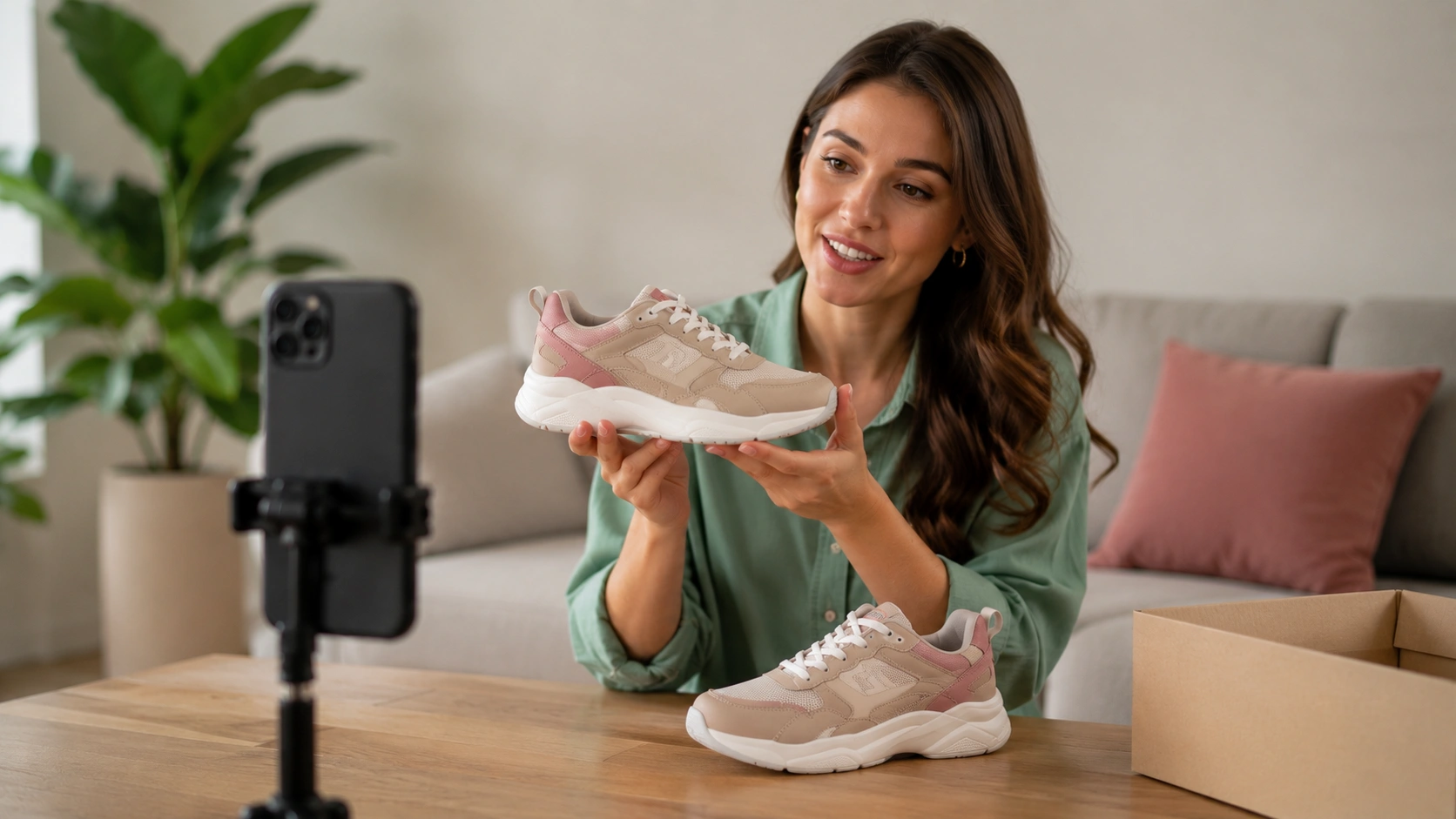
The "Backstage" Vibe. Consumers in 2026 prefer authenticity. You do not need a 5-person camera crew. A high-quality mobile phone, a stable tripod, and good lighting are often more effective than a sterile studio setup. This "raw" look builds trust and makes the host feel like a peer rather than a salesperson.
Consistency over Spectacle. A weekly 15-minute "New Arrival" drop is better than a once-a-quarter 2-hour extravaganza. Consistency builds a habit among your customers, turning your site into a destination they check regularly.
Future Opportunity: Interactive Social Commerce
While we advocate for on-site ownership, the integration with social commerce platforms like TikTok Shop and Instagram is still a vital part of a diversified strategy.
Syncing across channels. The goal is to create content once and deploy it everywhere. A live stream hosted on your Shopify site can simultaneously be pushed to social channels. The modern operator uses a centralized UGC Hub to manage these assets, ensuring that usage rights and product tags are consistent across the entire web.
Closing the loop. The most successful brands use social commerce for discovery and on-site shoppable video for conversion. They import UGC (User Generated Content) from TikTok and Instagram, tag it, and place it on the relevant PDPs to provide social proof at the exact moment of purchase through Videowise's social commerce platform.
Technical Considerations: Page Speed and Core Web Vitals
As Google’s ranking algorithms become even more focused on user experience, you cannot afford to let video slow down your store.
Viewport loading. This technology ensures that the live shopping widget or video player only loads when the user scrolls to it. If the video is at the bottom of the page, it shouldn't impact the initial load time of the header or hero image.
Global CDN delivery. To provide a "live" experience without lag, your video must be served from a global Content Delivery Network (CDN) that places the data as close to the user as possible. This is particularly important for brands with a global customer base.
Performance-first architecture. We have built our infrastructure to ensure that adding video doesn't just look good—it performs. By optimizing how scripts are loaded and how video is compressed, we allow brands to maintain their speed scores while adding heavy-weight interactive features.
Conclusion
The future of live shopping is not about reinventing the television. It is about integrating the intimacy of a physical store visit with the efficiency of modern e-commerce. By focusing on on-site ownership, AI-driven repurposing, and performance-first infrastructure, Shopify operators can turn live commerce into a consistent, scalable revenue channel. We built Videowise to help brands navigate this transition—turning every video asset into a measurable contributor to CVR, AOV, and RPS. As competition for attention intensifies, the brands that win will be those that offer more than just a product; they will offer a trusted, interactive experience that makes shopping feel like a conversation.
Ready to see how live shopping can drive revenue for your store? Book a demo to explore our performance-first video commerce solutions.
Install Videowise from the Shopify App Store to get started with shoppable video and live commerce on your store.
FAQ
Is live shopping suitable for brands with small catalogs?
Yes, live shopping can be even more effective for niche brands as it allows the founder or product expert to build deep trust with a specific audience. Instead of a massive variety, focus on the unique story, craftsmanship, or "how-to" aspects of your core products to drive high conversion rates.
How does on-site live shopping affect my page speed?
If implemented with a performance-first infrastructure like ours, the impact on page speed is negligible. We use viewport loading and optimized scripts to ensure that video components only load when necessary, maintaining your Core Web Vitals and SEO rankings while providing a high-quality interactive experience.
What is the best way to repurpose live shopping content?
The most efficient method is using AI-powered clipping tools to extract the best 15–60 second segments from your live stream. These clips can then be used as shoppable videos on your PDPs, in email marketing campaigns, or as social media content, ensuring you get maximum ROI from a single production effort.
Do I need a professional host to be successful?
No, in fact, "overly polished" hosts can often feel less authentic to modern shoppers. Most successful brands use internal team members, founders, or existing influencers who have a genuine connection to the product, as authenticity is the primary driver of trust and conversion in live commerce.
.webp)


