

Table of Contents
- Introduction
- The Economic Engine of Live Shopping Asia
- Strategic Models: Social Platforms vs. Owned Infrastructure
- Operationalizing the Asian Live Shopping Blueprint
- Technical Performance and Core Web Vitals
- Measuring What Matters: Revenue Attribution in 2026
- Scaling with AI and Automation
- The Future of Shoppable Video
- Conclusion
- FAQ
Introduction
Ecommerce operators in 2026 are facing a persistent challenge: customer acquisition costs (CAC) continue to climb while consumer attention spans shrink. To maintain growth, brands are looking beyond traditional static storefronts toward high-intent, interactive channels. Live shopping Asia has set the global blueprint for this shift. Originally popularized in China through platforms like Taobao Live in 2016, this commerce model has evolved into a multi-trillion-dollar industry across the Asia-Pacific region.
At Videowise, we see live shopping not just as a marketing trend, but as a fundamental shift in how products are discovered and purchased. In Asia, that same model has become a primary revenue driver, and Videowise’s live shopping platform helps Shopify brands bring it onto their own store. This guide explores the strategic frameworks, operational requirements, and technical considerations that Shopify operators can adopt from the Asian market to drive measurable revenue through video.
The Economic Engine of Live Shopping Asia
Live shopping in Asia is built on three pillars: entertainment, real-time interactivity, and immediate conversion. Unlike traditional TV shopping, which relies on a one-way broadcast, the Asian model uses two-way communication to build trust and urgency. Shoppers can ask questions about sizing, material, or application and receive instant answers. This interaction mimics the in-store experience while providing the convenience of digital checkout.
Conversion rates in live commerce typically outperform standard ecommerce benchmarks. While a traditional product detail page (PDP) might see a conversion rate (CVR) of 2-3%, live shopping events in markets like Vietnam and Thailand often report significantly higher figures. The reason is rooted in "social proof" and "scarcity." When thousands of viewers watch a host demonstrate a product and see the stock counter tick down in real-time, the psychological friction of the purchase is minimized.
The Average Order Value (AOV) also tends to rise during these events. Operators in the Asia-Pacific region often bundle products or offer exclusive "live-only" kits. This strategy encourages shoppers to add more to their carts to hit discount thresholds. By the time a live stream ends, the brand has not only moved inventory but has also gathered deep data on what content triggered the most purchases.
Key Takeaway: Live shopping is a revenue-first channel that increases CVR and AOV by combining real-time social proof with high-intent interactivity and a shoppable video experience.
Strategic Models: Social Platforms vs. Owned Infrastructure
When analyzing live shopping Asia, operators must distinguish between two primary execution models. Each has distinct implications for data ownership, customer experience, and attribution.
The Social Marketplace Model
Platforms like TikTok Shop, Shopee, and Lazada dominate the Southeast Asian landscape. In these environments, the entire journey—from discovery to payment—happens within a third-party app. This model provides massive built-in traffic but comes with trade-offs.
Brands often have limited control over the customer data and the brand aesthetic. For a high-growth Shopify brand, relying solely on social marketplaces can create a "rented audience" problem where you are vulnerable to algorithm changes and platform fees. However, the social model is excellent for top-of-funnel reach and moving high volumes of lower-priced SKUs quickly.
The On-Site Live Experience
The more advanced strategy involves bringing the live shopping experience directly onto the brand's own Shopify store. By hosting live events on-site, you retain 100% of the customer data and keep shoppers within your own ecosystem. This is where Videowise provides the most value, and its social commerce platform helps extend the same content across owned and social channels.
On-site live shopping allows for a more "curated" experience. You can integrate the video feed with your existing product catalog, enabling one-click checkouts that don't interrupt the stream. For premium brands or those with complex product stories, the on-site model ensures that the live event feels like an extension of the brand identity rather than a generic marketplace broadcast.
Operationalizing the Asian Live Shopping Blueprint
Success in live commerce requires more than just turning on a camera. Asian brands have perfected an operational cycle that balances talent, content, and logistics.
Talent Strategy: KOLs and In-House Hosts
In China, the industry is powered by Key Opinion Leaders (KOLs) and Multi-Channel Networks (MCNs). These are professional influencers and agencies dedicated entirely to selling via live stream. However, in 2026, we are seeing a shift toward "Key Opinion Consumers" (KOCs) and in-house talent.
Shopify brands should consider a hybrid approach. Use high-reach influencers for major "tentpole" events to bring in new audiences, but use internal team members or specialized brand ambassadors for weekly or daily streams. In-house hosts often have deeper product knowledge, which builds more long-term trust with the core customer base.
Content Programming: Entertainment vs. Utility
The most successful live streams in Asia are not just long-form commercials. They are programmed like entertainment shows. A beauty brand might host a 60-minute "skincare masterclass" where 40 minutes are spent on education and 20 minutes on specific product offers.
Structure your events with "Revenue Peaks." This involves timing exclusive drops or flash discounts at specific intervals to keep viewers from dropping off. For example:
- 0–10 mins: Introduction and early-bird giveaway to boost initial viewership.
- 10–30 mins: Deep-dive demonstration and Q&A.
- 30–45 mins: Exclusive bundle launch or "live-only" discount code.
- 45–60 mins: Final Q&A and "last call" for limited stock items.
Quick Answer: Live shopping in Asia succeeds by blending entertainment with high-utility product demonstrations, using professional hosts (KOLs) to drive urgency and trust through real-time interaction.
Technical Performance and Core Web Vitals
A major concern for ecommerce directors is the impact of video on site performance. Adding a live stream or high-definition video carousels can often slow down a page, negatively impacting Core Web Vitals (CWV) and, consequently, search rankings and conversion rates.
Performance-first infrastructure is non-negotiable. In the Asian market, where mobile-first shopping is the standard, video delivery must be optimized for varying network speeds. For operators who want to measure whether that investment is paying off, content performance analytics shows how video connects to revenue without sacrificing page speed.
Viewport loading and adaptive bitrate streaming are key. This means the video only loads when it enters the user's view, and the quality adjusts automatically based on the user's internet connection. This prevents the "site lag" that often kills conversions on high-traffic PDPs or collection pages. For a real-world example of this at scale, see how Skullcandy scaled shoppable video across multiple stores.
| Feature | Impact on Revenue | Technical Requirement |
|---|---|---|
| Inline Checkout | Reduces friction; increases CVR | Direct Shopify cart integration |
| Real-time Chat | Builds trust; increases time on site | Low-latency messaging |
| Product Tagging | Simplifies discovery; boosts AOV | AI-powered automated tagging |
| Adaptive Streaming | Protects Core Web Vitals | Global CDN and viewport loading |
Measuring What Matters: Revenue Attribution in 2026
One of the biggest mistakes operators make is measuring live shopping purely through engagement metrics like "likes," "views," or "comments." While these indicate interest, they do not pay the bills. Asian ecommerce leaders focus on Revenue Per Session (RPS) and Influenced Revenue.
Direct Revenue is easy to track: a customer clicks a product tag in the video and completes a purchase during the stream. However, Influenced Revenue is often where the true value lies. A shopper might watch a live stream on Tuesday, leave the site, and return on Friday to purchase via a retargeting ad.
Advanced attribution models are necessary to see the full picture. By using how to track shoppable video performance, you can track the entire funnel from the first video view to the final checkout. This allows you to calculate the true return on ad spend (ROAS) for your video efforts. Operators should look for:
- Conversion lift: The difference in CVR between shoppers who watched a video vs. those who didn't.
- Time on site: The correlation between video consumption and session duration.
- AOV impact: Whether video viewers tend to buy more expensive items or more items per order.
Key Takeaway: Move beyond vanity engagement metrics. True success in live commerce is measured by Revenue Per Session (RPS) and the total conversion lift across the customer journey.
Scaling with AI and Automation
By 2026, the volume of video content required to stay competitive has made manual management impossible. To scale the Asian model in the West, brands are turning to AI-powered content intelligence.
AI Clips are essential for efficiency. A single 60-minute live shopping event can be repurposed into dozens of short-form shoppable videos for PDPs, email campaigns, and social ads. We utilize AI to identify the most "shoppable" moments in a long-form video, automatically clipping them and tagging the featured products. This turns a one-time live event into a long-tail revenue asset.
Usage rights and asset management are also simplified through AI. When importing User-Generated Content (UGC) from platforms like TikTok or Instagram, managing permissions for hundreds of videos is a bottleneck. Automated workflows allow brands to import, tag, and request rights for content in bulk, creating a centralized library of assets ready for deployment across the entire store.
The Future of Shoppable Video
As we look toward the end of 2026, the lines between "live" and "recorded" video are blurring. "Always-on" shoppable video is becoming the standard for Shopify brands. This involves taking the high-energy, interactive elements of live shopping and embedding them into the store through video stories, carousels, and interactive product galleries.
Omnichannel commerce is the endgame. Your video strategy shouldn't live in a silo. A video created for a live event in Asia should be easily deployable on your US Shopify store, your TikTok Shop, and even in your SMS marketing. That is why a live shopping inside Shop App workflow matters for brands that want to expand distribution without adding friction.
Bottom line: To scale like an Asian ecommerce leader, you must treat video as a core infrastructure component, not a creative afterthought. This means focusing on on-site integration, technical performance, and rigorous revenue attribution.
Conclusion
The lessons from live shopping Asia are clear: interactive, video-first commerce is the most effective way to drive high-intent conversions in a crowded market. By shifting focus from generic engagement to measurable revenue outcomes like RPS and CVR, Shopify operators can build a sustainable growth engine. Whether you are hosting a high-energy live event or deploying AI-powered shoppable video across your PDPs, the goal remains the same: provide a better shopping experience that leads to higher revenue.
At Videowise, our platform is built specifically to help brands execute this strategy at scale without sacrificing site performance. We focus on the technical details—from Core Web Vitals to deep revenue attribution—so you can focus on creating content that sells. If you want to see how it would work on your store, book a demo.
Turning your video assets into a measurable revenue channel is the most significant opportunity for ecommerce brands in 2026. When you're ready to get started, install Videowise from the Shopify App Store.
FAQ
What is the main difference between live shopping in Asia vs. the US?
In Asia, live shopping is a mainstream, high-volume revenue channel integrated into massive marketplaces like Taobao and Shopee, whereas in the US, it is still an emerging format often restricted to social apps or niche platforms. The Asian model also relies heavily on professional MCNs (Multi-Channel Networks) and KOLs who are trained specifically for live sales, creating a more polished and high-conversion ecosystem.
Which platforms are best for live shopping in Asia?
The dominant platforms vary by region: in China, Taobao Live, Douyin, and Kuaishou are the leaders; in Southeast Asia (Indonesia, Thailand, Vietnam), Shopee, Lazada, and TikTok Shop hold the largest market shares. These platforms are successful because they combine social interaction, live video, and integrated payment systems in a single app experience.
How does live shopping affect site speed?
If not implemented correctly, live video can significantly slow down a site by increasing page weight and delaying the Largest Contentful Paint (LCP). However, using a performance-first infrastructure like we provide ensures that video is delivered via adaptive bitrate streaming and viewport loading, which prevents any negative impact on Core Web Vitals or SEO rankings.
Can I run live shopping events without a professional studio?
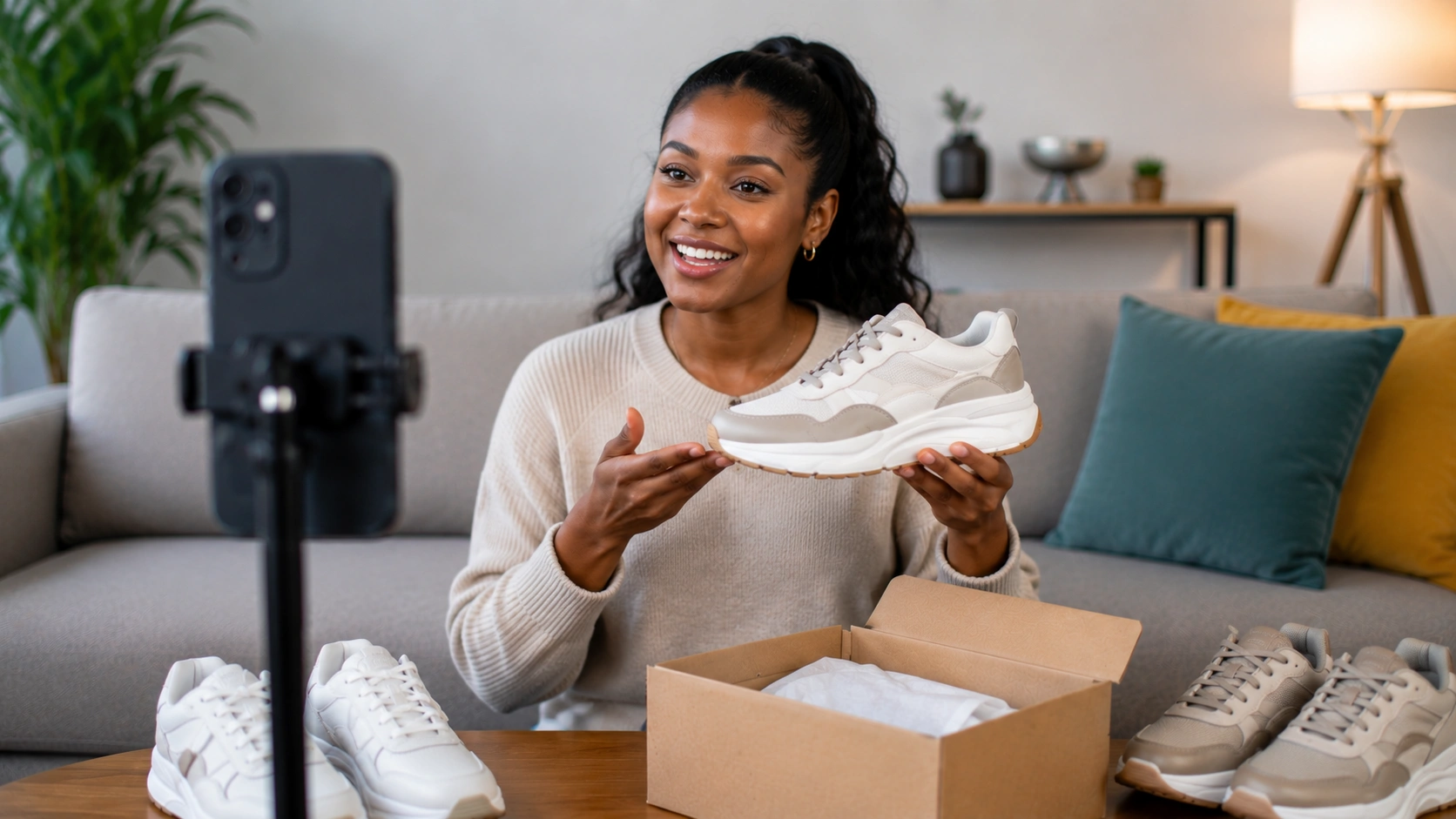
Yes, many of the most successful live streams in Asia and the West use a "lo-fi," authentic approach with just a smartphone and good lighting. The key to conversion is not high production value, but the host's ability to provide real-time product utility, answer customer questions, and build trust through genuine interaction.
.webp)


