

Table of Contents
- Introduction
- The State of Facebook Live Video Shopping in 2026
- Building a Revenue-First Live Strategy
- Step-by-Step: Executing Your Live Event
- Beyond the Broadcast: Repurposing Content
- Measuring the Revenue Impact
- Common Pitfalls for Shopify Operators
- Advanced Tactics for 2026
- Conclusion
- FAQ
Introduction
Customer acquisition costs on social platforms continue to climb in 2026, forcing Shopify operators to find more efficient ways to convert existing audiences. Facebook remains a powerhouse for community engagement, yet many brands struggle to move viewers from a live broadcast to a completed checkout. Facebook live video shopping represents a critical bridge between social interaction and measurable revenue. While Meta has shifted its native features over the years, the strategy of using live broadcasts to drive high-intent traffic remains one of the most effective ways to scale a brand’s digital footprint. At Videowise, we focus on helping brands transform these video assets into high-converting shoppable experiences that live beyond the initial broadcast. This guide covers the strategic framework for executing live events that prioritize revenue over vanity metrics.
Quick Answer: Facebook live video shopping is the practice of using live broadcasts on Facebook to demonstrate products and drive real-time sales. While native checkout tools have evolved, operators now use live video as a high-conversion funnel by integrating it with on-site shoppable video and comment-to-cart automation.
The State of Facebook Live Video Shopping in 2026
The landscape of social commerce has shifted significantly. We no longer look at Facebook as just a social network but as a massive top-of-funnel engine. In 2026, the brands winning with Facebook live video shopping are those that treat the live event as the "grand opening" of a broader content lifecycle.
Historically, the platform offered native product playlists. Today, the focus has shifted toward a more integrated live shopping feature. Operators now use live video to build deep trust, then leverage the resulting footage across their entire ecommerce stack. The primary goal is no longer just "engagement" but increasing Revenue Per Session (RPS)—the total revenue generated divided by the number of unique sessions during and after the event.
Why the "Live" Element Still Converts
Live video creates a sense of urgency that static images cannot replicate. When a brand goes live, it triggers notifications to followers, creating an immediate spike in traffic. But the real value lies in the real-time feedback loop. Shoppers can ask about fabric texture, sizing, or compatibility, and the host can answer instantly.
This interaction reduces the "mental friction" of the purchase. For a beauty brand, seeing a foundation applied in real-time without filters provides the authenticity shoppers demand in 2026. This authenticity directly impacts the Conversion Rate (CVR), as it replaces the need for a physical "touch and feel" experience.
Building a Revenue-First Live Strategy
To move the needle on Average Order Value (AOV), a live event must be structured with a clear commercial hierarchy. You are not just filming a video; you are hosting a digital trunk show.
Selecting the Right Talent
The host of your live shopping event is your most important "merchandising" decision. Operators often choose between three types of talent:
- The Founder: Best for brand story and high-ticket items where trust is paramount.
- The Product Expert: Best for technical goods, skincare, or electronics where utility must be proven.
- The Influencer: Best for reach and lifestyle brands where "aspiration" drives the impulse buy.
Regardless of the choice, the host must be trained to constantly tie the conversation back to the product. Every five minutes, there should be a "re-intro" for new viewers explaining what is being sold and how to buy it.
The Technical Foundation
Facebook live video shopping fails when the technical execution is poor. In 2026, shoppers have low tolerance for buffering or poor audio.
- Audio Quality: Invest in a dedicated lapel microphone. If the audience cannot hear the product benefits, they will not buy.
- Lighting: Use a three-point lighting setup to ensure product colors are accurate. Inaccurate color representation is a leading cause of post-event returns.
- Internet Stability: Always use a dedicated high-speed connection. If possible, hardwire the streaming device via Ethernet to avoid the latency issues common with Wi-Fi.
Key Takeaway: Live shopping success depends on the "Three Pillars": high-quality audio for clarity, expert talent for trust, and a constant feedback loop to answer shopper objections in real-time.
Step-by-Step: Executing Your Live Event
Running a successful broadcast requires a disciplined workflow. Operators should treat the live event like a television production.
Step 1: Set the Commercial Objective. Decide if this event is for a new product launch, a seasonal clearance, or a "bundle and save" promotion. Your call-to-action (CTA) must be singular and clear.
Step 2: Prepare the Product Catalog. Even if you aren't using native Facebook tagging, have your Shopify links ready. Use a dedicated landing page to track traffic specifically from the Facebook broadcast.
Step 3: The Pre-Live Warmup. Start the broadcast 5–10 minutes before the official start. Use this time to check audio, greet early arrivals, and build a "waiting room" audience. This signals to the Facebook algorithm that the content is engaging, which can increase organic reach.
Step 4: The Demonstration Phase. Do not just hold the product. Use it. If you are selling a kitchen tool, cook with it. If you are selling apparel, show the stretch of the fabric and how it fits different body types.
Step 5: The Closing and Handoff. End the stream by telling viewers where they can find the recording and how they can still shop the featured items. This is where you transition the "live" energy into "evergreen" revenue.
Beyond the Broadcast: Repurposing Content
The biggest mistake ecommerce operators make is letting the live video die once the stream ends. A 40-minute Facebook Live is a goldmine of high-converting content.
This is where we see the most significant revenue lift. By using our platform, brands can take those long-form broadcasts and use AI Clips to automatically identify the most engaging moments. These short-form clips are then transformed into shoppable video modules for Product Detail Pages (PDPs).
Transforming Live Video into On-Site Shoppable Video
When you take a segment of your Facebook Live where a host answers a specific question about a product and place it on that product's page, you are providing "social proof" at the exact moment of decision. If you want a broader framework, Get Started With Shoppable Videos Using Videowise is a helpful next step.
Unlike standard video players, we ensure these videos are interactive. A shopper can watch the clip from your Facebook Live and click a "Buy Now" button directly within the video player. This keeps the shopper on your site and reduces the steps to checkout, which is the primary driver of Revenue Per Session (RPS).
Maintaining Site Performance
Operators often worry that adding video will slow down their Shopify store. This is a valid concern, as a slow site negatively impacts Core Web Vitals—the metrics Google uses to measure user experience, such as Largest Contentful Paint (LCP).
LCP measures how long it takes for the largest element on the screen to become visible. Our performance-first infrastructure ensures that while your Facebook live video shopping clips are high-definition, they do not delay the loading of your site. We use advanced viewport loading and compressed delivery to ensure that the video only loads when the user is ready to see it.
| Content Type | Primary Goal | Best Placement | Key Metric |
|---|---|---|---|
| Full Live Stream | Community Building | Facebook Timeline | Reach / Total Sales |
| AI-Generated Clips | Conversion | Product Detail Pages | CVR / RPS |
| Behind the Scenes | Brand Affinity | Email / SMS | Click-Through Rate |
| Tutorial Segments | Education | Collection Pages | Time on Site |
Measuring the Revenue Impact
In 2026, "views" and "likes" are considered vanity metrics. A senior ecommerce director needs to know how Facebook live video shopping impacted the bottom line. To do this, we look at full-funnel attribution.
Direct vs. Influenced Revenue
- Direct Revenue: Sales made during the live broadcast or through the specific links shared in the comments.
- Influenced Revenue: This is harder to track but often more significant. It includes shoppers who watched the live stream, didn't buy immediately, but returned to the site 48 hours later because they saw a shoppable clip of that same live stream on a PDP.
By using Content Performance analytics, operators can see exactly which video assets are driving the highest conversion. If a 30-second clip from a Facebook Live session is outperforming your professional brand video, that tells you that your audience values authenticity over high-production polish.
Revenue Per Session (RPS)
RPS is the ultimate metric for video commerce. It is calculated by taking the total revenue generated from a group of users and dividing it by the total number of sessions. If users who interact with your live-streamed clips have an RPS of $12.00 while non-video users have an RPS of $8.00, the value of your video strategy is clear. You are not just getting more "engagement"; you are getting more value out of every visitor.
For a real-world example of this model, see Andar's live shopping case study.
Bottom line: Success in Facebook live video shopping isn't measured by how many people watched live, but by the total revenue generated across the entire content lifecycle, from the initial broadcast to the repurposed clips on your Shopify store.
Common Pitfalls for Shopify Operators
Even seasoned brands can stumble when executing a live strategy. Avoiding these common mistakes will save your team time and protect your margins.
The "Over-Production" Trap
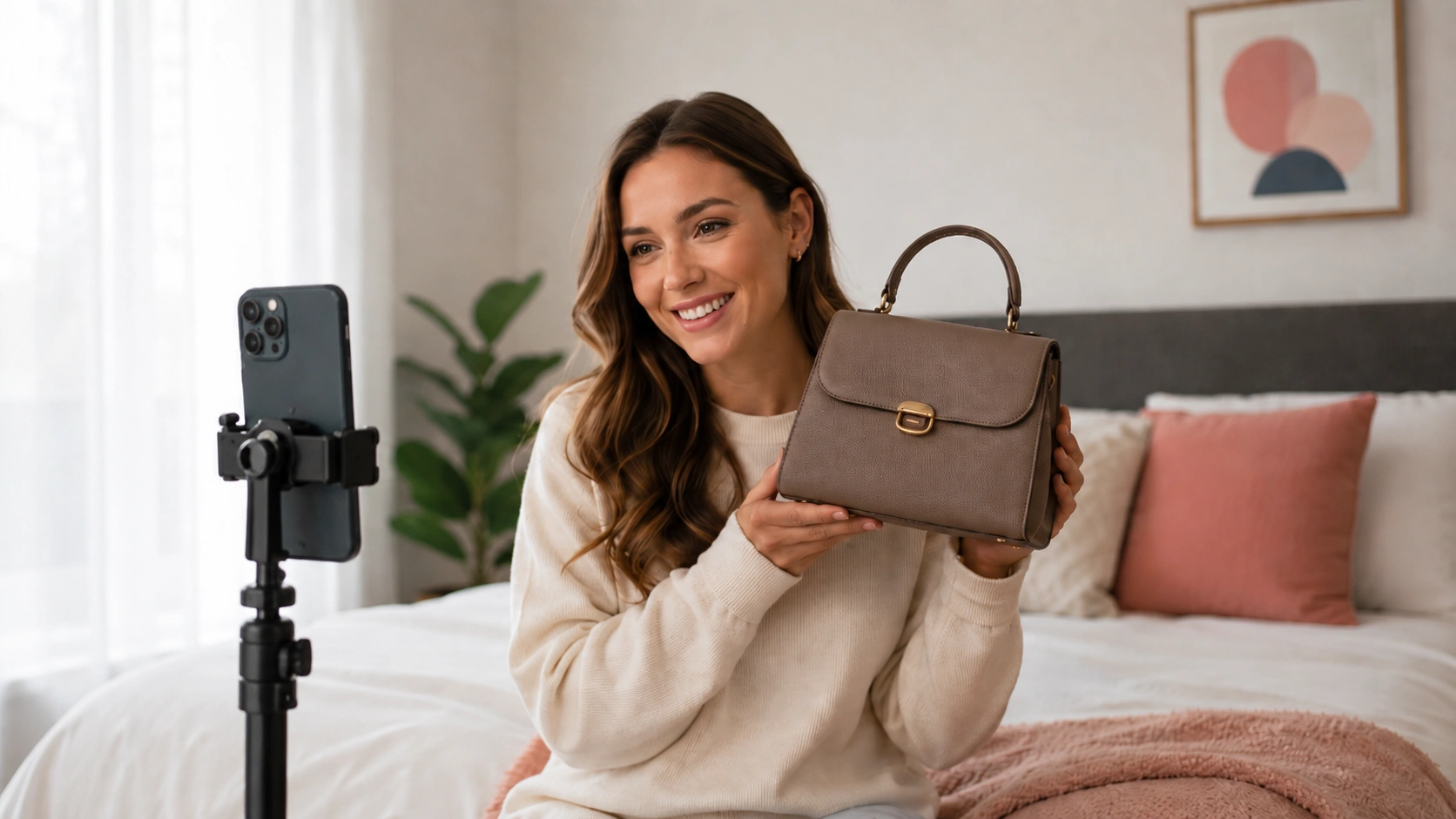
Many brands wait until they have a full camera crew to go live. In our experience, high-production values can sometimes feel like a television commercial, which triggers the "ad-avoidance" instinct in social media users. A high-quality mobile phone with good lighting often converts better because it feels like a genuine recommendation from a peer.
Neglecting the "Comment Moderator"
A live host cannot talk and manage the chat simultaneously. You must have a dedicated moderator in the comments. This person’s job is to:
- Post product links as they are mentioned.
- Answer technical questions that the host might miss.
- Pin the most important comments to the top of the feed.
- Manage any "trolls" or negative sentiment to keep the energy positive.
Forgetting the "Post-Live" Promotion
Most of your views will happen after the live event is over. Ensure you have a strategy to promote the "replay." This includes sending an email to your list with a link to the recorded broadcast and using AI Studio to create teaser clips for your Instagram and Facebook Stories.
Myth: Facebook live shopping only works for fashion and beauty. Fact: Any product that requires a demonstration or has a high "information gap"—from power tools to supplements—can see significant CVR lift through live video.
Advanced Tactics for 2026
Once you have mastered the basics of Facebook live video shopping, you can begin to optimize for higher margins and better retention.
Sequential Retargeting
Use the data from your live event to build custom audiences for Meta ads. For example, you can create an ad set that specifically targets people who watched at least 50% of your live stream but didn't make a purchase. Since they have already spent significant time with your brand, the cost to convert them is usually much lower than targeting a "cold" audience.
Integrating with SMS Marketing
Live events are a great way to grow your SMS list. Offer an "exclusive" discount code that is only revealed at the end of the broadcast, but tell viewers they can get it early by texting a keyword to your brand’s number. This turns a one-time viewer into a long-term subscriber you can reach without relying on social algorithms.
Multi-Store Scaling
For larger retailers operating across different regions, bulk publishing becomes a necessity. If you run a live event for your US store, you should be able to quickly repurpose that content for your UK or EU stores. Using a centralized Creative Library or UGC Hub allows you to manage these assets at scale, ensuring that your best-performing video content is available to every regional team without manual re-uploads.
Conclusion
Facebook live video shopping has evolved from a simple social feature into a sophisticated revenue channel for Shopify brands. By focusing on high-quality demonstration, real-time interaction, and strategic repurposing, operators can overcome rising acquisition costs and drive meaningful growth in CVR and AOV. The real power of live video is its ability to build trust at scale—a commodity that is increasingly valuable in the 2026 ecommerce landscape.
At Videowise, we are built to help you capture that value. Our platform ensures that the energy and conversion power of your live broadcasts aren't lost once the stream ends. By turning your live assets into performance-first shoppable videos on your site, we help you drive more revenue from every session.
Ready to see how shoppable video can transform your Shopify store's performance? Book a demo with our team today to explore our AI-powered video commerce platform.
If you're ready to install Videowise today, add it from the Shopify App Store.
FAQ
Does Facebook still support live shopping features?
While Meta has removed the dedicated "Live Shopping" tab and some native product tagging features, you can still go live on Facebook and sell products. Most brands now use a combination of "comment-to-cart" tools or simply drive traffic to a dedicated shoppable landing page on their Shopify store to track and complete transactions.
How does live video impact my Shopify store's page speed?
Standard video embeds can slow down a site, but using a performance-first video commerce platform prevents this. By utilizing techniques like viewport loading—where the video only loads when a shopper scrolls to it—you can maintain high Core Web Vitals scores while still offering a rich, video-heavy shopping experience.
What is the ideal length for a Facebook live shopping event?
Most high-performing live shopping events last between 30 and 60 minutes. This provides enough time for the Facebook algorithm to distribute the stream to a wider audience and allows the host to demonstrate multiple products, but it's short enough to keep the audience's attention and maintain high energy.
Can I use my Facebook live recordings on my website?
Yes, and you should. Repurposing live content is a major revenue driver. You can take the full recording or use AI tools to create short clips of specific product demonstrations, then embed those clips as shoppable videos on your Product Detail Pages to help convert future shoppers who missed the live event.
.webp)


