

Table of Contents
- Introduction
- The Evolution of Live Shopping Facebook Strategies
- The Revenue Case for Facebook Live Commerce
- A Strategic Framework for Successful Live Events
- Technical Implementation and Workflow
- Optimizing for On-Site Conversions
- Pre-Event Promotion for Maximum Attendance
- Post-Event: Turning Replays into Revenue
- Measuring What Matters: Live Shopping Attribution
- Conclusion
- FAQ
Introduction
High customer acquisition costs are the constant shadow over every Shopify growth team in 2026. As social platforms become more crowded, simply running static ads is no longer enough to maintain a healthy return on ad spend. Ecommerce operators are shifting toward interactive, real-time experiences to bridge the gap between discovery and purchase. Live shopping Facebook strategies offer a direct line to your community, allowing you to humanize your brand while driving immediate sales. At Videowise, we focus on helping brands turn these video interactions into measurable revenue through Videowise's shoppable video platform. This guide will cover how to structure your Facebook live events, the technical requirements for a successful stream, and how to capture the long-tail value of your video content to maximize your revenue per session (RPS).
The Evolution of Live Shopping Facebook Strategies
The landscape of social commerce has shifted significantly over the last few years. While Facebook previously offered a native "Product Playlist" feature within its Commerce Manager, the strategy for 2026 focuses on a more integrated, omnichannel approach. For brands that want to keep the path to purchase on-site, Videowise's social commerce tools support a more integrated workflow.
Operators now use Facebook as the top-of-funnel discovery engine. The live stream acts as the engagement hook, but the actual transaction often happens through a streamlined path to the brand's own storefront. This shift allows brands to own their customer data and provide a more branded checkout experience.
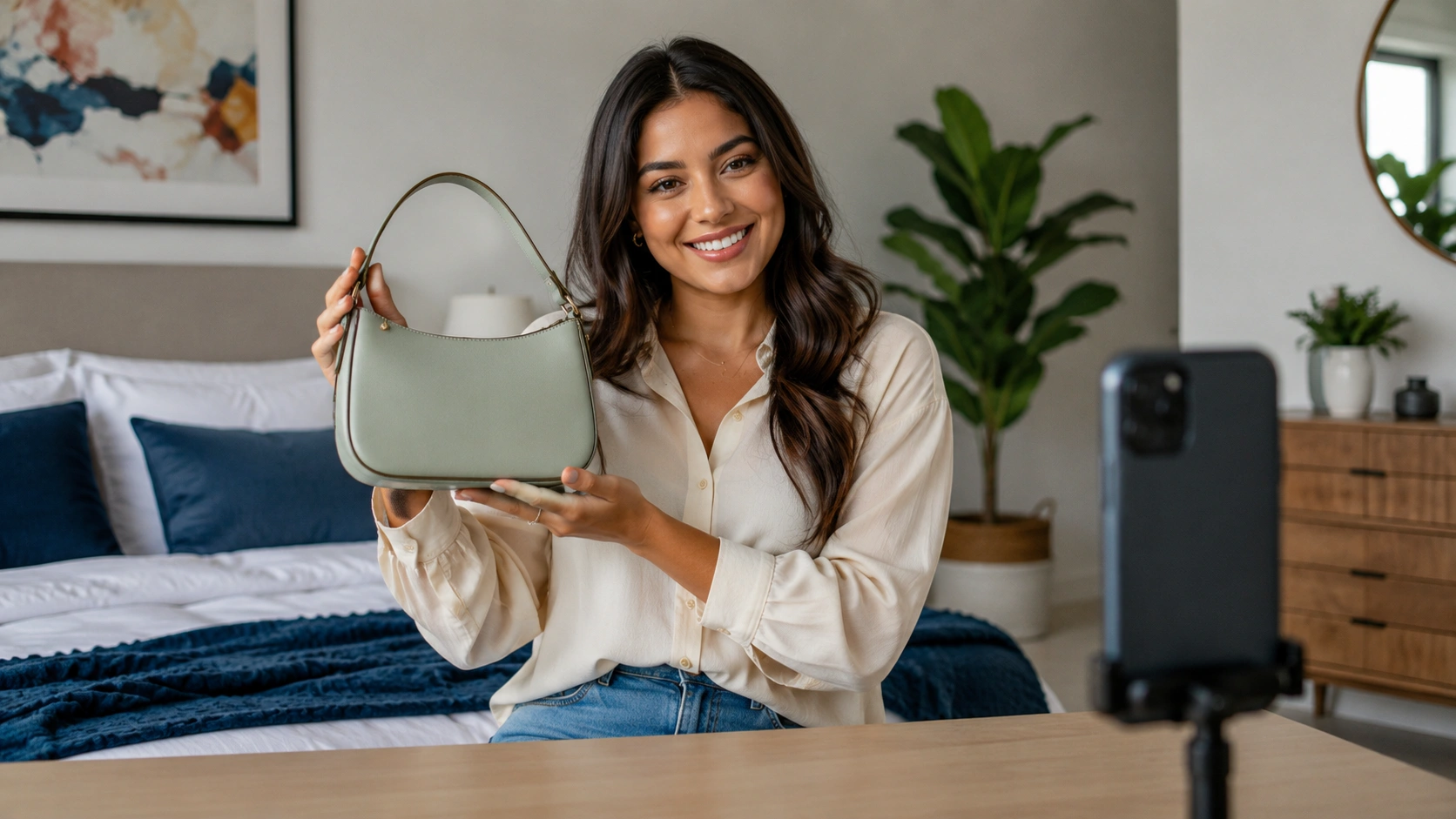
Quick Answer: Live shopping on Facebook is the process of hosting a live video broadcast to showcase products and interact with customers in real-time. To drive revenue, brands use these streams to demonstrate product utility, answer questions, and provide direct links to shoppable pages on their Shopify store.
The Shift to Omnichannel Live Events
Modern operators do not view Facebook in isolation. They treat a live event as a multi-destination broadcast. By using streaming software, a brand can go live on Facebook, Instagram, and their own website simultaneously, and Videowise's live shopping feature supports that kind of cross-channel experience.
This approach ensures that you meet the customer wherever they are. While Facebook provides the scale and social reach, your on-site presence allows for a performance-first shopping experience where Core Web Vitals (the metrics Google uses to measure page speed and user experience) remain protected.
The Revenue Case for Facebook Live Commerce
For a growth manager, the primary concern is not just "views" or "likes." The focus is on how live video impacts the bottom line, and performance analytics make that connection clearer.
Live shopping on Facebook serves three critical business outcomes:
- Increased Conversion Rate (CVR): Real-time product demonstrations remove the "imagination gap." When a shopper sees a garment's movement or a skincare product's texture live, the hesitation to buy decreases.
- Higher Average Order Value (AOV): Live hosts can effectively cross-sell and bundle products. Explaining how three different products work together as a routine often leads to larger carts compared to static PDP (Product Detail Page) browsing.
- Improved Revenue Per Session (RPS): By keeping users engaged in a high-intent video environment, the total value generated from every visitor increases.
Key Takeaway: Live shopping is a conversion tool, not just a brand awareness play. Its success should be measured by direct sales and the lift in AOV during the event window.
A Strategic Framework for Successful Live Events
Success in live shopping requires more than just hitting the "Go Live" button. It requires a merchandising plan and a clear promotional calendar.
Choosing the Right Content Format
Not every live stream should be a hard sell. Different formats serve different stages of the customer journey:
| Event Type | Primary Objective | Best For |
|---|---|---|
| Product Launch | High Initial Sales | New arrivals, limited drops |
| Tutorial / How-to | Reduced Returns | Beauty, tech, complex apparel |
| Flash Sale | Inventory Clearance | Seasonal transitions, holiday events |
| Q&A / FAQ | Building Trust | High-ticket items, health & wellness |
The Power of Exclusive Offers
To drive immediate action, use the "live-only" incentive. Whether it is a limited-time discount code or a gift-with-purchase, the goal is to create a sense of urgency. In our experience, brands that offer exclusive rewards for live participants see a significantly higher CVR than those who run generic promotions.
Technical Implementation and Workflow
Setting up a live shopping event on Facebook involves a few technical layers. An operator needs to ensure the stream is stable and the path to purchase is clear. If you want help mapping that workflow to your own store, book a demo.
Step 1: Prepare Your Tech Stack
Use a professional streaming tool like OBS Studio, StreamYard, or Restream. These tools allow you to overlay product graphics, prices, and "Buy Now" calls-to-action (CTAs) directly onto the video feed. This makes the experience look like a professional shopping channel rather than a casual phone broadcast.
Step 2: Set Up the Destination
Create a dedicated "Live Shopping" landing page on your Shopify store. Instead of sending users to individual PDPs and making them leave the stream, send them to a page where the live video is embedded alongside a collection of the featured products. This keeps the momentum high, and shoppable video carousels can help carry that experience beyond the live event.
Step 3: Test Connection and Lighting
Nothing kills a conversion opportunity faster than a laggy stream or poor audio. Ensure you have a dedicated high-speed internet connection (wired is better than Wi-Fi). Use a basic three-point lighting setup to ensure your products are clearly visible and colors are accurate.
Myth: You need a full production studio to go live.
Fact: Most high-growth Shopify brands start with a high-quality smartphone, a ring light, and a stable internet connection. Authenticity often converts better than overly polished commercials.
Optimizing for On-Site Conversions
While the broadcast happens on Facebook, the revenue is often realized on your site. Our performance-first infrastructure ensures that when you bring that social traffic to your store, the video content doesn't slow down your pages.
Many operators fear that adding heavy video components will hurt their site speed. We solve this by using advanced loading techniques that prioritize the "Above the Fold" content. This ensures your store remains fast and responsive, which is critical for maintaining a high CVR during high-traffic events.
Incorporating Shoppable Video
Even if a customer misses the live window, you can use the recorded content. By placing shoppable video carousels on your homepage or collection pages, you allow customers to watch highlights and purchase products directly from the video player. This turns a one-time event into a 24/7 revenue driver.
Pre-Event Promotion for Maximum Attendance
A live event is only as good as its audience. Operators should treat a live shopping broadcast like a major product launch.
- Email and SMS: Send a "Save the Date" 48 hours before and a "We're Live" message 5 minutes after the start.
- Social Teasers: Post short-form Reels or Stories on Facebook and Instagram showing behind-the-scenes prep.
- Countdown Stickers: Use interactive countdowns in Stories to allow users to set reminders.
- Collaborations: If you are working with an influencer, have them promote the event to their following to bring in fresh top-of-funnel traffic.
Post-Event: Turning Replays into Revenue
The life of your live stream should not end when the broadcast stops. In fact, for many brands, the "replay" period generates more total revenue than the live window itself.
Using AI to Scale Content
You can use AI Clips to automatically identify the most engaging moments from your long-form Facebook live stream. These short, punchy clips can then be repurposed as:
- Shoppable UGC (User-Generated Content) style videos for PDPs.
- High-performing assets for Facebook and Instagram Reels.
- Video content for email marketing campaigns.
By tagging these clips with specific products, you create a path for shoppers to buy exactly what they see in the video without searching your entire catalog. This bulk publishing capability is essential for large retailers managing thousands of SKUs (Stock Keeping Units).
Measuring What Matters: Live Shopping Attribution
To justify the effort of live shopping, you must move beyond vanity metrics like "Total Views." Operators need to look at full-funnel attribution, and content performance analytics help connect video interactions to actual revenue.
Direct vs. Influenced Revenue
- Direct Revenue: Sales made via the specific links shared during the live broadcast.
- Influenced Revenue: Sales made by users who watched the live stream but purchased later in the day or week.
Our Content Performance Analytics provide a clear view of how video interactions lead to purchases. By tracking the entire journey—from the first play on Facebook to the final checkout on Shopify—you can see the true ROI (Return on Investment) of your video strategy.
Metrics to Track
- Average Watch Time: This indicates content quality. If users drop off in the first 30 seconds, your hook needs work.
- Click-Through Rate (CTR) on Product Tags: How many viewers are interested enough to view product details?
- Add-to-Cart (ATC) Rate: How many viewers are moving from interest to intent?
- Core Web Vitals Impact: Are your on-site video embeds affecting your LCP (Largest Contentful Paint) or other speed metrics?
Bottom line: A successful Facebook live strategy is measured by how effectively it moves users from the social feed to the checkout page, maintaining high site performance throughout the journey.
Conclusion
Live shopping on Facebook remains a powerful pillar of a modern social commerce strategy. By focusing on high-intent content, real-time engagement, and a performance-optimized checkout experience, Shopify brands can significantly improve their conversion rates and average order values. The key is to view the live stream as the beginning of a revenue funnel, not the end. Using tools like Videowise, you can ensure that your video commerce efforts are measurable, fast, and scalable. We are built to help you turn every video into a storefront, ensuring your brand stays ahead in the competitive ecommerce landscape of 2026. Ready to turn your video content into a high-performance revenue engine? Install Videowise from the Shopify App Store.
FAQ
Is Facebook Live Shopping still available in 2026?
Yes, but the format has changed from the old native product playlists. Brands now go live on Facebook and use external links, overlays, and integrated on-site shoppable video players to facilitate the actual purchase process on their own stores. For proof points, browse our customer stories.
How do I drive the most revenue from a Facebook live event?
The best way to drive revenue is to offer exclusive, "live-only" incentives like discount codes or limited-edition bundles. Combining these offers with clear product demonstrations and direct links to a shoppable landing page creates the highest conversion lift.
Will adding live video replays to my site slow it down?
Not if you use a performance-first video platform. If you want to go deeper on measurement, how to track shoppable video performance explains the metrics that matter, ensuring that your site stays fast even with multiple shoppable video carousels active.
Can I repurpose my Facebook live streams for other channels?
Absolutely. You should take your long-form live recordings and use AI-powered tools to create short clips. If you're mapping out the broader video workflow, get started with shoppable videos shows how those assets can keep driving revenue long after the live event ends.
.webp)


