

Table of Contents
- Introduction
- The Revenue Case for Live Social Commerce
- Platform Selection: Reach vs. Control
- Designing Content for High Conversion
- Technical Performance and Site Speed
- Measurement and Attribution: Beyond Vanity Metrics
- Building a Live Commerce Workflow
- Integrating UGC into the Live Experience
- Scaling Without Dev Dependency
- Future Trends: AI and AR in Live Shopping
- Conclusion: Turning Video into a Revenue Engine
- FAQ
Introduction
Ecommerce operators in 2026 face a persistent challenge: rising customer acquisition costs (CAC) paired with a plateau in traditional conversion rates. Static product pages often fail to bridge the trust gap required for high-consideration purchases. Live social commerce addresses this by merging real-time video, social proof, and instant checkout into a high-velocity sales channel. We designed Videowise to solve these specific conversion hurdles by turning video assets into measurable revenue streams. This guide explores how Shopify brands can transition from passive video hosting to an active live selling strategy that prioritizes revenue per session (RPS) and long-term customer lifetime value. If you want to see how it maps to your store, book a demo. By the end of this article, you will have a clear framework for selecting platforms, managing technical performance, and optimizing live streams for maximum bottom-line impact.
Quick Answer: Live social commerce is the integration of real-time video broadcasting with native checkout capabilities on social platforms or brand websites. It drives revenue by compressing the sales funnel, allowing shoppers to move from discovery to purchase within a single interactive session.
The Revenue Case for Live Social Commerce
Live social commerce is no longer an experimental tactic. It is a fundamental shift in how modern shoppers evaluate products. In 2026, the US market for live commerce is projected to reach nearly $68 billion. This growth is driven by the format’s ability to solve the "uncertainty" problem in digital retail.
Traditional ecommerce typically converts at 2-3% globally. In contrast, well-executed live shopping events can see conversion rates (CVR) as high as 30%. This lift occurs because live video provides context that static images cannot. A host can demonstrate the drape of a fabric, the sound of a mechanical keyboard, or the application of a skincare serum in real time.
Revenue per session (RPS) is the ultimate metric here. When a shopper interacts with a live stream, their time on site increases. More importantly, their intent to purchase hardens as they see their questions answered in the chat. This interactive layer often leads to higher average order values (AOV) as hosts suggest product bundles or complementary items mid-stream. If you want a deeper framework for attribution, this video commerce ROI guide is a useful place to start.
Platform Selection: Reach vs. Control
Operators must choose between hosting events on social platforms or their own Shopify storefront. Both have distinct advantages for revenue growth.
Social Platforms (TikTok Shop, Instagram, YouTube)
Social platforms offer massive built-in audiences. Social commerce currently leads the market by providing a full-stack solution where checkout happens inside the app. This removes friction for impulsive, lower-priced items. However, the trade-off is a loss of first-party data and limited control over the branding experience.
On-Site Live Shopping
Hosting live events on your own Shopify store allows for better control over the customer journey. You own the data, the retargeting pixels, and the checkout flow. On-site events also keep high-intent traffic within your ecosystem, where you can drive higher AOV through sophisticated upselling tools with a dedicated live shopping platform.
| Platform Type | Best For | Key Metric | Primary Advantage |
|---|---|---|---|
| Social (TikTok/IG) | Viral discovery | New Customer Acquisition | Built-in reach/Algorithmic boost |
| On-Site (Shopify) | Retention and AOV | Revenue Per Session (RPS) | First-party data ownership |
| Marketplaces (Amazon) | High-intent search | Conversion Rate (CVR) | Frictionless "One-Click" buying |
Key Takeaway: Use social platforms to fill the top of your funnel and move high-intent customers to your site for live events that prioritize AOV and data retention.
Designing Content for High Conversion
Live social commerce fails when it feels like a scripted television commercial. Authenticity is the primary driver of trust in 2026. Shoppers want a "backstage pass" experience where they can see the product in a real-world setting.
The Role of the Host
The host is the bridge between the product and the "Add to Cart" button. Founders and product designers often perform better than professional presenters because they possess deep domain expertise. They can answer technical questions about materials, sourcing, or fit that a generic influencer might miss.
If you partner with influencers, ensure they have a genuine affinity for the brand. Revenue-first brands are increasingly moving toward "co-owner" models where creators have a stake in the sales performance of the event. This aligns incentives toward conversion rather than just "engagement" or views.
Content Formats That Sell
- The Deep-Dive Tutorial: Focus on one complex product and show every possible use case.
- The Interactive Q&A: Let the audience dictate the flow. If a viewer asks to see the inside of a bag, show it immediately.
- The Limited Drop: Use scarcity by launching a specific SKU that is only available during the stream.
- The "Bundle and Save": Create exclusive kits that are only accessible via a live-only discount code.
Technical Performance and Site Speed
A common fear among ecommerce directors is that adding video will slow down their Shopify store. Page speed is a critical factor for Core Web Vitals (CWV), which influences both SEO rankings and conversion. A one-second delay in load time can significantly drop CVR.
We prioritize a performance-first infrastructure to ensure that shoppable video and live streams do not negatively impact site speed. When implementing live commerce, the video player should utilize lazy loading and compressed formats. This ensures the "Above the Fold" content remains fast and responsive while the video assets load as needed.
Mobile optimization is non-negotiable. In 2026, over 60% of live shopping happens on mobile devices. Your live commerce player must support portrait-mode video and have a checkout interface that is easy to navigate with one hand. Avoid large pop-ups that obscure the video feed or the chat.
Bottom line: Your live commerce tech must be invisible to the user—if the video lags or the page feels heavy, the shopper will bounce before the first product demo ends.
Measurement and Attribution: Beyond Vanity Metrics
Many brands fall into the trap of measuring "views" or "likes." These are vanity metrics that do not pay the bills. To scale live social commerce, you must track full-funnel attribution with content performance analytics.
Essential Metrics for Operators
- Direct Revenue: Sales made specifically through the live checkout link during the broadcast.
- Influenced Revenue: Sales made by viewers within 24–48 hours of watching the stream.
- Add-to-Cart (ATC) Rate: The percentage of viewers who clicked a product tag in the video.
- Revenue Per Session (RPS): The total revenue generated divided by the number of unique viewers.
The Power of A/B Testing
Don't guess which formats work. Test different variables across multiple streams. Try a founder-led stream vs. an influencer-led stream. Test a 15-minute high-energy format against a 60-minute deep-dive. Use content performance analytics to see where viewers drop off. If 50% of people leave during the shipping explanation, move that section to the end or simplify the message.
Building a Live Commerce Workflow
Successfully launching live social commerce requires a repeatable process. Most brands fail because they treat every stream as a massive, one-off production.
Step 1: Inventory and Catalog Sync Ensure your Shopify catalog is fully synced with your live platform. There is nothing more damaging to brand trust than selling out of a product mid-stream while the "Buy Now" button is still active.
Step 2: Pre-Stream Promotion Treat your live event like a movie premiere. Use your email and SMS lists to build hype 48 hours in advance. Offer a "calendar invite" link so shoppers get a notification when you go live.
Step 3: The Live Execution Have at least one person behind the scenes managing the chat. The host should focus on the camera, while the moderator answers basic questions about shipping, sizing, or returns. This keeps the energy of the stream high.
Step 4: Post-Stream Repurposing The value of a live stream doesn't end when the broadcast stops. Use AI Clips to cut the best moments into short-form shoppable videos for your PDPs (Product Detail Pages). A 60-minute live event can yield 10–15 high-converting video snippets that continue to drive revenue for months.
Myth: Live shopping is only for "young" brands or fashion retailers. Fact: Any brand with a product that requires demonstration—from home tools to complex supplements—can see significant CVR lift from live commerce.
Integrating UGC into the Live Experience
User-generated content (UGC) is a powerful addition to live social commerce. During a stream, you can feature video testimonials from real customers. This adds a layer of third-party validation that brand-produced content cannot replicate.
Using our UGC Hub, brands can import authentic videos from TikTok or Instagram and weave them into the live experience. Seeing a "real person" use the product while the host discusses it creates a "social proof sandwich" that is highly effective at closing sales.
Scaling Without Dev Dependency
Ecommerce teams are often stretched thin. You cannot afford to wait for a developer to build a custom landing page for every live event. You need a drag-and-drop solution that allows marketing leads to publish and manage content independently.
Videowise is built to allow scale without dev dependency. Whether you are running a single-store Shopify setup or a multi-store international operation, the ability to bulk-publish shoppable video and live events is essential. This agility allows you to react to trends or inventory shifts in real time. You can see how this approach shows up across our customer stories.
Future Trends: AI and AR in Live Shopping
As we move through 2026, two technologies are reshaping live social commerce: AI and Augmented Reality (AR).
AI-powered content intelligence is now being used to automate product tagging and generate real-time captions. This makes streams more accessible and searchable. We are also seeing the rise of AI-powered "shopping assistants" that live within the chat to provide instant sizing recommendations based on a user's previous purchase history.
AR Try-On integrations allow viewers to see how a product looks on them without leaving the stream. Imagine a live eyewear demo where the viewer can "try on" the glasses using their front-facing camera while the host explains the lens technology. For brands building this kind of workflow, AI video creation tools can help turn static assets into commerce-ready formats.
Conclusion: Turning Video into a Revenue Engine
Live social commerce is the most effective way to humanize your digital storefront while driving measurable business outcomes. By focusing on revenue-first metrics like RPS and CVR, and ensuring your technical infrastructure supports a fast, mobile-friendly experience, you can turn video from a cost center into a profit center. Videowise was built specifically for this purpose—to help Shopify brands manage and scale video commerce without compromising on performance. The most successful brands in 2026 will be those that stop viewing video as "content" and start viewing it as their most powerful sales tool. To get started, install Videowise from the Shopify App Store.
Key Takeaway: Success in live commerce requires a mix of authentic hosting, performance-first tech, and a relentless focus on revenue metrics over vanity engagement.
FAQ
How does live social commerce affect my Shopify store speed?
If implemented correctly using a performance-first infrastructure, live commerce should have a negligible impact on site speed. Using advanced loading techniques like lazy loading and optimized scripts ensures that your Core Web Vitals remain strong while still delivering high-quality video.
Do I need a professional studio to start live shopping?
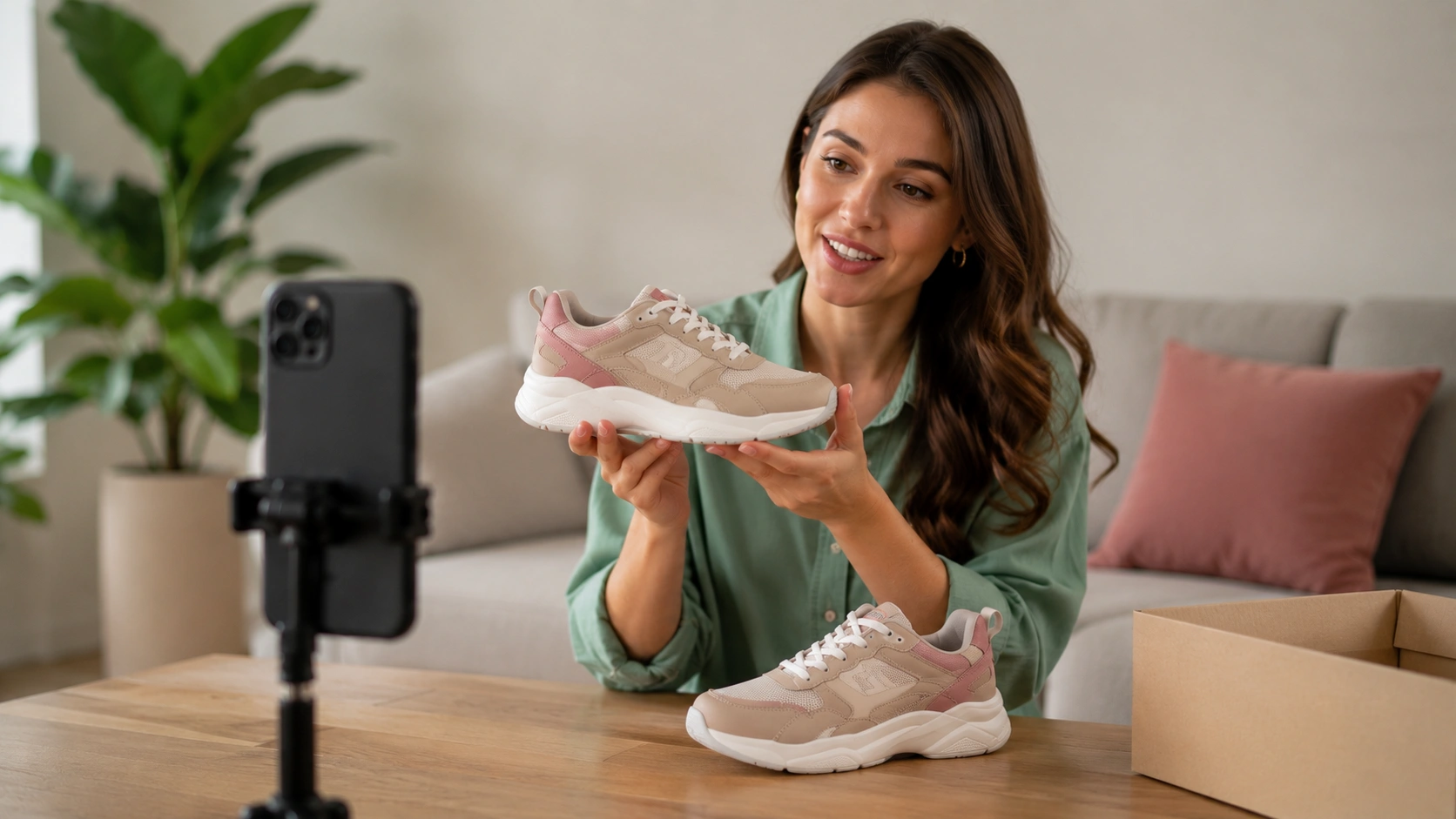
No, most successful live streams in 2026 favor authenticity over high production value. A clean backdrop, good natural lighting, and a high-quality smartphone camera are often more effective at building trust than a polished, multi-camera studio setup. If you want a faster on-ramp, Get Started With Shoppable Videos Using Videowise is a practical next step.
What is the difference between shoppable video and live shopping?
Shoppable video is asynchronous, meaning it is a recorded video with embedded buy buttons that shoppers can view at any time. Live shopping is a real-time event where the host and audience interact through chat, often creating a sense of urgency through limited-time offers. For the platform version of that experience, see Videowise’s shoppable video platform.
How do I measure the success of a live social commerce event?
You should look past views and likes to focus on direct revenue, influenced revenue, and revenue per session (RPS). Additionally, track your "Add to Cart" rate and post-event return rates to see if the live demonstration led to more confident, long-term purchases.
.webp)


