

Table of Contents
- Introduction
- The State of Live Shopping in the UK
- Why UK Operators are Prioritizing Live Commerce
- Strategic Implementation for Shopify Brands
- Categorizing the Most Effective Formats
- Technical Considerations: Performance and Speed
- The Role of Content Intelligence
- Measuring What Matters: Moving Beyond Views
- Scaling Live Shopping for Large Catalogs
- Common Pitfalls to Avoid
- The Future of UK Live Commerce
- Conclusion
- FAQ
Introduction
Customer acquisition costs for UK retailers continue to climb. For many Shopify operators, the traditional "static image and text" product page is no longer enough to maintain healthy conversion rates. Shoppers now demand more transparency and interactivity before they click the buy button. Live shopping has emerged as a primary solution to this conversion plateau. At Videowise, we help brands move past vanity engagement metrics and turn video into a measurable revenue driver with our live shopping platform. This guide covers the current state of live shopping in the UK, how to implement it without slowing down your store, and the strategies top brands use to maximize revenue per session. By the end of this article, you will understand how to integrate live selling into your existing ecommerce stack to drive meaningful growth in 2026.
The State of Live Shopping in the UK
Live shopping is no longer an experimental channel for UK brands. In 2026, it has become a core component of the retail landscape. Recent data indicates that the UK live selling market has grown into a £16 billion industry. This growth is largely driven by sectors like beauty and fashion. For example, beauty sales through live channels saw a massive 791% year-on-year increase. Women's fashion is not far behind, with UK shoppers consuming over 500,000 hours of live stream content every month.
The shift is driven by a change in consumer expectations. UK shoppers are looking for a more personal connection with the brands they buy from. They want to see products in action, ask questions in real-time, and get immediate answers. This interactive format builds a level of trust that static content cannot match.
Quick Answer: Live shopping in the UK is an interactive retail format where brands sell products via real-time video streams. It drives revenue by combining entertainment with instant purchasing, resulting in higher conversion rates (CVR) and average order value (AOV) for Shopify retailers.
Why UK Operators are Prioritizing Live Commerce
For a growth manager or ecommerce director, the appeal of live shopping is not just about "being modern." It is about the specific business outcomes it facilitates. When executed correctly, live commerce impacts several key performance indicators (KPIs) simultaneously.
Increased Conversion Rates (CVR)
The primary benefit is the immediate impact on conversion. In a typical ecommerce journey, a shopper might have three or four unanswered questions that prevent a purchase. During a live event, those questions—about sizing, material, or usage—are answered instantly by the host or other shoppers in the chat. This removes friction from the buying process.
Higher Average Order Value (AOV)
Live shopping events allow for natural product bundling and cross-selling. A host demonstrating a skincare routine can easily explain why a cleanser, toner, and moisturizer work better together. This educational approach often leads to shoppers adding more items to their cart than they originally intended.
Improved Revenue Per Session (RPS)
By increasing both the likelihood of a purchase and the total value of that purchase, live shopping significantly raises your revenue per session. This metric is critical in 2026 as traffic becomes more expensive to acquire. Making every visitor more valuable is the most sustainable way to scale.
Strategic Implementation for Shopify Brands
Implementing live shopping requires more than just turning on a camera. Successful UK brands follow a structured approach to ensure their events actually result in sales rather than just "likes."
Step 1: Define Your Primary Objective
Before choosing technology or talent, decide what you want to achieve. Are you clearing out end-of-season stock? Are you launching a new hero product? Or are you looking to reward your most loyal customers with an exclusive drop? Your goal will dictate your host choice, your promotion strategy, and your success metrics.
Step 2: Choose Your Platform Mix
Operators usually choose between two main paths: social commerce platforms or on-site live shopping.
- Social Commerce: Platforms like TikTok Shop and Instagram Live are excellent for discovery and reaching new audiences. They allow you to tap into existing user bases.
- On-Site Live Shopping: Hosting events directly on your Shopify store gives you full control over the customer experience and data. This is where you can truly leverage your first-party data and existing site traffic.
Many successful brands use a hybrid approach. They use social platforms for reach and their own site for high-intent shoppers who are already browsing their PDPs (Product Detail Pages).
Step 3: Sourcing the Right Talent
The host is the face of your brand during the event. In the UK market, shoppers respond best to authenticity over high-production polish. You have three main options for hosts:
- Internal Experts: Your own product designers or customer service leads often have the deepest knowledge.
- Professional Hosts: Individuals who specialize in live selling and know how to keep an audience moving toward the checkout.
- Influencers: They bring their own audience, which is great for acquisition, but they must align closely with your brand values.
Step 4: Tech Stack Integration
Your tech stack must support the transaction without adding friction. If a shopper has to leave the video to find a product on your site, you will lose them. We provide shoppable video capabilities that allow for direct product interaction within the video player. This means shoppers can add to cart and checkout without ever stopping the stream.
Key Takeaway: Success in live shopping requires a balance of high-intent audience targeting and a frictionless checkout process. The technology should never get in the way of the sale.
Categorizing the Most Effective Formats
Different products require different presentation styles. What works for a high-end electronics brand will not work for a fast-fashion retailer.
| Format Type | Best For | Key Revenue Driver |
|---|---|---|
| Product Launches | New collections or hero SKUs | Urgency and "First Access" |
| How-To / Tutorials | Beauty, Skincare, Tech | Trust and education-led CVR |
| Flash Sales | Inventory clearance | High volume in a short window |
| Q&A / AMA | Complex or high-ticket items | Removing purchase barriers |
Technical Considerations: Performance and Speed
One of the biggest concerns for ecommerce directors is the impact of video on site performance. A slow site kills conversion faster than a good video can save it. If your live shopping solution increases your LCP (Largest Contentful Paint) or negatively impacts your Core Web Vitals, it could hurt your overall SEO and user experience. That's why optimizing video for conversion and page speed matters.
Core Web Vitals are the standardized metrics Google uses to measure a page's health. For a Shopify store, maintaining these scores while running heavy video content is a challenge. We built our platform with a performance-first infrastructure. This ensures that even high-definition live streams do not bloat your page weight or slow down the rest of the shopping experience.
Viewport Loading and Optimization
To keep your site fast, look for solutions that use smart loading. This means the video assets only load when they are about to be seen by the shopper. It prevents the browser from trying to download everything at once, which keeps your initial page load speed high.
Myth: High-quality video will always slow down my Shopify store. Fact: With optimized delivery and a performance-focused infrastructure, you can host live shopping events without negatively impacting Core Web Vitals or page speed.
The Role of Content Intelligence
In 2026, the value of a live shopping event extends far beyond the time the "Live" light is on. Smart operators treat a live stream as a massive content production session. A one-hour live stream can be broken down into dozens of smaller assets.
Repurposing with AI
Manually editing hours of footage is time-consuming. Using AI Clips allows you to automatically identify the most high-intent moments from your live show—like a specific product demonstration or a compelling answer to a customer question. These clips can then be embedded back onto your PDPs as shoppable videos.
The UGC Hub
User-generated content (UGC) is often the most trusted form of media. During a live event, your customers are interacting and providing real-time feedback. This social proof can be captured and organized within a UGC Hub. By centralizing these assets, your merchandising team can quickly deploy them across the site to support ongoing conversion efforts.
Measuring What Matters: Moving Beyond Views
Many brands make the mistake of measuring the success of live shopping by the number of viewers. While reach is a factor, it is a vanity metric if it doesn't translate into revenue. To get a true picture of your ROI (Return on Investment), you need to look at deeper attribution models.
Direct vs. Influenced Revenue
Direct revenue is easy to track—it consists of the sales made through the video player during the event. Influenced revenue is more complex. It includes shoppers who watched the video but didn't buy until two days later, or those who saw a clip of the live show on a product page and then converted.
We provide Content Performance Analytics that track the entire funnel. This allows operators to see the exact path from a video view to a completed purchase. When you can prove that video viewers have a 20% higher CVR than non-viewers, it becomes much easier to justify the investment in live shopping.
Revenue Per Session (RPS) as the North Star
If you only focus on CVR, you might miss the bigger picture. RPS combines CVR and AOV into a single metric that tells you how much money you make for every person who lands on your site. If your live shopping events are driving higher AOV through bundling, your RPS will climb even if your CVR remains steady.
Bottom line: Total revenue impact is the only metric that matters for an ecommerce operator. Use attribution tools to track both direct sales and the long-term influence of your video content on the customer journey.
Scaling Live Shopping for Large Catalogs
For brands with hundreds or thousands of SKUs, managing live shopping can feel like a logistical nightmare. You cannot realistically host a live event for every single product. The solution is bulk management and AI-powered tagging.
By using automated tagging and multi-store support, you can link products to your video assets at scale. If a product goes out of stock, your video player should automatically update to reflect that, preventing a poor customer experience. For brands that need to operate across multiple storefronts, the Skullcandy case study shows how shoppable video can scale across four regional online stores. This level of automation is what separates a "one-off" experiment from a repeatable, scalable revenue channel.
Common Pitfalls to Avoid
Even with the best intentions, live shopping campaigns can fail if they fall into common traps.
- Ignoring the Replay: Most of your revenue will likely come after the live event has ended. If you don't make the recorded version shoppable and easy to find on your site, the complete guide to live video commerce is a useful next read.
- Poor Audio Quality: Shoppers will forgive a slightly grainy video, but they will not stay if they cannot hear the host. Invest in good microphones before you invest in 4K cameras.
- Lack of Promotion: "Build it and they will come" does not apply to live shopping. You must leverage your email lists, SMS, and social channels to drive traffic to the event.
- Complex Checkout: Every extra click in the checkout process reduces your CVR. Ensure your live shopping solution supports inline checkout or a "one-click" add-to-cart.
The Future of UK Live Commerce
As we look further into 2026, the integration of video and commerce will only tighten. We are seeing more "hybrid" models where physical store staff in London or Manchester are hosting live streams from the shop floor. This blends the physical and digital worlds, giving online shoppers the same level of service they would get in person.
AI Studio tools are also making it easier for smaller teams to produce high-quality video content without needing a full production agency. The barrier to entry is lowering, but the bar for quality and performance is rising.
Conclusion
Live shopping in the UK has transitioned from a trend to a fundamental retail strategy. For Shopify brands, it offers a way to combat rising acquisition costs by maximizing the value of every visitor. By focusing on revenue-centric metrics like CVR, AOV, and RPS—and ensuring your technical foundation doesn't sacrifice site speed—you can build a sustainable competitive advantage.
Our mission is to help brands turn every video asset into a measurable revenue channel. Whether you are just starting with your first live event or looking to scale a global multi-store operation, book a demo with our team today.
Key Takeaway: Live shopping is the most effective way to humanize your digital storefront and remove the barriers to purchase in 2026.
Ready to see how shoppable video can transform your Shopify store? Install Videowise from the Shopify App Store.
FAQ
Is live shopping only effective for fashion and beauty brands in the UK?
While fashion and beauty have seen the fastest adoption, live shopping works for any category where products benefit from demonstration or expert advice. Electronics, home goods, and even specialty food brands use live selling to explain complex features or share usage tips, leading to higher trust and conversion.
How does live shopping impact my Shopify store's page load speed?
If you use a poorly optimized video player, it can significantly slow down your site and hurt your Core Web Vitals. However, our platform uses a performance-first infrastructure and viewport loading to ensure that video content only loads when needed, maintaining your site's speed and SEO health.
Do I need a professional studio to start live shopping?
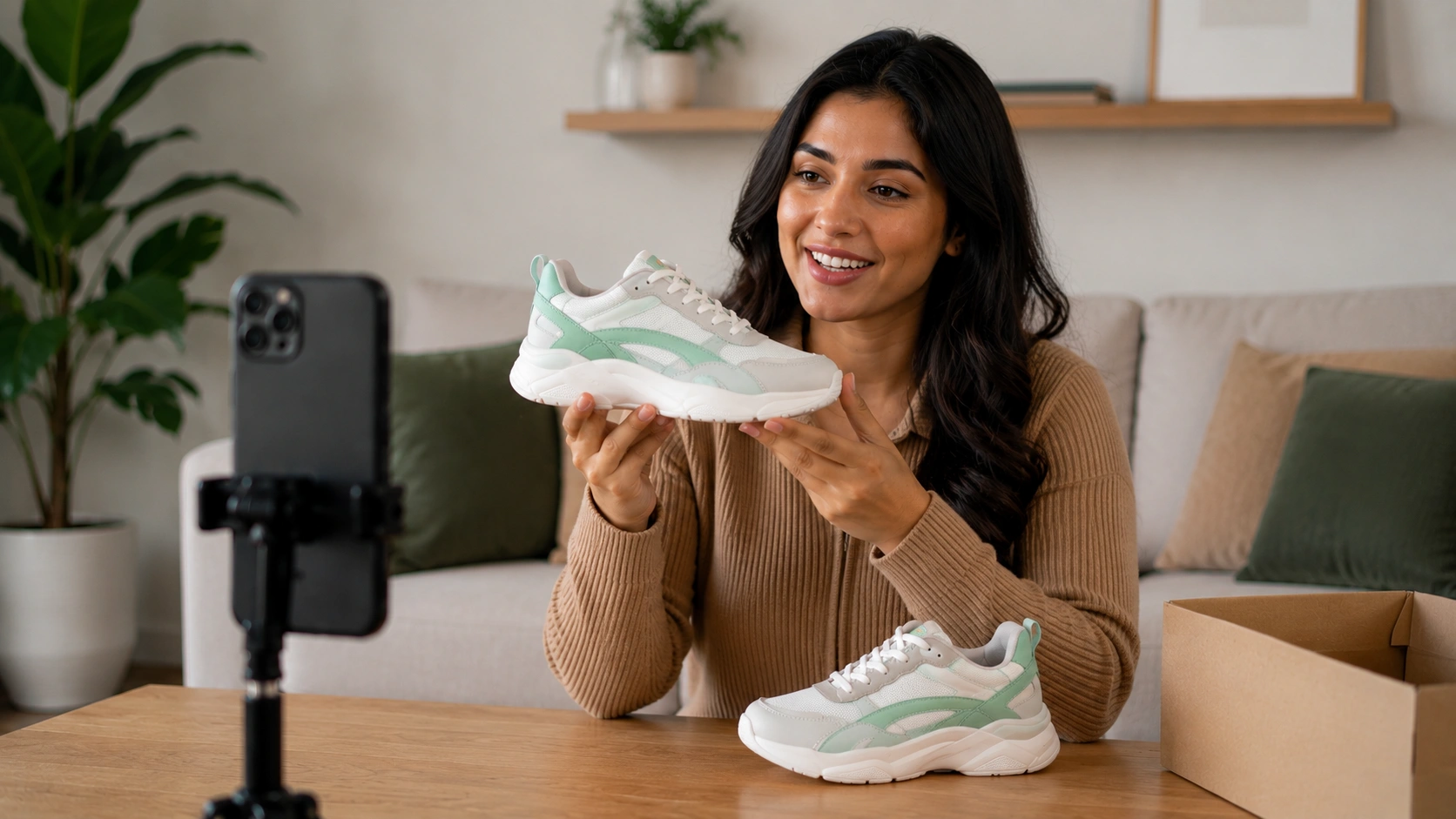
No, most UK shoppers actually prefer an authentic, "unfiltered" look over a high-production studio setting. A well-lit room, a high-quality smartphone, and a good microphone are usually enough to get started, as the value lies in the host's expertise and the interactivity of the session.
How do I track the actual revenue generated from a live stream?
You should use a platform that offers full-funnel attribution and performance analytics. This allows you to track not only the direct sales that happen during the live event but also the "influenced revenue" from shoppers who watched the video and purchased later.
.webp)


