

Table of Contents
- Introduction
- The State of Live Commerce in 2026
- Trend 1: The Transition from Social Reach to On-Site Revenue
- Trend 2: AI-Powered Personalization and Autonomous Hosting
- Trend 3: The Rise of the "Micro-Live" and High-Frequency Streaming
- Trend 4: Replay Monetization and the Shoppable Video Flywheel
- Trend 5: AR Integration and "Phygital" Interactive Demos
- Strategy: How to Build Your 2026 Live Shopping Roadmap
- Measuring What Matters: Moving Beyond View Counts
- The Role of Social Commerce in the 2026 Ecosystem
- Logistics and Production in 2026
- Content Production Efficiency
- Conclusion
- FAQ
Introduction
As we move through 2026, ecommerce operators are facing a familiar set of pressures: rising acquisition costs, conversion plateaus on static product pages, and a surplus of content that fails to convert. Static images and standard descriptions no longer suffice for a consumer base that prioritizes real-time verification and social proof. Live shopping has evolved from an experimental marketing tactic into a core revenue channel. At Videowise, we have seen this transition firsthand, as brands move away from vanity engagement metrics toward measurable outcomes like Revenue Per Session (RPS) and Conversion Rate (CVR) lifts in our customer stories. This guide explores the dominant live shopping trends 2026, providing actionable frameworks for growth managers and ecommerce directors to turn interactive video into a high-yield sales engine.
Quick Answer: Live shopping in 2026 is defined by the shift toward on-site hosted events, the dominance of "micro-live" formats, and AI-powered personalization. Operators are moving beyond social-only streams to own their customer data and maximize revenue through shoppable replays.
The State of Live Commerce in 2026
The global live commerce market has surpassed $1 trillion this year. While China remains the leader in total volume, the US market is experiencing its most significant surge to date, with projections hitting $68 billion. The primary driver of this growth is not just the volume of streams, but the efficiency of the format.
Operators are seeing conversion rates for live shopping events ranging from 9% to 30%. This is a stark contrast to the standard 2–3% conversion rate seen on traditional ecommerce product detail pages (PDPs). The value proposition has shifted from "entertainment" to "utility." Shoppers tune in to see how a product fits, how it functions in real-world lighting, and to get immediate answers to objections that usually cause cart abandonment.
Regional Adoption and Growth
In the United States, 2026 marks the year where live shopping has become a weekly habit for nearly 15% of digital shoppers. Gen Z and Millennials lead this charge, with Millennials representing the largest group of actual purchasers. In Europe, adoption has scaled through specialized platforms, while Southeast Asia remains a competitive hotspot where live commerce accounts for nearly half of all weekly digital interactions.
Category Leadership
Fashion and beauty products continue to dominate, accounting for over 50% of global live shopping sales. However, 2026 has seen a rapid rise in electronics, home goods, and health and wellness. These categories benefit significantly from real-time demonstrations that reduce the "perceived risk" of a purchase. When an operator can show the exact interface of a new gadget or the texture of a supplement powder live, return rates drop significantly.
Trend 1: The Transition from Social Reach to On-Site Revenue
One of the most critical live shopping trends 2026 is the strategic pivot from third-party social platforms to on-site hosted live shopping. While TikTok Shop and Instagram Live are excellent for discovery, they often keep the customer data and the relationship.
In 2026, sophisticated brands are using social media as a "top-of-funnel" teaser while hosting the actual high-conversion event on their own Shopify store. This allows brands to:
- Own the Customer Data: Every click, add-to-cart, and question is tracked within the brand’s own analytics.
- Reduce Friction: Shoppers can use one-click checkouts and existing account information without leaving the stream.
- Eliminate Distractions: On-site streams don't compete with the next viral dance video in a social feed.
Our performance-first infrastructure at Videowise is built to support this shift. By hosting live events directly on the store, brands maintain their Core Web Vitals—the technical metrics Google uses to measure page speed and user experience—while delivering high-definition, interactive video.
Key Takeaway: Social platforms are for reach, but your own website is for revenue. In 2026, the most successful operators prioritize on-site live shopping to control the checkout experience and the customer relationship.
Trend 2: AI-Powered Personalization and Autonomous Hosting
Artificial Intelligence (AI) is no longer a buzzword in live commerce; it is the operational backbone. In 2026, AI is being used to solve the two biggest bottlenecks in live shopping: production costs and real-time moderation.
Contextual Recommendations
AI now analyzes a viewer’s previous purchase history and real-time browsing behavior during a live stream. If a shopper has previously looked at denim, the AI can trigger a personalized overlay suggesting the specific jeans that pair with the shirt currently being demonstrated by the host. This level of personalization drives higher Average Order Value (AOV), which is the average dollar amount spent each time a customer places an order.
AI-Driven Moderation and Support
Real-time chat is essential for trust, but scaling it is difficult. AI assistants in 2026 handle routine questions—such as "Is this in stock in size Large?" or "What is the shipping time to California?"—instantly. This frees the human host to focus on storytelling and product demonstration.
AI Clips and Repurposing
The work doesn't end when the stream stops. Operators are using AI Clips to automatically identify the highest-converting moments of a live stream. These snippets are then repurposed into shoppable video carousels on PDPs. This ensures that the effort put into a one-hour live event continues to drive revenue for months.
Trend 3: The Rise of the "Micro-Live" and High-Frequency Streaming
Gone are the days of 90-minute "extravaganzas" once a month. The dominant format in 2026 is the "Micro-Live." These are short, 15-to-20-minute sessions focused on a single product launch, a specific use case, or a "deal of the hour."
Why Frequency Trumps Duration
Operators have found that three 20-minute sessions per week outperform one monthly two-hour session. High-frequency streaming keeps the brand top-of-mind and fits into the fragmented attention spans of mobile shoppers.
Lowering the Barrier to Entry
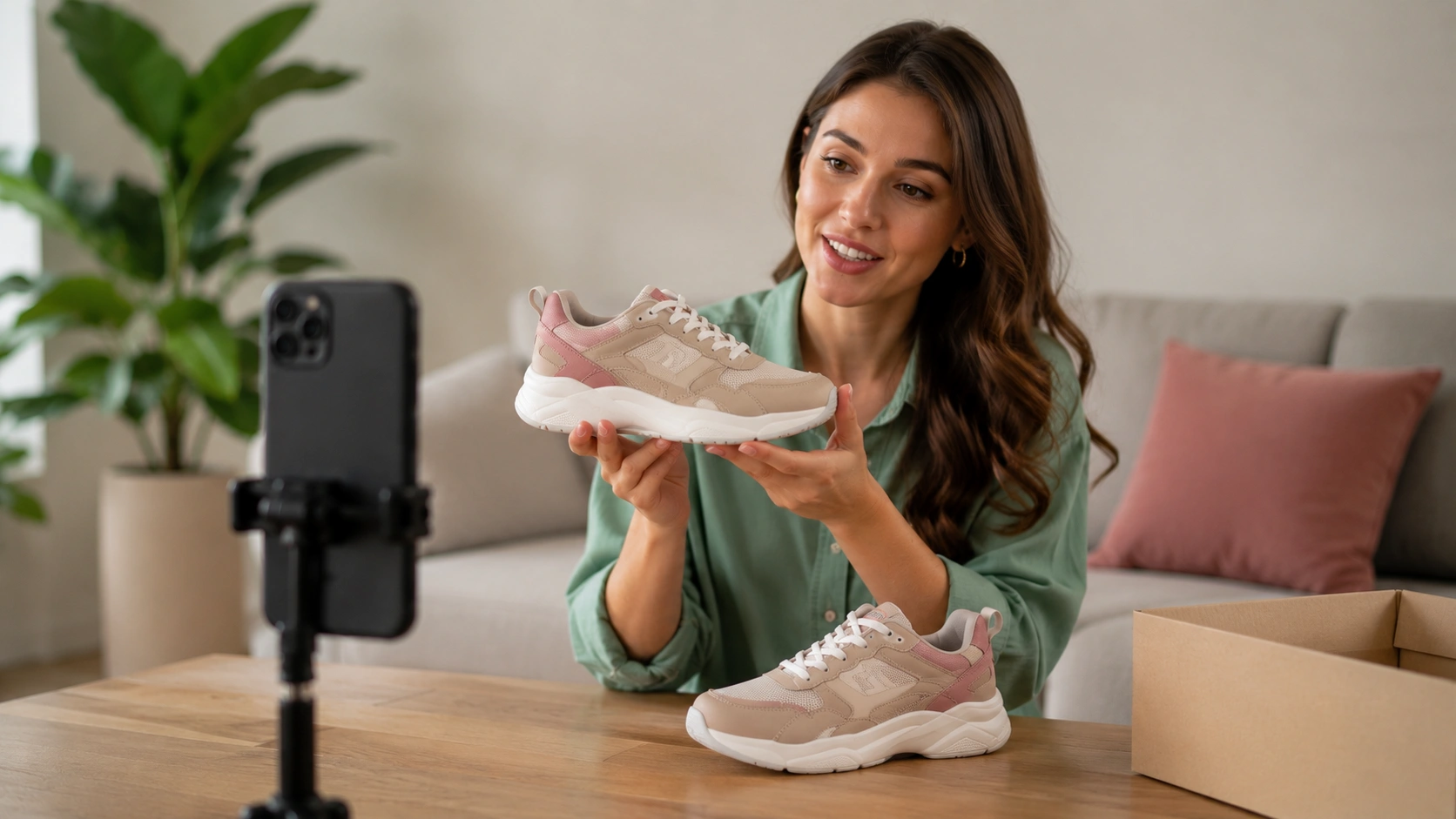
Micro-lives require less logistical preparation. A solo founder or a dedicated community manager can go live from a smartphone with a simple ring light. The focus in 2026 is on authenticity and expertise rather than high-gloss production. Shoppers respond better to "backstage" vibes where they can see the product unedited and unfiltered.
For a deeper framework, see Videowise’s complete live video commerce guide.
Trend 4: Replay Monetization and the Shoppable Video Flywheel
A common mistake in previous years was treating live shopping as an ephemeral event. In 2026, the real revenue often happens after the live event is over, and repurposing live shows keeps that value compounding.
Bottom line: Data shows that up to 70% of revenue attributed to live commerce now comes from shoppable replays.
Making Replays Interactive
A standard video recording is a passive experience. A shoppable replay in 2026 includes:
- Automatic Chaptering: AI segments the video by product, allowing shoppers to jump straight to the item they care about.
- Persistent Tags: Product tags remain clickable within the video player, allowing for an instant add-to-cart at any point during the playback.
- In-Video Search: Users can search for a specific keyword (e.g., "waterproof") and be taken to the exact moment the host discusses that feature.
By embedding these shoppable replays on collection pages and PDPs, operators create a "flywheel" where live content continues to generate sales long after the broadcast ends. We provide the tools to manage this Creative Library, ensuring that every piece of live content is tagged, searchable, and ready for bulk publishing.
Trend 5: AR Integration and "Phygital" Interactive Demos
The line between physical and digital ("phygital") shopping is blurring through Augmented Reality (AR) integration within live streams. In 2026, this technology has become accessible to mid-market Shopify brands, not just enterprise giants.
Virtual Try-On (VTO)
During a live stream for a beauty brand, viewers can now tap a button to see how a lipstick shade looks on their own face using their phone’s front-facing camera—all while the host continues the demonstration. This effectively removes the final barrier to purchase for items that are typically "try-before-you-buy."
3D Product Visualization
For home goods and electronics, hosts can trigger 3D models that viewers can "place" in their own room via AR. This trend has drastically reduced return rates in 2026, as customers have a much clearer understanding of product scale and fit before they click buy.
Strategy: How to Build Your 2026 Live Shopping Roadmap
Transitioning to a live-first commerce strategy requires a phased approach. For an operator at a Shopify brand, the goal is to move from "testing" to "scaling" without increasing headcount proportionally.
Step 1: Audit Your Content and Tech Stack
Identify your highest-traffic pages. These are the locations where shoppable video and live shopping will have the most significant impact on CVR. Ensure your platform supports performance-first delivery so that adding video doesn't slow down your site speed.
Step 2: Define Your Host Strategy
You don't always need a celebrity. In 2026, the most effective hosts are:
- Product Experts: Internal team members who know the technical details.
- Micro-Influencers: Creators with smaller, highly engaged audiences who offer high trust.
- Founders: Especially for D2C brands where the story is part of the value.
Step 3: Implement Multi-Touch Attribution
Stop looking at just "Live Sales." Use Content Performance Analytics to track influenced revenue. A customer might watch a stream on Tuesday but not buy until Thursday after seeing a retargeting ad. Your attribution model must account for the video's role in that journey.
Step 4: Automate the Post-Live Workflow
Use AI tools to clip, tag, and publish your live content to your PDPs and collection pages. This ensures that the ROI of every stream is maximized.
| Metric | Traditional PDP | Live Shopping (2026) |
|---|---|---|
| Conversion Rate (CVR) | 2% - 3% | 9% - 30% |
| Average Order Value (AOV) | Baseline | 15% - 25% Increase |
| Return Rate | Standard | 10% - 20% Decrease |
| Revenue Per Session (RPS) | Low | High |
Measuring What Matters: Moving Beyond View Counts
In 2026, view counts are considered a "vanity metric." High views without revenue are a failure for a growth-focused operator. Instead, focus on these three Key Performance Indicators (KPIs):
- Revenue Per Session (RPS): Total revenue generated by the live event divided by the number of unique viewers. This tells you the actual value of each person tuning in.
- Add-to-Cart (ATC) Rate: The percentage of viewers who add an item to their cart during the stream. This measures the effectiveness of your host and your product demonstrations.
- Influence Revenue: Revenue from customers who watched the video but purchased at a later time. This is critical for understanding the long-term ROI of your video assets.
The Role of Social Commerce in the 2026 Ecosystem
While the focus is on on-site revenue, social commerce remains a powerful discovery tool. The trend in 2026 is "Simulcasting." Videowise social commerce makes it possible to broadcast a single live stream to multiple destinations simultaneously: your Shopify site, TikTok Shop, and Instagram.
The key is unified management. An operator shouldn't have to manage three different chats and three different inventories. Modern platforms allow for a centralized dashboard where questions from all platforms are funneled into one view, and inventory is synced in real-time across all channels. Shop App live shopping is another channel worth planning for when the roadmap expands.
Myth: Live shopping is only for "hype" brands or drops. Fact: In 2026, brands with large, evergreen catalogs use live shopping to clear slow-moving inventory and educate customers on complex products.
Logistics and Production in 2026
The technical barriers to entry have vanished. You no longer need a dedicated studio or a production crew to see success.
Mobile-First Infrastructure
Over 80% of live shopping views in 2026 occur on mobile devices. This means your video format must be vertical (9:16) and your interface must be optimized for "one-handed" shopping. Buttons must be easy to tap, and the checkout process must be frictionless.
Latency and Interaction
In 2026, "ultra-low latency" is the standard. If there is a 30-second delay between a host asking a question and seeing the chat response, the interactive element is lost. Real-time retail requires sub-second latency to maintain the "live" feeling that drives impulse purchases.
Content Production Efficiency
To keep up with the demand for high-frequency streaming, brands are turning to their customers. UGC videos are being integrated into live streams to provide additional social proof.
UGC Integration
During a live event, a host can "pull in" a recorded video from a real customer using the product. This "review-in-a-video" format is incredibly effective for building trust. We facilitate this through our Social Commerce features, allowing brands to import UGC from TikTok and Instagram and use it directly in their video commerce strategy.
Conclusion
Live shopping trends 2026 point toward a future where video is the primary interface for ecommerce. For the operator, the mission is clear: move beyond engagement and focus on turning every stream into a measurable revenue channel. By prioritizing on-site hosting, leveraging AI for efficiency, and focusing on shoppable replays, brands can build a sustainable, high-conversion sales engine that operates at scale.
At Videowise, we are dedicated to helping brands navigate this transition, and you can book a demo to see how the workflow fits your store. Our platform is built to ensure that your video strategy drives CVR, AOV, and RPS without ever compromising on page speed or technical performance. The opportunity in 2026 is not just to "go live," but to install Videowise from the Shopify App Store and build a video-first brand that wins on revenue.
Key Action: Audit your current PDP conversion rates and identify 5 "hero" products that would benefit from a live demonstration. Start with one 20-minute micro-live and measure the RPS lift compared to your static page baseline.
FAQ
What is the most important live shopping trend in 2026?
The most significant trend is the shift toward on-site live shopping where brands host events on their own Shopify stores. This allows for better data ownership, higher conversion rates through integrated checkouts, and a distraction-free environment compared to social media platforms.
How does live shopping impact return rates for ecommerce brands?
Live shopping typically reduces return rates by 10% to 20% because it provides a clearer, more accurate demonstration of the product. Shoppers can see the fit, color, and functionality in real-time and ask questions before buying, which reduces the "expectation gap" that leads to returns.
Can small brands with limited budgets succeed in live shopping?
Yes, because the trend in 2026 favors authenticity over high production value. A smartphone, a knowledgeable host, and a clear "micro-live" format can be highly effective. The focus is on providing value and answering customer questions rather than expensive studio setups.
How do I measure the ROI of my live shopping events?
Instead of just looking at live sales, you should track Revenue Per Session (RPS), Add-to-Cart rates, and Influenced Revenue. Using video analytics allows you to see the full-funnel impact of your video, including customers who watch a stream but purchase days later.
.webp)


